Troubleshooting Piranha FX CNC Machine Enclosure and Coolant Systems
Fix dust leaks and mist coolant clogs on your Piranha FX CNC machine. Expert troubleshooting for retrofitted enclosures and air-over-water systems.
The Reality of Retrofitting the Piranha FX Work Envelope
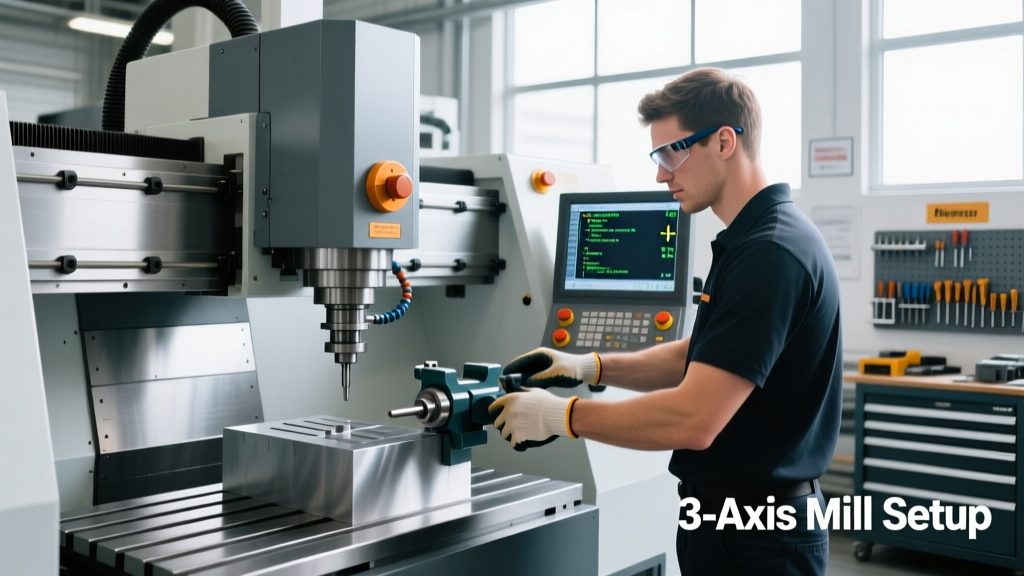
The Next Wave Automation Piranha FX is a highly capable desktop CNC router, but its open-frame architecture and lack of factory-integrated fluid management present immediate hurdles when machining 6061 aluminum or abrasive composites like Corian and MDF. The stock Piranha FX configuration features a 12-inch by 12-inch by 3-inch cutting capacity, utilizing exposed V-wheel gantry tracks and NEMA 23 stepper motors. When operators push this machine into metalworking or high-dust composite routing, retrofitting a custom enclosure and a Minimum Quantity Lubrication (MQL) mist coolant system is not optional—it is mandatory for preserving the drive train and maintaining dimensional accuracy.
This guide bypasses generic advice and addresses the specific failure modes, pressure dynamics, and sealing vulnerabilities inherent to retrofitting coolant and containment systems onto the Piranha FX platform.
Enclosure Diagnostics: Sealing the 12x12 Footprint
Building an acrylic or polycarbonate box around the Piranha FX seems straightforward until the spindle spins at 18,000 RPM. Fine particulate matter behaves like a fluid under high-frequency vibration, escaping through microscopic gaps that rigid adhesives cannot hold.
Symptom: Fine Dust Escaping the Retrofitted Acrylic Box
Root Cause 1: Vibration-Induced Adhesive Failure. Most hobbyists use cyanoacrylate (super glue) or standard hot glue to seal acrylic panels to the MDF or aluminum extrusion base. The Piranha FX's V-wheel gantry generates harmonic vibrations that shatter these brittle bonds within 10 to 15 hours of machining time.
The Fix: Strip all rigid adhesives. Use 3M VHB Tape 4910 (clear, 1/16-inch thick) for all acrylic-to-acrylic and acrylic-to-base joints. VHB tape absorbs harmonic vibration without losing its bond. For the base seal, apply a continuous bead of automotive-grade RTV silicone (Permatex Ultra Black) to accommodate thermal expansion and gantry shock.
Root Cause 2: Static Cling and Electrostatic Repulsion. Acrylic enclosures build up massive static charges from airborne MDF and Corian dust, causing particulates to cling to the walls and eventually get pushed out through the Z-axis roof gap by electrostatic repulsion.
The Fix: Wipe the interior of the enclosure with a 50/50 mixture of distilled water and anti-static fabric softener. For a permanent solution, apply an anti-static coating like Novus Plastic Polish #1 to the interior panels, and ground the acrylic using a strip of copper tape connected to the machine's main earth ground.
Symptom: Dust Pulling Back Into the Shop Air
Root Cause: Positive Pressure Build-up. If your enclosure is perfectly sealed but your dust extractor hose is undersized, the internal air pressure goes positive, forcing dust out of the spindle bellows.
The Fix: The Piranha FX enclosure volume is roughly 2.5 cubic feet. You must install a minimum 4-inch diameter dust port connected to an extractor rated for at least 600 CFM to maintain negative pressure. Never use a 2.5-inch shop vac hose as the primary exhaust for an enclosed desktop CNC.
Mist Coolant Troubleshooting for Aluminum Milling
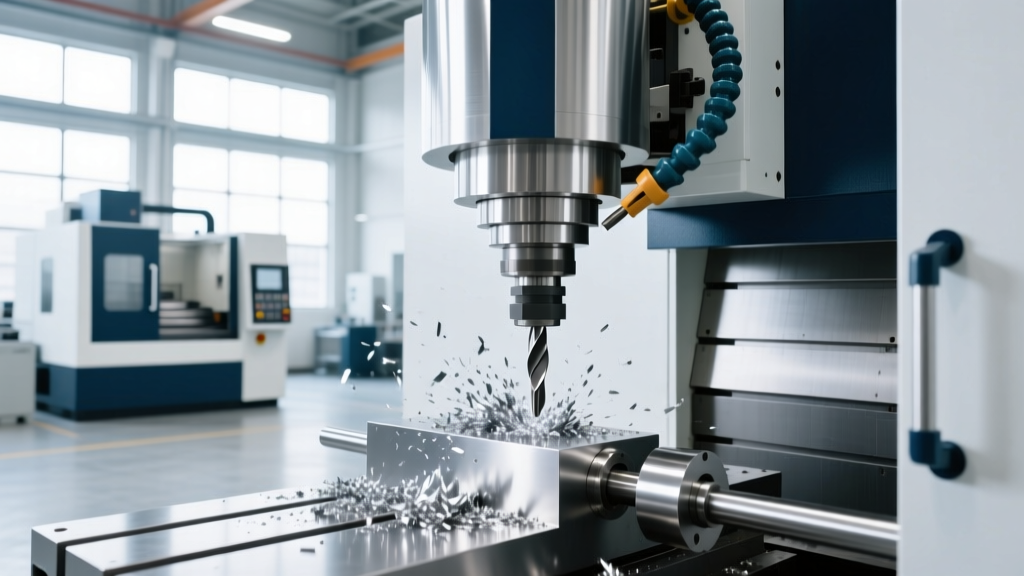
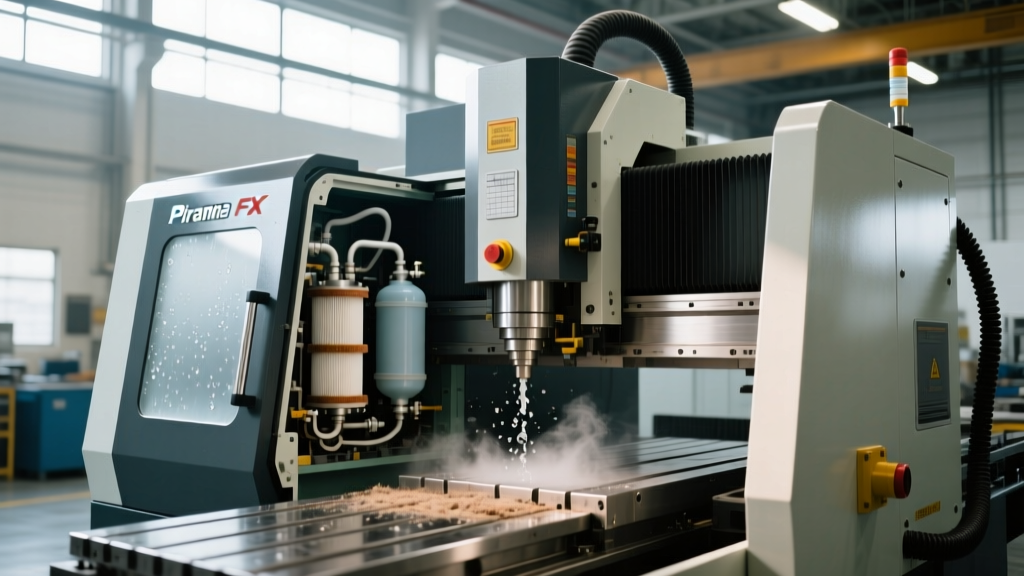
CRITICAL WARNING: Never use flood coolant on the Piranha FX. The machine's open V-wheels, lead screws, and unsealed NEMA 23 stepper motors will rapidly ingest fluid and conductive aluminum swarf, leading to catastrophic short circuits and mechanical binding within hours.To machine aluminum on the Piranha FX, you must use an air-over-water or micro-drop MQL system. According to industry data on Minimum Quantity Lubrication, MQL reduces fluid consumption by up to 95% compared to flood cooling while maintaining tool life, making it the only viable option for open-frame desktop routers.
Mist System Troubleshooting Matrix
| Symptom | Root Cause | Targeted Repair |
|---|---|---|
| Nozzle sputters and spits water droplets | Air pressure is too low to atomize the fluid; air-to-water ratio is unbalanced. | Increase compressor regulator to 80-100 PSI. Adjust the fluid metering valve to 1-2 drops per second. |
| Water siphons back into air compressor when idle | Hydrostatic head pressure pushes water backward when airline pressure drops. | Install a $5 pneumatic inline check valve (e.g., McMaster-Carr part # 9843K14) on the air inlet side of the reservoir. |
| End mill welds chips (built-up edge) despite mist | Nozzle placement is blocked by the Piranha FX spindle housing; mist is not hitting the cutting zone. | Relocate nozzle using a 1/8-inch micro-drop flexible line mounted directly to the router base, angled 45 degrees at the tool tip. |
| Reservoir fluid turns into a thick, gummy paste | Using standard WD-40 or non-emulsifying oils that trap aluminum fines. | Flush system and refill with Tap Magic Aluminum or a dedicated MQL fluid like AccuLube LB-2000. |
Drive Train & Electronics Protection Protocol
Even with a perfectly tuned mist system, atomized coolant and microscopic aluminum swarf will circulate inside the enclosure. The NIOSH guidelines on metalworking fluids highlight the respiratory and dermatological hazards of airborne coolant mist, but from a machine-maintenance perspective, this mist is equally hazardous to the Piranha FX's electronics.
Step-by-Step Swarf Ingress Prevention
- Stepper Motor Shrouds: The X and Y-axis NEMA 23 motors are completely exposed. 3D print custom motor covers using TPU (Thermoplastic Polyurethane) at Shore 95A hardness. TPU is flexible enough to absorb vibration and prevents conductive aluminum swarf from entering the motor windings or the rear encoder cables.
- V-Wheel Track Wipers: Fabricate felt wipers that attach to the front and back of the X-axis gantry plate. Soak these felt pads in a light dry-film PTFE lubricant. As the gantry moves, the wipers will physically push aluminum chips off the V-slot extrusions before they can embed into the Delrin V-wheels and cause flat-spotting.
- Z-Axis Lead Screw Bellows: The Z-axis is the most vulnerable component on the Piranha FX. The lead screw must be protected from vertical swarf drop. Install a 3D-printed TPU accordion bellows over the Z-axis lead screw. Secure the top to the Z-mount and the bottom to the spindle carriage using M3 screws and nylon washers.
- Dielectric Grease Application: Disconnect the stepper motor cables at the controller box. Pack the Molex or JST connectors with dielectric tune-up grease before reconnecting. This creates a waterproof, airtight seal that prevents atomized coolant from wicking into the copper pins and causing intermittent step-loss or ghost movements.
Component Upgrade Matrix: DIY vs. Professional MQL
When your retrofitted air-over-water system requires constant adjustment, it is time to evaluate an upgrade. The following matrix compares the standard DIY setup against professional micro-drop systems scaled for the Piranha FX footprint.
| Feature | DIY Air-Over-Water (Mason Jar Rig) | Fog Buster / Micro-Drop System | AccuLube Precision Applicator |
|---|---|---|---|
| Average Cost | $35 - $60 | $180 - $250 | $450 - $600 |
| Atomization Quality | Poor (Spits large droplets at low PSI) | Good (Consistent mist above 60 PSI) | Excellent (Sub-micron aerosol at any PSI) |
| Fluid Metering | Manual needle valve (Requires constant tuning) | Calibrated drip feed | Precision volumetric pump |
| Piranha FX Suitability | Acceptable for occasional plastics/wood | Ideal for 6061 Aluminum and Brass | Overkill for desktop, best for industrial enclosures |
Final Calibration Tip for the Piranha FX Spindle
The stock Makita-style compact router used on many Piranha FX setups lacks the torque to push through heavy aluminum chips if the coolant evaporates too quickly. When setting your air-over-water nozzle, aim the mist stream so it leads the tool path by exactly 1/8 of an inch. This ensures the lubricant pools slightly in the cut channel ahead of the single-flute carbide end mill, reducing cutting forces and preventing the Z-axis lead screw from stalling under heavy lateral loads.