CNC Machine Coolant Recycling: Budgeting for Tight Tolerances
Analyze the ROI of CNC machine coolant recycling. Learn how fluid purity impacts thermal tolerances, scrap rates, and 2026 budget planning for CNC shops.
The Metrology of Dirty Coolant: Why Tolerances Drift
When planning a CNC shop's annual budget, fluid management is often relegated to a generic consumables line item. This is a critical financial and metrological error for shops holding tight geometric and dimensional tolerances. The physical state of your metalworking fluid (MWF) directly dictates thermal stability and cutting forces at the tool-workpiece interface. Implementing a cnc machine coolant recycling strategy is not merely an environmental compliance exercise; it is a fundamental requirement for maintaining ±0.0005-inch (12.7 µm) tolerances on 5-axis machining centers and high-speed HMCs.
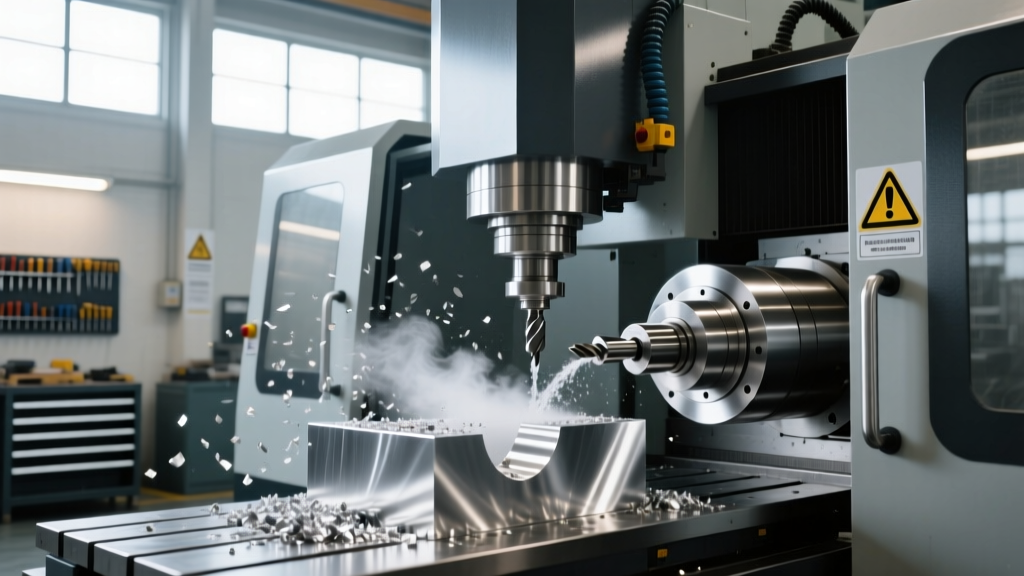
As coolant degrades, tramp oil (hydraulic and way lube leaks) and sub-micron metallic fines accumulate. Tramp oil forms a barrier that prevents the semi-synthetic or soluble oil emulsion from properly wetting the cutting zone. This loss of boundary lubrication increases friction, leading to two catastrophic tolerance-killers:
- Tool Deflection: Increased cutting forces push the tool away from the workpiece, ruining profile tolerances on deep-pocket milling and contouring operations.
- Thermal Expansion: Excess friction generates localized heat. Because dirty coolant loses its specific heat capacity and flow characteristics, it fails to extract this heat efficiently.
⚠️ The Thermal Expansion Math (Why Parts Fail CMM Inspection)
Consider machining a 400mm aerospace bulkhead from 6061-T6 aluminum on a Makino a61nx. The coefficient of thermal expansion for 6061-T6 is approximately 23 µm/m/°C. If poor coolant lubricity causes a localized 4°C temperature spike in the workpiece due to friction, the part grows by 36.8 µm (0.00145 inches). If your print tolerance is ±0.0005 inches, the part is instantly scrapped once it cools to room temperature and shrinks back out of spec. No amount of spindle probing or tool length compensation can fix a thermally unstable workpiece.
Budgeting for CNC Machine Coolant Recycling Systems
To protect part accuracy and eliminate the hidden costs of scrapped forgings, shops must invest in active fluid recycling. When evaluating CapEx for the 2026 fiscal year, you must match the recycling technology to your specific tolerance requirements and machine architecture.
1. Oleophilic Skimmers and Coalescers (Entry-Level)
CapEx Range: $2,500 – $7,500 per unit.
Best For: 3-axis VMCs running basic aluminum or mild steel with loose tolerances (±0.005 inches).
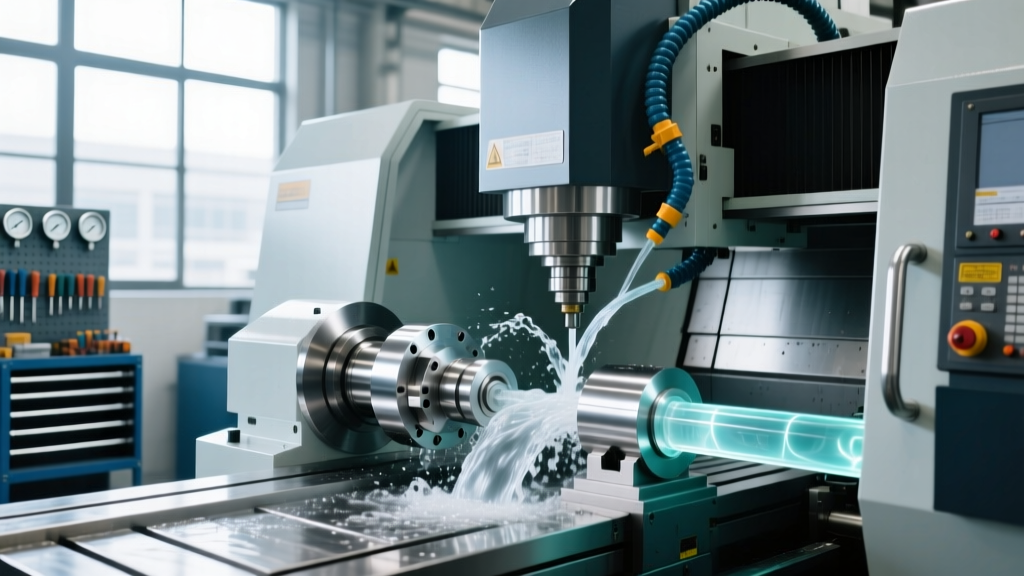
Limitations: These systems only remove floating tramp oil. They do not extract suspended metallic fines. If you are running 1000-PSI through-spindle coolant (TSC) on a Haas UMC-750, coalescers will not protect the rotary union seals from fine particulate abrasion, leading to catastrophic pressure drops and poor chip evacuation in deep-hole drilling.
2. Centrifugal Separators (Mid-Tier / High-Accuracy)
CapEx Range: $18,000 – $38,000 for a centralized 100-GPM system.
Best For: Multi-machine cells, 5-axis trunnions, and Swiss-type lathes holding sub-10-micron tolerances.
Advantage: Centrifuges spin fluid at high velocities, separating tramp oil and metallic fines down to 1–2 µm without using consumable filter media. By maintaining a pristine fluid matrix, you preserve the exact refractometer concentration and pH levels required for optimal lubricity, ensuring consistent cutting forces and thermal stability.
3. Vacuum Distillation / Evaporators (Zero-Liquid Discharge)
CapEx Range: $45,000 – $85,000+.
Best For: High-volume production shops facing extreme municipal disposal surcharges or strict EPA zero-liquid discharge (ZLD) mandates. While excellent for reducing haul-away costs, the primary ROI driver here is regulatory compliance rather than direct tolerance improvement.
ROI Breakdown: 15-Machine Shop Cost Analysis
The following matrix models the annual financial impact of ignoring coolant degradation versus implementing a centralized centrifugal cnc machine coolant recycling system in a 15-machine job shop (mix of 3-axis VMCs and 4-axis HMCs) running Master Fluid Solutions TRIM MicroSol 585XT.
| Cost Category | Status Quo (No Recycling) | With Centrifugal Recycling |
|---|---|---|
| Annual Coolant Purchases (Concentrate) | $48,500 | $14,200 |
| Hazardous Waste Haul-Away ($4.50/gal) | $31,000 | $2,500 |
| Scrap/Rework (Tolerance failures linked to MWF) | $72,000 | $8,500 |
| Machine Downtime (Sump cleanouts & seal repairs) | $18,000 | $3,000 |
| Total Annual Fluid-Related Costs | $169,500 | $28,200 |
CapEx Investment: $32,000 (Centralized Centrifuge + Piping)
Annual OpEx (Power/Maintenance): $4,500
Year 1 Net Savings: $104,800
Payback Period: 3.6 Months
As outlined by the EPA's Pollution Prevention guidelines, extending the life of metalworking fluids through active recycling drastically reduces the hazardous waste footprint, but the internal financial recovery from avoided scrap is where the true budget justification lies.
Implementation SOPs: Maintaining Fluid Chemistry for Accuracy
Purchasing a recycler is only half the battle. To guarantee that your CNC machines maintain their specified positioning accuracy (e.g., ISO 230-2 standards), the shop floor must adhere to strict fluid metrology protocols. According to OSHA's Metalworking Fluids standards, maintaining proper chemical balance is also critical for operator respiratory health, making this a dual-compliance necessity.
Daily and Weekly Metrology Checks
- Concentration (Refractometer): Test daily using a calibrated handheld refractometer (e.g., Vee Gee STX-1). Multiply the Brix reading by the fluid's specific multiplier (usually 1.0 to 1.5 for semi-synthetics). Target 6% to 8% concentration. Warning: Running below 5% destroys boundary lubrication, causing immediate tool deflection and poor surface finishes (Ra > 63 µin).
- pH Levels: Test twice weekly using a digital pH meter (not paper strips, which are inaccurate in dark, oily emulsions). Target pH 8.8 to 9.2. If pH drops below 8.5, anaerobic bacteria are consuming the emulsifiers. This breaks the fluid matrix, causing rust on machine ways and ruining part surface integrity.
- Tramp Oil Measurement: Use a split-tube centrifuge test kit weekly. Even with a recycler, if tramp oil exceeds 2% by volume, you must adjust the skimmer dwell time or check machine way-lube metering valves for over-lubrication.
The Temperature Stability Rule
For shops machining tight-tolerance aerospace or medical components, coolant temperature must be actively managed. High-accuracy CNC machines utilize spindle chillers and ballscrew cooling, but if the coolant sump itself fluctuates by more than ±2°C throughout the shift, the workpiece will experience cyclic thermal growth. Modern CNC machine coolant recycling systems can be integrated with inline heat exchangers tied to the shop's central chiller loop, locking the fluid temperature at exactly 20°C (68°F) to match the CMM inspection room environment. This single integration eliminates the 'morning vs. afternoon' tolerance drift that plagues unconditioned shops.
"Tolerance is not just a function of the machine's cast iron and linear encoders; it is a function of the chemical and thermal stability of the fluid separating the tool from the part. Budgeting for fluid purity is budgeting for accuracy."
Strategic Budget Allocation for 2026
When drafting your capital expenditure requests for the upcoming fiscal year, shift the narrative of cnc machine coolant recycling away from 'environmental compliance' and toward 'scrap mitigation and tolerance assurance.' By presenting the financial matrix above to stakeholders, you demonstrate that a $32,000 centrifugal system is not a sunk cost, but an active insurance policy against the $72,000+ annual bleed of scrapped, out-of-tolerance components. Prioritize centralized centrifugal systems for high-pressure TSC machines, enforce daily refractometer SOPs, and lock your fluid temperature to your CMM room to guarantee metrological success on every shift.