Ball Screw CNC Machine Maintenance for Aluminum Operations
Master ball screw CNC machine maintenance for aluminum operations. Learn chip management, lubrication specs, and backlash testing for 6061 and 7075 alloys.
The Metallurgical Reality of Aluminum Chips on Linear Drives
Machining aluminum presents a unique set of mechanical threats to the linear drive systems of a CNC mill or router. Unlike steel or titanium, which produce relatively predictable chip geometries, aluminum alloys generate debris that actively hunts for microscopic gaps in your machine's way covers. Understanding the specific chip morphology of your primary workpiece materials is the first step in preserving the precision of your ball screw CNC machine.
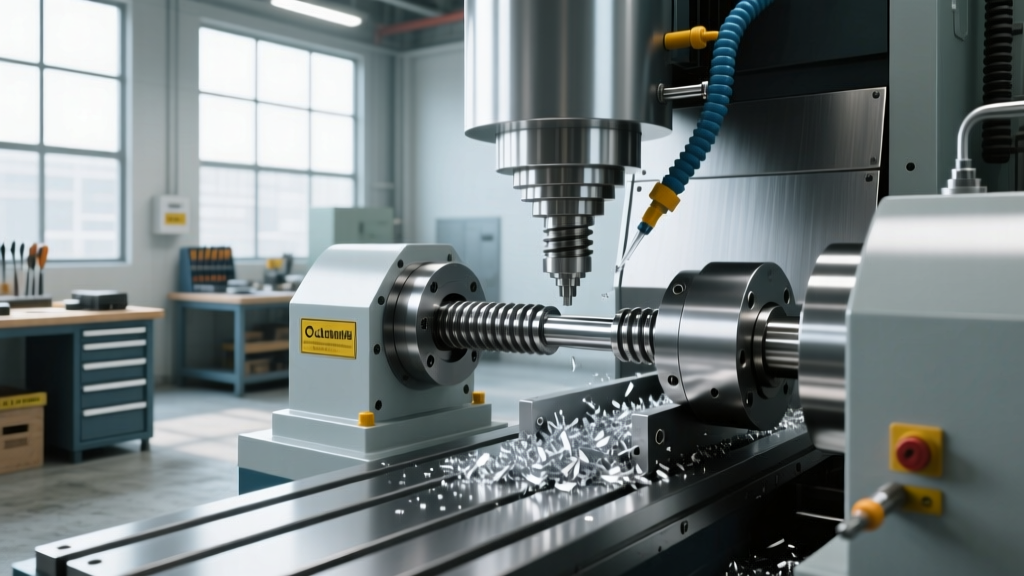
When machining 6061-T6 aluminum, the material tends to produce long, stringy, and gummy chips due to its silicon and magnesium content. These chips easily wrap around the wiper seals of the ball nut, eventually working their way past the primary seal and infiltrating the recirculation tubes. Conversely, aerospace-grade 7075-T6 produces shorter, harder, and highly abrasive chips. If 7075 chips breach the ball nut assembly, they mix with the lubricant to form a lapping compound that accelerates raceway wear and destroys preload tolerances in a matter of weeks.
Warning: High-Pressure Coolant Wash-DownsAluminum machining requires high-volume flood coolant to prevent built-up edge (BUE) on the cutting tool. However, aiming 1,000+ PSI coolant nozzles directly at the telescopic way covers forces emulsified coolant past the cover seals. This washes away the protective ISO VG 68 way oil, leading to boundary lubrication failure and catastrophic galling inside the ball nut.
Precision Lubrication Strategies for High-Speed Aluminum Routing
Because aluminum operations often demand rapid traverse rates exceeding 1,000 IPM (inches per minute) to maintain optimal surface finishes and chip evacuation, the lubrication delivery system must be flawless. The choice between oil-air mist and sealed grease depends entirely on your machine's RPM and duty cycle.
| Lubrication Type | Ideal Application | Recommended Fluid | Aluminum-Specific Risk |
|---|---|---|---|
| Oil-Air Mist System | High-speed VMCs, continuous production | Mobil Vactra Oil Heavy Medium (ISO VG 68) | Aluminum dust mixes with oil to form sludge; requires strict metering. |
| Sealed Grease (Factory Packed) | Routers, lower-speed heavy cuts | Kluber Isoflex NBU 15 (NLGI Grade 2) | Abrasive 7075 chips embedded in grease cause permanent brinelling. |
| Oil Flood / Drip | Legacy machines, low traverse rates | Way Oil with tackiness agents | High washout rate from aluminum flood coolants. |
For modern machining centers utilizing oil-air systems, verify that the metering valves are dispensing exactly 0.05cc to 0.1cc per shot. Over-lubrication in aluminum environments is just as dangerous as under-lubrication; excess oil acts as a magnet for airborne aluminum fines generated during high-speed spindle operation.
Step-by-Step Backlash and Preload Verification
Even with pristine way covers, the constant directional reversals inherent in 3D contouring aluminum parts will eventually degrade ball screw preload. You must verify backlash using a mechanical dial indicator, as relying solely on servo load meters will mask mechanical degradation until a crash occurs.
- Isolate the Axis: Move the X-axis table to the center of travel. Disable the servo brakes via the MDI panel to allow for mechanical settling.
- Mount the Indicator: Attach a 0.0001-inch resolution dial indicator to the spindle housing, with the plunger pressed against a precision ground steel block clamped to the table. Preload the indicator by 0.050 inches.
- Apply Bidirectional Force: Use a pry bar to apply exactly 50 lbs of force to the table in the positive X direction, then release. Note the indicator reading.
- Reverse and Measure: Apply 50 lbs of force in the negative X direction. The difference between the two readings is your mechanical backlash.
- Evaluate Tolerance: For precision aluminum aerospace components, backlash must remain below 0.0003 inches. If readings exceed 0.0005 inches, the ball nut preload has degraded, and the screw requires professional regreasing and shim adjustment.
Inspecting Telescopic Way Covers for Chip Intrusion
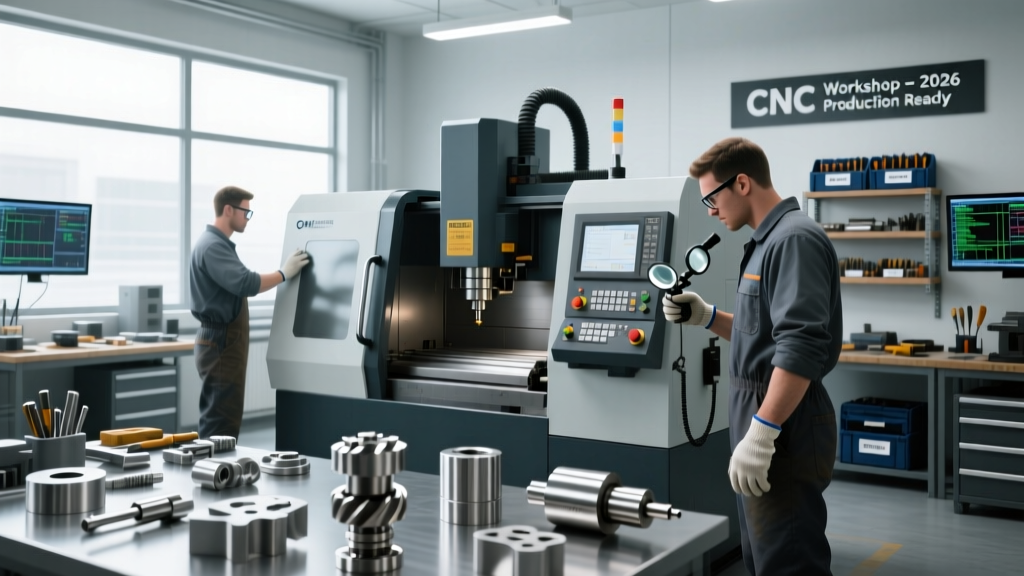
The telescopic steel covers protecting the ball screw CNC machine assemblies are the first line of defense. Aluminum chips are notorious for lodging in the overlapping seams of these covers. During your weekly maintenance window, manually jog the axis to full extension and inspect the wiper blades on each cover leaf. If the polyurethane wipers show scoring or if you can slide a 0.005-inch feeler gauge between the wiper and the steel sheet, the cover must be rebuilt immediately. A single compromised cover leaf will allow stringy 6061 chips to spool directly onto the ball screw shaft.
Comprehensive Preventative Maintenance Matrix
Implementing a rigid, data-driven maintenance schedule is non-negotiable for shops running high-volume aluminum operations. The following matrix is calibrated for machines operating 2+ shifts per day, cutting primarily non-ferrous alloys.
| Interval | Component Target | Action Required |
|---|---|---|
| Daily | Way Covers & Wipers | Blow off aluminum chips with low-pressure air (max 30 PSI) to prevent chip packing in the cover seams. Never use high-pressure air, which drives fines past the seals. |
| Weekly | Lube System Reservoir | Check ISO VG 68 oil levels. Inspect the translucent lube lines for air bubbles or milky discoloration, which indicates coolant cross-contamination. |
| Monthly | Ball Nut Wiper Seals | Visually inspect the external felt wipers on the ball nut. If saturated with aluminum paste, replace the wiper cartridges. |
| 6-Month | Mechanical Backlash | Perform the dial indicator backlash test on X, Y, and Z axes. Update CNC controller backlash compensation parameters if mechanical wear is under 0.0005 inches. |
| Annual | Full Axis Calibration | Utilize a laser interferometer to map pitch error and repeatability across the entire ball screw travel. Check motor coupling torque specs. |
Economic Thresholds: Rebuild vs. Replace
When a ball screw CNC machine suffers catastrophic chip intrusion, shop managers must decide between rebuilding the existing assembly or purchasing a replacement. According to linear motion engineering guidelines from THK and NSK, the decision hinges on the condition of the screw shaft raceways.
If the aluminum intrusion has only degraded the ball nut's internal recirculation tubes and wiper seals, a professional rebuild—costing between $1,200 and $2,500—is highly economical. The rebuild facility will disassemble the nut, replace the load-bearing balls with oversized matched sets to restore preload, and install new polyurethane seals.
However, if abrasive 7075 chips have scored the actual grooves of the screw shaft, a rebuild is impossible. The shaft must be replaced. A new precision-ground C3 or C5 class ball screw assembly for a standard 40-taper VMC typically ranges from $4,500 to $8,500, excluding the $1,500+ in labor required for installation and laser recalibration. To avoid this capital expenditure, investing $300 annually in premium bellows-style way covers—which offer 100% chip sealing compared to the 85% sealing of telescopic steel covers—is the most cost-effective insurance policy for aluminum-heavy machine shops.
For further technical specifications on linear motion sealing technologies and load ratings, reference the engineering catalogs provided by SKF Linear Motion, which detail the exact dynamic load capacities required to maintain rigidity during aggressive aluminum roughing cycles.