What Can You Do With a CNC Machine for Aluminum? Maintenance Guide
Discover what you can do with a CNC machine for aluminum by optimizing uptime. Expert maintenance schedules, coolant specs, and spindle service intervals.
The Reality of High-Speed Aluminum Machining
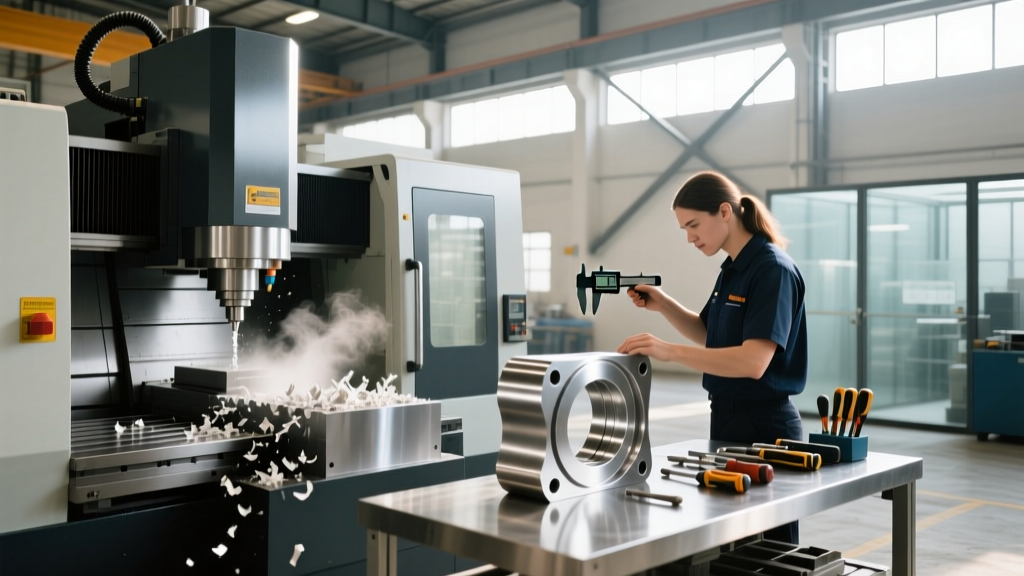
When shop floor managers ask what can you do with a CNC machine configured for high-volume aluminum milling, the true bottleneck is rarely the spindle's maximum RPM or the controller's processing speed. The limiting factor is almost always the rigor of the machine's maintenance schedule. Aluminum alloys like 6061-T6 and 7075-T6 allow for aggressive material removal rates (MRR), but they generate massive volumes of stringy chips and microscopic, highly conductive fines. If these fines bypass way covers and infiltrate the linear guideways or spindle encoder housing, they act as a lapping compound that destroys precision components in a matter of weeks.
⚠️ Critical Warning: Conductive FinesUnlike steel or titanium chips, aluminum dust is highly conductive and easily becomes statically charged. If your spindle air purge system fails or way wipers degrade, aluminum fines will infiltrate the spindle motor encoder cables, causing short circuits and catastrophic drive faults. Always verify air purge pressure daily.
The Daily 15-Minute Shift Protocol (Operator Level)
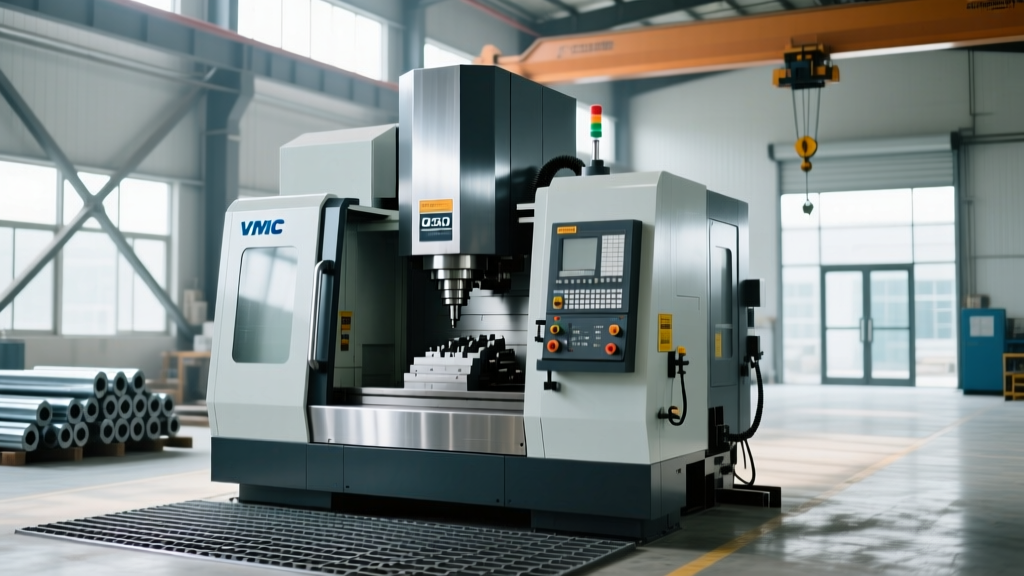
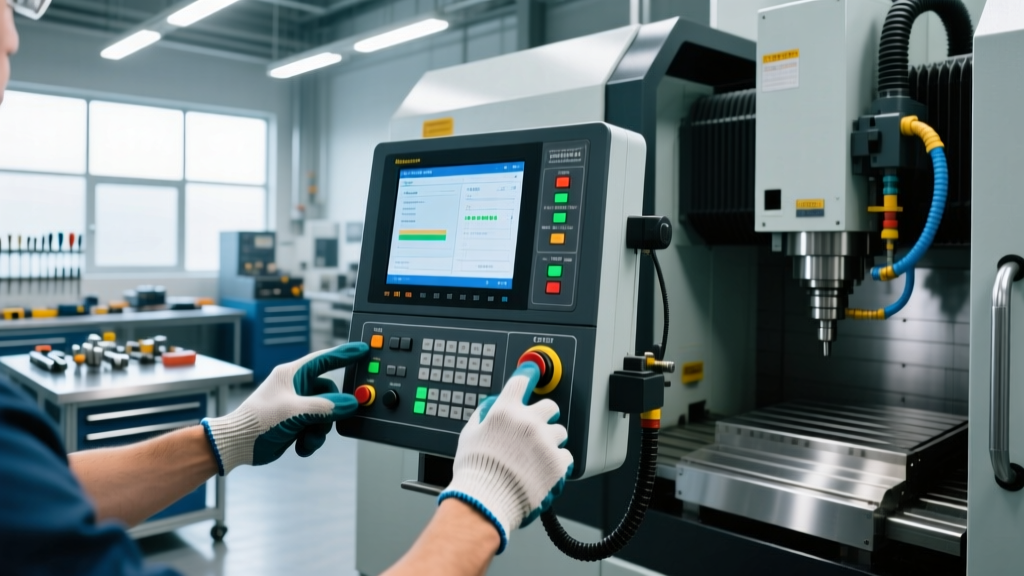
To maximize the capabilities of a vertical machining center (VMC) in an aluminum production environment, operators must execute a strict daily checklist before the first cycle starts. This is not about wiping down the enclosure; it is about verifying the fluid dynamics that protect the machine's kinematics.
1. Way Lubrication Verification
Aluminum machining requires high traverse rates, often exceeding 800 IPM (inches per minute). This demands a consistent hydrodynamic film between the linear guide blocks and the rails. Check the way lube reservoir level and verify the pump cycle time. For most standard VMCs, the system should inject ISO VG 68 way oil (such as Mobil Vactra No. 2) every 15 to 30 minutes of active cutting time. If the reservoir level does not drop by at least 0.5 liters over an 8-hour shift, the metering valves are likely clogged with aluminum sludge.
2. Coolant Refractometer Readings
Aluminum requires specific coolant chemistry to prevent Built-Up Edge (BUE) on cutting tools and to stop the material from oxidizing and staining post-machining. Take a sample from the coolant tank return zone, not the surface. Using a standard optical refractometer, target a concentration of 8.0% to 9.0% Brix for semi-synthetic fluids. If your specific fluid requires a correction factor (e.g., multiplying the reading by 1.5), apply it immediately and record the data in the machine's digital log.
Weekly & Monthly Preventative Service Intervals
Weekly and monthly tasks shift the focus from fluid levels to mechanical seal integrity and fluid chemistry management. According to guidelines published by the CDC National Institute for Occupational Safety and Health (NIOSH), maintaining metalworking fluid chemistry is critical not just for tool life, but for preventing the aerosolization of degraded fluid byproducts.
Tramp Oil Skimming and pH Balancing
Because aluminum does not rust, shops often neglect tramp oil removal, assuming the machine's internal components are protected. This is a fatal error. Tramp oil (hydraulic fluid and way oil leaking into the sump) coats the surface of the coolant, starving it of oxygen and promoting anaerobic bacteria growth. This bacteria drops the coolant pH below 8.0, which causes the coolant to become acidic. Acidic coolant will chemically attack 6061 aluminum, leaving permanent black or gray stains on finished parts. Run the tramp oil skimmer for at least 4 hours every weekend, and check the pH weekly to ensure it remains between 8.8 and 9.2.
Way Wiper and Polyurethane Seal Inspection
Inspect the primary way wipers on the X and Y axes. In aluminum machining, the wipers are subjected to sharp, needle-like chips. If the neoprene or polyurethane lips are torn or packed with compacted aluminum dust, the fines will be dragged directly under the linear guide blocks. Replace wiper inserts every 3 to 6 months in high-volume aluminum environments, regardless of visual wear, as the microscopic sealing lip degrades rapidly.
Bi-Annual Deep Maintenance (Technician Level)
Every six months, a certified technician must perform invasive checks to compensate for the thermal and mechanical stresses induced by heavy aluminum roughing cycles.
Ball Screw Backlash and Laser Interferometry
Heavy roughing of 7075-T6 aluminum generates significant axial thrust on the ball screws. Over time, this causes the thrust bearings to seat deeper into their housings, creating backlash. Use a dial indicator to check axial play at the center and extremes of the X and Y axes. Acceptable backlash for precision aluminum aerospace components is under 0.0003 inches (0.007 mm). If backlash exceeds 0.0005 inches, the ball screw nut must be preloaded, or the parameters in the CNC controller's backlash compensation table must be updated. For 5-axis machines, a full laser interferometry calibration is mandatory annually to maintain volumetric accuracy.
Spindle Taper and Toolholder Maintenance
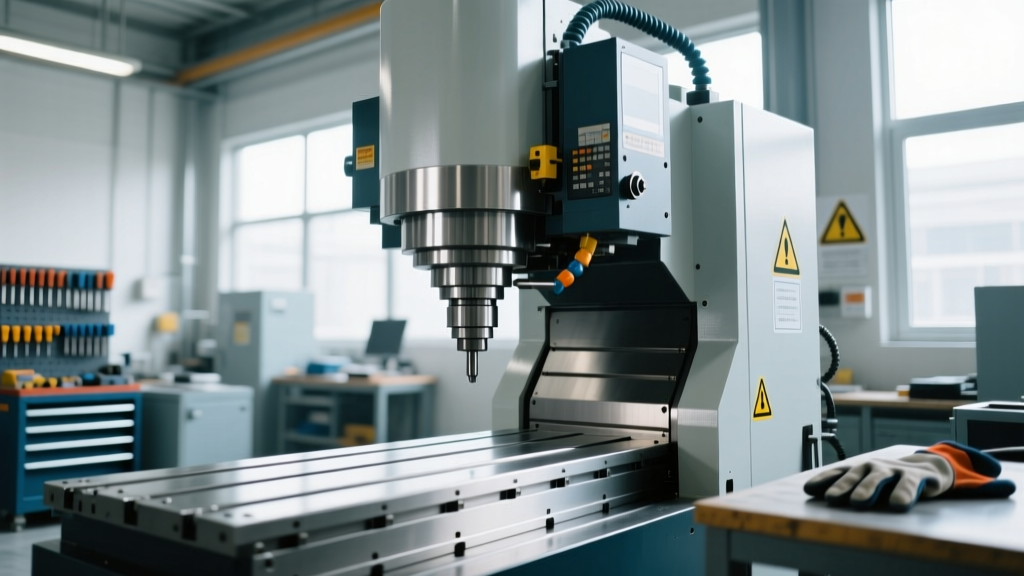
Aluminum chips frequently stick to the toolholder tapers (BT40, CAT40, or HSK63) due to the material's gummy nature. If a chip is trapped in the spindle taper, it causes tool runout, leading to poor surface finishes and premature endmill failure. Technicians must clean the spindle taper with a specialized taper cleaning tool and isopropyl alcohol, then inspect the pull-stud retention knobs. Replace any retention knobs showing galling or necking.
Alloy-Specific Machining & Maintenance Matrix
Different aluminum alloys behave differently under the cutter, requiring distinct maintenance and fluid management approaches.
| Alloy Grade | Primary Machining Characteristic | Coolant Requirement | Specific Maintenance Focus |
|---|---|---|---|
| 6061-T6 | Stringy, continuous chips; prone to BUE | Semi-synthetic, high lubricity (8-9% conc.) | Chip conveyor hinge-belt tensioning; daily way cover flushing. |
| 7075-T6 | Short, brittle chips; high cutting forces | Semi-synthetic, high cooling capacity | Ball screw thrust bearing inspection; spindle thermal growth monitoring. |
| A380 (Die Cast) | Abrasive (high silicon); generates fine dust | Synthetic fluid with extreme pressure (EP) additives | Way wiper replacement every 3 months; coolant filtration to 20 microns. |
Financial Impact of Deferred Maintenance in 2026
Skipping scheduled service intervals on an aluminum-dedicated VMC results in exponential cost increases. Based on current 2026 industrial supply chain pricing and technician labor rates, here is the financial reality of deferred maintenance on a standard 40-taper VMC:
- Preventative Way Wiper Replacement: $120 (Parts) + $85 (Labor) = $205 Total
- Deferred Consequence (Linear Guide Block Failure): $450 (Guide Block) + $1,200 (Labor & Way Cover Removal) + $800 (Laser Calibration Downtime) = $2,450 Total
- Preventative Spindle Air Purge Filter Swap: $35 (Filter) + $40 (Labor) = $75 Total
- Deferred Consequence (Encoder Short / Spindle Rebuild): $6,500 (Spindle Cartridge Exchange) + 3 Weeks Lead Time = $6,500+ Total
Troubleshooting Aluminum-Specific Defects
When part quality degrades, operators often blame the toolpath or the endmill. However, in aluminum machining, the root cause is frequently a maintenance failure.
Symptom: Severe Built-Up Edge (BUE) on Carbide Tooling
The Cause: The coolant concentration has dropped below 7%, or the coolant pH has fallen below 8.5, destroying the fluid's lubricity. Aluminum is welding itself to the cutting edge of the tool.
The Fix: Do not just add more coolant concentrate to the sump. The existing fluid is likely compromised by tramp oil. Skim the tramp oil, shock-treat the sump with a biocide if bacteria is present, and restore the concentration to 9.0% using a pre-mixed solution, not straight water and concentrate.
Symptom: Axis Stiction and Poor Surface Finish on Contouring
The Cause: Aluminum fines have mixed with the way oil to create an abrasive paste, causing the linear guide blocks to stick and slip (stiction) during slow, interpolated contouring moves.
The Fix: Flush the linear guideways with a solvent-based cleaner approved by the machine builder, replace the way oil metering valves to ensure proper flow volume, and install magnetic way-oil filters in the lube distribution lines to catch metallic particulates before they reach the rails.
Expert Insight: The capabilities of a CNC machine in aluminum are defined by its fluid management. According to standards outlined by OSHA regarding metalworking fluids, proper fluid maintenance not only extends the life of the machine's mechanical components but also ensures the air quality in the shop remains safe, as degraded fluids aerosolized during high-speed aluminum milling pose significant respiratory hazards. Treat your coolant system with the same respect as your spindle.
Ultimately, mastering aluminum machining requires shifting the operational mindset from reactive repairs to predictive fluid and mechanical management. By adhering to these precise intervals and chemistry targets, shops can run 24/7 lights-out aluminum production with minimal unplanned downtime.