2026 Guide: Multi-Function 3020 CNC Machine Mill-Turn
Discover the best multi-function 3020 CNC machine options for milling and turning in 2026. Compare specs, pricing, and upgrade paths for desktop manufacturing.
The Reality of Desktop Mill-Turn in 2026
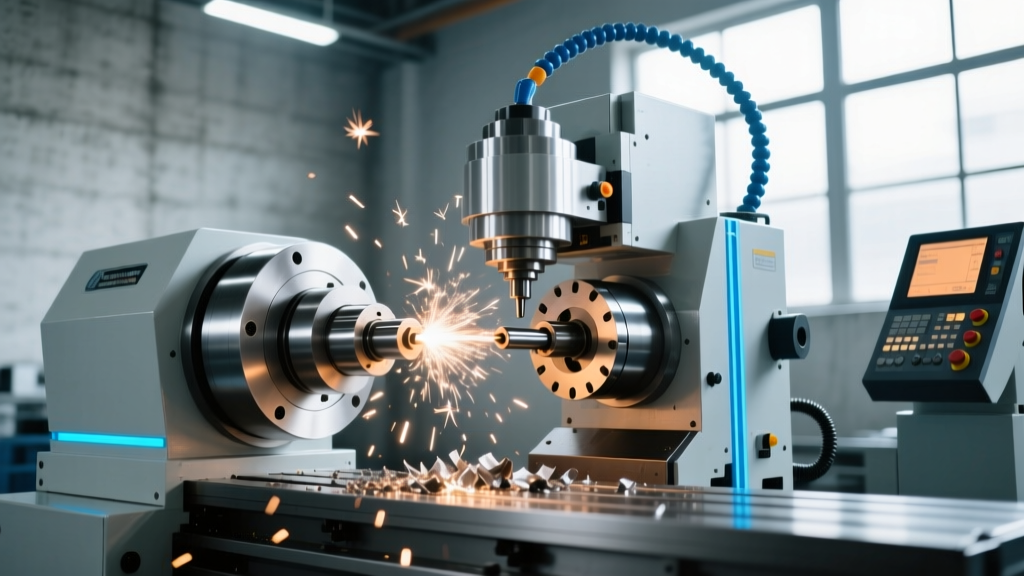
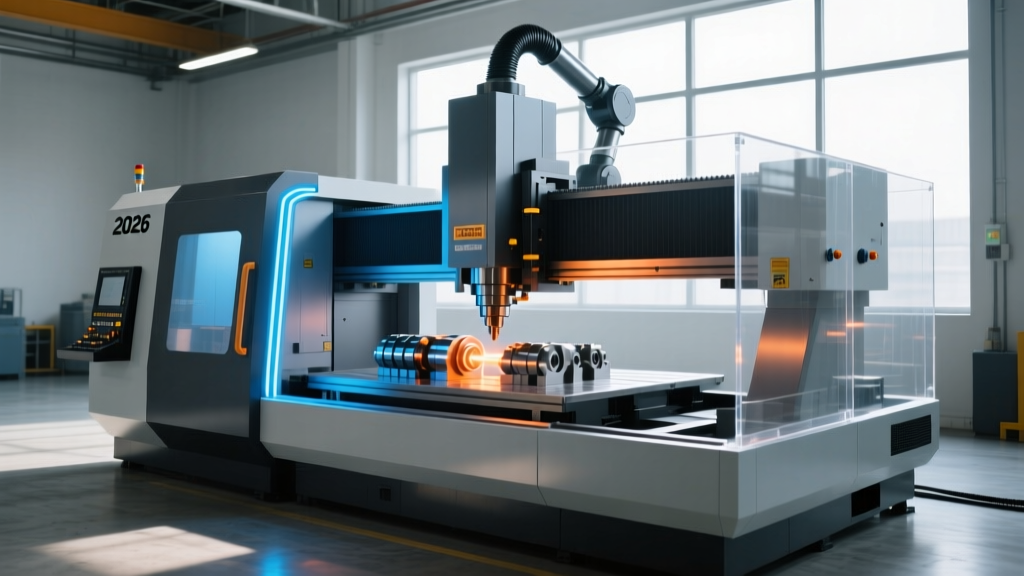
The 3020 CNC machine—defined by its 300mm x 200mm work envelope—has evolved from a basic PCB routing platform into a legitimate micro-manufacturing workhorse. In 2026, the demand for multi-function desktop machines capable of both milling and turning has surged, driven by the maker-economy and rapid prototyping sectors. However, the market is saturated with misleading 'combo' machines that promise mill-turn capabilities but deliver severe mechanical compromises.
True mill-turn operations require simultaneous or highly synchronized multi-axis movement, rigid tooling, and precise spindle indexing. Adapting a standard 3020 platform for turning requires strategic hardware upgrades and a deep understanding of CAM software limitations. This guide cuts through the marketing fluff to provide a rigorous engineering and purchasing framework for building or buying a 3020 CNC machine for mill-turn applications.
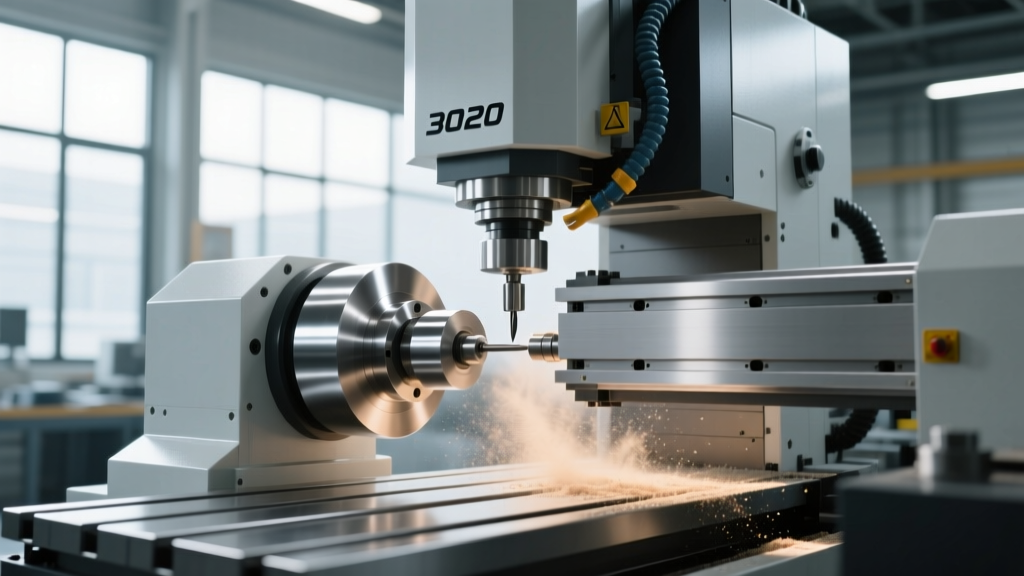
⚠️ Buyer Warning: The 'Combo Machine' TrapAvoid pre-packaged '3-in-1' desktop machines that mount a miniature lathe bed directly onto a router table. These configurations suffer from catastrophic Z-axis deflection and impossible work-holding geometries. A true 3020 mill-turn setup utilizes a high-precision 4th-axis rotary table mounted to the mill bed, or a dedicated modular swap-system, not a permanently affixed lathe spindle.
Core Mechanical Upgrades for True Mill-Turn
Out-of-the-box 3020 CNC machines typically feature open-loop NEMA 23 steppers, round linear rails, and 800W high-frequency spindles. To achieve the rigidity and synchronization required for turning operations on a mill bed, you must address three critical mechanical systems.
1. The 4th-Axis Rotary Table (The Turning Engine)
In a mill-turn setup, the 4th-axis rotary table acts as your lathe spindle. The type of drive mechanism inside this rotary table dictates your turning capabilities.
| Drive Type | Backlash / Precision | Max Turning RPM | Cost Range (2026) | Verdict for Mill-Turn |
|---|---|---|---|---|
| Standard Worm Gear | High (0.05mm+ over time) | 100 - 300 RPM | $250 - $450 | Poor. Requires constant backlash compensation; fails under interrupted cuts. |
| Harmonic Drive (Strain Wave) | Zero Backlash (<0.005mm) | 200 - 500 RPM | $800 - $1,400 | Excellent. Ideal for precision turning and live-tooling synchronization. |
| Direct Drive Servo (DD) | Zero Backlash (<0.002mm) | 800+ RPM | $2,500+ | Overkill for 3020 footprint, but required for high-speed production turning. |
2. Spindle and Tooling Constraints
Most 3020 CNC machines use ER11 collets. While adequate for 1/8-inch end mills, ER11 collets lack the clamping force and rigidity for turning operations, especially when subjected to radial cutting forces. Furthermore, cheap imported ER11 collets exhibit Total Indicated Runout (TIR) of 0.015mm or more. For mill-turn, you must upgrade to precision ER16 collets (if your spindle nose permits) or source Swiss-grade ER11 collets with a guaranteed TIR of <0.005mm. According to Sandvik Coromant's Turning Knowledge Base, toolholder runout directly correlates to premature insert wear and poor surface finish, a penalty magnified on micro-machines.
3. Motion Control and Synchronization
Standard GRBL controllers cannot handle the complex kinematics of mill-turn operations. You must upgrade to a 4-axis closed-loop controller running Mach4, EdingCNC, or a LinuxCNC-based system. Closed-loop steppers (like the iHSV57 series) are mandatory in 2026 to prevent lost steps during heavy facing or grooving operations on the rotary axis.
CAM and Post-Processor Synchronization
The hardware is only half the battle. Generating G-code for a 3020 mill-turn hybrid requires CAM software that understands non-standard kinematics. Standard 3-axis post-processors will crash your machine if they attempt to index the A-axis while the spindle is engaged.
- Autodesk Fusion 360: The industry standard for desktop manufacturing. You must utilize the 'Mill/Turn' workspace and configure a custom post-processor that maps your specific 4th-axis rotary limits. Autodesk Fusion Manufacturing provides robust toolpath generation, but you must manually verify the A-axis wrap angles to prevent cable tangling on small 3020 gantries.
- SprutCAM X: An excellent alternative for complex multi-axis micro-machining, offering superior collision detection for tight 3020 work envelopes.
When using a 3020 CNC for continuous turning (A-axis rotation exceeding 360 degrees), the spindle power and coolant cables will twist and snap. Install a compact slip-ring assembly (rated for your spindle's 3-phase VFD power) between the Z-axis plate and the spindle housing to allow infinite A-axis rotation without cable binding.
Material-Specific Machining Parameters for 3020 Platforms
A 3020 CNC machine lacks the mass to absorb high-frequency vibrations. Therefore, chip thinning and precise feed-rate control are critical. Below are verified starting parameters for mill-turn operations on a rigidly upgraded 3020 platform equipped with a 1.5kW BLDC spindle and harmonic drive rotary table.
| Material | Operation | Tooling | Spindle / Rotary RPM | Feed Rate | Depth of Cut (DOC) |
|---|---|---|---|---|---|
| 6061-T6 Aluminum | OD Turning (Rotary) | CCMT 060204 Carbide Insert | Rotary: 400 RPM | 0.08 mm/rev | 0.5 mm (Radial) |
| 303 Stainless Steel | Face Milling (Spindle) | 20mm 3-Flute Carbide | Spindle: 4,500 RPM | 800 mm/min | 0.25 mm (Axial) |
| Delrin (Acetal) | Live Tooling (Cross Drill) | 3mm Carbide Spot Drill | Spindle: 6,000 RPM | Peck: 0.5mm | N/A (Peck Cycle) |
Evaluating Pre-Built vs. Custom 3020 Mill-Turn Solutions
When sourcing equipment in 2026, buyers generally choose between modifying an existing 3020 router or investing in a purpose-built desktop mill-turn center. While companies like Tormach offer exceptional dedicated desktop lathes and mills, combining them requires significant floor space and capital. The 3020 hybrid approach remains the most space-efficient solution for micro-factories.
The Custom Build Route (High ROI, High Effort)
Purchasing a barebones cast-iron 3020 mill base (e.g., from Siegmund or heavily upgraded generic imports) and outfitting it with a harmonic drive 4th axis, EdingCNC controller, and 1.5kW servo spindle.
Total Cost: $2,800 - $3,500.
Best For: Machinists who understand kinematics, VFD tuning, and custom post-processor editing.
The Prosumer Pre-Built Route (Plug-and-Play)
Opting for specialized desktop platforms like the Bantam Tools Desktop CNC Milling Machine (with 4th-axis add-on) or the Pocket NC V2-10 (which offers true 5-axis trunnion capabilities in a similar footprint).
Total Cost: $4,500 - $6,000.
Best For: Engineering labs, jewelry manufacturers, and dental prototyping facilities where machine downtime costs more than the hardware premium.
Final Purchasing Framework
Do not buy a 3020 CNC machine for mill-turn operations based solely on the X and Y travel specifications. The deciding factors must be the Z-axis clearance (minimum 80mm required to accommodate a 4th-axis chuck and tooling), the controller's ability to output synchronized 4th-axis G-code (G93 inverse time feed rates), and the structural rigidity of the Y-axis carriage. If your application requires turning diameters larger than 50mm or materials harder than brass, bypass the 3020 footprint entirely and invest in a dedicated micro-lathe and 3-axis mill pair. For complex, small-diameter mill-turn parts in aluminum, plastics, and brass, a properly configured 3020 CNC machine remains an unmatched, high-ROI manufacturing asset in 2026.