Multi-Function CNC Machine Design: Mill-Turn Buying Guide
Explore multi-function CNC machine design for mill-turn centers. Compare specs, pricing, and top 2026 models for complex milling and turning operations.
The Shift to Done-in-One Manufacturing
The transition from sequential machining to done-in-one manufacturing has fundamentally altered how precision parts are produced. Evaluating multi-function cnc machine design requires looking beyond standard axis counts and spindle speeds. Modern mill-turn centers integrate the heavy-duty cutting torque of a lathe with the 5-axis contouring capabilities of a machining center, eliminating secondary setups and reducing cumulative tolerances. For manufacturing engineers and procurement teams in 2026, selecting the right multi-tasking platform means understanding the mechanical compromises and architectural advantages inherent in these hybrid systems.
Architecture Distinction: Turn-Mill vs. Mill-Turn
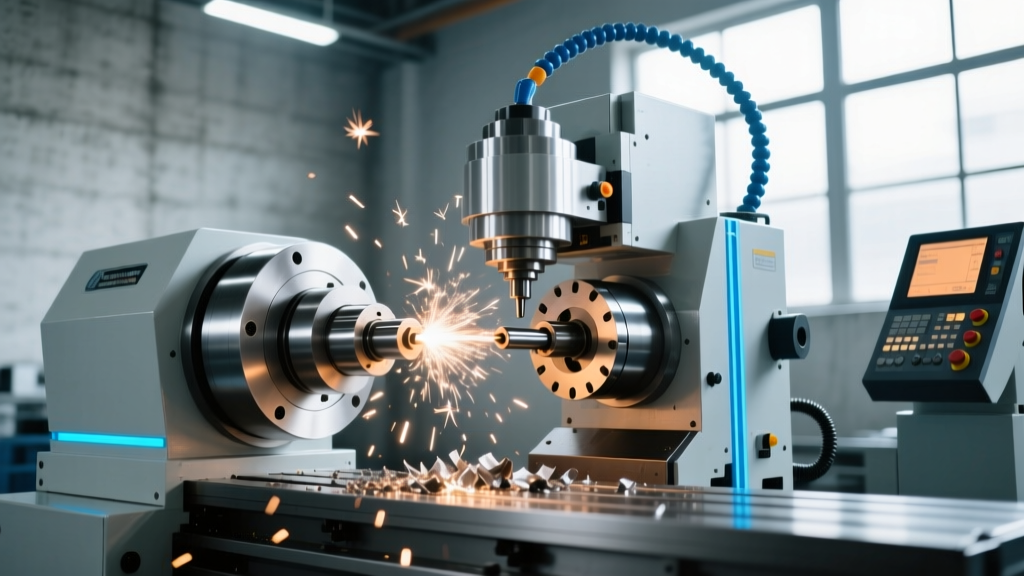
Turn-Mill Centers: Built on a lathe bed. They feature a main turning spindle and a sub-spindle, with a milling spindle mounted on a B-axis. Best for rotational parts requiring off-center holes, flats, and light-to-medium milling (e.g., automotive shafts, hydraulic fittings).
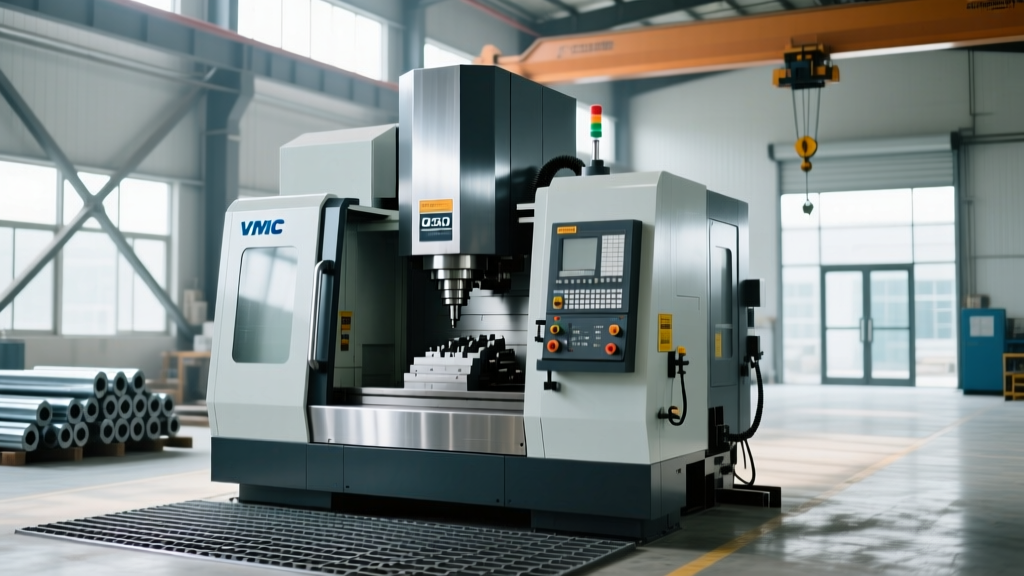
Mill-Turn Centers: Built on a heavier, often box-way or reinforced linear guide mill bed. They prioritize milling rigidity and large Y-axis travels while retaining turning capabilities. Best for complex structural aerospace components, impellers, and heavy prismatic parts that require turning operations.
2026 Mill-Turn Market: Pricing and Top Contenders
The capital expenditure for multi-tasking machinery remains high, but the return on investment via reduced work-in-process (WIP) and floor space consolidation justifies the cost for high-mix, high-value part families. Below is a comparative look at three dominant platforms in the mid-to-high tier market as of 2026.
| Model Series | Approx. Base Price (2026) | Turning Spindle (Max RPM) | Milling Spindle (Max RPM) | Tool Interface |
|---|---|---|---|---|
| Mazak INTEGREX i-200S | $450,000 - $550,000 | 5,000 RPM (Main) | 20,000 RPM | Capto C6 |
| DMG MORI NTX 2000 | $650,000 - $850,000 | 6,000 RPM (Main) | 20,000 RPM (compactMASTER) | Capto C6 / HSK-A63 |
| Okuma MULTUS U3000 | $380,000 - $480,000 | 5,000 RPM (Main) | 12,000 RPM | Capto C6 |
Note: Prices reflect base configurations. Adding high-pressure coolant systems, bar feeders, and gantry loaders typically increases the final landed cost by 25% to 40%.
Critical CNC Machine Design Specs for Complex Parts
When auditing a machine's capability for your specific part geometry, standard brochure specifications are insufficient. You must evaluate the underlying mechanical design of the axes and spindles.
1. B-Axis Spindle and Direct Drive Motors (DDM)
The B-axis controls the tilt of the milling spindle. Older or budget-friendly designs utilize worm-gear drives, which introduce backlash over time and require regular maintenance. In 2026, premium multi-function platforms utilize Direct Drive Motors (DDM) for the B-axis. DDM eliminates mechanical transmission components, providing zero-backlash contouring essential for 5-axis simultaneous milling of aerospace blisks and impellers. When requesting quotes, explicitly verify if the B-axis is DDM or worm-driven.
2. C-Axis Locking Torque and Milling Stability
The C-axis rotates the main spindle to position the part for milling. During heavy off-center milling operations, the C-axis must lock rigidly to prevent the part from shifting. Standard C-axis disc brakes offer 400 to 600 Nm of locking torque, which is adequate for aluminum and light steel milling. However, if your part family includes titanium, Inconel, or requires heavy interrupted cuts in stainless steel, you must specify a heavy-duty C-axis brake providing 1,200 Nm to 2,500 Nm of locking torque. Failure to do so will result in chatter, poor surface finishes, and accelerated spindle bearing wear.
3. Thermal Growth and Y-Axis Orthogonality
Multi-tasking machines generate immense heat from dual spindles and high-volume chip generation. Advanced cnc machine design incorporates thermal compensation algorithms and chilled ball screws. More importantly, evaluate the Y-axis construction. Many machines achieve Y-axis travel via a virtual axis (moving the X and Z axes simultaneously on an angle). True orthogonal Y-axis designs, where the axis moves on a dedicated physical plane, maintain superior geometric accuracy and surface finish during heavy side-milling operations. According to technical guidelines from Sandvik Coromant, maintaining strict tool center point (TCP) accuracy in multi-axis environments requires machines with robust thermal stability and physical Y-axis geometries to prevent scrap rates from climbing during long-cycle unmanned operations.
The Hidden Costs of Multi-Tasking Integration
The purchase price of the machine is only the beginning. Multi-function environments require specialized ancillary investments that are frequently omitted from initial ROI calculations.
- Premium Tooling Interfaces: Standard VDI turrets are obsolete for high-end mill-turn work. You will need Coromant Capto (C6 or C8) tooling. Budget $400 to $900 per basic holder, and upwards of $2,500 for heavy-duty driven milling adapters.
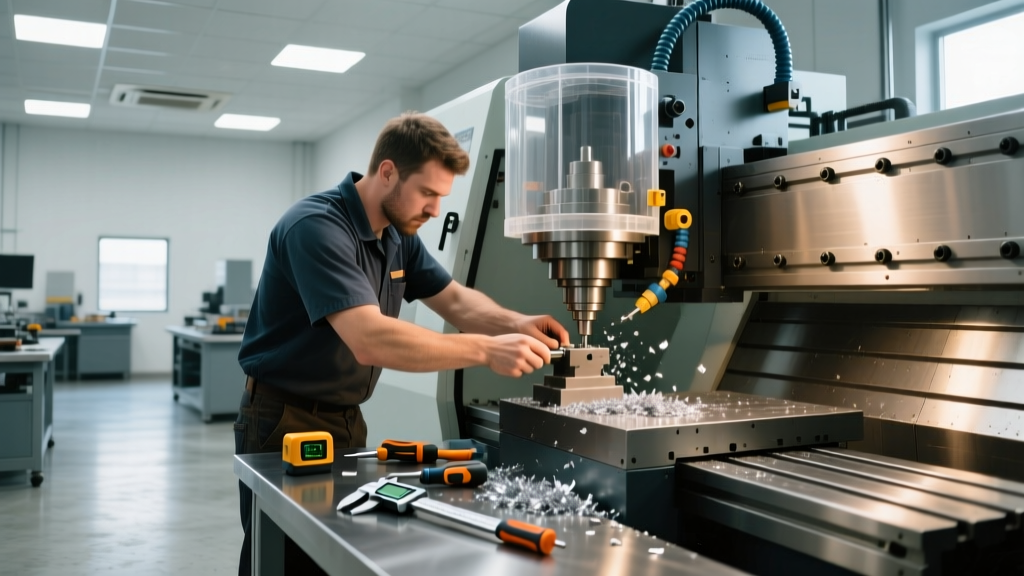
- CAM Software and Post-Processors: Programming a 5-axis mill-turn center requires advanced CAM modules (e.g., Mastercam Mill-Turn, Siemens NX, or GibbsCAM). Licensing these modules adds $15,000 to $30,000. Furthermore, custom post-processor generation and verification software (like VERICUT) are mandatory to prevent catastrophic B-axis collisions, adding another $10,000+ to the software budget.
- High-Pressure Coolant (HPC): To effectively break chips in deep-hole drilling and exotic alloys, 70 bar (1,000 psi) is the modern baseline, with 150 bar (2,200 psi) required for titanium. Upgrading the machine's pump and adding programmable nozzle manifolds costs between $25,000 and $45,000.
- Chip Management: Mill-turn centers produce a mix of stringy turning chips and fine milling chips. Standard hinge-belt conveyors often jam with this mixture. Specify a scraper-belt or brush-style conveyor system designed for mixed chip morphologies.
Decision Matrix: Do You Actually Need a Mill-Turn?
Not every shop benefits from multi-tasking technology. If your parts are simple rotational geometries, a standard lathe with live tooling is vastly more economical. Use the framework below to determine if a full mill-turn investment is justified.
| Evaluation Criteria | Mill-Turn Center | Separate Lathe + 3-Axis Mill |
|---|---|---|
| Part Geometry | Complex, non-concentric features, deep off-center pockets, 5-axis contouring on rotational blanks. | Simple concentric turning, basic cross-drilling, standard prismatic milling. |
| Setup Time Tolerance | High mix/low volume. Reduces setup from 4 hours to 20 minutes. | High volume/low mix. Setup time is amortized over thousands of parts. |
| Tolerance Stacking | Critical. Features machined in a single chucking eliminate secondary setup datum errors. | Standard. Secondary setups introduce 0.001" - 0.003" runout risks. |
| Operator Skill Level | Requires advanced CAM programmers and highly skilled setup technicians. | Can be operated by separate, specialized lathe and mill operators. |
Automation and Unmanned Machining Readiness
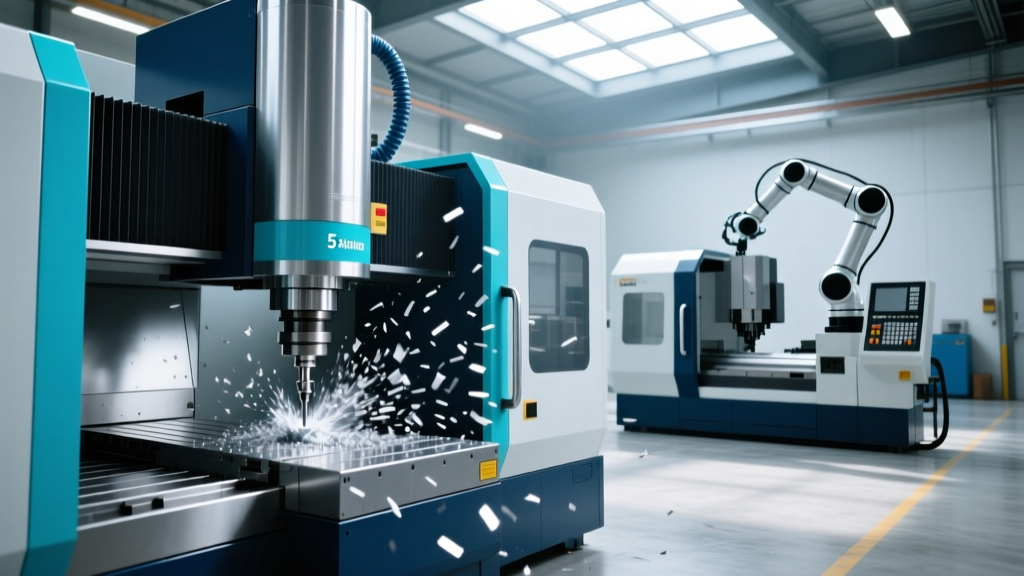
In 2026, the true ROI of a multi-function platform is unlocked through lights-out manufacturing. When specifying your machine, ensure the cnc machine design supports seamless automation integration. Look for standardized interfaces like MTConnect or OPC UA for real-time telemetry. If you plan to use a gantry loader or a 6-axis robotic arm for part handling, the machine must be ordered with the necessary automated door actuators, internal part wash-down nozzles (to prevent chip interference with robotic grippers), and macro-ready CNC controls (such as Fanuc 31i-B5 or Siemens Sinumerik ONE) capable of handling complex handshake protocols with external PLCs.
Final Procurement Checklist
Before signing the purchase order, verify these specific mechanical and software deliverables with the OEM:
- Confirm B-axis utilizes Direct Drive Motor (DDM) technology, not worm gear.
- Verify C-axis locking torque exceeds 1,000 Nm for heavy milling applications.
- Ensure the control includes native 5-axis TCP (Tool Center Point) management and turning cycles.
- Specify 70 bar (minimum) high-pressure coolant with programmable multi-nozzle output.
- Require a physical, orthogonal Y-axis if tight-tolerance side milling is a primary operation.