2 Axis CNC Machine Maintenance Schedule for Aluminum Turning
Master your 2 axis CNC machine maintenance schedule for aluminum turning. Learn chip management, coolant TRIM levels, and spindle care for high-RPM operations.
Machining aluminum on a 2 axis CNC machine presents a unique set of tribological and mechanical challenges that differ drastically from steel or titanium operations. While aluminum is relatively soft and easy to cut, its ductility, high thermal conductivity, and the abrasive nature of aluminum oxide demand a highly specific maintenance protocol. When running high-volume 6061-T6 or 7075-T651 bar stock on a 2-axis CNC turning center (such as a Haas ST-10 or DMG MORI NLX series), standard factory maintenance schedules are often insufficient to prevent premature component wear.
This guide details the exact maintenance intervals, coolant chemistry parameters, and mechanical inspections required to keep a 2 axis CNC machine running at peak precision during dedicated aluminum machining operations.
The Hidden Threat of Aluminum Oxide Fines
The most pervasive enemy of a 2 axis CNC machine dedicated to aluminum is not the visible stringy chips, but the microscopic aluminum oxide (Al2O3) dust generated during high-speed turning. Aluminum oxide is the exact compound used to manufacture grinding wheels and sandpaper. When these microscopic fines bypass the way cover wipers and mix with the machine's ISO 68 way lube (such as Mobil Vactra No. 2), they create a highly abrasive lapping slurry.
This slurry infiltrates the linear guide blocks and ball screw nuts, accelerating wear by up to 400% compared to steel machining environments. Replacing a single THK or NSK linear guide block on a standard mid-sized turning center costs between $450 and $650 per block, plus 4 to 6 hours of machine downtime and realignment labor.
⚠️ Critical Maintenance Warning: Never use standard high-pressure compressed air to blow down the casting of a 2 axis CNC machine after machining aluminum. The air pressure forces abrasive aluminum fines directly into the labyrinth seals of the spindle and the wiper seals of the linear guides. Always use a dedicated industrial vacuum with a HEPA filter or a soft-bristle brush to remove dry aluminum dust from the way covers.Daily Maintenance Protocol for Aluminum Turning
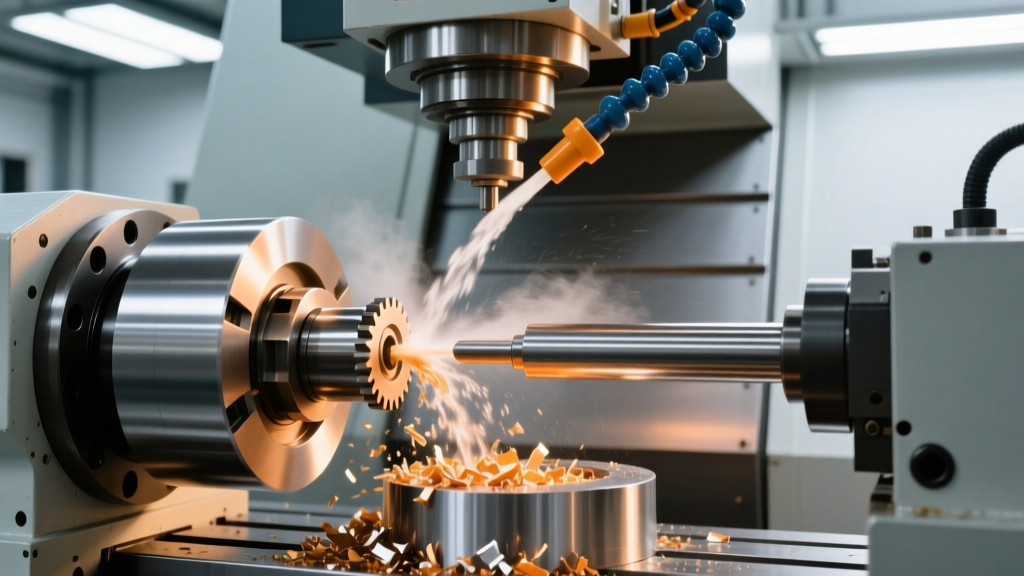
Because aluminum generates high volumes of continuous, ductile chips—especially when using uncoated or highly polished carbide inserts—daily chip management is non-negotiable. Stringy 'bird's nest' chips will wrap around the spindle nose, jam the chip conveyor auger, and eventually stall the conveyor motor, tripping the thermal overload relay.
- Spindle Nose & Chuck Clearance (Every 4 Hours): Stop the machine and clear wrapped chips from the chuck jaws and spindle nose. Accumulated chips here cause clamping pressure loss and part runout.
- Chip Conveyor Auger (End of Shift): Inspect the hinge-belt or auger-style conveyor. Aluminum chips tend to pack tightly in the auger trough. Use a brass scraper to clear the trough; never use steel scrapers which can damage the conveyor belt links.
- Way Cover Wipers (Start of Shift): Inspect the polyurethane wiper blades on the X and Z-axis way covers. If the wipers are torn or hardened by coolant exposure, aluminum fines will be dragged under the covers during rapid traverses.
- Coolant Skimmer (Daily): Aluminum machining requires high concentrations of tramp oil to be skimmed daily to prevent anaerobic bacteria growth, which thrives in the warm, high-concentration coolant environments needed for aluminum.
Coolant Chemistry: The 8-10% Rule for 6061 and 7075 Alloys
Standard coolant maintenance is inadequate for aluminum. To prevent Built-Up Edge (BUE) on carbide inserts and achieve mirror-like surface finishes, the coolant must provide exceptional boundary lubrication. Furthermore, aluminum is highly reactive to pH extremes.
For a 2 axis CNC machine running aluminum, you must use a high-lubricity semi-synthetic or soluble oil coolant (such as TRIM MicroSol 585XT or Master Fluid Solutions' CIMCOOL). You must maintain the following parameters:
| Parameter | Target Range | Consequence of Deviation |
|---|---|---|
| Concentration | 8.0% - 10.0% | Below 8%: Poor tool life, BUE, staining. Above 10%: Foaming, high fluid costs, sticky residue on machine seals. |
| pH Level | 8.5 - 9.2 | Below 8.0: Aluminum oxidation (white powder staining on parts). Above 9.5: Operator skin irritation, degradation of machine way covers and rubber seals. |
| Water Hardness | 50 - 150 ppm | Hard water causes calcium soaps to form, leaving abrasive scale on the machine ways and clogging coolant nozzle orifices. |
Test the concentration daily using a calibrated optical refractometer. Remember to multiply the refractometer reading by the specific coolant manufacturer's multiplier factor. Check pH levels weekly using a digital pH meter, as litmus paper is entirely inaccurate in the alkaline environment of metalworking fluids.
Spindle Bearing and Turret Curvic Coupling Care
Aluminum turning requires high surface speeds, meaning the spindle on a 2 axis CNC machine is frequently operating between 4,000 and 6,000 RPM for extended periods. This generates significant thermal growth and places high centrifugal stress on the spindle bearings.
Spindle Grease Purging
Most modern turning centers utilize grease-packed ceramic hybrid bearings for the spindle. Under high-RPM aluminum cutting, the grease degrades and migrates. According to Haas Automation Service Manuals, spindles operating in high-duty cycles require periodic grease purging and replenishment. If your machine features an oil-air spindle lubrication system, verify the metering valves are delivering exactly 0.05cc to 0.1cc of oil per cycle. Over-lubrication causes churning and rapid spindle overheating, while under-lubrication leads to catastrophic bearing seizure.
Turret Curvic Coupling Cleaning
The indexing turret on a 2-axis CNC lathe relies on a Hirth or curvic coupling to lock tools into precise centerline alignment. Aluminum fines are notorious for migrating into the turret housing. If even a single aluminum chip becomes trapped between the coupling teeth during a tool index, the turret will fail to clamp fully. This results in a microscopic centerline shift, causing the machine to cut tapers or fail tight-tolerance boring operations. Purge the turret coupling with a low-pressure solvent flush every 500 operating hours.
'The most expensive mistake a shop can make is treating aluminum like mild steel. Aluminum oxide is a lapping compound. If you aren't actively managing your way wipers and coolant filtration, you are slowly grinding your own linear guides into scrap.' — Senior Application Engineer, DMG MORI
Comprehensive Service Matrix for Aluminum Operations
The following schedule overrides standard factory baselines, specifically accounting for the abrasive and ductile nature of aluminum machining. For deeper insights into general CNC tribology, refer to the Machinery Lubrication CNC Maintenance Guidelines.
| Interval | Component | Specific Action for Aluminum | Est. Time |
|---|---|---|---|
| Daily | Coolant Sump | Skim tramp oil; check refractometer (target 8-10%). | 15 mins |
| Weekly | Way Covers & Wipers | Inspect polyurethane wipers for tearing; clean fines from bellows. | 30 mins |
| Monthly | Chip Conveyor | Drain trough; inspect auger flighting for aluminum wrapping damage. | 45 mins |
| 500 Hours | Turret Coupling | Flush curvic coupling with solvent to remove embedded Al2O3 fines. | 1 hour |
| 1000 Hours | Way Lube System | Drain and flush the ISO 68 way lube reservoir to remove suspended aluminum sludge; replace filter element. | 2 hours |
Troubleshooting Common Aluminum-Induced Faults
When operating a 2 axis CNC machine exclusively on aluminum, operators must be trained to recognize the early symptoms of aluminum-specific failures. Use this diagnostic framework to address issues before they result in scrapped batches or machine crashes.
- Symptom: Sudden Drop in Surface Finish Quality (Chatter Marks)
- Cause 1: Built-Up Edge (BUE) on the insert due to low coolant concentration. Fix: Increase concentration to 10% and verify nozzle pressure is exceeding 150 PSI to break the chip.
- Cause 2: Aluminum fines packed under the turret base, preventing rigid clamping. Fix: Clean the turret base and curvic coupling.
- Symptom: X-Axis Following Error or Servo Alarms
- Cause: Aluminum oxide slurry has scored the X-axis linear guide, increasing static friction and stiction. Fix: Inspect the way wipers immediately. If scoring is visible on the rail, the linear block must be replaced, and the way lube system must be flushed.
- Symptom: Coolant Nozzle Clogging and Pressure Drops
- Cause: Fine aluminum particles bypassing the paper band filter. Fix: Upgrade to a 10-micron paper band filter or install a centrifugal separator specifically designed for non-ferrous fines. Standard 25-micron filters will not catch aluminum oxide dust.
Optimizing Tooling for Reduced Maintenance Burden
Maintenance schedules are heavily influenced by the tooling selected. According to the Sandvik Coromant Turning Technical Guide, using uncoated carbide inserts with a highly polished rake face (such as CVD diamond or specialized PCD grades for high-silicon aluminum) drastically reduces cutting forces and heat generation. This not only extends tool life but reduces the thermal load on the spindle bearings and minimizes the generation of microscopic aluminum oxide dust, directly extending the intervals between way lube flushes and linear guide replacements.
By treating aluminum not as a 'soft, easy' material, but as a highly reactive and abrasive workpiece, shops can optimize their 2 axis CNC machine maintenance schedules to achieve thousands of hours of uninterrupted, high-precision turning.