CNC Knife Cutting Machine Cost Analysis & 2026 Budget Guide
Comprehensive 2026 cost analysis for CNC knife cutting machines. Break down CapEx, OpEx, blade consumables, and calculate ROI against die cutting.
Executive Data Highlight: 2026 Digital Cutting Economics
- Average Payback Period: 14–22 months for mid-volume fabricators transitioning from manual die cutting.
- Material Yield Increase: 12%–18% savings via dynamic nesting algorithms on high-cost composites (e.g., carbon fiber, aramid).
- Tooling Cost Reduction: $0 per SKU (eliminates $500–$1,500 physical die costs per design).
- Primary OpEx Driver: Vacuum pump energy consumption and oscillating blade degradation on abrasive textiles.
Procuring a CNC knife cutting machine—often categorized as a digital flatbed cutter or oscillating knife system—requires a financial analysis that extends far beyond the manufacturer's base sticker price. For facilities processing technical textiles, gaskets, foams, and composite materials, the total cost of ownership (TCO) is heavily influenced by vacuum infrastructure, material handling automation, and consumable wear rates. This 2026 budget guide dissects the capital and operational expenditures required to deploy a digital cutting cell, providing a framework for accurate ROI calculation.
Capital Expenditure (CapEx) Breakdown by Machine Tier
The market for flatbed knife cutters is segmented into three distinct tiers based on drive mechanics, accuracy tolerances, and material handling capabilities. Pricing below reflects 2026 market averages for a standard 5x10 ft (1.5x3.0 m) working area.
| Tier & Representative Brands | CapEx Range | Drive & Accuracy Specs | Best Application |
|---|---|---|---|
| Entry-Level (Jinan Style, Oshima, generic imports) | $25,000 – $55,000 | Stepper motors, belt drives. ±0.5mm tolerance. | Low-volume packaging, basic foam, non-critical textiles. |
| Mid-Range (Bullzeye, AGA, entry Eastman) | $75,000 – $130,000 | Servo motors, rack-and-pinion. ±0.2mm tolerance. | Automotive interiors, mid-volume apparel, gaskets. |
| Industrial (Zünd G3, Esko Kongsberg C) | $160,000 – $320,000+ | Linear motors, magnetic encoders. ±0.1mm tolerance. | Aerospace composites, high-speed roll-to-roll, 24/7 operation. |
Operational Costs (OpEx): Consumables and Energy
Unlike laser cutters that require expensive gas assist and lens replacements, or waterjets that demand high-pressure pump seals and abrasive garnet, CNC knife cutting machines rely primarily on mechanical consumables and electrical draw.
Blade Metallurgy and Lifespan
Oscillating knives cut via a high-frequency vertical stroke (up to 20,000 RPM), which generates immense friction. Blade life is entirely dependent on the abrasiveness of the material being processed.
- Standard Carbon Steel / Cotton: Tungsten carbide oscillating blades (Cost: $18–$25 each) will yield 150–200 hours of cutting time.
- Aramid (Kevlar) / Carbon Fiber: These highly abrasive technical fibers degrade standard carbide edges in 20–40 hours. Budget for diamond-coated or specialized geometries (Cost: $45–$80 each) to extend life by 30%.
- Tangential Drag Knives: Used for vinyl and thin magnetic sheets. These experience less vertical stress but require frequent tip replacement ($12–$15 each) every 80 hours to maintain tight corner radii.
Sacrificial Cutting Mats
The knife must penetrate slightly past the material to ensure a clean through-cut, scoring the sacrificial mat beneath. Polyurethane and polypropylene mats cost between $150 and $350 per 4x8 ft sheet. In a 3-shift operation, expect to replace the matting every 4 to 6 months, adding roughly $1,200 annually to the OpEx ledger.
Vacuum Pump Energy Draw
Holding porous materials (like woven fabrics or open-cell foams) requires a high-volume vacuum pump, typically a rotary vane system like the Becker U4.400. These units draw between 4.0 kW and 5.5 kW. At an industrial rate of $0.16/kWh, running the pump for an 8-hour shift costs approximately $6.40 per day, or $1,664 annually. Facilities utilizing multi-zone vacuum tables with automated solenoid valves can reduce this cost by 25% by only pulling vacuum on the active cutting zone.
⚠️ Hidden Cost Alert: Dust Extraction & ComplianceCutting composite materials, fiberglass, and certain treated textiles generates hazardous airborne particulates. According to OSHA Airborne Contaminants Standards, facilities must maintain specific permissible exposure limits (PELs). Budget an additional $15,000–$25,000 for a HEPA-filtered downdraft extraction system integrated into the vacuum table to avoid regulatory fines and protect worker health.
Calculating ROI: Digital Cutting vs. Traditional Die Cutting
The most common financial justification for a CNC knife cutting machine is the elimination of physical tooling. Traditional steel-rule die cutting requires the fabrication of a custom wooden or steel die for every unique SKU.
"The breakeven point for digital versus analog tooling typically occurs when a specific part design requires fewer than 150 units per production run, or when design iteration cycles are shorter than 3 weeks."
— Adapted from NIST Manufacturing Extension Partnership (MEP) automation ROI frameworks.
Consider a facility producing custom foam gaskets. A steel-rule die costs $800 and takes 5 days to procure. If the facility processes 50 unique, low-volume SKUs per month, die costs alone consume $40,000 monthly. A $120,000 mid-range CNC knife system eliminates this tooling cost entirely, yielding a hard ROI payback in just 3.5 months, exclusive of the labor savings from digital file import versus physical die alignment.
Budgeting for Software and Nesting Algorithms
The hardware is only as efficient as the software driving it. Basic machines utilize generic CAD/CAM post-processors, but high-volume shops require advanced dynamic nesting software (e.g., SigmaNEST, Esko Cut, or proprietary OEM suites).
- Perpetual Licensing: $8,000 – $15,000 upfront, plus 18% annual maintenance fees for updates.
- SaaS / Subscription Models: $300 – $600 per month. This is increasingly standard in 2026, allowing shops to scale licenses during peak seasons.
Advanced nesting algorithms rotate and interlock irregular patterns (like apparel pieces or leather hides with defect avoidance) to maximize material utilization. A 5% improvement in material yield on $50,000 worth of monthly carbon fiber prepreg translates to $30,000 in annual savings, effectively paying for the software subscription in the first month.
Strategic Procurement Checklist
Before issuing a purchase order, ensure your budget accounts for these frequently overlooked integration requirements:
- Material Handling Automation: Manually loading 5x10 ft sheets of heavy rubber or composite takes 2–3 minutes. Over a year, this results in hundreds of hours of lost spindle time. Budget $35,000–$60,000 for a conveyorized roll-feed or automated sheet loader if cycle times are critical.
- Power Infrastructure: Industrial vacuum pumps and servo drives often require 3-phase 400V/480V power. Upgrading a standard 220V single-phase shop panel can cost $5,000–$12,000.
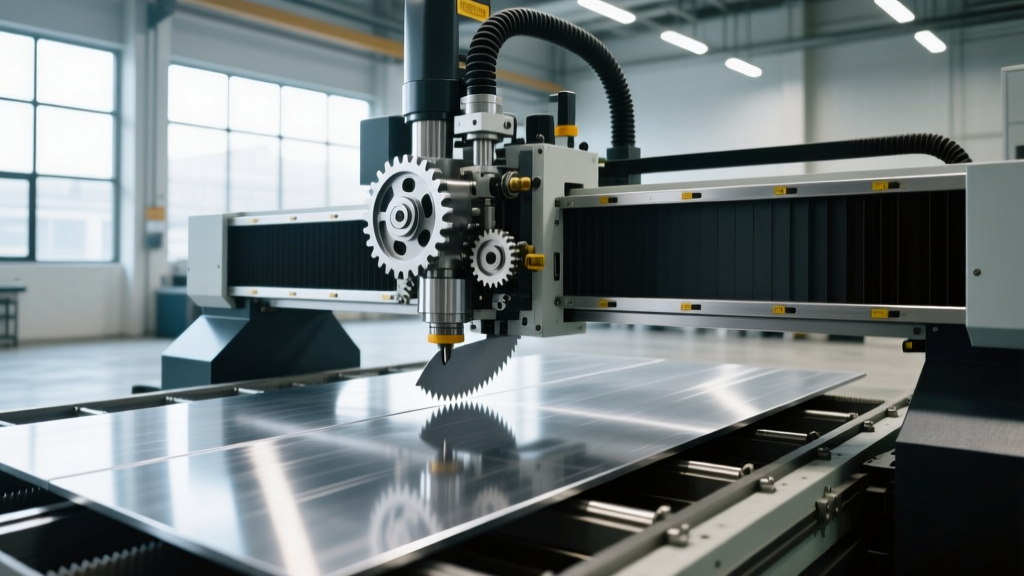
- Preventative Maintenance: Linear rails and rack-and-pinion gears require automated lubrication systems or strict manual greasing schedules (using specialized greases like Kluber isoflex) to prevent premature bearing failure, which can cost upwards of $8,000 to repair out of warranty.
By mapping out the complete CapEx, OpEx, and integration costs outlined above, manufacturing engineers and procurement managers can accurately forecast the true financial impact of integrating a CNC knife cutting machine into their production workflow, ensuring a profitable transition to digital fabrication.