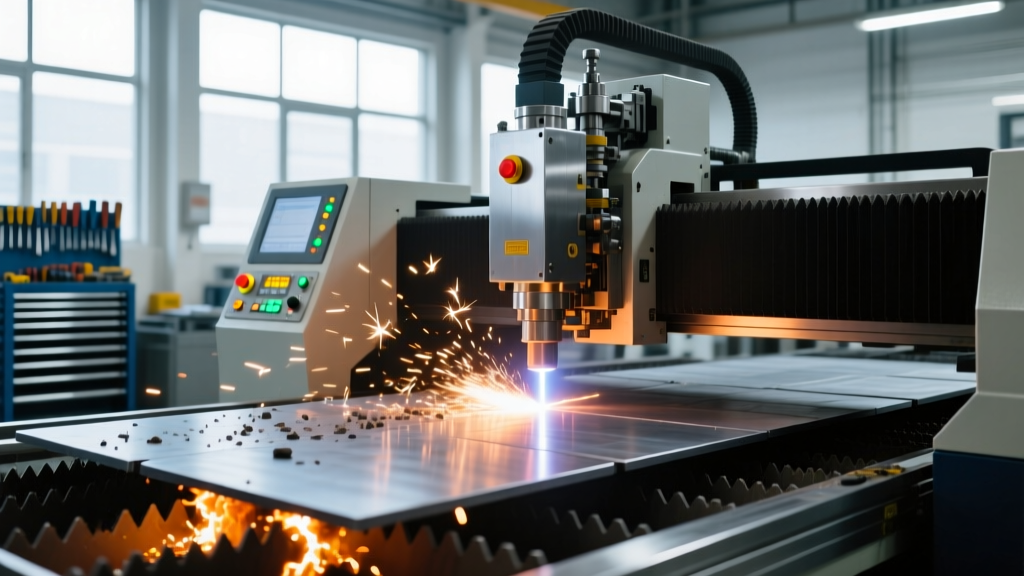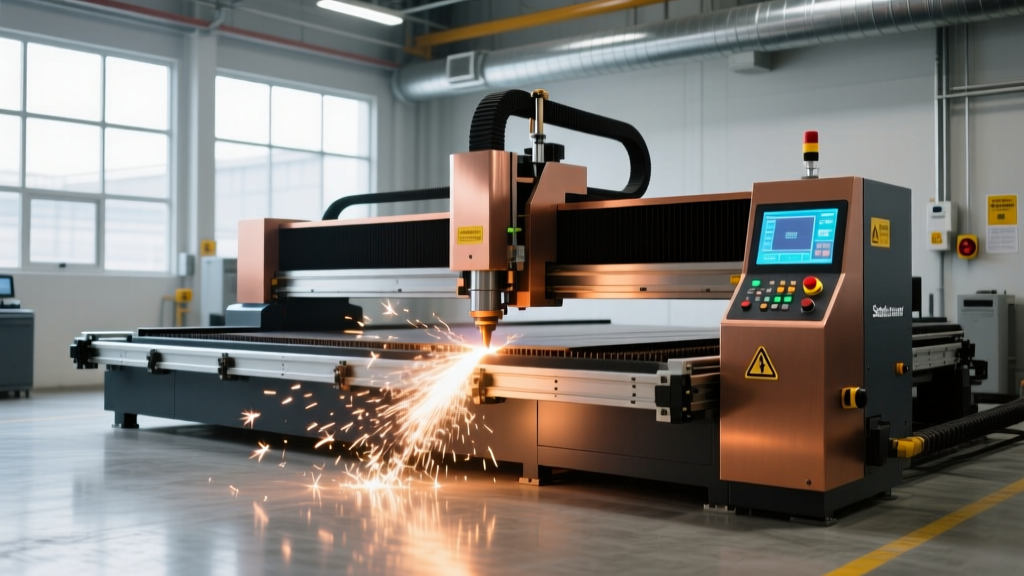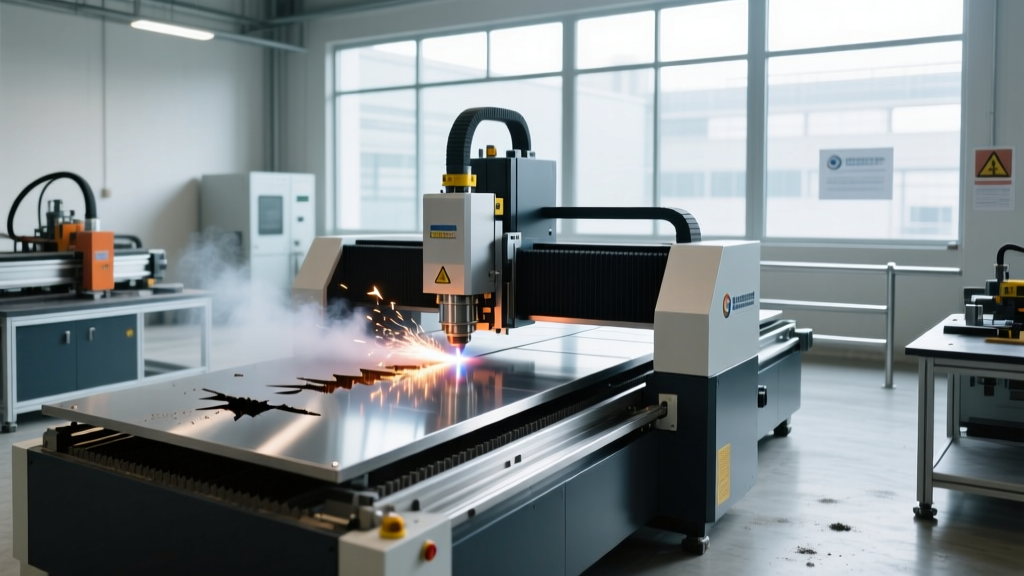
Fiber Laser Cutting Machine CNC vs Plasma and Waterjet Alternatives
Compare fiber laser cutting machine CNC systems against plasma and waterjet alternatives. Analyze costs, cut quality, and speed for metal fabrication.
The industrial metal fabrication landscape in 2026 is defined by a critical procurement decision: selecting the optimal thermal or mechanical cutting technology for specific production volumes and material profiles. While the fiber laser cutting machine CNC has become the undisputed standard for high-speed, precision sheet metal processing, it is not a universal panacea. Fabricators must rigorously evaluate laser systems against advanced CNC plasma and abrasive waterjet alternatives to avoid severe CapEx misallocations and operational bottlenecks.
Executive Decision Matrix
- Choose Fiber Laser CNC: For sheet metal up to 25mm, high-volume nesting, tight tolerances (±0.05mm), and minimal secondary grinding.
- Choose CNC Plasma: For heavy plate (25mm to 50mm+), aggressive bevel cutting, and environments where CapEx constraints override edge-finish requirements.
- Choose Abrasive Waterjet: For heat-sensitive alloys (aerospace titanium, hardened tool steel), extreme thicknesses (>100mm), and zero Heat-Affected Zone (HAZ) mandates.
CapEx and OpEx Reality: The 2026 Financial Breakdown
The initial purchase price of a CNC cutting system is merely the entry fee. True cost of ownership requires analyzing consumable burn rates, assist gas expenses, and energy draw. The table below contrasts a mid-range 6kW fiber laser, a 300-amp precision plasma system, and a standard 5-axis abrasive waterjet.
| Metric | 6kW Fiber Laser CNC | 300A Precision Plasma | Abrasive Waterjet |
|---|---|---|---|
| Estimated CapEx (5x10 bed) | $140,000 - $280,000 | $65,000 - $110,000 | $180,000 - $320,000 |
| Hourly Operating Cost | $15 - $45 (Gas dependent) | $12 - $20 | $35 - $60 (Abrasive cost) |
| Cutting Speed (12mm Mild Steel) | 1.8 m/min (N2 assist) | 3.2 m/min (O2 assist) | 0.25 m/min |
| Kerf Width | 0.15mm - 0.3mm | 1.5mm - 3.0mm | 0.8mm - 1.2mm |
| Dimensional Tolerance | ± 0.05mm | ± 0.5mm | ± 0.1mm |
Fiber Laser Cutting Machine CNC: The High-Volume Standard
The dominance of the fiber laser cutting machine CNC in modern job shops is driven by its unmatched beam quality and electro-optical efficiency. Unlike legacy CO2 lasers that require complex mirror alignments and consume massive amounts of electricity, modern 6kW to 12kW fiber sources (from manufacturers like IPG Photonics and TRUMPF) deliver a concentrated beam that vaporizes metal with exceptional speed.
The Assist Gas Economics: Nitrogen vs. Compressed Air
A critical operational variable in 2026 is assist gas selection. Cutting stainless steel or aluminum with Oxygen (O2) causes an exothermic reaction that oxidizes the edge, rendering it unsuitable for powder coating or welding without extensive secondary grinding. Therefore, fabricators use high-pressure Nitrogen (N2) to achieve an oxide-free edge. However, bulk liquid N2 delivery can cost a busy shop over $40,000 annually.
To combat this, the industry has heavily adopted on-site nitrogen generators and high-pressure compressed air cutting. By utilizing a 30kW screw compressor paired with a high-end desiccant dryer, shops can cut mild steel up to 6mm and stainless up to 4mm using compressed air, reducing gas-related OpEx by up to 80%. According to IPG Photonics application guidelines, air cutting yields a slightly darker edge on mild steel but remains perfectly acceptable for subsequent painting or powder coating processes.
When Plasma Remains the Superior Alternative
Despite the commoditization of high-power fiber lasers, CNC plasma retains a distinct advantage in heavy plate processing and specialized beveling. If a fabricator's primary workload consists of 25mm to 50mm carbon steel, a 400-amp precision plasma system (such as the Hypertherm XPR300 or newer X-Definition models) will outpace a 6kW laser in throughput while costing a fraction of the capital investment.
"While lasers dominate the thin-to-medium gauge market, the physics of plasma cutting still make it the most cost-effective method for severing thick structural steel where edge squareness is secondary to structural integrity and speed." — Hypertherm Technical Resources
Furthermore, plasma excels in 3D bevel cutting for weld prep. While 5-axis laser bevel heads exist, they are prohibitively expensive and highly sensitive to the focal point variations inherent in thick-plate beveling. Plasma torches, being more robust and forgiving of standoff height variations, are the industry standard for preparing V, Y, and K bevels on heavy structural components.
Waterjet: The Zero-HAZ Niche
The abrasive waterjet cutter operates on an entirely different physical principle, utilizing a supersonic stream of water mixed with garnet abrasive to erode material. This cold-cutting process eliminates the Heat-Affected Zone (HAZ) entirely. This is non-negotiable in aerospace and defense manufacturing, where thermal alteration of metallurgical properties in materials like Inconel, titanium, or hardened tool steel can lead to catastrophic part failure.
Warning: The Hidden Costs of Waterjet
While waterjet offers unmatched material versatility, the operational overhead is severe. The mixing tube and focusing nozzle must be replaced every 40 to 80 hours. More significantly, garnet abrasive consumption is relentless. A machine cutting 25mm titanium might consume 1.5 kg of garnet per minute. At roughly $0.50 per kilogram, abrasive costs alone can easily exceed $40 per hour of cutting time. Additionally, the disposal of spent abrasive and metal-laden sludge requires environmental compliance and physical labor that laser and plasma systems simply do not demand.
Edge Quality and Secondary Operations
The true cost of a cut part is not realized until it leaves the machine bed. Secondary operations—grinding, sanding, and slag removal—destroy profit margins.
- Fiber Laser (N2 Assist): Produces a virtually burr-free, oxide-free edge. Parts can move directly to the press brake or welding cell. Minimal secondary labor required.
- Fiber Laser (O2 Assist): Leaves an oxide layer that must be removed via chemical etching or mechanical grinding before welding, otherwise risking porous welds.
- CNC Plasma: Modern high-definition plasma produces minimal dross on thin materials, but thick plate cutting inevitably leaves a hardened slag layer on the bottom edge that requires manual chipping or automated slag-grinding conveyor systems.
- Waterjet: Leaves a matte, sandblasted finish. While free of thermal dross, the surface roughness (Ra) is higher than a laser cut, which may require secondary milling if a tight sealing surface is required.
Final Procurement Framework
Selecting the right technology requires mapping your specific material thickness distribution against your quality requirements. Use the following framework to guide your 2026 capital equipment requests:
- If 85% of your work is under 20mm and requires tight nesting efficiency: Procure a 6kW to 12kW fiber laser cutting machine CNC. Pair it with an automated sheet loading tower to maximize spindle-on time and justify the CapEx.
- If your primary workload is 25mm+ structural carbon steel and edge finish is irrelevant: Invest in a high-amperage (300A+) CNC plasma table with a heavy-duty downdraft ventilation system to manage the dense metallic fume generation.
- If you are contracted for aerospace, medical, or hardened tooling where thermal distortion is a liability: Specify an abrasive waterjet with dynamic taper compensation software to ensure perpendicularity on thick cuts, factoring abrasive disposal into your long-term facility planning.
Ultimately, the most profitable fabrication facilities in 2026 do not rely on a single technology. They deploy a hybrid approach: utilizing fiber lasers for high-speed, precision sheet metal work, while maintaining a dedicated plasma cell for heavy structural severing, ensuring every part is processed at the lowest possible cost-per-inch.