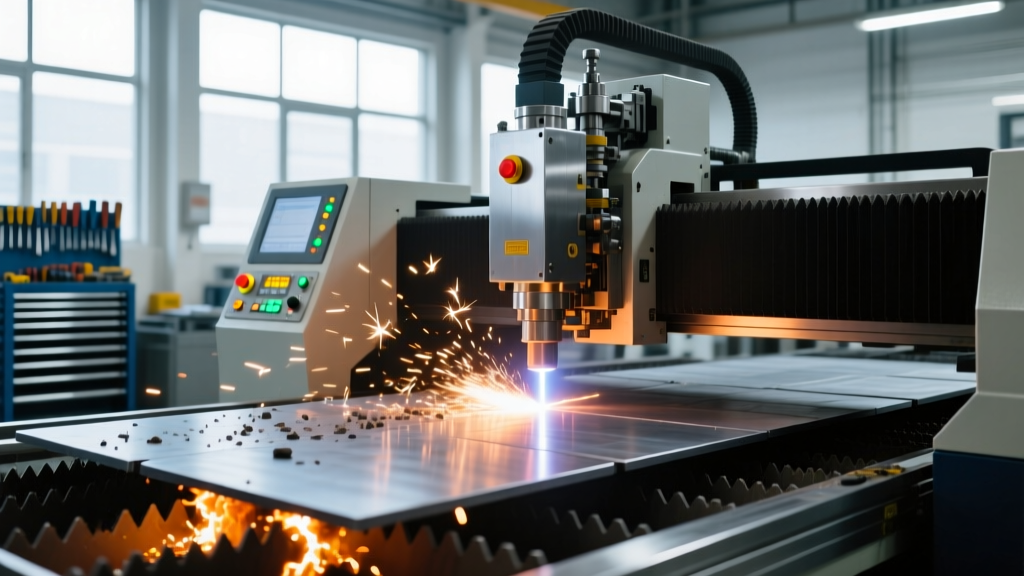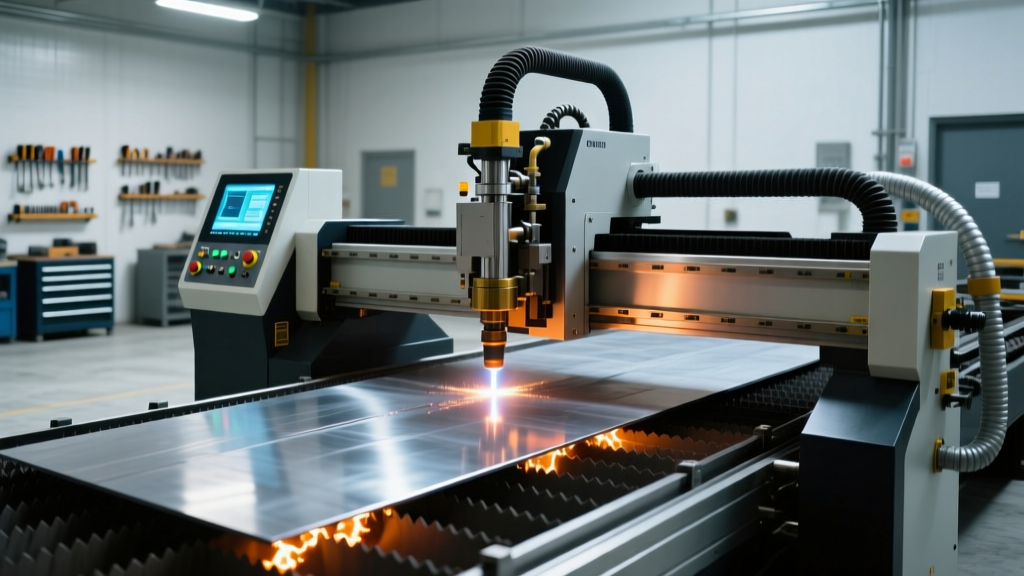
Preventive Maintenance Schedules for CNC Plasma Cutting Machines
Maximize uptime with exact preventive maintenance schedules for CNC plasma cutting machines. Learn daily, weekly, and annual service intervals and costs.
The Economics of Plasma System Uptime
CNC plasma cutting machines operate in extreme thermal, electrical, and mechanical environments. A modern high-definition plasma system, such as the Hypertherm XPR300 or Lincoln Electric Spirit II, generates arc temperatures exceeding 30,000°F while subjecting the gantry to continuous thermal loading and abrasive metallic dust. Neglecting a structured maintenance protocol does not merely degrade cut quality; it triggers catastrophic torch failures. Replacing a liquid-cooled torch body and lead set on a 300-amp system costs between $2,800 and $4,500, excluding the $500 to $1,500 per hour lost in production downtime.
While 2026 IoT-enabled plasma power supplies feature predictive arc-voltage monitoring, physical maintenance of the gas delivery, cooling, and mechanical drive systems remains entirely dependent on operator discipline. The following preventive maintenance schedule is engineered for heavy-duty industrial CNC plasma tables operating 1 to 3 shifts daily.
⚠️ CRITICAL WARNING: Never use standard shop air without a coalescing filter and refrigerant air dryer. Moisture in the plasma gas will destroy a $150 hafnium electrode in under 10 pierces and cause internal torch arcing that voids OEM warranties.Daily Operator Protocols (The First 15 Minutes)
Daily maintenance for CNC plasma cutting machines should be executed during the machine's warm-up cycle. Operators must verify fluid dynamics and gas purity before striking the first arc.
- Air Pressure Verification: Check the dynamic air pressure at the torch console, not just the compressor gauge. Dynamic pressure must remain between 90 and 120 PSI while the plasma gas is flowing. A drop below 85 PSI during cutting causes severe dross and nozzle burnout.
- Coolant Level and Temperature: For liquid-cooled torches, verify the reservoir level. The coolant temperature should stabilize between 60°F and 80°F. If the chiller unit fails to drop the temperature below 85°F, halt operations to prevent O-ring degradation inside the torch.
- Slag Bed Inspection: Ensure the water table or downdraft slats are not obstructed. In water tables, the material surface must sit exactly 0.125 inches below the water line to suppress UV radiation and noise without splashing the torch.
- Consumable Visual Check: Inspect the nozzle bore. If the orifice is no longer perfectly round or shows signs of copper spatter buildup, replace it immediately. Spatter alters the gas swirl pattern, resulting in an asymmetrical kerf.
Consumable Lifecycle & Replacement Matrix
Consumable wear is the primary variable in cut quality. According to technical guidelines from The Welding Institute (TWI), plasma arc constriction relies entirely on the precise geometry of the swirl ring and nozzle. Operators must track pierce counts rather than relying on visual guesswork.
| Component | Process / Gas | Max Lifespan (Pierces) | Failure Indicator |
|---|---|---|---|
| Hafnium Electrode | O2 / Mild Steel | 300 - 500 | Pit depth exceeds 1/32" (0.8mm) |
| Silver Electrode | Air / Aluminum | 50 - 150 | Pit depth exceeds 1/16" (1.6mm) |
| Copper Nozzle | All Processes | 400 - 800 | Orifice ovality or internal spatter |
| Swirl Ring | O2 / H35 Mix | Match Electrode | Melted vents or carbon tracking |
Monthly Cooling and Air Filtration Audits
Monthly service shifts focus from the torch to the support infrastructure. The longevity of CNC plasma cutting machines is directly tied to the purity of the gases and coolants feeding them.
Coolant Chemistry Analysis
High-amperage liquid-cooled torches require a precise coolant mixture: 30% ethylene or propylene glycol and 70% deionized water. Never use tap water; the dissolved minerals will cause electrolysis inside the copper torch body, leading to internal arcing and total destruction. Test the coolant conductivity monthly using a digital TDS meter. Conductivity must remain below 50 µS/cm. If it exceeds this threshold, flush the system entirely and refill with a fresh OEM-approved mixture.
Air Dryer Desiccant and Filter Checks
Inspect the coalescing filter elements for oil carryover. Compressor oil aerosols will coat the inside of the polyurethane torch leads, eventually degrading the internal tubing. Drain the compressor tank and verify that the refrigerant air dryer is maintaining a dew point of -40°F or lower. In high-humidity environments, desiccant beds may require replacement every 3 to 6 months rather than the standard annual interval.
Annual Gantry, Drive, and Slag Management
Once a year, the machine must be taken offline for a full mechanical audit. The combination of high-velocity abrasive dust and thermal expansion takes a severe toll on the CNC gantry.
- Rack and Pinion Degreasing: Plasma dust mixes with standard lithium grease to form an abrasive lapping compound that destroys helical rack teeth. Use an industrial citrus degreaser to strip all old grease from the X and Y axis racks. Reapply a synthetic, high-tack lithium complex grease (such as Mobilux EP2) that resists fling-off and dust adhesion.
- Servo Motor Backlash Tuning: Mount a dial indicator to the torch carriage. Command a 0.100-inch directional reversal via the CNC controller. If the physical movement lags the digital readout by more than 0.005 inches, adjust the gearbox tensioner or recalibrate the servo drive parameters to eliminate the dead band.
- Water Table pH Balancing: If your CNC plasma table utilizes a water pan, bacterial growth and aluminum oxidation will rapidly acidify the water, leading to severe corrosion of the steel slats and gantry legs. Test the pH level; it must be maintained between 8.5 and 9.5. Add an industrial biocide and alkaline buffer as needed. For facilities cutting thick aluminum, consider installing a continuous water filtration and aeration system to comply with OSHA standard 1910.252 regarding hazardous fume and particulate management.
- Torch Lead Bend Radius Inspection: Inspect the umbilical cord for micro-fractures in the outer jacket. The internal copper wiring and gas hoses will snap if the bend radius is forced below 18 inches. Replace the cable management track rollers if they show flat spots that cause the lead to snag during rapid traverses.
Troubleshooting Cut Quality Degradation
When maintenance schedules are compressed or ignored, cut quality is the first metric to fail. Use this decision matrix to trace poor cut quality back to its mechanical root cause before replacing expensive power supply components.
Symptom-to-Cause Diagnostic Matrix
- Symptom: Excessive high-speed dross (beaded, difficult to remove).
- Root Cause: Worn nozzle orifice or travel speed exceeding the arc's ability to penetrate. Fix: Replace nozzle; reduce feed rate by 15%.
- Symptom: Severe kerf angle (bevel) on one side of the cut.
- Root Cause: Torch is not perfectly perpendicular to the material, or the swirl ring gas vents are melted, causing asymmetric gas flow. Fix: Square the torch breakaway mount; replace swirl ring and electrode.
- Symptom: Arc voltage fluctuating wildly during a straight cut.
- Root Cause: Moisture in the plasma gas or a failing power supply rectifier. Fix: Check air dryer dew point; inspect inline moisture traps.
- Symptom: Piercing takes 3x longer than programmed time.
- Root Cause: Shield cap is clogged with slag, preventing pre-flow gas from clearing the pierce zone, or pierce height is set too low. Fix: Clean shield cap; adjust initial pierce height to 0.150" - 0.200".
Sourcing OEM vs. Aftermarket Consumables
A common cost-cutting measure in fabrication shops is purchasing third-party aftermarket consumables for CNC plasma cutting machines. While aftermarket electrodes and nozzles may cost 40% to 60% less than OEM parts (e.g., Hypertherm or ESAB), the total cost of ownership often favors OEM components. Independent testing consistently shows that OEM hafnium inserts are perfectly centered and utilize proprietary silver-brazing techniques that prevent the insert from ejecting during high-current pierces. An aftermarket electrode that fails mid-cut can score the copper nozzle and damage the $1,200 torch body, instantly wiping out a year's worth of consumable savings. For critical-tolerance aerospace or structural steel contracts, OEM consumables are non-negotiable. For general scrap cutting or non-critical roughing, high-tier aftermarket brands can be utilized, provided operators strictly monitor pit depth and discard them at the first sign of asymmetrical wear.