Best Friction Welding Equipment Manufacturers for Low Force (2026)
Evaluate the best friction welding equipment manufacturers for low force in 2026. Compare MTI, KUKA, and EWI tech for ISO compliance and safety.
The Shift to Low Force Friction Welding (LFFW) and Safety Compliance
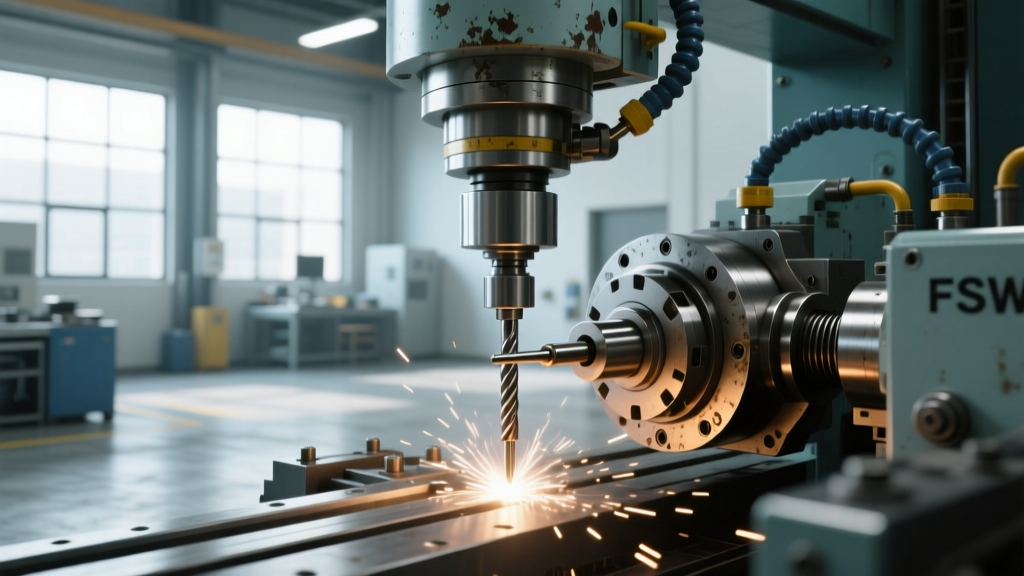
Low Force Friction Welding (LFFW) has fundamentally altered the aerospace and automotive manufacturing landscape by reducing axial forge forces by 50% to 80% compared to traditional rotary friction welding. By utilizing specialized kinematics or hybrid preheating, LFFW allows for the joining of thin-walled tubes, delicate heat-treated alloys, and dissimilar metals without the massive hydraulic tonnage previously required. However, this reduction in axial force introduces a distinct safety and compliance profile. When evaluating the best friction welding equipment manufacturers for low force, procurement teams and safety engineers must prioritize rotational inertia management, high-RPM spindle braking, and stringent machine guarding over traditional hydraulic crush-zone protections.
⚠️ CRITICAL SAFETY WARNING: Kinetic Energy vs. Axial ForceLow axial force does not equate to low kinetic energy. LFFW spindles frequently operate between 2,000 and 8,000 RPM. A workpiece ejection caused by inadequate collet clamping force or rotational shear can exceed 15,000 Joules of impact energy. Standard 1/4-inch polycarbonate shields will fail under these conditions. 2026 safety protocols mandate the use of 1/2-inch AR500 steel or specialized ballistic-grade polycarbonate with steel mesh interlayers for all LFFW primary enclosures.
The 2026 Compliance Matrix: ISO, CE, and OSHA Requirements
Operating LFFW equipment requires adherence to a matrix of international safety standards. Unlike standard MIG or TIG setups, friction welding machines are classified as heavy rotating machinery, triggering strict mechanical safeguarding regulations. Below is the compliance framework that top-tier manufacturers must integrate into their low-force systems.
| Standard / Directive | Scope | LFFW Specific Application |
|---|---|---|
| ISO 15614-1 | Welding Procedure Qualification | Requires precise torque and RPM data logging to validate the low-force thermal cycle. |
| ANSI B11.19 / OSHA 1910.212 | Machine Safeguarding | Mandates redundant spindle braking (<1.5 seconds) and interlocked acoustic enclosures. |
| CE Machinery Directive 2006/42/EC | European Market Compliance | Requires Performance Level (PL) d or e safety PLCs for emergency stop and guard interlock circuits. |
| ISO 10882-1 | Fume and Particle Extraction | Governs the capture velocity for particulate matter generated during the low-force upset phase. |
For a comprehensive overview of mechanical guarding requirements, refer to the OSHA Machine Safeguarding guidelines, which detail the mandatory stopping times and barrier distances for high-RPM rotating equipment.
Evaluating the Best Friction Welding Equipment Manufacturers for Low Force
The market for LFFW systems is highly specialized. The following manufacturers lead the industry in delivering low-force friction welding equipment that meets rigorous 2026 safety and compliance standards.
1. Manufacturing Technology Inc. (MTI)
MTI remains a dominant force in rotary and linear friction welding. For low-force applications, MTI has increasingly transitioned from traditional hydraulic actuation to advanced servo-driven systems. This shift is critical for safety: servo systems eliminate the risk of high-pressure hydraulic fluid leaks near the hot forge zone, drastically reducing fire hazards.
- Key Safety Feature: Redundant spindle braking. MTI utilizes a dynamic regenerative braking system paired with a mechanical friction brake, ensuring the spindle reaches zero RPM in under 1.2 seconds, well within ANSI B11.19 requirements.
- Compliance Tech: Integrated NIST-traceable load cells for real-time axial force verification, ensuring the machine never exceeds the programmed low-force threshold, preventing workpiece buckling.
- Estimated Pricing (2026): $320,000 – $480,000 for mid-range servo-driven LFFW models.
2. KUKA (Thompson Friction Welding Lineage)
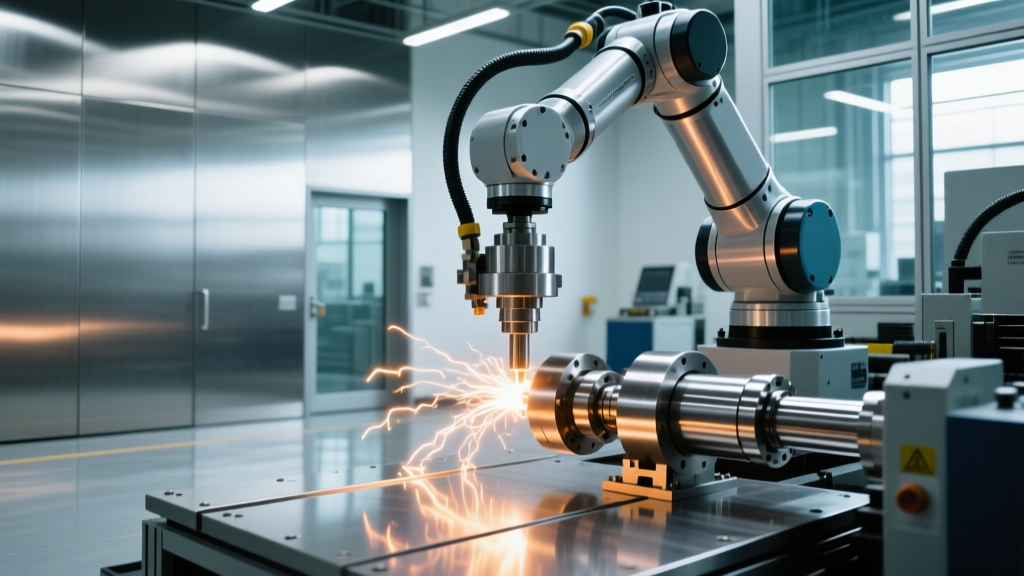
Following its acquisition of Thompson Friction Welding, KUKA has integrated its advanced robotics safety architecture into its friction welding lineup. The KUKA SRS (Spindle Rotary Series) adapted for low-force applications features some of the most sophisticated safety PLCs on the market.
- Key Safety Feature: KUKA Safety Integrated. The machine's emergency stop, light curtains, and guard interlocks are managed via a dual-channel safety PLC achieving Performance Level e (PLe) under ISO 13849.
- Acoustic Management: LFFW at high RPMs can generate noise levels exceeding 115 dB. KUKA's factory-integrated acoustic enclosures utilize dampening composites that reduce operator-side noise to below 80 dB, ensuring OSHA compliance without requiring secondary facility treatments.
- Estimated Pricing (2026): $350,000 – $550,000+ depending on automation integration.
Further details on their aerospace-grade safety implementations can be found on the KUKA Aerospace Friction Welding portal.
3. EWI (Edison Welding Institute) & Licensed Integrators
EWI is the pioneer of the proprietary Low Force Friction Welding (LFFW) process. While EWI is primarily a research and development organization, they license their LFFW technology to specialized machine builders and integrators. When procuring an EWI-licensed machine, compliance is a shared responsibility between the integrator's mechanical guarding and EWI's process control software.
- Key Safety Feature: Proprietary process control algorithms that monitor rotational torque and axial displacement at 1,000 Hz. If the system detects an anomaly indicating a potential weld failure or tooling slip, it triggers an immediate spindle abort sequence.
- Compliance Note: Buyers must verify that the specific integrator building the EWI-licensed machine holds current CE and UL certifications, as EWI provides the process IP, not the final machine safety certification.
- Estimated Pricing (2026): Highly variable; typically $400,000+ due to custom tooling and licensing fees.
For foundational research and process specifications, consult the Edison Welding Institute (EWI) Friction Welding resources.
Deep Dive: Critical Safety Components in LFFW Systems
When auditing a prospective LFFW machine, safety engineers must look beyond standard emergency stops. The unique physics of low-force welding require specialized hardware.
Collet Clamping Force Verification
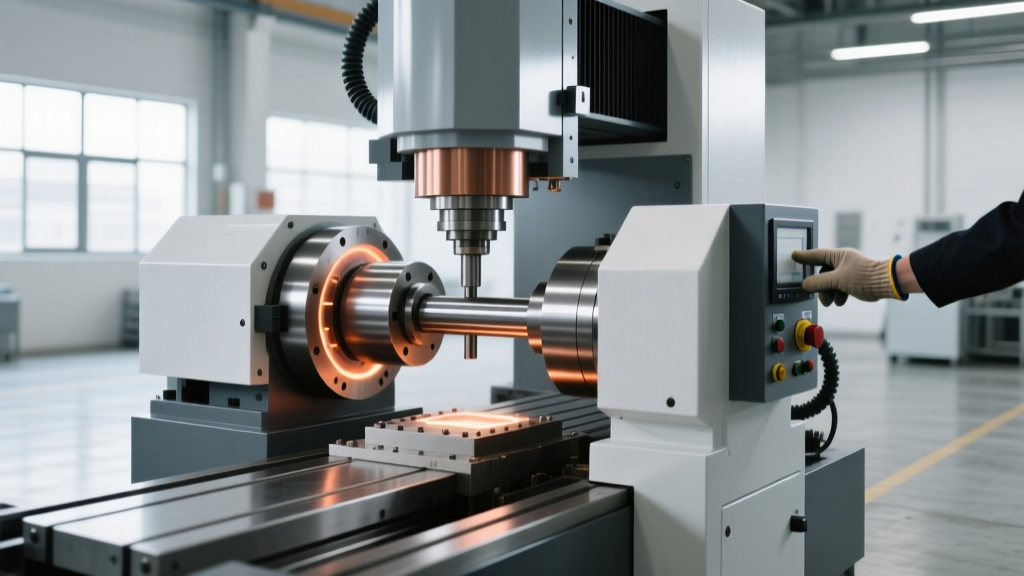
In traditional friction welding, the massive forge force helps keep the part seated in the tooling. In LFFW, the reduced axial force means the collet must rely entirely on radial clamping pressure to counteract rotational torque. Top manufacturers now integrate strain gauges directly into the collet housings. These gauges verify clamping force prior to spindle spin-up, preventing the catastrophic ejection of a poorly seated workpiece.
Thermal Imaging and Fire Suppression Integration
Although LFFW operates at lower temperatures than fusion welding, the localized heat at the interface can still ignite residual machining oils or coolants. Compliant 2026 systems feature integrated thermal imaging cameras that monitor the forge zone. If temperatures exceed a predefined threshold post-weld, the system automatically deploys localized CO2 or clean agent fire suppression before the enclosure doors can be unlocked.
"The most common safety oversight in low force friction welding is treating the machine like a standard press. The axial tonnage is low, but the rotational shear forces are immense. If your tooling design and clamping verification do not account for high-torque, low-axial kinematics, your guarding will be tested by a projectile, not a hydraulic leak."
— Senior Manufacturing Safety Engineer, Aerospace Sector
Decision Framework: Procurement Checklist for Safety Engineers
Use this structured checklist when issuing an RFQ or evaluating a vendor for low-force friction welding equipment:
- Spindle Braking Time: Demand documented proof of spindle stopping time under maximum inertia load. Must be < 1.5 seconds.
- Guard Interlock Logic: Verify that guard interlocks are hardwired to a dual-channel safety relay or safety PLC (PLe), not routed through standard machine logic.
- Acoustic Enclosure Certification: Require third-party decibel testing certificates proving operator-side noise is < 85 dB(A) at maximum RPM.
- Tooling Ejection Prevention: Ensure the machine features pre-spin clamping force verification via integrated load cells or strain gauges.
- Hydraulic vs. Servo: Strongly prefer servo-driven axial actuation to eliminate high-pressure hydraulic fire hazards near the weld interface.
- Data Logging for ISO 15614: Confirm the HMI exports unalterable, time-stamped CSV/PDF records of RPM, torque, and axial force for every weld cycle to support procedure qualification.
The Cost of Non-Compliance
Investing in premium safety features from top-tier manufacturers is not merely a regulatory exercise; it is a financial imperative. OSHA fines for inadequate machine guarding on rotating machinery frequently exceed $15,000 per violation, with willful violations reaching over $150,000. Furthermore, a workpiece ejection incident in an LFFW cell can result in millions in facility damage, extended downtime, and severe liability. By selecting manufacturers like MTI or KUKA that engineer compliance directly into the machine's architecture, facilities mitigate these risks while securing the precise process control required for modern low-force metallurgy.