How to Lease Manufacturing Automation Equipment: 2026 Guide
Learn how to lease manufacturing automation equipment in 2026. Compare FMV vs. buyout leases, analyze cobot costs, and avoid hidden integration fees.
The CapEx vs. OpEx Reality in Modern Automation
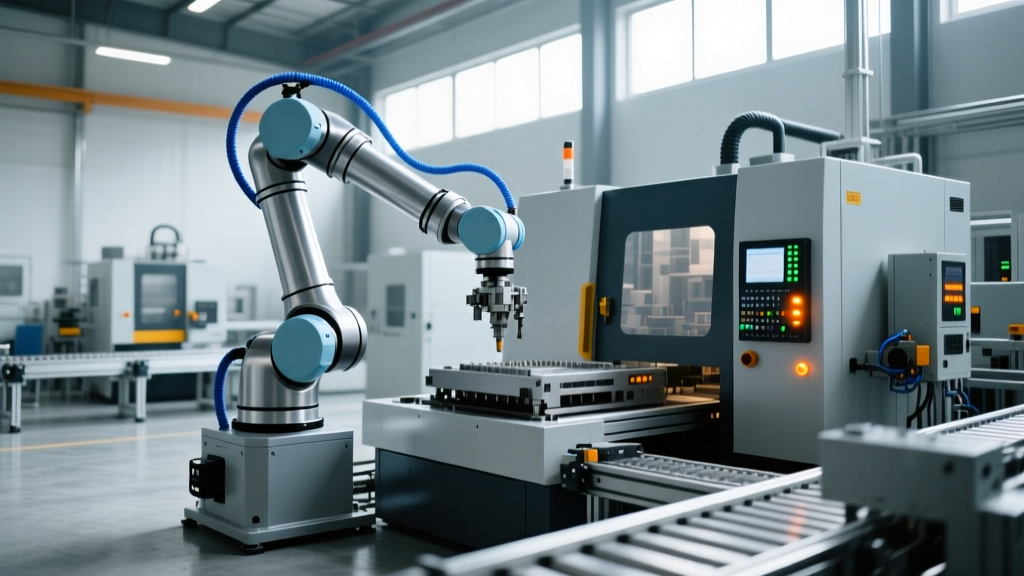
Deploying a fully integrated robotic workcell typically requires a capital expenditure (CapEx) ranging from $120,000 to over $250,000, depending on payload requirements and safety infrastructure. For small-to-medium enterprises (SMEs) and tier-2 suppliers, choosing to lease manufacturing automation equipment shifts this financial burden to operational expenditure (OpEx). This preserves working capital for raw materials and payroll while mitigating the risk of technology obsolescence in a rapidly evolving robotics market.
According to data from the International Federation of Robotics (IFR), global industrial robot density continues to surge, yet SME adoption is frequently bottlenecked by upfront liquidity constraints. Leasing bridges this gap, but the structural nuances of automation financing differ significantly from standard office equipment or vehicle leases.
Decision Matrix: When to Lease vs. Buy
- Choose Leasing If: Your production volumes are tied to short-term contracts (1-4 years), you require the latest vision systems and AI-driven path planning, or your facility lacks in-house maintenance teams to manage aging hardware.
- Choose Buying If: The automation cell performs a static, unchanging process (e.g., basic palletizing of uniform boxes), your company has excess cash reserves seeking depreciation tax shields, and the equipment has a proven 10+ year mechanical lifespan.
Structuring the Deal: FMV vs. $1 Buyout Leases
When evaluating how to lease manufacturing automation equipment, you will primarily encounter two contract structures. Understanding the mathematical divergence between them is critical for long-term cost management.
Fair Market Value (FMV) Leases
An FMV lease offers the lowest monthly payments. At the end of the term (typically 36 to 60 months), you have three options: return the equipment, renew the lease, or purchase the equipment at its projected Fair Market Value (usually 10% to 18% of the original invoice price). FMV is ideal for collaborative robots (cobots) and 3D vision systems where technological iteration renders older models inefficient within four years.
$1 Buyout (Capital) Leases
A $1 buyout lease functions more like a loan. Monthly payments are 15% to 25% higher than FMV leases, but you own the equipment outright at the end of the term for a nominal $1 fee. This structure is better suited for heavy-duty infrastructure, such as 6-axis articulated robots with massive payloads (e.g., FANUC M-900 series) or permanent conveyor systems, which do not experience rapid technological obsolescence.
Cobot Lease Cost Comparison: 2026 Market Rates
The following table illustrates the estimated financial breakdown for leasing two industry-leading heavy-payload cobots on a 36-month FMV agreement. Rates assume a standard commercial credit profile and include the base robot arm and teach pendant.
| Equipment Model | Outright Purchase Price | 36-Month FMV Lease Rate | End-of-Term FMV (Est. 15%) |
|---|---|---|---|
| Universal Robots UR20 (20kg payload) | $90,000 - $95,000 | $1,950 - $2,150 / mo | $13,500 - $14,250 |
| FANUC CRX-25iA (30kg payload) | $110,000 - $120,000 | $2,350 - $2,600 / mo | $16,500 - $18,000 |
Note: Many OEMs, including Universal Robots Financing, offer specialized programs that bundle the arm, end-of-arm tooling (EOAT), and integration labor into a single master lease agreement.
The Integration and Software Gotchas
The most common mistake facility managers make when leasing automation hardware is failing to account for the peripheral systems required to make the robot functional. A robotic arm sitting on a factory floor generates zero ROI without integration.
End-of-Arm Tooling (EOAT) and Safety Hardware
Ensure your lease agreement explicitly covers the entire integrated system, not just the robot serial number. If you lease a UR20 for welding, the lease must include the Miller push-pull welding torch, the fume extraction system, and the SICK microScan3 safety laser scanners. If these peripherals are purchased on separate invoices, they may not be covered under the master lease, leading to complex asset tracking and fragmented tax deductions.
PLC and SCADA Software Licensing
Hardware leases rarely cover perpetual software licenses. If your automation cell requires a Rockwell Automation ControlLogix PLC and FactoryTalk View SCADA licenses, understand that the software is licensed to your company, not the physical hardware. When the lease ends and the PLC is returned, you cannot legally transfer the software to the new owner. Always negotiate software licenses as separate, perpetual purchases, or ensure the lease includes a SaaS (Software as a Service) subscription model for the programming environment.
Warning: The 'Master Lease' TrapSome lessors attempt to bundle proprietary software licenses into the hardware lease. If you default on the hardware lease, the lessor may revoke your software licenses, bricking your entire factory network. Always sever critical SCADA and PLC software licenses from hardware financing agreements.
Step-by-Step Lessor Vetting Checklist
Not all financing companies understand industrial automation. A lessor specializing in commercial real estate or IT servers will not understand the depreciation curve of a servo motor or the integration costs of a vision system. Use this checklist when evaluating a financing partner:
- Verify Industry Expertise: Does the lessor have a dedicated manufacturing and automation desk? They should understand terms like 'cycle time,' 'payload,' and 'system integration.'
- Check ELFA Membership: Ensure the lessor is a member in good standing with the Equipment Leasing and Finance Association (ELFA), which enforces strict ethical and operational standards.
- Integration Funding: Confirm they will fund 'soft costs' (integration engineering, electrical panel building, safety fencing) up to at least 30% of the total lease value.
- Progress Payments: For large cells taking 6 months to build, does the lessor offer progress payments to the integrator, or do they require the equipment to be fully installed and signed off before funding?
End-of-Lease Return Conditions
If you opt for an FMV lease and plan to return the equipment, scrutinize the return conditions clause. Industrial environments are harsh. Lessor contracts often stipulate that equipment must be returned in 'good working condition, normal wear and tear excepted.' However, 'normal wear' is rarely defined.
Protect yourself by negotiating specific acceptable wear parameters into the contract. For example, specify that minor cosmetic scratches on the teach pendant screen, worn joint labels, and expected servo hour-meter readings (e.g., up to 20,000 operational hours) do not constitute excess wear. Require the lessor to accept the OEM's standard refurbishment certification as proof of condition, preventing them from charging you arbitrary third-party repair fees upon return.
Frequently Asked Questions
Can I lease used or refurbished automation equipment?
Yes, but the pool of willing lessors is smaller. Most captive lessors (like Siemens Financial Services) prefer funding new equipment. Independent lessors will fund used robots, but they typically require a shorter term (24 months) and higher interest rates due to the difficulty in establishing residual values for used automation hardware.
How does leasing affect my Section 179 tax deductions?
Under IRS guidelines, you generally cannot claim Section 179 expensing on equipment leased under a standard FMV operating lease, as you do not own the asset. However, the entire monthly lease payment is typically deductible as an ordinary business operating expense. For $1 buyout leases (which the IRS often views as conditional sales contracts), you may be able to claim depreciation and Section 179 benefits. Always consult a CPA specializing in manufacturing taxation.
What credit score is required to lease a $150,000 robotic cell?
While personal guarantees are common for smaller SMEs, lessors primarily underwrite based on the business's financial health, time in business (usually a minimum of 2-3 years), and cash flow. A business credit score (like Dun & Bradstreet PAYDEX) above 75 is generally required for prime rates, though specialized manufacturing lessors will look heavily at the liquidation value of the specific robot models being financed as collateral.