Automated Equipment Component Manufacturing: 2026 Cost Guide
Discover the true costs of automated equipment component manufacturing. This 2026 budget guide breaks down CapEx, OpEx, and ROI for robotic cells.
Transitioning to automated equipment component manufacturing requires precise financial modeling. Many mid-sized machine shops and fabricators underestimate the total cost of ownership by focusing exclusively on the robot arm's sticker price. In reality, the manipulator represents only 20% to 30% of the initial capital expenditure, while hidden operational costs can erode projected margins within the first 18 months. This guide provides a granular cost analysis and budget planning framework for deploying flexible automation cells in 2026, specifically targeting component machining, welding, and assembly environments.
Executive Budget Summary
Typical Cell CapEx: $140,000 – $280,000 (excluding facility prep)
Annual OpEx Increase: $12,000 – $22,000 (maintenance, energy, software)
Target Payback Period: 18 to 36 months based on 2-shift operations
Primary Cost Trap: Under-budgeting for custom End-of-Arm Tooling (EOAT) and PLC integration.
Capital Expenditure (CapEx) Breakdown for a Standard Robotic Cell
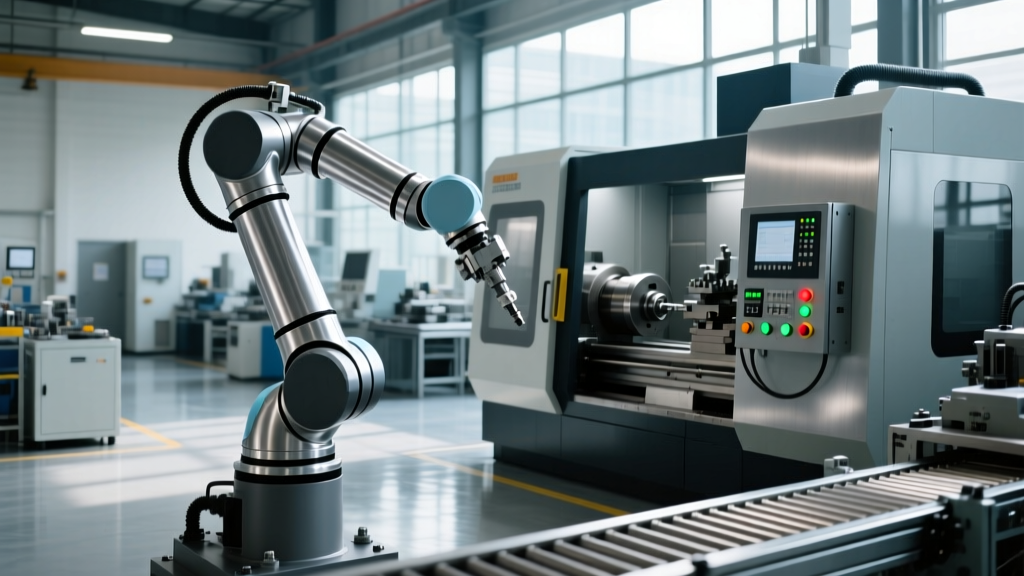
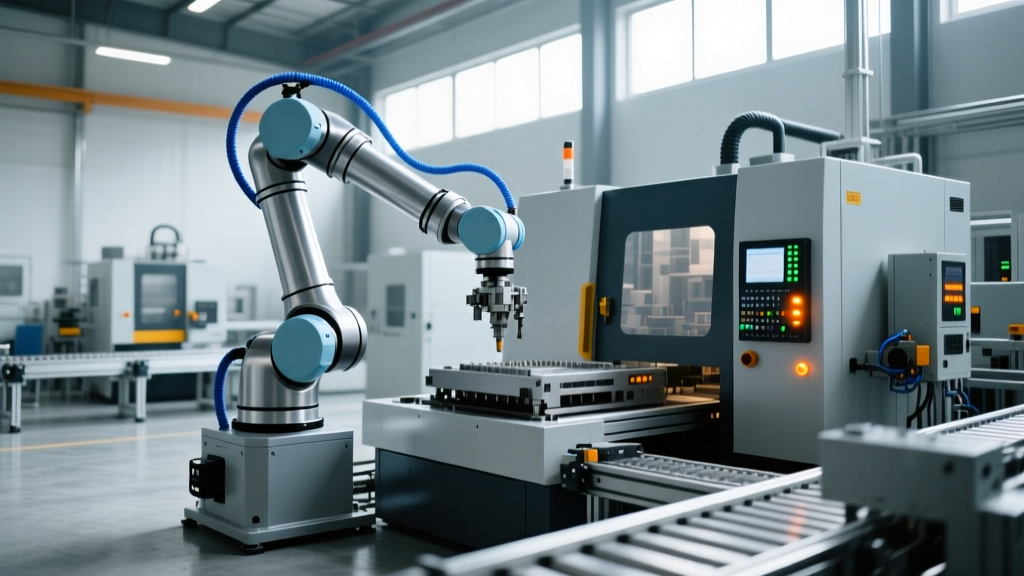
When budgeting for automated equipment component manufacturing, hardware selection dictates the baseline CapEx. The choice between a collaborative robot (cobot) and a traditional 6-axis industrial robot hinges on payload requirements, cycle time demands, and safety footprint constraints. Below is a realistic 2026 pricing matrix for a standard machine-tending or component-welding cell.
| Component Category | Specific Model / Spec | Estimated Cost (USD) |
|---|---|---|
| Cobot Manipulator (20kg payload) | Universal Robots UR20 | $52,000 - $56,000 |
| Industrial 6-Axis Robot (25kg payload) | FANUC M-20iD/25 | $70,000 - $78,000 |
| PLC & HMI Controller | Siemens SIMATIC S7-1500 + 12" Comfort Panel | $6,500 - $8,200 |
| Safety Systems (Light Curtains & Scanners) | SICK microScan3 Core & C4000 | $7,500 - $9,500 |
| Custom End-of-Arm Tooling (EOAT) | Dual-gripper pneumatic w/ quick-changer | $8,000 - $15,000 |
| System Integration & Programming | Typically 2.5x hardware cost | $90,000 - $140,000 |
The Integration Multiplier: Why Hardware is Only 30% of the Budget
The most common budgeting failure in automated equipment component manufacturing is treating the robot as a plug-and-play appliance. According to the Association for Advancing Automation (A3), system integration routinely consumes 60% to 70% of the total project budget. Integration encompasses the physical cell layout, electrical panel wiring, PLC ladder logic or structured text programming, SCADA network handshake protocols, and the crucial machine-to-machine (M2M) communication setup between the robot controller and the CNC or welder.
If you are retrofitting an older CNC mill (e.g., a 2012 Haas VF-2 with a non-standard I/O interface), expect integration costs to spike by an additional 15% to 20%. The integrator must map legacy M-codes and G-codes to modern Ethernet/IP or PROFINET protocols, often requiring custom middleware or hardware gateways like the HMS Anybus X-gateway ($1,200 - $1,800 per unit).
Hidden Operational Costs (OpEx) That Derail Margins
Once the cell is commissioned, operational expenses begin. Budget planners frequently model OpEx based solely on electricity and basic preventive maintenance, ignoring the mechanical and pneumatic realities of high-cycle manufacturing.
1. Harmonic Drive Degradation in Cobots
Collaborative robots rely on strain wave gears (harmonic drives) in their joints to achieve high torque in a compact footprint. When a cobot like the UR20 operates continuously at 80% or more of its rated payload capacity, the flexspline in the harmonic drive experiences accelerated metal fatigue. Replacing a single joint actuator on a premium cobot costs between $4,500 and $7,000, plus 4 to 6 hours of downtime. Budget Rule: If your component weighs more than 14kg, do not use a 20kg cobot; upgrade to a 30kg industrial robot with traditional RV reducers to avoid a $15,000+ year-three maintenance cliff.
2. Pneumatic Energy Waste and Vacuum Cup Wear
End-of-Arm Tooling (EOAT) that relies on venturi vacuum generators for picking stamped metal components is highly susceptible to compressed air leaks. A single 1/16-inch leak in a pneumatic line costs approximately $750 per year in wasted compressor energy. Furthermore, polyurethane vacuum cups picking oily or sharp-edged components will degrade every 40,000 to 60,000 cycles. Budget $1,200 annually for EOAT consumable replacement per cell.
3. Offline Programming and Software Licensing
To minimize cell downtime during changeovers, modern facilities use offline programming (OLP) software. Licenses for platforms like RoboDK or FANUC ROBOGUIDE range from $3,500 to $5,500 per seat annually. This is a mandatory OpEx line item for high-mix, low-volume component manufacturing.
ROI Calculation Framework: Payback Period Matrix
Calculating the return on investment requires comparing the fully burdened labor cost against the automated cycle time. The NIST Advanced Manufacturing Portal emphasizes the inclusion of indirect labor costs (benefits, training, floor space) in these models.
Payback Calculation Example: CNC Machine Tending Cell
- Total Cell Investment (CapEx): $185,000
- Manual Labor Cost (Fully Burdened): $32.00/hour
- Operator Efficiency: 75% (accounting for breaks, fatigue, loading/unloading variance)
- Automated Cycle Time: 42 seconds per part (runs 24/7 at 95% OEE)
- Annual Production Volume: 450,000 parts
- Labor Hours Replaced Annually: 5,250 hours
- Annual Labor Savings: $168,000
- Less Annual Cell OpEx (Maintenance/Software): $14,000
- Net Annual Savings: $154,000
- Simple Payback Period: 1.19 Years (approx. 14.3 months)
However, this matrix assumes 24/7 operation. If your facility only runs two shifts (16 hours/day), the annual labor hours replaced drop to 3,500, extending the payback period to 2.1 years. Always model ROI based on your actual scheduled spindle time, not theoretical maximums.
Safety Compliance and Facility Preparation Costs
Automated equipment component manufacturing introduces strict safety requirements. The OSHA Robotics Safety Guidelines and ANSI/RIA R15.06 standards mandate rigorous risk assessments. If you deploy a traditional industrial robot, you must budget for physical safety fencing ($45 to $75 per linear foot), interlocked access gates ($2,500 each), and safety PLCs.
While cobots eliminate the need for physical caging, they do not eliminate the need for safety scanners. If the cobot is handling sharp metal components or heavy weldments, a risk assessment will likely dictate that the cobot must operate at reduced speeds when a human enters the detection zone, or halt entirely. This negates the cycle time advantage. Budget $8,000 for area scanners and safety relays even in 'collaborative' setups to ensure compliance without sacrificing throughput.
Leasing vs. Buying: Financial Implications for Mid-Sized Shops
For job shops and mid-sized manufacturers, preserving cash flow is often more critical than minimizing total long-term cost. Robotics-as-a-Service (RaaS) and equipment leasing have matured significantly.
- Outright Purchase: Best for high-volume, dedicated component lines running 24/7. Requires immediate CapEx depreciation but yields the highest long-term ROI.
- Equipment Financing (3-5 Year Term): Typical interest rates for industrial automation equipment range from 6% to 9%. This allows the monthly loan payment to be offset by the monthly labor savings, creating a cash-flow-positive automation project from month one.
- Robotics-as-a-Service (RaaS): Monthly fees typically range from $3,500 to $6,000 per cell, inclusive of maintenance and software updates. Ideal for high-mix shops that need to scale automation up or down based on seasonal contract wins, though it is the most expensive option over a 5-year horizon.
Sourcing Strategy for End-of-Arm Tooling (EOAT)
Do not allow the robot OEM to dictate your EOAT sourcing. Robot manufacturers often mark up custom grippers by 40% to 60%. For automated equipment component manufacturing, partner with specialized tooling integrators like ATI Industrial Automation or Schmalz. Utilizing modular, quick-change EOAT systems (such as the ATI QC-10) allows a single robot to swap between a mechanical gripper for raw stock loading and a vacuum array for finished part unloading in under 4 seconds, effectively doubling the utility of a single capital asset without purchasing a second manipulator.
"The most expensive component in an automated cell isn't the robot; it's the downtime caused by poorly designed tooling. Spending an extra $3,000 on a high-quality, self-cleaning gripper with part-in-place sensors will save you $30,000 in integration troubleshooting and scrap reduction in the first year alone."
Accurate budget planning for automated equipment component manufacturing requires looking past the brochure specifications. By modeling the integration multiplier, accounting for harmonic drive wear, and rigorously calculating payback based on actual spindle utilization, manufacturing leaders can deploy automation cells that deliver predictable, compounding returns.