Automated Equipment Manufacturing: 2026 Buyer's Guide
Navigate automated equipment manufacturing in 2026. Compare cobots, PLCs, and vision systems with real pricing, integration frameworks, and vendor SLAs.
The 2026 CapEx Reality for Automated Equipment Manufacturing
Procuring hardware for automated equipment manufacturing is no longer just about buying robotic arms and conveyors; it is about acquiring an interconnected cyber-physical stack. In 2026, capital expenditure (CapEx) decisions must account for AI-driven edge processing, native OPC UA interoperability, and advanced safety architectures. Plant managers and automation engineers who base purchasing decisions on outdated 2022 pricing or legacy communication protocols face severe integration bottlenecks and hidden licensing costs.
This guide provides a technical procurement framework for selecting the core pillars of a modern automated production line: robotics, programmable logic controllers (PLCs), machine vision, and safety systems.
2026 Procurement Snapshot: The Hidden Software TaxWhen budgeting for automated equipment manufacturing, hardware represents only 60-70% of the total automation stack cost. Engineering software licenses (e.g., Siemens TIA Portal, Rockwell Studio 5000), edge-computing node subscriptions, and specialized End-of-Arm Tooling (EOAT) fabrication routinely consume the remaining 30-40%. Always request a 'Total Software Lifecycle' quote from vendors before signing hardware POs.
Robotics Selection: Heavy Payload Cobots vs. Traditional Industrial Arms
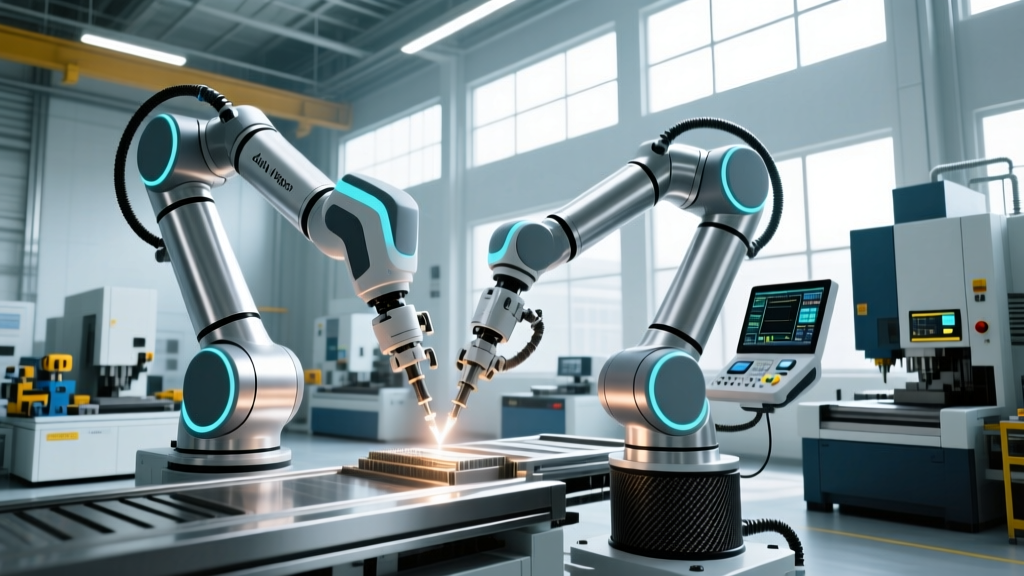
The boundary between collaborative robots (cobots) and traditional industrial robots has blurred. High-payload cobots now handle heavy machine-tending and palletizing tasks, eliminating the need for extensive physical safety caging in many applications. Below is a procurement matrix comparing the leading high-payload options for 2026.
| Model | Payload / Reach | IP Rating | Est. Base Price (2026) | Best Application |
|---|---|---|---|---|
| FANUC CRX-25iA | 30 kg / 1889 mm | IP67 (Wrist) | $52,000 - $56,000 | Heavy machine tending, welding |
| Universal Robots UR20 | 20 kg / 1750 mm | IP54 | $43,000 - $46,000 | Palletizing, large-part assembly |
| Yaskawa HC10DTP | 12 kg / 1200 mm | IP67 | $38,000 - $41,000 | Cleanroom, CNC loading |
Procurement Insight: The EOAT Multiplier
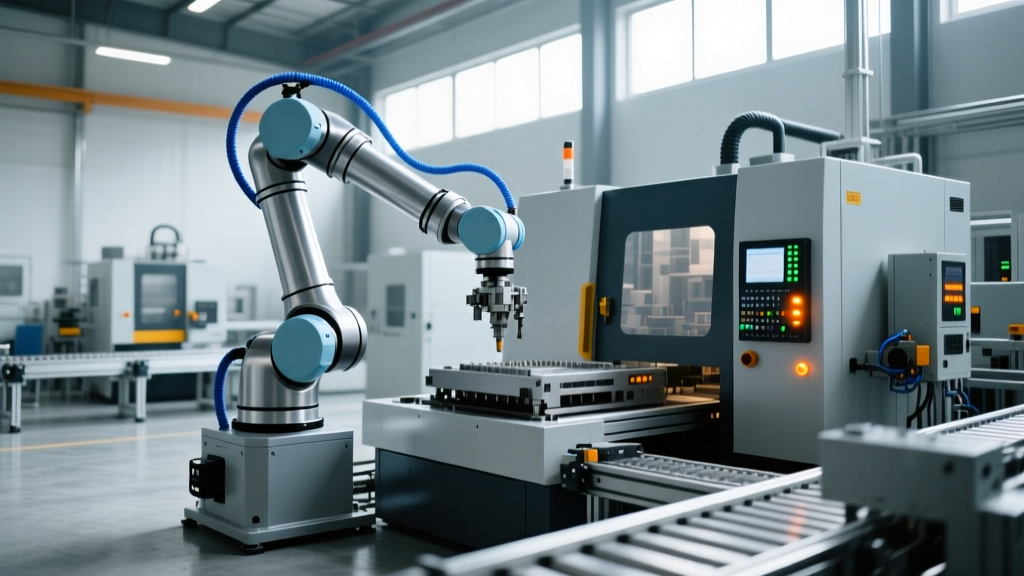
Do not evaluate robot pricing in a vacuum. A $45,000 UR20 requires specialized heavy-duty grippers. If you are handling porous materials or irregular geometries, expect to spend $8,000 to $15,000 on custom vacuum arrays or force-torque sensors (like the Robotiq FT 300-S) to prevent part slippage. Always mandate that robot vendors include a 'Gripper Integration Feasibility Study' in their initial proposal.
The Nervous System: PLC and SCADA Procurement
The choice of Programmable Logic Controller (PLC) dictates your facility's long-term scalability. In 2026, the duopoly of Siemens and Rockwell Automation continues to dominate, but their architectural philosophies require different procurement strategies.
Siemens S7-1500 vs. Rockwell Allen-Bradley ControlLogix 5580
- Siemens S7-1500 (CPU 1515-2 PN): Hardware costs are generally 20-30% lower than Rockwell equivalents (approx. $4,200 for the CPU). However, Siemens relies heavily on PROFINET. If your existing plant floor uses EtherNet/IP, you will need to purchase and configure PROFINET-to-EtherNet/IP gateways (e.g., HMS Anybus X-gateway, ~$1,800 each), which adds latency and points of failure.
- Rockwell ControlLogix 5580: Hardware carries a premium (approx. $6,800+ for comparable processing power), but native EtherNet/IP integration across drives, I/O, and SCADA is seamless. Rockwell's Studio 5000 licensing is notoriously expensive (often exceeding $4,500 per seat for Professional editions), which must be factored into your engineering OpEx.
Edge Computing Warning: When procuring SCADA systems like Ignition or FactoryTalk View, ensure the hardware specs for your edge servers include dedicated NPUs (Neural Processing Units). In 2026, predictive maintenance algorithms running locally on the SCADA edge require hardware acceleration to process high-frequency vibration data without polling the main PLC and causing network jitter.
Machine Vision: Moving Beyond 2D Pixel Counting
For quality inspection and bin-picking, standard 2D cameras are obsolete. Automated equipment manufacturing now relies on AI-embedded 3D vision systems that can handle reflective surfaces and unstructured lighting.
Cognex In-Sight 3800 Series
Cost: $9,500 - $13,000
Strength: Integrated AI edge learning. Excellent for optical character recognition (OCR) on curved, reflective metal parts where traditional rule-based algorithms fail.
Keyence CV-X400 Series
Cost: $11,000 - $15,000
Strength: Superior 3D profiling and multi-camera synchronization. Ideal for high-speed volumetric inspections on packaging and assembly lines.
Decision Framework: Turnkey vs. Custom Integration
One of the most critical decisions in automated equipment manufacturing is whether to purchase a turnkey system from an OEM or hire a systems integrator to build a custom cell. Use this framework to decide:
- Evaluate Part Variance: If your SKU count is low (under 15 SKUs) and cycle times are rigid, buy Turnkey. OEMs like Grob or Heller offer pre-engineered cells with validated MTBF (Mean Time Between Failures) data.
- Assess Footprint Constraints: If you are retrofitting automation into a brownfield facility with irregular column spacing and low clearances, choose Custom Integration. Turnkey systems rarely accommodate non-standard spatial geometries without expensive modifications.
- Calculate Changeover Frequency: If your line requires tooling changeovers more than twice per shift, invest in a Custom Flexible Cell utilizing quick-disconnect EOAT and recipe-driven PLC logic. Turnkey machines often require manual mechanical adjustments that destroy OEE (Overall Equipment Effectiveness) during changeovers.
Safety Compliance and Sensor Procurement
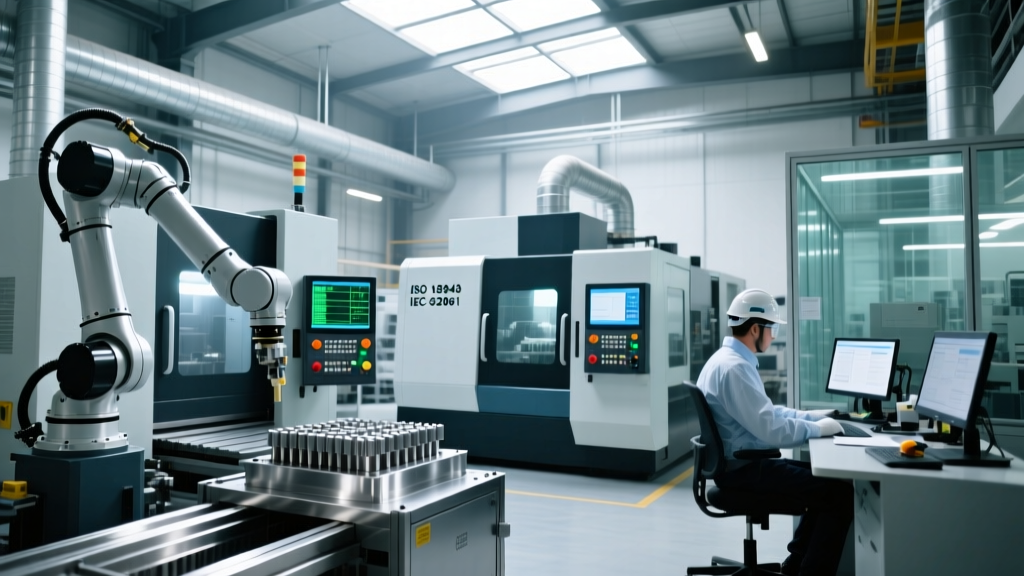
Automation safety is governed by strict international standards. According to ISO 10218-1 safety requirements for industrial robots, the control system must reliably detect human intrusion and halt motion within calculated stopping distances. Procurement must include advanced safety PLCs and area scanners.
- Safety Controllers: Pilz PNOZ m C1 (approx. $2,200) or Allen-Bradley GuardLogix 5580. Do not attempt to run safety logic on standard PLCs; dedicated safety controllers are required for SIL 3 / PLe compliance.
- Area Scanners: SICK microScan3 Pro (approx. $4,500 per unit). These provide simultaneous protective field and warning field monitoring, allowing cobots to slow down rather than hard-stop when operators enter the peripheral zone, preserving cycle times.
Hidden Costs and Vendor SLA Checklist
The Association for Advancing Automation (A3) frequently highlights that integration delays are the primary cause of ROI erosion in automation projects. Protect your CapEx by enforcing strict Service Level Agreements (SLAs) with your equipment vendors and integrators.
| SLA Metric | Minimum Acceptable Standard (2026) | Penalty / Remediation Clause |
|---|---|---|
| FAT (Factory Acceptance Test) | Must run at 110% of target cycle time for 8 continuous hours with zero faults. | Vendor covers expedited shipping and on-site engineering if FAT fails. |
| Spare Parts Consignment | Critical spares (drives, servo motors, I/O modules) shipped with initial installation. | 15% discount on final milestone payment if spares are delayed. |
| Cybersecurity Handover | Full network topology map, open port list, and default password audit. | Mandatory free remediation within 48 hours of security audit failure. |
Strategic Sourcing and Future-Proofing
As noted by the National Institute of Standards and Technology (NIST) advanced manufacturing initiatives, interoperability is the cornerstone of modern smart factories. When issuing RFQs for automated equipment manufacturing, mandate native support for OPC UA and MQTT protocols. Vendors relying on proprietary, closed-loop communication buses will trap your facility in a siloed architecture, making future AI integration and digital twin synchronization prohibitively expensive.
By focusing on total lifecycle costs, rigorous SLA enforcement, and open-architecture protocols, engineering teams can procure automation stacks that deliver measurable OEE improvements and adapt to the shifting demands of modern production.