Bottle Packaging Machinery: Sleeve vs Pressure-Sensitive Maintenance
Master bottle packaging machinery maintenance. Compare service schedules, costs, and part replacements for pressure-sensitive vs sleeve labeling systems.
The Core Divergence: Adhesive Web vs. Thermal Shrink Architectures
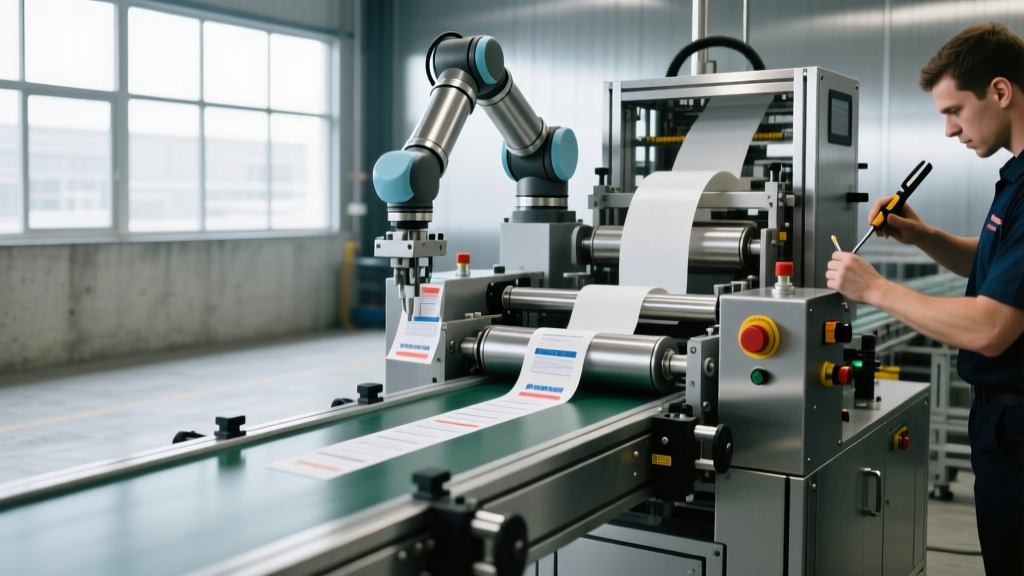
Maintaining labeling systems within bottle packaging machinery requires fundamentally different mechanical and operational approaches depending on the application method. Pressure-sensitive (PS) labelers rely on precise web tension, servo-driven peel plates, and adhesive management. In contrast, sleeve labelers depend on high-speed rotary cutting heads, mandrel film delivery, and thermal steam tunnels. Misapplying maintenance schedules across these two technologies is a primary cause of unplanned downtime in beverage and pharmaceutical packaging lines.
⚠️ CRITICAL SAFETY DIRECTIVE:Before executing any teardown on sleeve cutting heads or PS web paths, strict adherence to OSHA's Lockout/Tagout (LOTO) protocols is mandatory. Sleeve labelers store kinetic energy in high-tension down-feed belts, while PS labelers utilize spring-loaded dancer arms that can snap upon release. Always verify zero-energy state via multimeter on servo drives before physical intervention.
Pressure-Sensitive (PS) Labeler Maintenance Matrix
PS labelers, such as the Herma 500 series or Krones Canmatic architectures, operate on continuous web feed mechanics. The primary failure modes involve adhesive buildup, web tracking drift, and peel plate edge degradation. Maintenance must focus on the web path and the applicator wipe-down mechanism.
| Interval | Component Focus | Actionable Procedure | Est. Cost / Part |
|---|---|---|---|
| Daily | Peel Plate & Wipe Brushes | Wipe peel plate edge with 99% isopropyl alcohol. Inspect wipe-down brushes for flattened bristles that cause label skewing. | $15 (solvents) |
| Weekly | Web Guides & Dancer Arms | Clear dust from ultrasonic edge sensors. Lubricate dancer arm pivot points with dry PTFE spray to maintain 2-4 N web tension. | $25 (lubricants) |
| Monthly | Drive Belts & Pinch Rollers | Check web drive belt deflection (target 5mm at 10N force). Replace rubber pinch rollers showing durometer hardening or flat spots. | $80 - $140 |
| Annually | Servo Motors & Peel Bar | Recalibrate servo encoder origins. Replace the stainless steel peel plate if the dispensing edge shows micro-burring under 10x magnification. | $250 - $450 |
Critical Failure Mode: Adhesive Ooze and Web Breaks
When processing high-tack acrylic adhesives in cold-fill environments, adhesive ooze at the label edges accumulates on the peel plate. Standard alcohol wipes fail to dissolve this cured residue. Line technicians must use specialized citrus-based adhesive removers (e.g., Label-Off) applied with a non-marring brass scraper. Furthermore, if web breaks exceed 2 per shift, verify the rewind spindle torque. Excessive rewind tension (above 6 N) stretches the silicone-coated backing paper, leading to micro-tears that snap under the high-speed acceleration of the dispensing servo.
Sleeve Labeling System Service Schedules
Sleeve labelers, such as the Krones Sleevematic or Axon high-speed platforms, eliminate adhesive but introduce extreme mechanical complexity via the cutting head and thermal shrink tunnel. The maintenance focus shifts from web tension to rotary blade precision and thermal dynamics.
The Cutting Head: Mandrel and Blade Teardown
The cutting head is the highest-wear component in bottle packaging machinery utilizing sleeve technology. Tungsten carbide blades slicing through 40-50 micron PETG or OPS shrink film at 400+ bottles per minute will degrade. Dull blades cause 'chatter' marks on the film, leading to skewed shrinking in the steam tunnel.
- Isolate and Extract: Disconnect the servo-driven down-feed belts and extract the cutting head assembly from the main mast.
- Blade Replacement: Remove the retaining ring. Swap out the rotary blades every 600,000 to 800,000 cuts. Inspect the blade holder for film dust compaction.
- Mandrel Inspection: Check the aluminum mandrel cylinder for vertical scoring. Scoring creates friction, causing the film tube to drag and misalign during the drop phase.
- Rebuild and Balance: Reassemble the rotor and perform dynamic balancing. An unbalanced cutting head operating at 3,000 RPM will destroy the main spindle bearings within 400 operating hours.
PETG film generates microscopic static-charged dust during high-speed cutting. This dust infiltrates the cutting head servo bearings. Install an ionized air blower directly above the film reel and schedule a vacuum purge of the cutting head housing every 72 operating hours to prevent bearing seizure.
Thermal Tunnel Calibration and Descaling
Sleeve labels require precise thermal application to contour to the bottle. Steam tunnels operate at 4.5 to 6.0 bar (65-87 PSI). Over time, hard water causes calcium carbonate scale buildup inside the steam nozzles. This restricts steam flow, creating uneven heat zones that result in 'smiling' (bottom edge curving up) or 'frowning' (bottom edge curving down) labels.
Quarterly Descaling Protocol: Flush the steam generator and distribution manifold with a 10% citric acid solution heated to 60°C (140°F) for 45 minutes. Follow with a high-pressure deionized water rinse. Verify nozzle output symmetry using a thermal imaging camera; temperature variance across the tunnel cross-section must not exceed ±1.5°C.
Cost of Ownership: PS vs Sleeve Over 5 Years
When evaluating bottle packaging machinery for a new line, capital expenditure is only one metric. The 5-year operational maintenance costs reveal stark differences between the two labeling technologies.
| Cost Category (5-Year) | Pressure-Sensitive (PS) | Sleeve Labeling |
|---|---|---|
| Consumable Parts (Blades, Peel Plates, Belts) | $8,500 - $12,000 | $22,000 - $35,000 |
| Preventative Maintenance Labor | 120 Hours | 340 Hours |
| Major Component Rebuilds (Servos, Mandrels) | $4,000 | $14,500 |
| Estimated Unplanned Downtime Cost | $18,000 | $42,000 |
"While sleeve labelers offer superior material cost savings per label and eliminate adhesive waste, their mechanical complexity demands a highly trained maintenance staff. Facilities running sleeve equipment must budget for at least 30% higher technical labor hours compared to equivalent PS lines."
— Adapted from PMMI OpEx Guidelines on Packaging Line Efficiency (PMMI Operations Excellence Certificate Framework)
Troubleshooting Decision Matrix: Label Placement Errors
Label skew and misregistration are the most common defects halting bottle packaging machinery. Use this diagnostic flow to isolate the root cause based on your machine type.
Pressure-Sensitive Skew Diagnostics
- Symptom: Label applies at a consistent 2-degree angle.
- Cause: The peel plate is not perfectly parallel to the bottle conveyor guide rail.
- Fix: Loosen the peel plate mounting bracket. Use a digital angle gauge to set the plate exactly 90° to the conveyor travel vector. Retorque to 15 Nm.
- Symptom: Label 'flags' (edges do not adhere to the bottle contour).
- Cause: Wipe-down brush pressure is insufficient, or bottle surface temperature is below the adhesive's minimum application temperature (MATT), typically 10°C (50°F).
- Fix: Increase brush compression by 3mm. If cold-fill, install an inline infrared pre-heater to raise the bottle surface temp to 15°C prior to the applicator.
Sleeve Shrink Distortion Diagnostics
- Symptom: Vertical seams are wavy or 'zippered'.
- Cause: The steam tunnel's initial pre-shrink zone is too aggressive, shocking the PETG film before it settles.
- Fix: Reduce steam pressure in the first tunnel zone by 0.5 bar. Ensure the lay-flat folder is applying uniform mechanical tension before the bottle enters the thermal zone.
- Symptom: Label slides down the bottle neck during shrinking.
- Cause: Insufficient mechanical support or incorrect film shrinkage ratio for the bottle taper.
- Fix: Verify the film's transverse direction (TD) shrinkage matches the bottle's maximum contour delta. If the bottle taper exceeds 15%, switch from standard PETG to high-shrink OPS film.
Regulatory and Safety Compliance in Labeler Upkeep
Maintenance personnel working on modern bottle packaging machinery must adhere to stringent safety standards. The integration of light curtains, interlocked guarding, and servo-driven axes falls under ISO 13849-1 (Safety of machinery — Safety-related parts of control systems). When replacing worn sensors on PS web guides or sleeve film-feed eyes, technicians must ensure the replacement components meet the original Performance Level (PL) rating—typically PL 'd' or 'e' for high-speed packaging environments. Bypassing interlocks to clear film jams in sleeve mandrels is a severe violation that compromises the entire safety logic circuit.
Establishing a Predictive Maintenance Baseline
Transitioning from reactive to predictive maintenance requires establishing baseline vibration and thermal signatures. For sleeve cutting head spindles, mount an accelerometer to the main bearing housing. A baseline vibration velocity of 1.5 mm/s RMS is normal; an increase to 4.0 mm/s RMS indicates bearing race degradation, providing a 4-week warning window to schedule a rebuild during a planned changeover. Implementing these strict, technology-specific maintenance schedules ensures maximum Overall Equipment Effectiveness (OEE) and extends the operational lifecycle of your labeling assets.