Secondary Packaging Machinery Costs for Pharma Blister Lines
Analyze 2026 CapEx and OpEx for secondary packaging machinery integrated with pharma blister lines, including serialization, tooling, and validation costs.
Capital Allocation Realities in Pharma Blister-to-Carton Integration
Capital allocation for pharmaceutical packaging lines frequently underestimates the integration costs between primary blister formers and downstream equipment. While the blister machine itself commands significant attention, the secondary packaging machinery required to carton, bundle, and case-pack those blisters introduces complex mechanical and software integration challenges. In 2026, strict adherence to the Drug Supply Chain Security Act (DSCSA) and heightened Overall Equipment Effectiveness (OEE) targets mean that procurement teams must budget for fully automated, servo-driven transfer stations and Level 3 serialization aggregation.
This analysis breaks down the exact CapEx and OpEx parameters for integrating secondary packaging machinery with pharmaceutical blister lines, utilizing current market pricing for mid-to-high-tier European and North American equipment manufacturers.
Compliance Warning: Any secondary packaging machinery deployed in US pharmaceutical markets must support 2D DataMatrix code verification at speeds up to 300 cartons per minute. Budget an additional $45,000 to $60,000 per line for high-resolution vision systems (e.g., Cognex or Sea Vision) capable of reading codes on high-gloss or UV-coated carton stock without slowing the cartoner infeed.CapEx Breakdown: Blister and Secondary Packaging Machinery Tiers
Pricing for integrated lines varies drastically based on motion technology (intermittent vs. continuous) and transfer mechanisms. The following matrix outlines 2026 baseline capital costs for integrated primary and secondary configurations.
| Line Configuration | Primary Blister Model | Secondary Cartoner Model | Speed (Blisters/min) | Estimated CapEx (USD) |
|---|---|---|---|---|
| Entry-Level Intermittent | Romaco Blisterix R 090 | Promatic P 91 | 80 - 120 | $480,000 - $550,000 |
| Mid-Tier Continuous | Uhlmann B 1240 | Uhlmann C 130 | 150 - 250 | $950,000 - $1,250,000 |
| High-Speed Servo | Marchesini Zanasi AZ 60 | Marchesini BA 400 | 300 - 450 | $1,800,000 - $2,400,000 |
The Transfer Station: Where Budgets Succeed or Fail
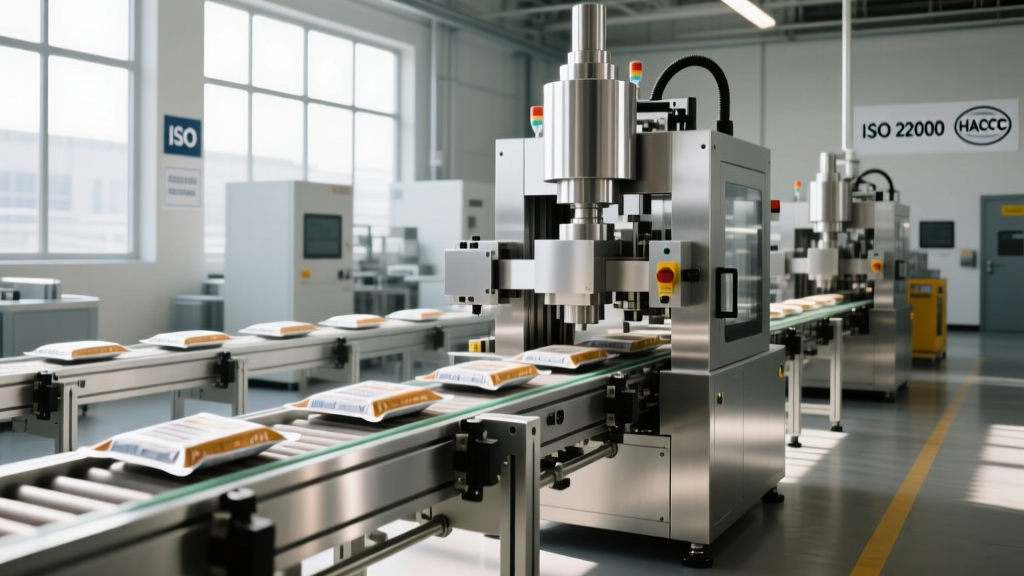
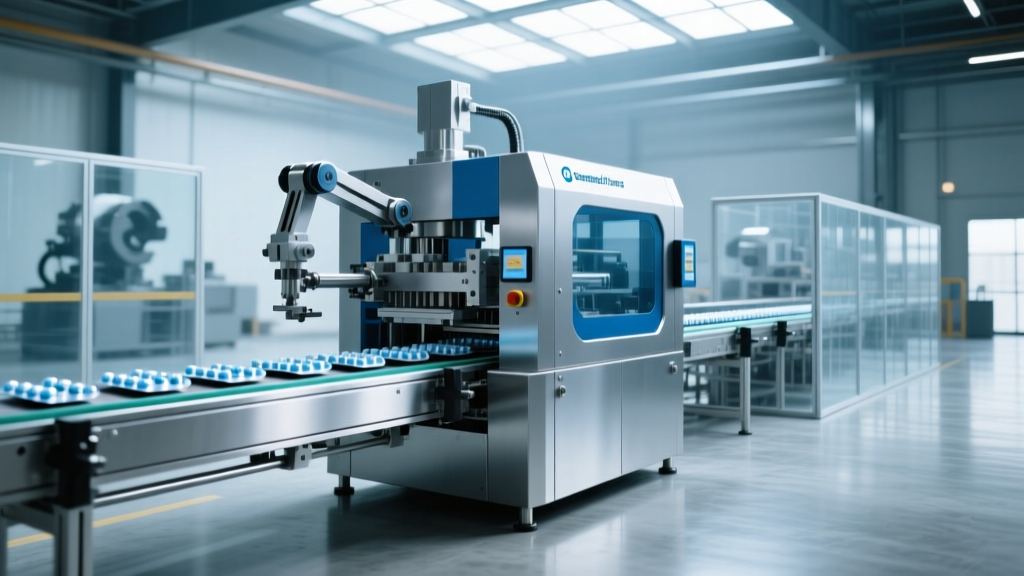
The physical link between the blister machine and the secondary packaging machinery is the transfer station. Older systems rely on gravity chutes or basic bucket conveyors, which cause micro-stops and blister scuffing. Modern continuous-motion lines utilize multi-axis robotic pick-and-place units or advanced servo-driven bucket belts. Budget $110,000 to $160,000 specifically for a robotic transfer cell (e.g., a FANUC or KUKA delta robot setup) if your SKUs include fragile medical devices or odd-shaped combination packs that standard bucket conveyors cannot handle reliably.
Operational Expenditure (OpEx) and Format Part Realities
Procurement teams often secure the capital budget but fail to account for the ongoing OpEx associated with format changes. Pharmaceutical lines frequently run 15 to 30 distinct SKUs, requiring frequent changeovers of forming dies, sealing plates, and cartoner magazine buckets.
- Blister Format Parts: Hardened aluminum or PEEK forming tools cost between $12,000 and $22,000 per SKU. Sealing stations require custom-machined 316L stainless steel plates, adding $8,000 to $14,000 per SKU.
- Secondary Cartoner Format Parts: Custom carton magazine stacks, tuck-in folders, and bucket chains for the secondary packaging machinery cost $9,000 to $18,000 per SKU.
- Changeover Time Valuation: If a manual changeover takes 45 minutes, and your line generates $12,000 per hour in throughput value, a 45-minute downtime costs $9,000. Investing an extra $40,000 upfront for tool-less, snap-in format parts on the cartoner reduces changeover to 12 minutes, yielding an ROI in under 8 shifts.
Serialization and Track-and-Trace Integration Costs
Compliance with global serialization mandates is non-negotiable. According to the FDA's DSCSA guidelines, unit-level serialization and bundle-level aggregation must be flawlessly executed. Integrating aggregation software and hardware between the blister outfeed and the case packer adds significant cost.
"The most common point of failure in pharma packaging OEE is not the blister forming station, but the aggregation vision system at the secondary cartoner infeed. Misreads caused by carton flap flutter force the line to reject good product, artificially depressing OEE by 4% to 7%." — 2025 PMMI Packaging Line Efficiency Report
To mitigate this, specify secondary packaging machinery with integrated, enclosed verification tunnels rather than open-air top-mount cameras. Expect to pay a premium of $35,000 to $55,000 for enclosed, climate-controlled vision tunnels that eliminate ambient light interference and carton flap flutter.
Hidden Costs: Validation and FAT/SAT Protocols
In pharmaceutical manufacturing, equipment is not considered 'purchased' until it is validated. The IQ/OQ/PQ (Installation, Operational, and Performance Qualification) lifecycle for integrated primary and secondary packaging machinery is rigorous.
- Documentation Generation (GAMP 5): Third-party validation engineers charge $150 to $225 per hour. A full validation package for an integrated blister-cartoner line typically requires 400 to 600 hours, adding $60,000 to $135,000 to the project budget.
- Factory Acceptance Testing (FAT): Flying a team of 3 engineers to the OEM facility in Germany or Italy for a 5-day FAT costs approximately $18,000 in travel and labor burden.
- Site Acceptance Testing (SAT) & Utility Hookups: Upgrading facility utilities to support a high-speed line (e.g., adding a dedicated 120 CFM oil-free air compressor and 480V/3-phase drops) averages $25,000 to $40,000.
Decision Framework: Monobloc vs. Linked Secondary Machinery
When specifying the line architecture, engineers must choose between a Monobloc design (where the blister machine and cartoner share a single, continuous base frame and control cabinet) and a Linked design (two distinct machines connected by a buffering conveyor).
| Feature | Monobloc (Integrated Chassis) | Linked (Buffered Conveyor) |
|---|---|---|
| Footprint | Compact; 20-30% less floor space. | Requires 3-5 meters for accumulation buffers. |
| Control System | Single PLC/HMI; unified alarm management. | Dual PLCs; requires handshake programming. |
| Line Stoppage Impact | High; cartoner jam halts blister former. | Low; buffer allows blister to run during cartoner faults. |
| Best Use Case | High-volume, single-SKU or low-mix production. | High-mix, complex SKUs requiring frequent secondary changeovers. |
For contract manufacturing organizations (CMOs) running high-mix, low-volume batches, a linked configuration with a 4-meter accumulation buffer is financially superior. The buffer allows operators to perform format changeovers on the secondary packaging machinery while the primary blister machine continues running, effectively eliminating 15 minutes of primary machine downtime per shift.
Spare Parts and Lifecycle Servicing
Do not sign the purchase order without negotiating a 3-year critical spares package. For the secondary packaging machinery, this must include replacement servo motors for the main drive shaft, a full set of carton transport lugs, and the specific PLC communication gateway cards. Budget exactly 4% to 6% of the total CapEx annually for OEM preventive maintenance contracts. Neglecting this results in unplanned downtime that costs an average of $22,000 per hour in delayed batch releases and quarantined inventory.
Ultimately, accurate budgeting for secondary packaging machinery in pharmaceutical blister lines requires looking past the base machine price. By accounting for robotic transfer cells, enclosed serialization tunnels, tool-less format parts, and rigorous GAMP 5 validation protocols, plant managers can secure realistic capital approvals and achieve target OEE metrics within the first quarter of commissioning.