Shrink vs Stretch Packaging Machinery Equipment: 2026 Guide
Compare shrink vs stretch packaging machinery equipment. Explore 2026 pricing, film specs, L-sealers, turntables, and ROI data for end-of-line buyers.
The Core Dilemma: Containment vs. Presentation
Selecting the correct end-of-line packaging machinery equipment requires a fundamental understanding of your primary operational goal: are you securing a heavy pallet for freight transit, or are you bundling retail-ready multi-packs for display? Buyers frequently conflate shrink wrapping and stretch wrapping, but the physics, film chemistry, and machinery architectures are entirely distinct. Shrink wrapping relies on thermal energy to contract a polymer film tightly around a product, creating a tamper-evident, weatherproof seal. Stretch wrapping relies on the elastic recovery of linear low-density polyethylene (LLDPE) to bind heavy loads together via tension. Choosing the wrong system results in either catastrophic load shifts during transit or wasted thermal energy on simple pallet stabilization.
Quick Diagnostic Matrix: Which Technology Do You Need?
| Application Requirement | Shrink Wrapping | Stretch Wrapping |
|---|---|---|
| Primary Use Case | Retail bundling, tamper evidence, weatherproofing | Pallet stabilization, freight containment, dust protection |
| Typical Load Weight | Lightweight to medium (1 lb – 150 lbs) | Heavy palletized loads (500 lbs – 5,000+ lbs) |
| Film Mechanism | Heat activation (thermal contraction) | Mechanical tension (elastic recovery) |
| Energy Consumption | High (requires continuous heat tunnel operation) | Low (only powers motors and pre-stretch carriages) |
Shrink Wrapping Equipment: Technical Specs & Buyer Data
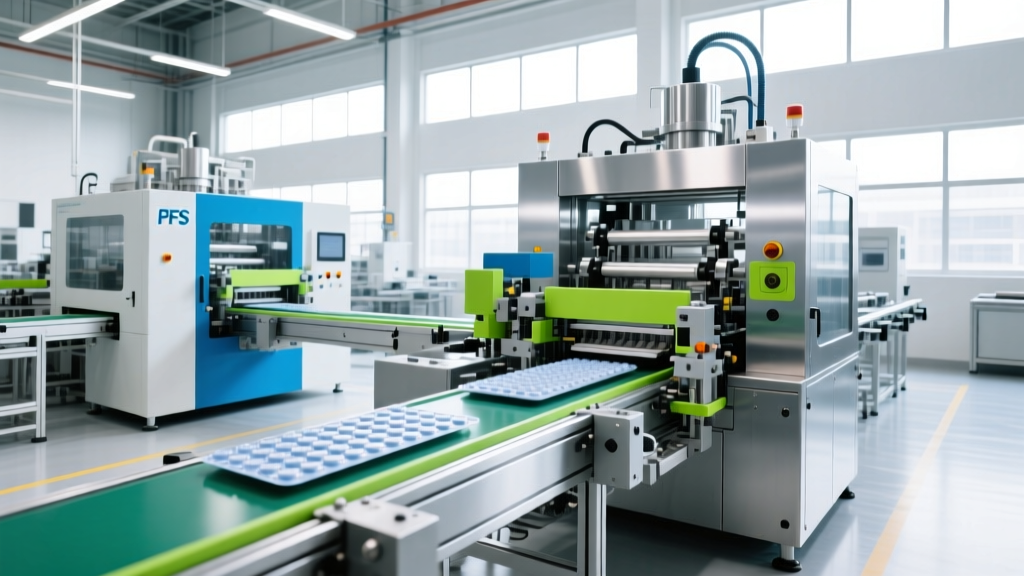
Shrink packaging machinery equipment is engineered for precision and aesthetics. The process typically involves an L-sealer or side-sealer that cuts and seals the film around the product, followed by a heat tunnel that applies controlled thermal energy (usually between 250°F and 350°F) to shrink the film taut. According to industry standards tracked by PMMI (The Association for Packaging and Processing Technologies), modern shrink tunnels utilize advanced variable-frequency drives (VFDs) and precise airflow nozzles to prevent "dog-ears" (unshrunk corners) and film burn-through.
Film Chemistry: POF vs. PVC vs. PE
- Polyolefin (POF): The 2026 standard for retail packaging. It offers high clarity, FDA approval for direct food contact, and excellent tensile strength. Cross-linked POF is mandatory for products with sharp edges that would puncture standard films. Typical gauge: 60 to 100. Cost: ~$3.20 to $4.50 per pound.
- Polyvinyl Chloride (PVC): Historically cheap but increasingly phased out. When heated, PVC releases hydrogen chloride gas, requiring expensive HVAC ventilation upgrades. It also becomes brittle in cold transit environments. Avoid for new facility builds.
- Polyethylene (PE): Used for heavy-duty shrink bundling (e.g., 24-packs of water bottles or insulation batts). PE is thick (2 to 10 mil), lacks retail clarity, but provides immense structural holding force.
Machine Configurations & 2026 Pricing
When sourcing shrink packaging machinery equipment, capital expenditure scales directly with speed and automation level:
- Semi-Automatic L-Sealers with Manual Transfer: Ideal for 5-15 packs per minute (PPM). Models like the Eastey AS-200 series range from $8,500 to $14,000.
- Automatic L-Sealers with Integrated Tunnels: Speeds of 20-40 PPM. Features automatic product infeed and outfeed conveyors. Expect to invest $22,000 to $45,000.
- Continuous Motion Side-Sealers: For high-volume lines (60-120+ PPM). Equipment from manufacturers like ARPAC or Plexpack utilizes endless sealing bands and precision servo-driven tunnels. Pricing starts at $85,000 and exceeds $150,000 for fully integrated sleeving systems.
Stretch Wrapping Equipment: Load Containment Science
Stretch wrapping is purely a structural engineering exercise. The goal is to achieve adequate Load Containment Force (LCF)—the total compressive force holding the pallet together. Testing protocols outlined by the International Safe Transit Association (ISTA) dictate that insufficient LCF leads to load shifting, product damage, and trailer overturns. The machinery must stretch the film, apply it with precise tension, and secure the tail without manual intervention.
The Pre-Stretch Carriage Advantage
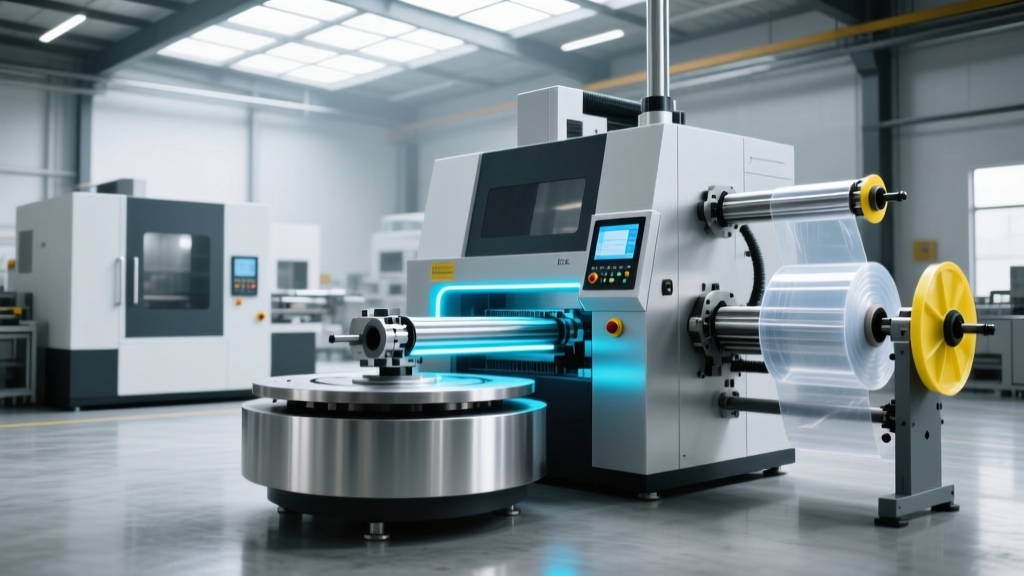
The most critical component on any modern stretch wrapper is the powered pre-stretch carriage. Standard film carriages simply pull the film, stretching it 10% to 20% via brute force. A powered pre-stretch carriage utilizes two rollers turning at different speeds to stretch the film before it touches the load. Engineering data from Lantech demonstrates that a 250% pre-stretch ratio turns 10 feet of film into 35 feet. This reduces film cost per pallet by up to 60% while increasing the film's elastic memory, which translates directly into tighter, more secure load containment.
💡 Pro Tip: Measuring True ContainmentDo not buy a stretch wrapper based solely on "number of wraps." A machine applying 4 layers of un-stretched 80-gauge film provides less containment force than a machine applying 2 layers of 300% pre-stretched nano-layer film. Demand a demonstrable Load Containment Force test (measured in pounds of force) from your equipment vendor before signing a PO.
Machine Configurations & 2026 Pricing
- Semi-Automatic Turntables: The workhorse of warehousing. A standard 4,000 lb capacity turntable with a powered pre-stretch mast (e.g., Lantech Q-300XT or Robopac HELIX) costs between $9,500 and $16,000.
- Rotary Arm Wrappers: The pallet remains stationary on the floor while a rotating arm circles it. Essential for unstable, ultra-heavy, or liquid-filled pallets that would tip on a spinning turntable. Pricing: $28,000 to $55,000.
- Robotic Mobile Wrappers: Autonomous units that drive to the pallet and wrap it in place. Ideal for sprawling warehouses with limited floor space or oversized loads (e.g., lumber, HVAC units). Expect to pay $45,000 to $85,000.
- High-Speed Rotary Ring Systems: For high-volume beverage and building materials plants (100+ pallets per hour). These overhead ring systems easily exceed $120,000.
CAPEX vs. OPEX: The True Cost Matrix
Buyers often fixate on the initial machine cost while ignoring the operational expenditure (OPEX). The table below illustrates the hidden costs of both technologies over a standard 5-year lifecycle.
| Cost Factor | Shrink Wrapping (Auto L-Sealer + Tunnel) | Stretch Wrapping (Auto Turntable) |
|---|---|---|
| Initial CAPEX | $35,000 (Avg. mid-speed system) | $14,000 (Avg. powered pre-stretch) |
| Energy Draw | High (400V / 3-phase for heat tunnels; ~$800/mo) | Low (Standard 110V/220V motors; ~$40/mo) |
| Consumable Cost | POF Film: ~$3.80/lb (High cost per package) | LLDPE Film: ~$1.90/lb (Low cost per pallet) |
| Maintenance Reality | Teflon tape replacement (weekly); Heater band burnout (annual); Airflow nozzle cleaning. | Turntable chain tensioning (quarterly); Photo-eye sensor dusting (daily); Carriage roller replacement. |
Line Integration and Automation Standards
In 2026, standalone machines are the exception, not the rule. Both shrink and stretch packaging machinery equipment must integrate seamlessly into broader PLC-controlled packaging lines. When specifying your equipment, mandate Ethernet/IP or PROFINET communication protocols. This allows the wrapper to receive dimensional data directly from upstream 3D vision scanners or barcode readers.
For shrink lines, integration means the L-sealer automatically adjusts its dwell time and tunnel temperature based on the specific SKU profile identified by the scanner. For stretch lines, it means the turntable automatically selects the correct wrap pattern and pre-stretch tension based on the pallet's height and weight profile, eliminating operator error and film breakage. Always specify automatic film tail heat-sealing or mechanical wipe-downs on stretch wrappers to eliminate the need for manual labor at the end of the cycle.