Automated Beverage Carton Packaging Machinery Market: Labeler Upkeep
Compare maintenance schedules for pressure-sensitive vs. sleeve labelers in the automated beverage carton packaging machinery market. Expert service guides.
The secondary packaging and promotional multi-pack segments of the automated beverage carton packaging machinery market rely heavily on high-speed labeling to differentiate products on retail shelves. While primary aseptic filling dominates the carton conversation, the application of pressure-sensitive labels (PSL) and shrink sleeves onto gable-top, brick, and specialized carton formats requires distinct, rigorous maintenance protocols. Misaligning the service schedule with the specific mechanical demands of these two labeling technologies results in catastrophic line inefficiencies, film waste, and unplanned downtime.
Operational Mechanics and Wear Profiles
Pressure-sensitive labelers and shrink sleeve applicators operate on fundamentally different mechanical principles, which dictate their respective wear profiles and maintenance intervals.
Pressure-Sensitive Labeling (PSL) Mechanics
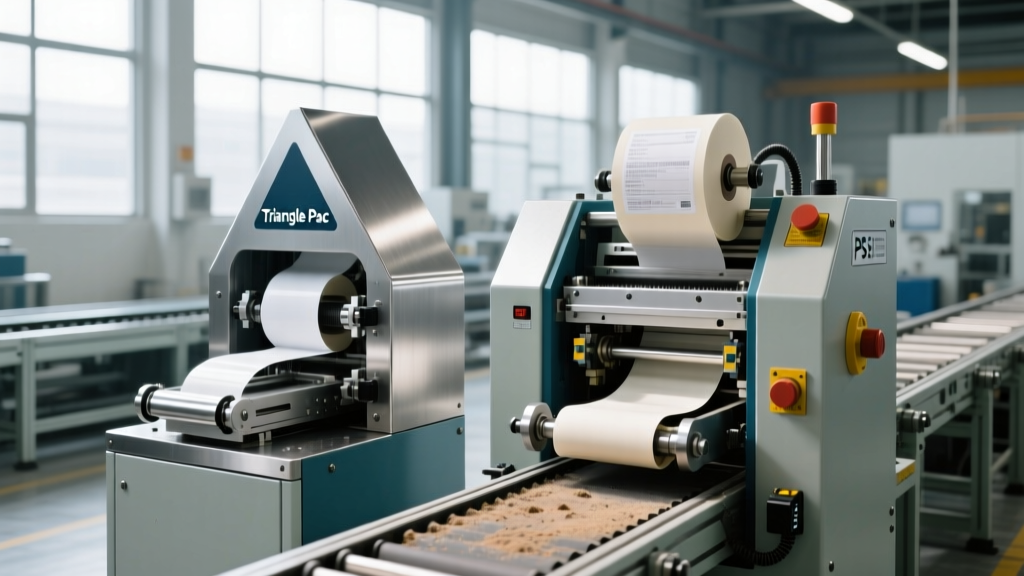
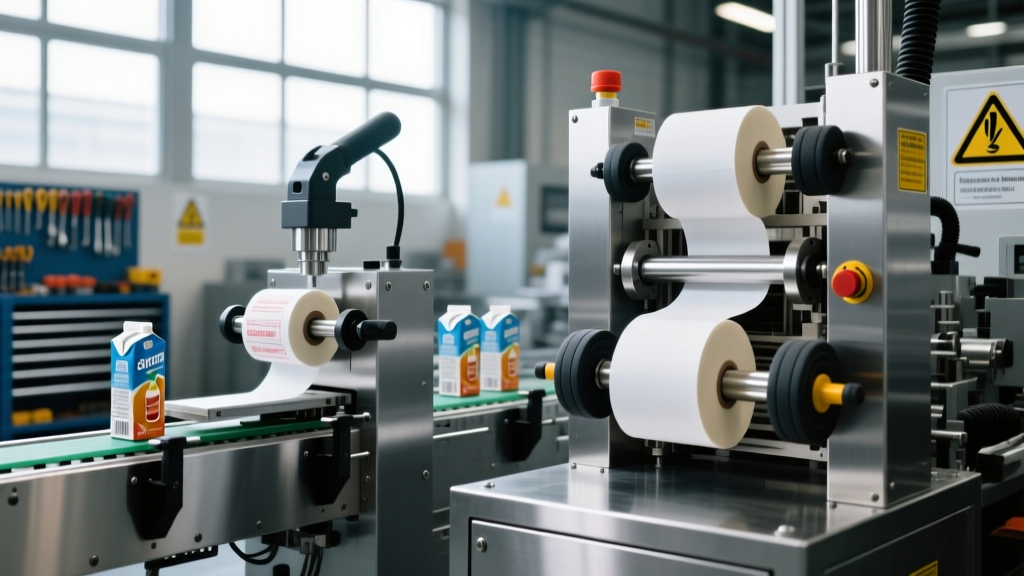
PSL systems utilize a silicone-coated release liner, a precise web-tensioning system, and a peel plate to separate the label from the backing. The label is then applied to the carton via a tamp, blow, or wipe-on mechanism. The primary wear points are the peel plate edge, the nip rollers, and the web-guiding sensors. Because PSL relies on adhesive tack, environmental factors like ambient humidity and carton surface dust heavily influence mechanical stress.
Shrink Sleeve Applicator Mechanics
Sleeve labelers feed a continuous tubular film over a mandrel, cut it to length using high-speed rotary or reciprocating blades, and drop it over the carton before it enters a steam or hot-air shrinking tunnel. The critical wear components are the cutting blades, the mandrel surface, and the steam tunnel nozzles. Unlike PSL, sleeve systems do not use adhesives on the applicator head, but they introduce severe thermal and moisture-related maintenance variables.
Preventative Maintenance Matrix: PSL vs. Sleeve
| Interval | Pressure-Sensitive (PSL) Tasks | Shrink Sleeve Tasks | Est. Downtime |
|---|---|---|---|
| Daily | Clean photoelectric sensors; wipe peel plate with isopropyl alcohol; check web tension (2.5 - 3.5 N/cm). | Purge steam tunnel condensate lines; inspect film feed rollers for debris. | 15 mins |
| Weekly | Inspect nip roller durometer; verify servo-driven web guide calibration. | Lubricate mandrel bearings; inspect cutting blade edges for micro-chipping. | 45 mins |
| Monthly | Replace Teflon coating on peel plates if worn; check encoder timing belts. | Descale steam generator; replace rotary cutter blades (approx. every 40k cuts). | 2 hours |
| Annual | Complete drive train teardown; replace PLC backup batteries; recalibrate tamp pneumatic cylinders. | Replace heat tunnel insulation; service blower motor bearings; rebuild steam valves. | 8-12 hours |
Deep Dive: Pressure-Sensitive Labeler (PSL) Service Schedules
In high-speed carton lines running 400 to 800 cartons per minute (cpm), PSL systems require meticulous attention to web path geometry and adhesive residue management.
Peel Plate and Nip Roller Maintenance
The peel plate is the most abused component in a PSL system. Standard stainless-steel peel plates with a Teflon or DLC (Diamond-Like Carbon) coating must be inspected weekly. If the leading edge develops micro-burrs from liner abrasion, it will cause label tearing or premature dispensing. Replace DLC-coated peel plates annually, or every 12 million cycles, whichever comes first. Budget approximately $150 to $300 per replacement plate depending on the OEM (e.g., Krones, Sidel).
Nip rollers, which pull the web through the system, accumulate adhesive ooze. Do not use metal scrapers on polyurethane nip rollers; this alters the surface durometer and causes web slippage. Use specialized citrus-based adhesive solvents during the daily shift changeover.
Servo and Encoder Calibration
Modern PSL machines use servo-driven web feeders rather than mechanical clutches. Monthly maintenance must include verifying the timing belt tension connecting the servo motor to the feed roller. A loose belt introduces a 2mm to 4mm registration error at the carton application point. Always recalibrate the encoder zero-position after any belt replacement to ensure the label cut-off aligns perfectly with the carton's leading edge.
Deep Dive: Shrink Sleeve Applicator Maintenance
Sleeve labelers applied to beverage cartons face unique challenges, primarily due to the sharp corners of gable-top cartons and the heavy reliance on steam tunnels for shrinking PET-G or PVC films.
⚠️ SAFETY WARNING: Steam Tunnel MaintenanceSteam tunnels operate at 1.5 to 2.0 bar of pressure with temperatures exceeding 120°C (248°F). All internal maintenance, including nozzle clearing and trap cleaning, must strictly adhere to OSHA's Lockout/Tagout (LOTO) standards. Never attempt to clear a jammed sleeve film from the tunnel without verifying zero energy state and allowing a 20-minute cool-down period.
Cutting Mechanism and Mandrel Care
The cutting mechanism is the highest-failure point on a sleeve applicator. Carbide-tipped rotary blades or reciprocating knives must be replaced every 35,000 to 45,000 cuts. Running dull blades causes film micro-tears that propagate through the steam tunnel, resulting in split sleeves on the final carton package. The mandrel itself must be wiped down weekly with a non-abrasive solvent to remove plasticizer buildup from the film, which increases friction and causes film tracking errors.
Steam Generator Descaling
Facilities utilizing hard water will experience rapid calcium carbonate buildup in the steam generator coils and tunnel nozzles. This restricts steam flow, causing uneven shrinking and "smiling" (upward curling) of the sleeve label on the carton base. Implement a monthly chemical descaling protocol using food-grade citric or sulfamic acid solutions. If your facility's water hardness exceeds 7 grains per gallon, installing an inline reverse osmosis (RO) water softener is a mandatory capital upgrade to protect the $4,500+ steam generator assemblies.
Cost of Poor Maintenance: Downtime Analysis
Financial Impact of Labeler Neglect
- PSL Web Breaks: A single web break on a 600 cpm line takes 3 to 5 minutes to re-thread and splice. At an average margin of $0.12 per beverage carton, a 5-minute stop costs $36 in lost production, excluding the scrapped cartons that passed the sensor without a label.
- Sleeve Tunnel Jams: A film jam in the steam tunnel requires a full LOTO procedure, cool-down, and clearance. This averages 25 to 40 minutes of downtime. The thermal shock of restarting the tunnel also wastes the first 20 cartons due to improper heat soak.
- Scrap Film Costs: Poorly maintained PSL peel plates or dull sleeve cutter blades increase film scrap rates from the industry standard of 1.2% to over 4.5%. On a line consuming $8,000 of label material per week, this represents a $264 weekly material bleed.
Calibration Frameworks for High-Speed Carton Lines
According to guidelines published by the Packaging Machinery Manufacturers Institute (PMMI), secondary packaging equipment must maintain a registration accuracy of +/- 0.5mm to ensure barcodes and nutritional panels remain scannable and legible. Achieving this on corrugated or coated beverage cartons requires specific calibration frameworks:
- Surface Friction Mapping: Beverage cartons often feature UV-cured varnishes or aqueous coatings that alter surface friction. PSL tamp pads must be adjusted for air pressure (typically 40-60 PSI) based on the specific coating slip-agent ratio to prevent label bouncing.
- Shrink Ratio Compensation: Sleeve films shrink at different rates in the machine direction (MD) and transverse direction (TD). If the carton geometry changes (e.g., switching from a 1-liter brick to a 500ml gable-top), the steam tunnel's upper and lower manifold pressures must be independently recalibrated to prevent the sleeve from tearing on the sharp top ridge.
- Static Dissipation: High-speed film unwinding generates massive static charges, especially in winter months when plant humidity drops below 30%. Install and actively maintain ionizing bars (cleaning the emitter pins monthly with compressed air) to prevent PSL labels from clinging to the peel plate or sleeve films from collapsing prematurely on the mandrel.
Edge Cases and Troubleshooting
Edge Case: Sleeve Distortion on Gable-Top Corners
When applying sleeves to gable-top cartons, the sharp folded ridges act as stress concentrators during the shrinking phase. If you experience chronic sleeve splitting at the top corners, do not immediately increase film thickness. Instead, check the steam tunnel's lateral nozzle alignment. The steam must hit the flat sides of the carton first, pulling the film taut before the top ridge receives direct heat. Adjusting the nozzle angle by just 10 to 15 degrees outward resolves 90% of corner-splitting issues without increasing material costs.
Edge Case: PSL Adhesive Ooze on Cold Cartons
If your beverage line fills cartons with cold liquids (e.g., chilled juices or dairy) immediately prior to labeling, the carton surface temperature can drop below the adhesive's glass transition temperature. Standard acrylic adhesives fail to tack properly below 10°C (50°F). If you cannot alter the line layout to allow for surface warming, you must switch to specialized cold-temperature rubber-based hot-melt adhesives on your PSL web, and increase the tamp dwell time by 15-20 milliseconds to ensure a mechanical bond.