Aseptic Filler Fixes: Pharmaceutical Packaging Machinery Manufacturer
Master aseptic food filler repair with protocols from a top pharmaceutical packaging machinery manufacturer. Fix VHP, HEPA, and SIP faults fast.
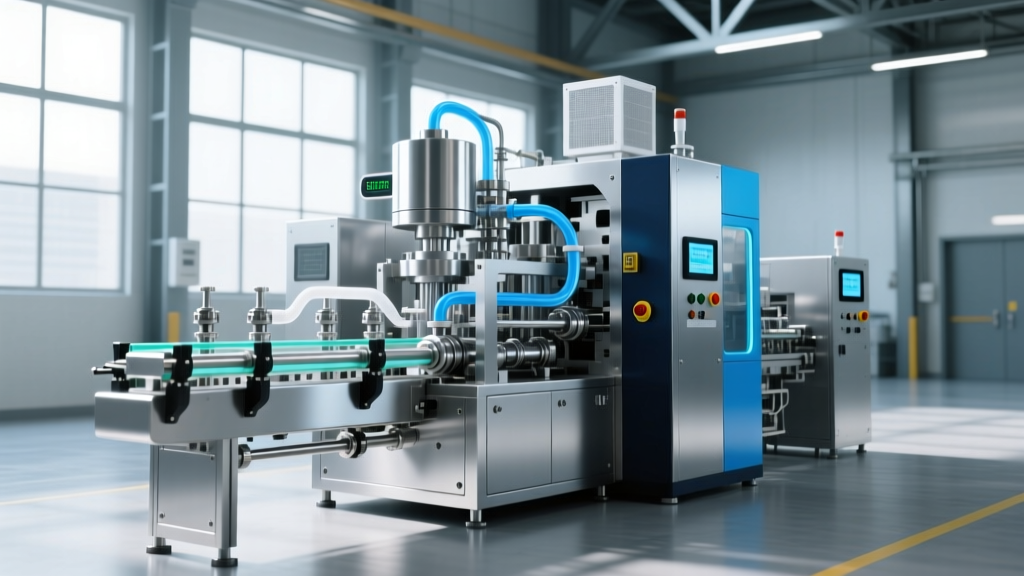
When food and beverage producers upgrade to extended shelf life (ESL) or fully aseptic liquid packaging lines, they increasingly source equipment from a pharmaceutical packaging machinery manufacturer like Syntegon, IMA, or Bausch+Ströbel. These systems borrow heavily from EU GMP Annex 1 and FDA 21 CFR Part 211 standards, utilizing Vaporized Hydrogen Peroxide (VHP) isolators and Steam-in-Place (SIP) networks. However, applying pharma-grade aseptic technology to high-speed food lines (often exceeding 36,000 bottles per hour) creates unique mechanical and thermal stress profiles.
Troubleshooting these hybrid systems requires moving beyond standard mechanical repairs into strict contamination control, thermal mapping, and biochemical validation. This guide details the exact diagnostic protocols for resolving the most critical faults in pharma-derived aseptic food fillers.
Diagnostic Flowchart: Isolator Pressure & VHP Faults
Before opening any access panels, technicians must evaluate the isolator's pressure cascade and VHP cycle logs. Use this decision matrix to isolate the root cause of cycle aborts.
| Symptom / Error Code | Primary Suspect | Diagnostic Action | Target Specification |
|---|---|---|---|
| Cycle abort during VHP Injection Phase | H2O2 Vaporizer Temp Drop | Check PID controller and heating element resistance | Vaporizer block at 110°C ± 2°C |
| High Residual H2O2 Post-Aeration | Catalytic Converter Exhaustion | Measure exhaust H2O2 ppm; inspect catalyst bed | < 1.0 ppm within 120 mins |
| Isolator Pressure Drop > 15 Pa | Glove Port Breach / HEPA Load | Perform ISO 10648-2 pressure decay test | Leak rate < 1.0 h⁻¹ at +30 Pa |
| SIP Cycle Fails to Reach Hold Temp | Steam Trap Blockage / RTD Lag | Verify Pt100 calibration and steam trap delta-T | 121.1°C at coldest point (drain) |
Troubleshooting VHP Decontamination Cycles
Pharmaceutical packaging machinery manufacturers design VHP systems to achieve a 6-log reduction of Bacillus atrophaeus. In food applications, the challenge is maintaining this log reduction while cycling the machine 4 to 6 times per shift to accommodate aggressive CIP/SIP schedules.
Symptom: Cycle Abort Due to High Residual H2O2
If the isolator fails to aerate below the 1 ppm safety threshold, the filling sequence will not initiate. This is rarely a sensor fault; it is almost always a catalytic or airflow issue.
⚠️ Warning: Catalytic Bed SaturationStandard manganese dioxide (MnO2) catalytic filters degrade when exposed to liquid water. If your pre-heating phase for the 35% w/w H2O2 solution is failing, liquid droplets will enter the vapor stream, permanently blinding the catalyst bed. Always verify the vaporizer thermocouple reads a minimum of 108°C before the injection pump engages.
Repair Protocol:
- Extract the exhaust catalyst cartridge and weigh it. A weight increase of >5% indicates moisture saturation.
- Test the aeration blower motor amperage. A drop in amperage suggests a clogged pre-filter upstream of the HEPA, reducing the air exchange rate (ACH) below the required 15 ACH for rapid aeration.
- Recalibrate the electrochemical H2O2 sensor using a standardized 10 ppm test gas. Drift in these sensors is common after 18 months of continuous exposure to oxidative environments.
SIP Thermal Mapping & RTD Sensor Failures
Sterilize-in-Place (SIP) relies on saturated steam at 121.1°C (250°F) for a minimum of 30 minutes, or 134°C for 15 minutes. According to FDA guidance on aseptic processing, the coldest point in the system—usually the lowest condensate drain or the filling valve manifold—must dictate the cycle hold time.
The Pt100 Sensor Lag Phenomenon
Food and beverage lines experience severe thermal shock compared to pharma lines due to rapid changeovers between ambient-temperature CIP fluids and 140°C SIP steam. This causes the protective thermowells of Pt100 Class A Resistance Temperature Detectors (RTDs) to develop micro-fissures, leading to moisture ingress and erratic resistance readings.
Diagnostic Steps for SIP Temperature Deviations:
- Check the Delta-T: Compare the RTD reading at the steam inlet versus the remote manifold. A delta-T greater than 2.5°C during the steady-state hold phase indicates condensate pooling.
- Inspect Steam Traps: Inverted bucket or thermostatic steam traps at the low-point drains frequently fail open on high-speed food lines due to water hammer. If the trap fails open, live steam escapes, but if it fails closed, condensate pools, creating a localized cold spot that will fail thermal validation.
- Perform a 3-Point Calibration: Remove the suspect RTD and test in a dry-block calibrator at 80°C, 121°C, and 135°C. Replace any sensor showing a deviation > ±0.3°C.
Isolator Pressure Cascades and Glove Port Integrity
Modern aseptic food fillers utilize positive-pressure isolators to protect the product from the environment. The WHO GMP guidelines for sterile products mandate strict pressure differentials to prevent ingress of unclassified air.
"In high-speed rotary fillers, the continuous movement of the filling carousel creates turbulent airflows inside the isolator. Maintaining a stable +20 Pa to +40 Pa cascade requires dynamic HEPA fan filter unit (FFU) adjustments that standard pharma VFDs are not always programmed to handle at 36,000 bph speeds."
— Lead Validation Engineer, Aseptic Systems Integration
Glove Port Leak Testing (ISO 10648-2)
Glove ports are the highest-risk vulnerability on any aseptic filler. The elastomeric materials (typically Hypalon or EPDM) degrade rapidly when exposed to food-grade peracetic acid (PAA) splash-back during exterior decontamination.
Execution of the Pressure Decay Test:
- Seal all isolator ports and inflate the main chamber to +50 Pa.
- Allow a 10-minute stabilization period for temperature equilibration (adiabatic heating from compression will cause false leak readings if skipped).
- Monitor the pressure decay over 15 minutes. The acceptable leak rate for a Class 3 isolator is < 1.0 h⁻¹.
- If the leak rate exceeds 2.5 h⁻¹, isolate the glove ports using blanking flanges and re-test to confirm if the breach is in the gloves or the main HEPA seals.
Pharma vs. Food: Mechanical Wear Considerations
Technicians must understand that while the biology of the machine is pharmaceutical, the mechanics are industrial food packaging. A pharmaceutical packaging machinery manufacturer designs rotary joints and dosing valves for 400 cycles per minute. Food lines push these same components to 600+ cycles per minute to achieve commercial throughput.
| Component | Pharma Lifecycle Expectancy | Food Line Reality (High Speed) | Required Intervention |
|---|---|---|---|
| Dosing Valve O-Rings (EPDM) | 1,000,000 cycles | 400,000 cycles (due to PAA exposure) | Replace every 14 days; switch to FFKM (Kalrez) |
| Rotary Union Mechanical Seals | 24 months | 6-8 months (due to steam/CIP thermal shock) | Repack with high-temp PTFE; monitor weekly |
| HEPA Filter Media (H14) | 5 years | 2-3 years (due to high ACH and humidity) | Annual PAO/DOP integrity scan required |
Preventative Maintenance Matrix for Aseptic Food Lines
To maintain the validation state of an aseptic filler sourced from a pharmaceutical manufacturer, the maintenance schedule must be compressed to account for the harsh realities of food production environments. Implement this matrix to prevent unplanned downtime and sterility breaches.
- Daily: Visual inspection of all glove ports for micro-tears; verify VHP vaporizer block temperature prior to first shift start-up.
- Weekly: Lubricate isolator door hinges with food-grade, H1-registered, high-vacuum grease to prevent particulate shedding inside the clean zone.
- Monthly: Perform a full isolator pressure decay test (ISO 10648-2) and calibrate the electrochemical H2O2 residual sensors.
- Quarterly: Disassemble and inspect all SIP steam traps; verify Pt100 RTD calibration against a certified dry-block reference.
- Annually: Conduct aerosol challenge testing (PAO) on all supply and exhaust HEPA filters to ensure 99.995% efficiency at 0.3 microns.
By applying rigorous pharmaceutical troubleshooting methodologies to the high-speed realities of food and beverage packaging, plant engineers can eliminate chronic micro-stoppages, ensure absolute sterility assurance levels (SAL), and maximize the ROI on premium aseptic filling equipment.