How Spindle Bearings Impact Machine Tending Tools ROI
Discover how CNC spindle types and bearing configurations dictate the budget, payload, and ROI of your automated machine tending tools in 2026.
The CapEx Disconnect: Spindle Physics vs. Automation Budgets
When manufacturing engineers plan the capital expenditure for automated machine cells, they typically size their machine tending tools—robotic arms, gantries, and end-of-arm tooling (EOAT)—based on part weight and footprint. This approach fundamentally ignores the machine tool's spindle assembly. The spindle's taper interface and bearing configuration dictate the actual cycle time, cutting forces, and required automation speed. A mismatch between spindle capabilities and tending automation results in either stranded capital (over-engineered robots) or bottlenecked throughput (robots that cannot keep pace with spindle RPMs).
In 2026, with the rising integration of high-frequency spindles and advanced hybrid ceramics, understanding the financial bridge between spindle mechanics and automation hardware is critical for accurate budget forecasting. The cost of machine tending tools can swing from $18,000 to over $85,000 depending entirely on the spindle specifications they are tasked to service.
Warning: The "Over-Spindling" Budget Trap
Purchasing a 24,000 RPM HSK63 spindle for an aluminum aerospace component, but pairing it with a low-speed collaborative robot (cobot) due to budget constraints, renders the spindle's speed advantage useless. The robot becomes the bottleneck, and the premium paid for high-speed spindle bearings is entirely wasted. Always calculate the tending tool budget based on the spindle's target cycle time, not just the part geometry.
Spindle Taper Interfaces and Gripper Tooling Costs
The physical interface between the tool holder and the spindle nose determines the rigidity, RPM ceiling, and the type of automated tool changers or grippers required. According to Sandvik Coromant's tool interface engineering data, the dual-contact mechanics of modern interfaces require highly precise automated handling to prevent catastrophic crash damage.
CAT/BT Flanged Tapers (Heavy Duty, Lower RPM)
Standard CAT50 or BT50 spindles rely on a 7:24 taper. They are robust, handle heavy interrupted cuts in steel and titanium, and typically operate between 8,000 and 12,000 RPM. Because cycle times for these heavy-removal operations often exceed 3 to 5 minutes, the automation does not require blistering speed.
- Machine Tending Tool Class: Collaborative robots (e.g., FANUC CRX-10iA/L) or basic 3-axis pneumatic gantries.
- EOAT Requirements: Standard steel parallel grippers (e.g., SCHUNK PGN-plus 100). No high-speed acceleration dampening required.
- Estimated Automation Budget: $18,000 – $28,000 per cell.
HSK/Capto Hollow-Shank (High Speed, High Precision)
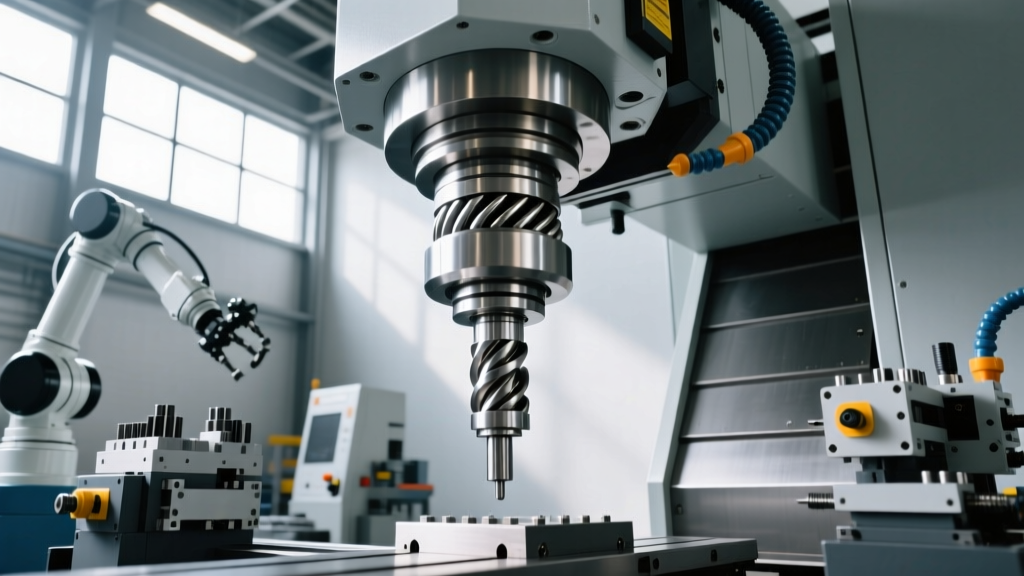
HSK63 and Capto C6 interfaces utilize a 1:10 taper with simultaneous face-and-taper contact. This dual-contact design provides superior radial rigidity at speeds ranging from 18,000 to 30,000 RPM. Cycle times for these components (often thin-wall aerospace structures or medical implants) are frequently under 90 seconds.
- Machine Tending Tool Class: High-speed articulated robots (e.g., FANUC M-20iD/25) capable of 1.5m/s to 2.0m/s Tool Center Point (TCP) velocities.
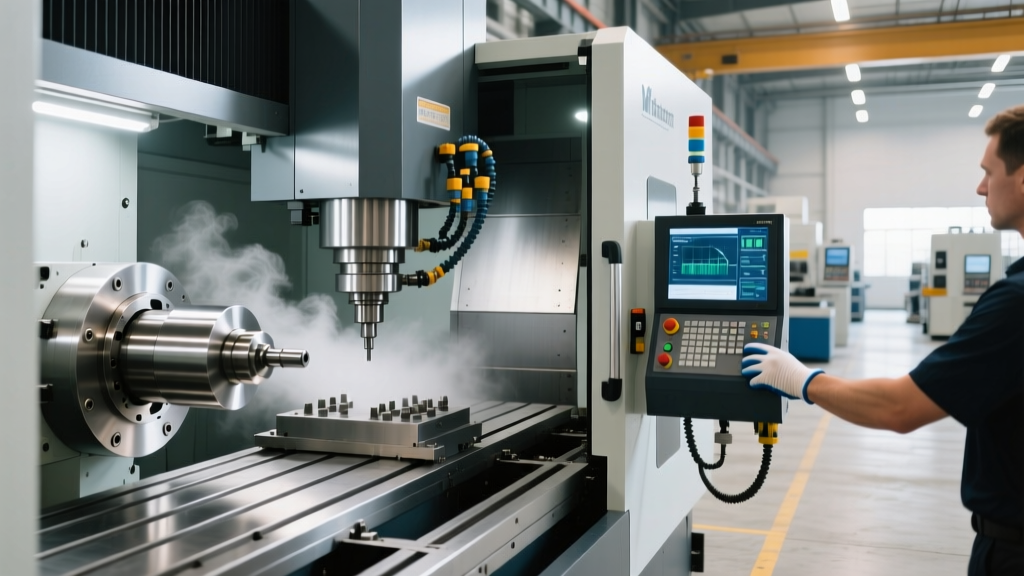
- EOAT Requirements: Lightweight carbon-fiber or 3D-printed titanium end-effectors to reduce inertia during rapid directional changes. Force-torque sensors are mandatory to ensure the robot does not misalign the tool during high-speed ATC (Automatic Tool Changer) exchanges.
- Estimated Automation Budget: $45,000 – $75,000 per cell.
Bearing Configurations: The Hidden Driver of Cycle Time ROI
The bearing configuration inside the spindle cartridge dictates thermal stability, maximum RPM, and maintenance intervals. As documented in SKF's super precision bearing specifications, the transition from standard steel to hybrid ceramics fundamentally alters the operational envelope of the machine tool.
Steel Angular Contact Bearings
Standard in mid-tier vertical machining centers, steel angular contact bearings (typically ABEC-7 or ABEC-9 precision) are cost-effective but generate significant frictional heat at high RPMs. They require aggressive oil-air lubrication and limit continuous high-speed duty cycles. Tending tools paired with these spindles must account for longer cycle times and potential mid-shift thermal growth compensation pauses.
Hybrid Ceramic Bearings (Silicon Nitride)
Hybrid bearings utilize silicon nitride (Si3N4) ceramic balls with steel races. Ceramic balls are 40% lighter and 70% stiffer than steel, reducing centrifugal forces and allowing 30% to 50% higher RPM limits. They run significantly cooler, enabling aggressive, uninterrupted high-speed machining.
Budget Impact: Because hybrid ceramic spindles maintain tight tolerances at high speeds without thermal pausing, the machine tending tools must operate on a continuous, high-uptime schedule. This necessitates investing in automated part-cleaning stations (to prevent swarf from interfering with robot grippers) and dual-zone shuttle systems, adding $12,000 to $18,000 to the base tending tool budget.
Hydrostatic Bearings
Found in ultra-precision jig borers and hard-turning lathes, hydrostatic bearings use a pressurized film of oil to suspend the spindle shaft. They offer zero friction and infinite stiffness but require complex, high-pressure hydraulic power units. The machine tending tools for these machines must be equipped with IP69K-rated washdown components and specialized coolant-containment skirts to prevent hydraulic cross-contamination, adding roughly $8,500 in EOAT environmental protection costs.
2026 Cost Matrix: Matching Spindles to Automation Hardware
The following matrix provides a baseline for budgeting machine tending tools based on the specific spindle and bearing architecture of the target CNC machine.
| Spindle Interface | Bearing Configuration | Target RPM / Cycle Profile | Required Tending Tool Class | Est. Automation CapEx (2026) |
|---|---|---|---|---|
| CAT50 / BT50 | Steel Angular Contact | 8k - 12k RPM / Long Cycle | Cobot / Basic Pneumatic Gantry | $18,000 - $28,000 |
| HSK63A | Hybrid Ceramic (Si3N4) | 18k - 24k RPM / Short Cycle | High-Speed Articulated Robot | $45,000 - $65,000 |
| Capto C6 | Hybrid Ceramic w/ Chill Rollers | 12k - 16k RPM / High Torque | Heavy Payload Robot + Force Sensor | $55,000 - $75,000 |
| Integral Motor | Hydrostatic / Magnetic | Sub-1 micron / Ultra-Precision | Linear Gantry + IP69K EOAT | $70,000 - $95,000 |
The Financial Risk of Spindle Crashes via Tending Errors
A critical, often-overlooked aspect of budget planning is the cost of failure. When automated machine tending tools misalign a workpiece or fail to clear chips from the spindle taper, the resulting crash can destroy the spindle cartridge.
Spindle Replacement Cost Breakdown
- Standard CAT40 Belt-Driven Spindle: $8,500 – $12,000 (Parts and Labor)
- HSK63 Direct-Drive High-Frequency Spindle: $28,000 – $45,000 (Requires factory-certified cleanroom rebuild)
- Capto C8 Integral Motor Spindle: $55,000+ (Often requires replacing the entire Z-axis ram assembly)
Budget Rule of Thumb: Allocate 15% of your total machine tending tools budget to advanced vision systems (e.g., Cognex In-Sight) or laser taper-cleaning systems. Spending $6,000 on an automated spindle ring-cleaner and part-presence verification sensor will pay for itself by preventing a single HSK spindle crash.
Decision Framework for Plant Managers and Integrators
To optimize your automation budget, follow this sequential decision framework before finalizing the purchase order for your machine tending tools:
- Audit the Spindle Duty Cycle: Request the spindle's S1 (continuous) vs. S6 (intermittent) duty curve from the machine tool builder. If the spindle requires a 20% cool-down period after aggressive roughing, you can downgrade the automation to a slower, less expensive cobot without losing overall cell OEE (Overall Equipment Effectiveness).
- Calculate the Taper Interface Tolerance: HSK and Capto interfaces rely on face contact for Z-axis depth accuracy. If your machine tending tools utilize standard, high-force mechanical grippers that induce micro-deflections on the robot arm, the tool will not seat perfectly. You must budget for compliant, low-force pneumatic grippers with alignment cones.
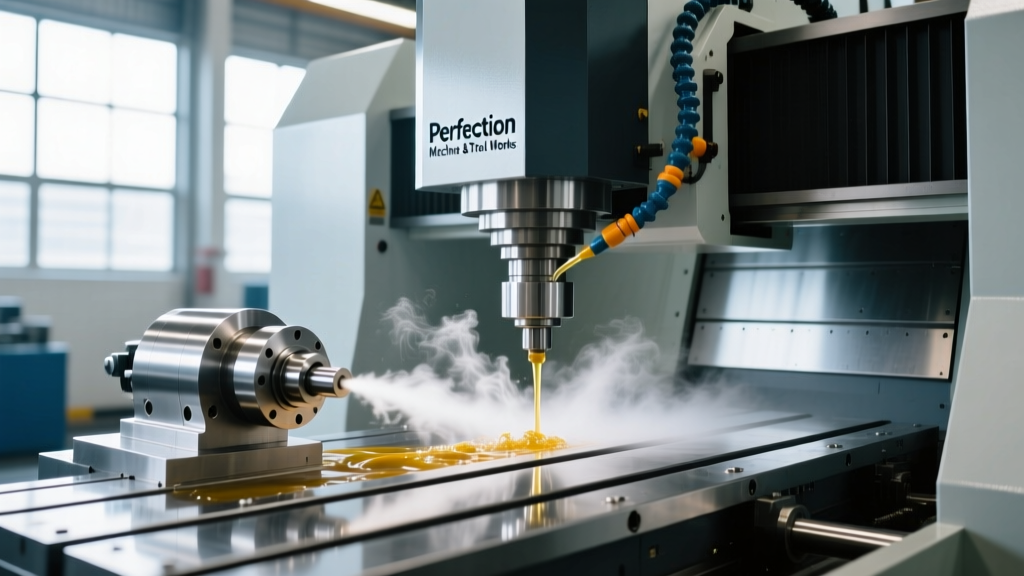
- Factor in Coolant Pressure Upgrades: Modern spindles utilizing hybrid ceramics often pair with 1,000 PSI through-spindle coolant (TSC) to clear chips in deep cavity milling. High-pressure TSC creates a severe mist environment inside the enclosure. Standard machine tending tools with IP65 ratings will fail prematurely; you must budget an additional $2,500 per robot for IP67/IP69K foundry-rated protective suits and sealed EOAT joints.
- Evaluate the Tool Magazine Capacity: A 120-tool matrix magazine requires the machine tending robot to occasionally perform automated tool replenishment (swapping worn sister tools from an external carousel). This requires adding a tool-gripper end-effector with RFID reading capabilities to the robot's EOAT, increasing the payload requirement and the overall automation budget by approximately $11,000.
Final Budget Alignment
The era of treating the CNC machine and the automation hardware as separate purchasing silos is over. By anchoring your machine tending tools budget to the specific physical realities of the spindle taper and bearing configuration, manufacturing leaders can eliminate stranded automation capital, prevent catastrophic crash liabilities, and achieve true lights-out manufacturing ROI.