Spindle Configurations for Ceramic Machining Tools Guide
Select the right spindle and bearing configuration for ceramic machining tools. Compare electro-spindles, hybrid bearings, and thermal management.
The Mechanical Reality of Ceramic Machining Tools
Outfitting a CNC platform for advanced structural ceramics—such as alumina (Al2O3), zirconia (ZrO2), and silicon carbide (SiC)—requires a fundamental rethinking of machine tool dynamics. Unlike metallic substrates, advanced ceramics exhibit extreme hardness (up to 9.5 on the Mohs scale) and near-zero plastic deformation. Consequently, the ceramic machining tools used to cut, mill, or grind these materials (primarily polycrystalline diamond (PCD), chemical vapor deposition (CVD) diamond, and cubic boron nitride (CBN)) rely on brittle fracture mechanisms and high-frequency micro-milling rather than shear-based chip formation.
This machining paradigm places punishing demands on the machine tool spindle. To prevent catastrophic tool edge chipping and achieve sub-micron surface finishes, the spindle must deliver extreme dynamic stiffness, near-zero radial runout, and high rotational frequencies. A standard 12,000 RPM belt-driven spindle with standard steel angular contact bearings will induce chatter, destroy a $1,200 diamond end mill in minutes, and yield unacceptable surface roughness (Ra > 0.8 µm). Selecting the correct spindle type and bearing configuration is the single most critical capital decision when building a ceramic machining cell.
Spindle Drive Architectures: Electro-Spindles vs. Direct-Drive
The drive mechanism dictates the spindle's torque curve, thermal profile, and maximum RPM ceiling. For ceramic applications, the industry has largely bifurcated into two distinct architectures based on the specific ceramic substrate being machined.
| Spindle Type | Optimal Ceramic Material | RPM Range | Peak Torque | Dynamic Stiffness | Approx. 2026 Cost |
|---|---|---|---|---|---|
| High-Frequency (HF) Electro-Spindle | Alumina, Macor, SiC | 30,000 – 120,000 | Low (8 – 25 Nm) | Very High (Short shaft) | $22,000 – $48,000 |
| Direct-Drive (Torque) Spindle | Zirconia, Sialon, AlN | 12,000 – 28,000 | High (80 – 150 Nm) | High (Larger shaft dia.) | $18,000 – $35,000 |
| Belt-Driven (Conventional) | Not Recommended | 8,000 – 15,000 | Medium (40 – 90 Nm) | Low (Belt compliance) | $4,000 – $9,000 |
When to Specify an HF Electro-Spindle
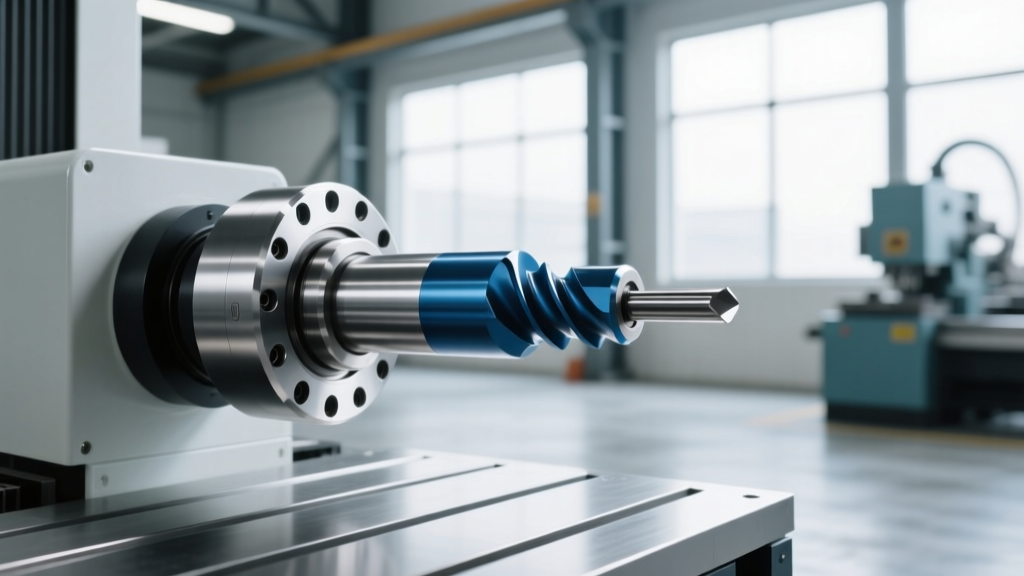
Electro-spindles (where the rotor is integrated directly into the spindle shaft) eliminate transmission losses and belt-induced vibrations. Manufacturers like GMN and Fischer dominate this space. For machining brittle alumina or silicon carbide with small-diameter (1mm – 6mm) diamond-coated micro-mills, surface speeds (SFM) require rotational speeds exceeding 40,000 RPM. The short, compact shaft of an HF electro-spindle minimizes overhang, yielding the high radial stiffness required to resist the intense localized cutting forces of ceramic micro-milling.
When to Specify a Direct-Drive Spindle
Zirconia (ZrO2) presents a different challenge. It possesses higher fracture toughness and requires deeper cuts and higher material removal rates (MRR) using larger PCD or CBN inserts. This demands high torque at moderate speeds (15,000 – 24,000 RPM). Direct-drive spindles, utilizing an integrated synchronous motor with a larger shaft diameter and robust bearing spans, provide the necessary torque without stalling, while maintaining tighter runout tolerances than belt-driven alternatives.
Bearing Configurations: Hybrid Ceramic vs. Hydrostatic
The bearing set is the spine of the spindle. In ceramic machining, standard all-steel bearings fail prematurely due to high-speed centrifugal forces, thermal expansion, and the abrasive nature of the environment. Two bearing configurations dominate modern ceramic machining centers.
1. Hybrid Ceramic Angular Contact Bearings (The Standard for Milling)
Hybrid bearings utilize high-purity chrome steel (e.g., 100Cr6) for the inner and outer races, but employ Silicon Nitride (Si3N4) for the rolling elements. According to data published on SKF's hybrid bearing engineering portals, Si3N4 balls offer transformative advantages for high-speed ceramic machining tools:
- Mass Reduction: Si3N4 is 60% lighter than bearing steel, drastically reducing centrifugal loading on the outer race at 60,000+ RPM.
- Stiffness: The elastic modulus of silicon nitride is 50% higher than steel, increasing the overall dynamic stiffness of the spindle nose.
- Thermal Stability: Si3N4 has a coefficient of thermal expansion (CTE) roughly 30% that of steel. As the spindle heats up, the balls do not expand into the races, preventing catastrophic preload spikes and bearing seizure.
- Electrical Insulation: In electro-spindles, hybrid bearings prevent electrical discharge machining (EDM) arcing through the bearing lubricant, a common cause of fluting and premature failure in standard bearings.
Specification Note: Always specify ABEC-9 (ISO Class 2) tolerances for ceramic milling spindles. This guarantees a radial runout of less than 1.5 µm at the bearing inner ring, translating to sub-3 µm runout at the tool tip.
2. Hydrostatic Bearings (The Standard for Heavy Grinding)
If your application involves heavy rotary grinding of ceramics (e.g., creep-feed grinding of silicon nitride structural components), rolling element bearings are often insufficient to dampen the massive radial forces. Hydrostatic bearings use a pressurized film of oil (typically supplied at 30–50 bar) to float the spindle shaft. They offer infinite static stiffness and exceptional damping characteristics, completely eliminating metal-to-metal contact. While they limit top-end RPM (usually capping around 12,000 RPM) and require a dedicated, temperature-controlled hydraulic power unit, they are mandatory for achieving mirror finishes on ground ceramic surfaces.
Preload Mechanisms and Dynamic Stiffness
Bearing preload—the internal axial force applied to eliminate clearance—is critical. Ceramic machining tools generate severe, intermittent radial shock loads as the diamond grit fractures the ceramic substrate.
WARNING: Preload Collapse in Thermal Gradients
Using constant-pressure (spring-loaded) preload mechanisms for heavy ceramic milling is a common engineering error. While springs accommodate thermal expansion, they allow axial float under heavy intermittent cutting loads. This micro-movement causes chatter marks on the ceramic workpiece and accelerates diamond tool wear. For milling advanced ceramics, always specify fixed-position preload (rigid clamping via precision ground spacer sleeves) to maximize axial and radial rigidity.
Fixed-position preload requires precise thermal management. Because the bearings cannot expand axially, the spindle housing and shaft must be engineered with matched CTEs, and the cooling jacket must maintain a strict temperature variance of ±0.5°C to prevent the preload from either collapsing (causing skidding) or over-tightening (causing thermal runaway).
"In ceramic micro-machining, the spindle's dynamic compliance at the tool tip dictates the tool life more than the diamond coating itself. A 5-micron deflection under load will shatter a CVD diamond edge instantly."
Thermal Management and Seal Integrity in Abrasive Environments
The swarf generated by machining advanced ceramics is not composed of long, stringy chips. It is a micro-fine, highly abrasive slurry of ceramic dust and coolant. This slurry acts as a lapping compound and is relentlessly aggressive toward spindle seals.
Sealing Architectures
- Standard Labyrinth Seals: Insufficient for ceramic grinding/milling. The micro-fine ceramic dust easily navigates the labyrinth paths, contaminating the bearing grease and causing rapid failure.
- Air-Purge Labyrinth Seals: The minimum acceptable standard. A continuous flow of filtered, dry compressed air (minimum 4 bar) is injected into the labyrinth, creating positive pressure that physically blows ceramic dust away from the bearing cavity.
- Active Liquid Seal Rings: Used in high-end electro-spindles, these utilize a controlled barrier fluid to completely isolate the bearing chamber from the machining environment.
Coolant-Through Spindle (CTS) Integration
For deep-cavity milling in ceramics, flood coolant cannot reach the cutting zone, leading to thermal cracking of the diamond tools. High-pressure CTS (up to 70 bar / 1,000 psi) is required to evacuate the abrasive ceramic slurry from the cut. When specifying a spindle, ensure the rotary union is rated for continuous high-pressure operation and utilizes diamond-like carbon (DLC) coated seal faces to resist wear from the high-pressure fluid.
2026 Procurement Framework: Sizing and ROI
Purchasing a spindle for ceramic machining is a significant capital expenditure. In 2026, supply chain lead times for precision ABEC-9 hybrid bearings and custom electro-spindle rotors remain extended, often ranging from 14 to 20 weeks. When drafting your equipment selection strategy, utilize the following decision matrix:
- Step 1: Define the Substrate. Alumina/SiC = HF Electro-Spindle (40k+ RPM). Zirconia/AlN = Direct-Drive Torque Spindle (15k-25k RPM).
- Step 2: Mandate Hybrid Bearings. Reject any vendor quoting all-steel bearings for RPMs above 20,000. Specify Si3N4 balls with ABEC-9 tolerances.
- Step 3: Audit the Sealing. Require documented air-purge or active liquid sealing systems. Standard contact seals will result in a $10,000 rebuild within 6 months.
- Step 4: Calculate Total Cost of Ownership (TCO). A premium GMN or Setco spindle may cost $35,000 upfront, but its rebuild cost is typically 30% of the new price ($10,500), and it will yield 300% longer tool life for your $800 diamond end mills compared to a cheaper, less rigid alternative.
By aligning the spindle drive type, bearing metallurgy, and sealing technology with the specific fracture mechanics of your target ceramic material, you transform the spindle from a maintenance liability into the core competitive advantage of your ceramic machining cell.