Safety Interlocks: Training Operators With Top Machine Learning Tools
Learn how top machine learning tools transform operator training for safety interlocks and E-stops, predicting failures before downtime occurs.
For decades, operator training on machine tool safety interlocks and emergency stops (E-stops) has been entirely reactive. Machinists are taught to slam the E-stop button when they hear a crash, or to reset a tripped door interlock after a fault code halts the spindle. However, as CNC environments become increasingly integrated with Industry 4.0 telemetry, the best shops are abandoning this reactive paradigm. By leveraging the top machine learning tools available in modern predictive maintenance suites, shop floor managers are now training operators to interpret safety system degradation before a catastrophic failure or nuisance fault occurs.
⚠️ THE TRUE COST OF NUISANCE E-STOPSAccording to internal manufacturing audits, a single nuisance E-stop or safety interlock fault on a 5-axis machining center costs an average of $4,200 per incident. This accounts for scrapped aerospace-grade titanium parts, lost spindle warm-up time, and the 45-minute fault-tracing process required to reset safety relays to OSHA machine guarding compliance standards.
How Top Machine Learning Tools Decode Interlock Telemetry
Safety interlocks—such as RFID door switches and E-stop relay circuits—are designed to fail safe. However, the physical components (solenoids, contactors, and reed switches) degrade over time due to thermal stress, micro-welding, and mechanical vibration. Modern CNC controllers, like the FANUC 31i-B5 or Siemens SINUMERIK 840D sl, continuously poll safety I/O links. When this high-frequency polling data is fed into the top machine learning tools (such as Siemens Senseye or Uptake Technologies), algorithms establish a baseline for normal electrical and mechanical behavior.
Instead of waiting for a hard fault, these ML models detect micro-anomalies. For example, a 24V DC safety solenoid lock normally draws 500mA. If an ML dashboard alerts an operator that the solenoid is now drawing 535mA, it indicates increasing coil resistance due to thermal degradation or physical binding in the actuator tongue. The operator is trained to schedule a 5-minute replacement during the next tool change, entirely avoiding an unplanned machine lockdown.
Traditional vs. ML-Augmented Operator Training
| Training Parameter | Traditional Reactive Training | ML-Augmented Predictive Training |
|---|---|---|
| E-Stop Response | Hit button during crash; wait for maintenance to reset safety relay. | Monitor contactor bounce times; replace E-stop relay before micro-welding occurs. |
| Door Interlocks | Slam door if RFID switch fails to engage; force PLC reset. | Adjust door hinge alignment based on ML alerts regarding actuator engagement time delays. |
| Downtime Metric | Measured in hours per unplanned event. | Measured in minutes during scheduled tool-change windows. |
Hardware-Specific Failure Signatures to Teach Operators
To effectively use predictive dashboards, operators must understand the physical hardware they are monitoring. Training programs must map ML dashboard alerts to specific physical components governed by ISO 13849-1 Performance Level (PL) requirements.
1. RFID Coded Safety Switches (e.g., Schmersal AZM400)
High-end machining centers use RFID-coded solenoid locks to prevent operators from defeating interlocks with spare magnets. The Schmersal AZM400 features an integrated electromechanical escape release.
- The ML Signature: ML tools track the exact millisecond the RFID tag is detected versus when the solenoid fully extends. A widening gap between these two telemetry points indicates mechanical wear on the locking bolt or a weakening solenoid spring.
- Operator Action: When the dashboard flags a 'Yellow - Actuator Delay' warning, the operator must inspect the door hinges for sag and lubricate the bolt guide, rather than waiting for the door to fail to latch.
2. Safety Relays and Contactors (e.g., Pilz PNOZmulti 2)
E-stop circuits rely on dual-channel safety relays to drop power to the spindle drive's safe torque off (STO) inputs. Over time, the internal contactors can suffer from arc erosion or micro-welding, especially when interrupting high-inductance servo loads.
- The ML Signature: Algorithms monitor the 'drop-out time'—the milliseconds between the E-stop signal and the physical opening of the contacts. If drop-out time increases from 15ms to 22ms, the contacts are likely pitting or welding.
- Operator Action: Operators are trained to tag out the machine for a safety relay swap at the end of the shift, preventing a scenario where the E-stop button is pressed during a crash, but the contacts fail to open, resulting in a destroyed spindle.
Many nuisance E-stop faults are not caused by the switch itself, but by missing or degraded flyback diodes on the 24V DC contactor coils. Train operators to verify diode integrity when an ML tool flags 'voltage spike anomalies' on the safety I/O link.
Standard Operating Procedure (SOP) for ML Predictive Alerts
Integrating the top machine learning tools into daily workflows requires a strict, standardized response protocol. Operators should not attempt to bypass or ignore algorithmic warnings. Implement the following 4-step SOP on your shop floor:
- Acknowledge the Dashboard Alert: At the start of every shift, operators must review the HMI safety health screen. Alerts are color-coded: Green (Nominal), Yellow (Degradation detected, schedule maintenance within 48 hours), Red (Imminent failure, do not start cycle).
- Physical Verification (Yellow Alerts): If a yellow alert indicates 'Guard Door Misalignment', the operator must use a feeler gauge to measure the gap between the RFID actuator and the switch body. The gap must not exceed the manufacturer's specified tolerance (typically 5mm to 8mm for lateral offset).
- Log the Mechanical Adjustment: If the operator tightens hinge pins or adjusts the striker plate to resolve the alignment issue, they must input a 'Resolved - Mechanical Adjust' code into the HMI. This retrains the ML model's baseline, preventing false positives.
- Initiate Lockout/Tagout (Red Alerts): If the ML tool detects a critical anomaly, such as 'Dual-Channel Asymmetry' on an E-stop circuit (meaning one channel is opening 50ms slower than the other), the operator must immediately initiate LOTO procedures and notify the maintenance supervisor. The machine must not be operated until the safety relay is replaced and tested per IEC 62061 standards.
Overcoming Operator Resistance to Algorithmic Safety Data
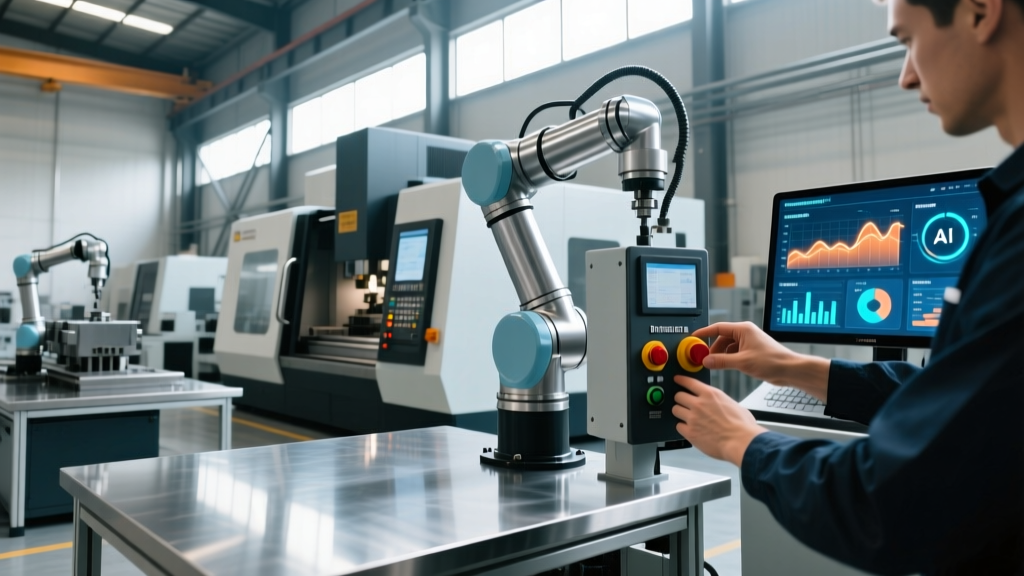
A common hurdle in modern machine shops is operator skepticism toward AI and ML dashboards. Veteran machinists often trust their ears and eyes over a screen. To bridge this gap, training must focus on information gain. Show operators the historical data: display a graph of how many times an ML-predicted solenoid failure matched a physical teardown. When operators realize that the algorithm can 'feel' a binding door latch before their own hands can, adoption rates increase dramatically.
Furthermore, ensure that the HMI interfaces displaying these ML insights are mounted directly on the CNC pendant, not hidden away in a supervisor's office. Safety is a shared responsibility, and democratizing access to predictive telemetry empowers the operator to take ownership of their machine's physical integrity.
Frequently Asked Questions (FAQ)
Can machine learning tools replace physical safety interlock testing?
No. While the top machine learning tools provide exceptional predictive insights, they cannot replace mandatory physical testing. OSHA and ISO standards require periodic physical actuation and validation of all safety circuits, E-stops, and interlocks to ensure Performance Level (PL) compliance. ML is a supplement for predictive maintenance, not a legal substitute for compliance testing.
What data points do ML tools use to predict E-stop relay failure?
Advanced ML platforms analyze contactor coil current draw, drop-out time latency, voltage sag during engagement, and the frequency of actuation cycles. By correlating these electrical signatures with historical failure data, the algorithm calculates a Remaining Useful Life (RUL) percentage for the safety relay.
How much does it cost to implement ML predictive safety monitoring?
For shops already utilizing modern CNC controllers with Ethernet/IP or PROFINET capabilities, adding a predictive maintenance software license (like Siemens Senseye or similar edge-computing modules) typically ranges from $3,500 to $8,000 annually per machine, depending on the telemetry depth required. This ROI is usually achieved within the first three prevented nuisance E-stop incidents.