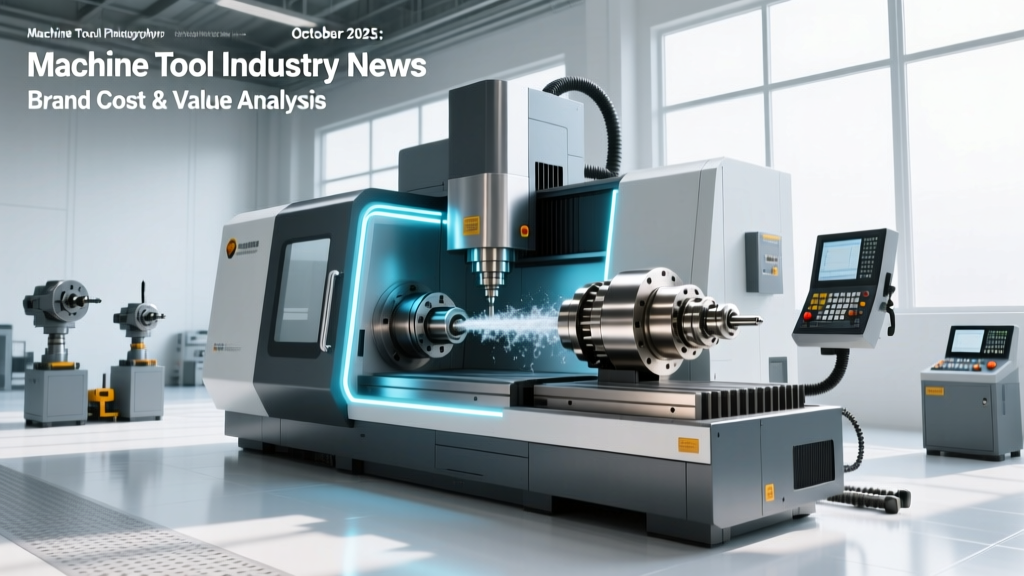
Machine Tool Industry News October 2025: Brand Cost & Value Analysis
Analyze machine tool industry news October 2025 to plan 2026 CapEx. Compare Tier 1-3 brand costs, hidden fees, and ROI for CNC vertical mills.
The manufacturing sector entered 2026 with a complex procurement landscape. If you tracked the machine tool industry news October 2025 cycle, you witnessed a pivotal shift: while global supply chains for critical components like direct-drive torque motors and linear guideways finally stabilized, currency fluctuations and new regional energy surcharges drastically altered the pricing tiers of major CNC builders. For machine shop owners and production managers, this means the historical price gaps between Tier 1 (Japanese/German), Tier 2 (American/Korean), and Tier 3 (Chinese/Indian) brands have compressed and shifted in unexpected ways.
Planning your 2026 Capital Expenditure (CapEx) budget requires looking past the base sticker price. This analysis deconstructs the current market value of leading machine tool brands, focusing on vertical machining centers (VMCs) and 5-axis trunnion machines, to help you calculate the true Total Cost of Ownership (TCO) and maximize your shop's ROI.
Market Context: The October 2025 Pivot
According to data tracked by AMT's US Manufacturing Technology Orders, Q4 2025 saw a 7% increase in domestic machine orders, driven by aerospace and medical reshoring. However, European builders faced a 4-6% price hike due to energy-intensive manufacturing costs in Germany, while Japanese builders leveraged a favorable yen to hold pricing steady. This macroeconomic reality forms the baseline for 2026 brand comparisons.
Tier 1 vs. Tier 2 vs. Tier 3: 2026 VMC Brand Comparison Matrix
When evaluating a standard 40-taper, 30x20x20 inch travel VMC, the market is distinctly segmented. Below is a comparative matrix reflecting current 2026 base pricing, lead times, and control ecosystems for the most heavily specified models in job shops and production environments.
| Brand / Model | Tier | 2026 Est. Price (USD) | Standard Control | Avg. Lead Time |
|---|---|---|---|---|
| Mazak VCN-530C | Tier 1 | $145,000 - $165,000 | Mazatrol SmoothAi | 16-20 Weeks |
| DMG Mori CMX 600V | Tier 1 | $135,000 - $155,000 | Siemens / Fanuc | 20-26 Weeks |
| Doosan (DN Solutions) DNM 5700 | Tier 2 | $115,000 - $130,000 | Fanuc 0i-F Plus | 12-16 Weeks |
| Haas VF-2SS | Tier 2 | $88,000 - $98,000 | Haas NGC | 8-12 Weeks |
| Haitian VMC800 | Tier 3 | $65,000 - $75,000 | Fanuc / Mitsubishi | 24-30 Weeks |
Note: Pricing reflects base models equipped with standard chip conveyors and basic probing. High-pressure coolant and 4th-axis prep add $12,000–$22,000 across all tiers.
Deconstructing the Hidden TCO: Where the Budget Actually Bleeds
The initial purchase price is merely the entry fee. The machine tool industry news October 2025 reports heavily emphasized the rising cost of localized service and proprietary replacement parts. When budgeting for 2026, you must factor in three critical TCO vectors that differentiate these brands.
1. Spindle Rebuild and Replacement Economics
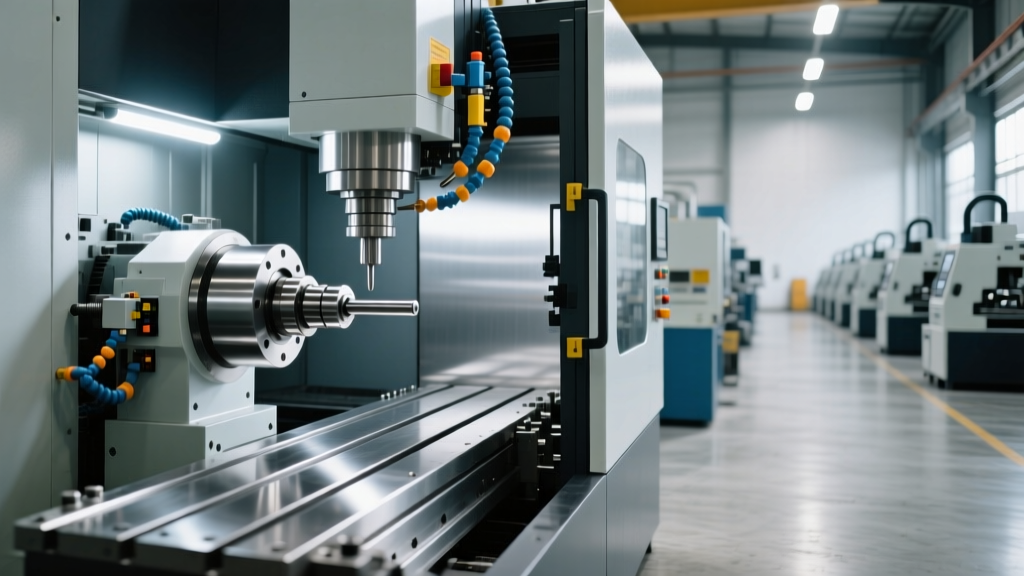
Spindle failure is the most expensive mechanical downtime event in a VMC's lifecycle. The engineering philosophy of the builder dictates your recovery cost:
- Tier 1 (Mazak, Okuma, DMG Mori): These builders typically use highly integrated, liquid-cooled cartridge spindles manufactured in-house. A catastrophic failure on a 12,000 RPM Mazak spindle requires a factory-certified rebuild or full replacement, costing between $18,000 and $26,000, with lead times of 4-8 weeks for the replacement core.
- Tier 2 (Haas): Haas utilizes a modular cartridge spindle design. A complete 12,000 RPM replacement cartridge costs approximately $4,500 to $6,000 and can be swapped by an in-house maintenance technician in under three hours, drastically reducing MTTR (Mean Time To Repair).
- Tier 3 (Haitian, Robodrill): Often rely on third-party spindle manufacturers (like IBAG or Kessler). Rebuilds are moderately priced ($8,000–$12,000) but sourcing specific bearing preloads and drawbar mechanisms locally can be challenging.
2. CNC Control Licensing and Memory Upgrades
As shops adopt 3D surfacing and complex 5-axis simultaneous toolpaths, control memory and look-ahead processing become bottlenecks. Upgrading a Fanuc or Siemens control post-purchase is notoriously expensive. Adding high-speed machining (HSM) options or expanding memory to 2GB on a Fanuc 31i-B5 can cost $4,000 to $8,000 via a software unlock code. Conversely, the proprietary Haas NGC control includes advanced high-speed machining features and generous memory allocations in the base price, representing a distinct value advantage for mold-and-die shops.
3. Automation and Robot Interface Readiness
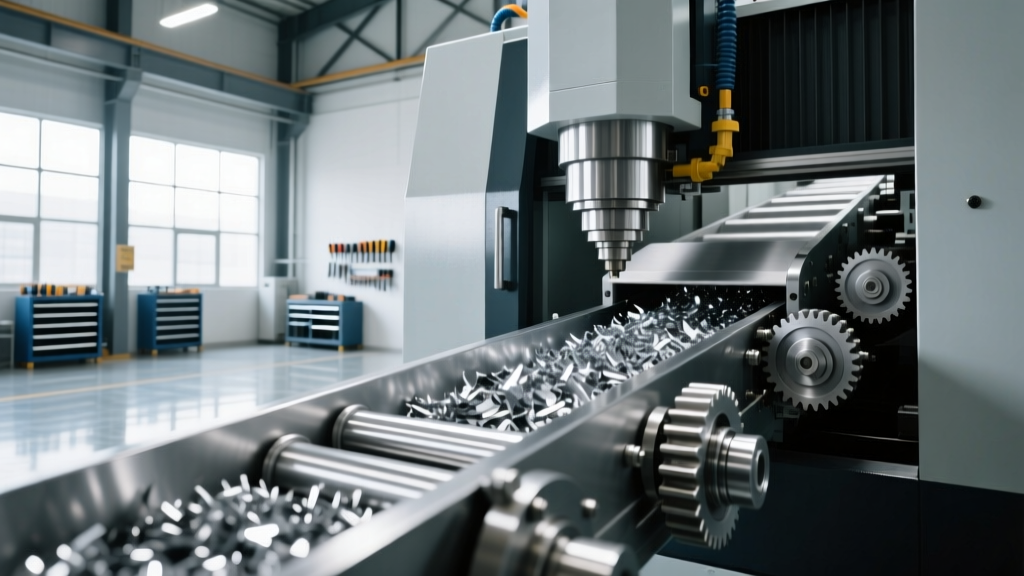
If your 2026 roadmap includes robotic machine tending, evaluate the machine's native I/O and software handshake capabilities. DMG Mori and Mazak charge premium licensing fees ($3,000–$5,000) to fully unlock their proprietary automation APIs (like Mazak's Smooth PMC software). Haas and Doosan offer more open, traditional M-code and macro-based I/O handshakes that integrate with standard FANUC or Universal Robots cobots without requiring expensive OEM software licenses.
Analyst Insight: 'The biggest budgeting mistake we see in 2026 is shops buying Tier 1 machines for Tier 2 work. If your tolerances are held to ±0.001 inches on aluminum and mild steel, the thermal stability and volumetric accuracy of a $160,000 German VMC cannot be justified over a $95,000 American VMC equipped with a high-quality Renishaw probing cycle.' — Senior Manufacturing CapEx Consultant
2026 Budget Planning: The 5-Axis Trunnion Dilemma
The transition from 3-axis to 5-axis machining is where CapEx budgets are most frequently blown. The market is currently split between integrated 5-axis machines and 3-axis machines retrofitted with trunnion tables.
Option A: Integrated 5-Axis
Example: Doosan DVF 5000 or Haas UMC-500SS
Cost: $185,000 - $240,000
Pros: Factory-calibrated kinematics, integrated coolant management, no table real estate lost to trunnion base.
Cons: High initial CapEx, limited work envelope for tall parts.
Option B: 3-Axis + Trunnion
Example: Mazak VCN-530C + Tsudakoma TR-550
Cost: $155,000 (Machine) + $45,000 (Trunnion) = $200,000
Pros: Trunnion can be removed for large 3-axis plate work; utilizes existing 3-axis inventory.
Cons: Requires extensive operator setup, potential kinematic drift, reduces Z-axis clearance significantly.
Procurement Directive: For production environments running continuous 5-axis aerospace structural components, budget for Option A. The factory-calibrated TCP (Tool Center Point) control saves 15-20 hours of setup time per month. For job shops doing occasional 5-sided machining or low-volume complex prototypes, Option B provides superior flexibility and protects your downside risk if 5-axis demand drops.
Strategic Depreciation and Resale Value Forecasting
When calculating ROI, the terminal value of the asset at year 5 or year 10 must be factored into your depreciation schedule. Based on historical auction data and used equipment dealer inventories entering 2026:
- Japanese Brands (Mazak, Okuma, Makino): Retain 55-65% of their purchase value at year 7. The global demand for used Japanese controls ensures high liquidity.
- American Brands (Haas): Retain 40-50% at year 7. While the initial depreciation is steeper, the massive domestic install base guarantees a fast sale on the secondary market.
- Korean Brands (Doosan/DN Solutions, Hyundai Wia): Retain 45-55% at year 7, sitting squarely in the value sweet spot for secondary buyers.
- Tier 3 Brands: Retain 20-30% at year 7. These should be treated as pure expense items; buy them only if the ROI is achieved within 36 months through raw spindle uptime.
Frequently Asked Questions (2026 Procurement)
Should I finance or lease CNC equipment in the current interest rate environment?
With 2026 equipment financing rates hovering between 7.5% and 9.2% for standard manufacturing loans, leasing (specifically a Fair Market Value lease) is often superior for Tier 1 equipment. It preserves working capital and allows you to upgrade to newer linear-motor driven models when the technology cycle resets. For Tier 2 equipment like a Haas VF series, purchasing via an SBA 504 loan (if eligible) remains the most cost-effective route due to the machine's long usable lifespan and low maintenance costs.
How do I justify a Tier 1 machine to a finance department focused on the bottom line?
Do not argue based on 'accuracy.' Argue based on 'unmanned runtime.' Tier 1 machines feature superior thermal compensation, rigid tapping synchronization, and advanced chip evacuation systems. If a $150,000 Mazak can safely run lights-out for 40 hours a week via a pallet pool, while a $90,000 Tier 2 machine requires an operator present to clear bird-nested chips and manage thermal drift, the Tier 1 machine pays for its $60,000 premium in roughly 8 months of reclaimed labor and extended spindle hours.
Are European-built machines still a viable investment given the energy surcharges?
Yes, but only for specific applications. If your shop machines Inconel, titanium, or hardened tool steels requiring high-torque, low-RPM cutting, German and Swiss builders (like Grob or Hermle) offer unmatched dynamic rigidity. However, for high-speed aluminum milling or general steel prismatic work, the energy-cost-driven price premiums on European VMCs are difficult to recoup compared to Japanese or Korean alternatives.