Myers Tool and Machine CNC Retrofits: Safety Compliance Guide
Ensure OSHA and ANSI compliance when upgrading manual mills and lathes. A deep dive into Myers Tool and Machine CNC retrofits and safety guarding.
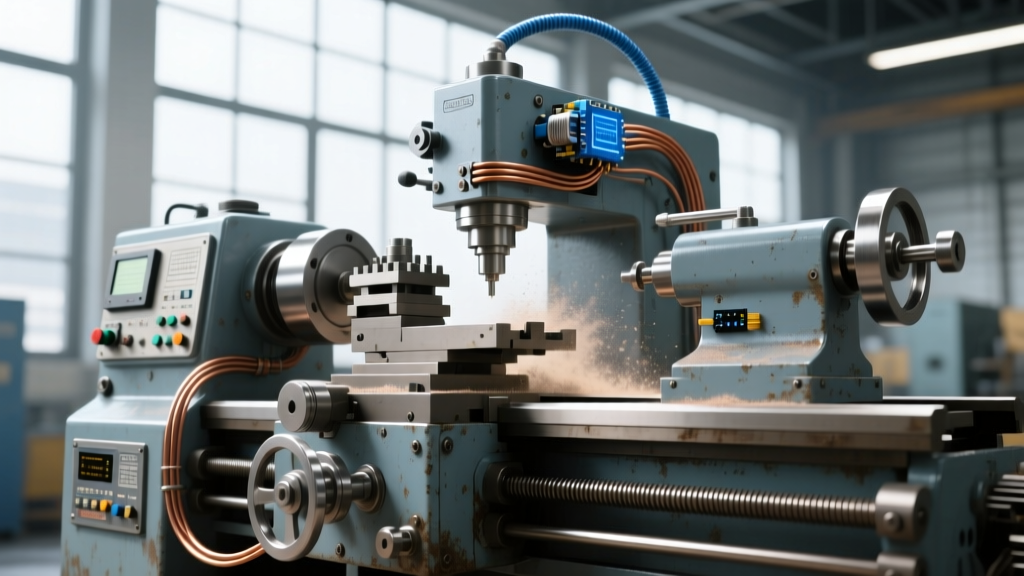
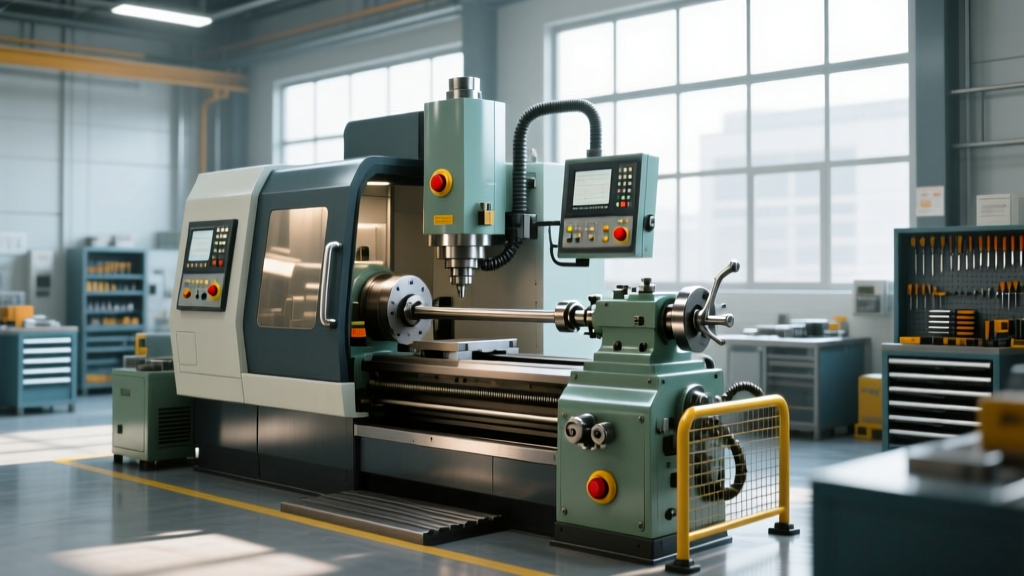
Converting a manual Bridgeport mill or South Bend lathe into a CNC machine offers immense ROI for job shops, reducing cycle times and improving repeatability. When sourcing heavy-duty tooling, workholding, or evaluating CNC retrofit options through established industrial suppliers like Myers Tool and Machine, shop owners typically focus on spindle torque, axis travel, and controller features. However, the safety compliance aspect of a retrofit is frequently overlooked until an OSHA inspection or a workplace incident occurs.
Adding automated axis drives, high-speed spindle control, and programmable logic to a manual machine fundamentally changes its regulatory classification. This guide details the exact safety architectures, guarding materials, and compliance protocols required when executing a manual-to-CNC conversion in 2026.
The Regulatory Reclassification of Retrofitted Equipment
A common and dangerous misconception in machine shops is the "grandfather clause"—the belief that if a manual machine was legally operated before a retrofit, it remains exempt from modern safety standards. Under OSHA 29 CFR 1910.212 (General Requirements for All Machines), the moment you attach automated servo drives and a CNC controller that can initiate movement without continuous human physical intervention, the machine is reclassified as automated production equipment.
⚠️ Compliance Warning: The Grandfather MythManual machines rely on the operator's physical presence and reaction time for safety (e.g., releasing the handwheel stops the feed). CNC retrofits remove this physical link. Therefore, the retrofit integrator or end-user assumes the legal liability of the Original Equipment Manufacturer (OEM) for the newly automated system. You must comply with current ANSI B11.0 Safety of Machinery standards, regardless of the base casting's manufacture date.
Evaluating Control Architectures for Safety I/O
Not all CNC retrofit kits handle safety I/O natively. When selecting a control package, the architecture of the emergency stop (E-stop) and door interlock circuits dictates your compliance pathway.
Hobbyist vs. Industrial Control Safety
Kits based on standard PC interfaces (like Mach4 paired with an Ethernet SmoothStepper) or open-source platforms (LinuxCNC) often route E-stop signals through standard low-voltage GPIO pins. This violates ISO 13849-1 Category 3 requirements because a single component failure (e.g., a welded relay contact or shorted GPIO trace) can render the E-stop useless.
Industrial retrofits utilizing Fanuc 0i-F Plus or Centroid M-400 controllers feature dedicated, dual-channel safety I/O. However, even with these controllers, external safety relays are mandatory for physical machine guarding.
| Control Platform | Native Dual-Channel E-Stop | External Safety Relay Required? | OSHA Compliance Viability |
|---|---|---|---|
| Mach4 / SmoothStepper | No | Yes (Pilz / Sick) | Low (Requires heavy custom wiring) |
| Centroid Acorn / M-400 | Yes (via MPI module) | Yes (for door interlocks) | High (Standard industrial use) |
| Fanuc 0i-F Plus | Yes (Integrated Safety) | Optional (Built-in dual channel) | Very High (OEM equivalent) |
Physical Guarding and Interlock Specifications
Upgrading the physical enclosure is where most retrofit budgets experience friction. Manual machines are open by design; CNC machines generate high-velocity projectiles (broken carbide inserts, snapped taps) and aerosolized coolants.
Material Selection: Polycarbonate vs. Acrylic
Never use acrylic (Plexiglas) or PETG for CNC retrofit guarding. Acrylic shatters into sharp shards upon impact from a broken endmill. You must use a minimum of 1/4-inch (6mm) Lexan polycarbonate. Polycarbonate yields and deforms under impact rather than shattering, absorbing the kinetic energy of a 1/2-inch carbide endmill breaking at 8,000 RPM.
Non-Contact RFID Interlocks
Mechanical tongue interlocks (where a metal key slides into a switch) are prone to defeat by operators using zip-ties or tape to bypass the door. For ANSI B11 compliance, utilize non-contact RFID coded safety switches, such as the Omron D40A or SICK STR1. These switches require the exact RFID-coded actuator to close the circuit, making unauthorized bypassing virtually impossible without replacing the entire switch assembly.
Safety Distance Calculation for Light Curtains
If your retrofit utilizes a light curtain (e.g., SICK microScan3) instead of a physical door for operator loading, you must calculate the minimum safe distance ($Ds$) from the hazard zone to the light field using the OSHA/ANSI formula:
Ds = K × Ts + Dpf
- K: Hand speed constant (OSHA mandates 63 inches/second).
- Ts: Total machine stop time (Servo brake engagement + spindle deceleration). Measure this with an oscilloscope; do not guess.
- Dpf: Depth penetration factor (based on the light curtain's beam resolution).
Example: If your retrofitted Bridgeport takes 0.4 seconds to halt the spindle via dynamic braking, and the light curtain has a 30mm resolution (Dpf = 3.4 inches), the minimum safe distance is (63 × 0.4) + 3.4 = 28.6 inches from the spindle centerline.
Itemized Safety Compliance BOM (Bill of Materials)
Integrating proper safety systems adds significant cost to a retrofit. Below is a realistic 2026 Bill of Materials for bringing a standard 3-axis knee mill retrofit into full OSHA compliance.
| Component | Specification / Model | Est. Cost (USD) |
|---|---|---|
| Safety Relay Module | Pilz PNOZ X2.8P (Dual-channel, Cat. 4) | $380 |
| Door Interlocks (x2) | Omron D40A Non-Contact RFID | $540 |
| Polycarbonate Sheet | 1/4" Lexan Margard (48" x 48") | $210 |
| E-Stop Stations (x2) | Siemens 3SU1 (Twist-release, NC contacts) | $160 |
| Spindle Contactor | Allen-Bradley 100-C09 (Force-guided) | $145 |
| Total Safety Hardware BOM | ~$1,435 | |
Note: This excludes fabrication labor for the enclosure framing and electrical panel integration, which typically adds $1,500 - $2,500 depending on shop rates.
Commissioning and Validation Protocol
Installing the hardware is only half the compliance equation. OSHA and ANSI require documented validation. Before running the first automated G-code program, execute this sign-off checklist:
- Wire Pull Test: Apply 50 lbs of pull force on all E-stop and interlock wiring inside the electrical panel to ensure terminal blocks are torqued to spec and wires will not vibrate loose during heavy milling operations.
- Single-Fault Injection: With the machine running a dry cycle, manually disconnect one channel of the dual-channel E-stop circuit. The machine must fault and halt immediately. Repeat for the second channel. If the machine continues running on one channel, the safety relay is wired incorrectly.
- Spindle Override Lockout: Verify that opening the polycarbonate door during an active M03 (spindle forward) command instantly drops the spindle enable signal, overriding any feed-hold or spindle-speed override potentiometer settings.
- Documentation: affix a serialized safety validation sticker to the electrical panel, signed by the commissioning engineer, detailing the date of the ISO 13849 performance level (PL) verification.
Retrofit Compliance FAQ
Can I use a standard 110V household relay for the spindle E-stop circuit?
No. Standard relays do not have force-guided (mechanically linked) contacts. If a standard relay's contact welds shut due to the inductive load of a spindle motor, the E-stop button will fail to cut power. You must use a safety-rated contactor (like the Allen-Bradley 100-C series) monitored by a dedicated safety relay.
Does adding a VFD (Variable Frequency Drive) to a manual lathe require full CNC guarding?
If the VFD is manually adjusted via a potentiometer and requires the operator to manually engage the mechanical half-nut or carriage handwheel, it is generally considered a manual assist. However, if the VFD is integrated with a digital readout (DRO) that automates threading or feed rates, it crosses into automated territory, triggering OSHA machine guarding requirements for interlocks and chip shielding.
Where should I mount the E-stop buttons on a retrofitted mill?
ANSI B11 dictates that E-stop buttons must be located at every primary operator control station. For a standard knee mill retrofit, this means one button on the main pendant (where the operator stands to load parts) and a second button on the opposite side of the table if the operator frequently accesses the rear of the machine for tool changes or vise adjustments. They must be mounted between 30 and 48 inches from the floor.