Machining Types of Agricultural Machinery: Smart Tool Safety Standards
Explore ISO 13849 and IEC 62443 safety standards for smart machine tools and Industry 4.0 networks manufacturing types of agricultural machinery.
The Cyber-Physical Shift in Ag-Manufacturing
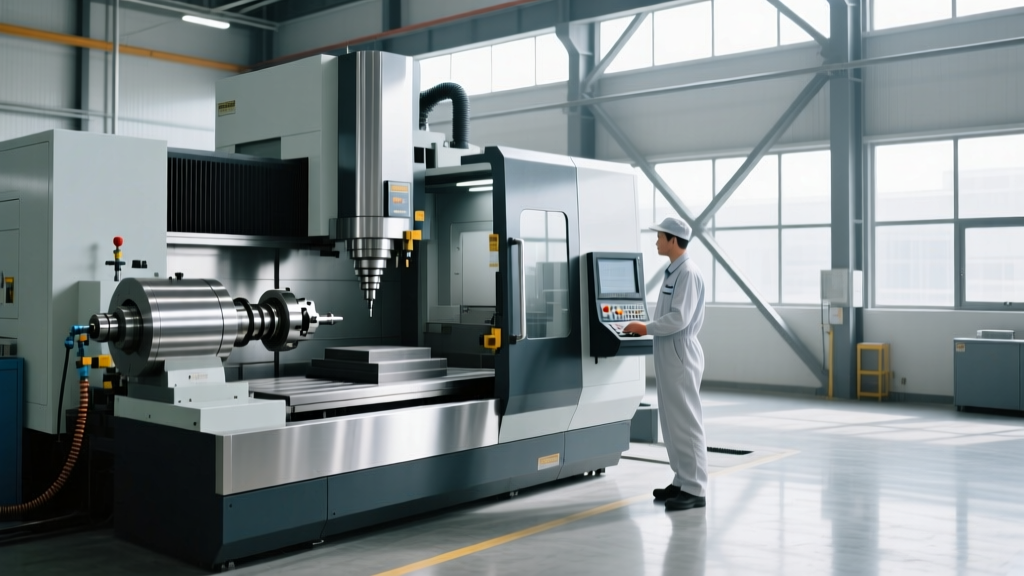
Manufacturing heavy-duty components for diverse types of agricultural machinery—from combine harvester planetary gearboxes to tractor PTO shaft splines—requires high-torque, multi-axis CNC machining. Historically, safety in these machine shops focused entirely on mechanical guarding and physical light curtains. However, as modern job shops adopt Industry 4.0 smart machine tools to handle the complex geometries and high-volume demands of the agricultural sector, the safety paradigm has fundamentally shifted.
When a 5-axis Mazak INTEGREX or DMG MORI NTX turning center is integrated into a networked, lights-out manufacturing cell, safety is no longer just about keeping the operator away from the chuck. It is about ensuring that network latency, cyber intrusions, or IoT sensor failures do not override physical safety interlocks. In 2026, compliance officers and shop floor managers must navigate a dual-standard landscape: mechanical safety (ISO 13849) and industrial cybersecurity (IEC 62443).
Core Safety Standards Governing Smart Manufacturing Cells
To legally and safely operate connected machine tools that produce parts for heavy agricultural equipment, facilities must comply with overlapping regulatory frameworks. The integration of MTConnect and OPC UA protocols for real-time spindle load monitoring introduces network-based vectors that can impact physical machine states.
ISO 13849-1: Performance Levels in Connected Environments
ISO 13849-1 dictates the safety-related parts of control systems. For heavy-duty turning centers machining high-tensile steel for tractor axles, the required Performance Level (PLr) is typically PLd or PLe (Category 3 or 4). In a smart factory setup, safety signals (like emergency stops or door interlocks) are increasingly transmitted over industrial Ethernet using protocols like PROFIsafe or CIP Safety. If the network switch managing the OPC UA data traffic experiences a broadcast storm, it must not degrade the safety network's response time below the 10-millisecond threshold required for PLe compliance.
IEC 62443: Securing the Industrial IoT
While ISO 13849 handles the physical outcome, IEC 62443 secures the digital pathway. A compromised MTConnect adapter could theoretically send malformed G-code or override feed-hold commands. The NIST SP 800-82 Revision 3 guidelines explicitly outline how Industrial Control Systems (ICS) must be segmented to prevent IT-layer breaches from cascading into OT-layer physical hazards.
⚠️ CRITICAL COMPLIANCE WARNING: Connecting a CNC machine's USB or Ethernet port directly to the shop's main IT network for data extraction violates IEC 62443-3-3 zone and conduit requirements. A breach here can disable safety PLCs, leading to catastrophic chuck failures during the machining of unbalanced agricultural flywheels.Compliance Matrix: Legacy CNCs vs. Industry 4.0 Smart Tooling
Understanding the compliance gap between older equipment and modern smart tools is vital when upgrading a shop that produces types of agricultural machinery components. The table below highlights the architectural differences in safety enforcement.
| Feature | Legacy CNC (Pre-2018) | Industry 4.0 Smart Tooling (2026 Standard) |
|---|---|---|
| Safety Interlock Routing | Hardwired 24VDC relays directly to the machine PLC. | Networked via PROFIsafe over PROFINET; requires certified safety switches. |
| Data Extraction | Manual USB transfer or isolated drip-feed. | Continuous MTConnect/OPC UA streaming via isolated OT VLAN. |
| Perimeter Guarding | Physical polycarbonate shields and mechanical limit switches. | SICK microScan3 safety laser scanners integrated with the cell controller. |
| Cyber-Physical Risk | Low (Air-gapped by default). | High (Requires strict IEC 62443 firewall and DMZ policies). |
Implementing Safe IoT Architectures for Heavy Ag-Part Machining
Transitioning to a connected environment requires capital investment and strict adherence to OSHA machine guarding and safety protocols, adapted for digital threats. Below is the actionable framework for deploying a safe, connected machining cell for large agricultural components.
Step 1: Network Segmentation and the OT DMZ
Never place smart machine tools on the same subnet as the front-office ERP system. Establish an Operational Technology (OT) Demilitarized Zone (DMZ). The CNC controllers (e.g., FANUC 31i-B5 or Siemens SINUMERIK ONE) should communicate only with a localized edge gateway. This gateway aggregates MTConnect data and pushes it to the DMZ, where the IT network can pull it. This one-way data diode approach ensures that a ransomware attack on the corporate network cannot encrypt the CNC's safety PLC or alter tool offset parameters.
Step 2: Deploying Safety-Rated Area Scanners
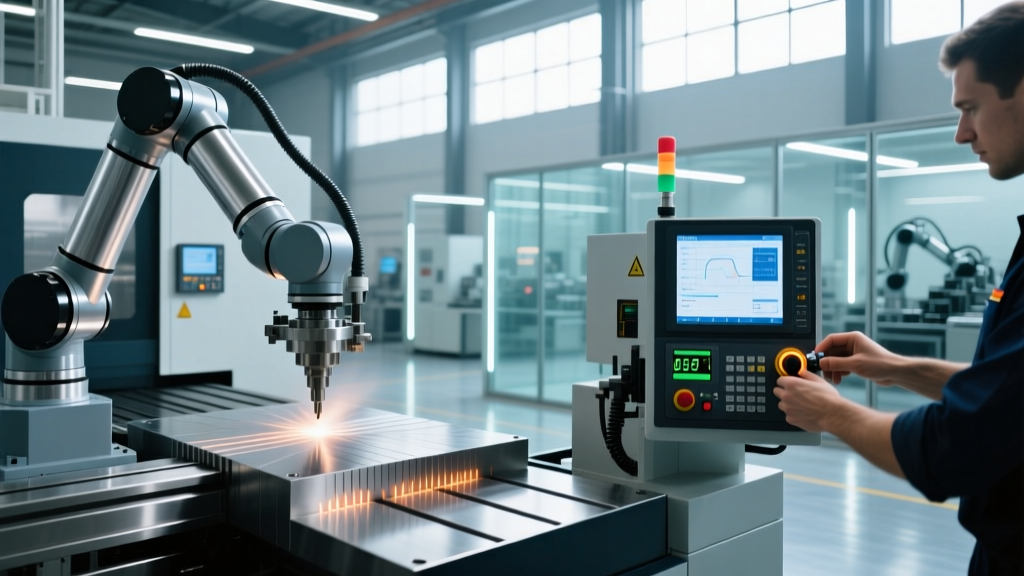
When machining massive parts like combine harvester mainframes, operators frequently enter the machine envelope for setup and probing. Traditional light curtains are insufficient for 5-axis trunnion tables. Instead, deploy safety-rated LiDAR scanners, such as the SICK microScan3 Pro (priced between $4,200 and $5,500 per unit). These scanners create dynamic protective fields. If an operator steps into the inner warning zone, the OPC UA network commands the spindle to drop to a safe holding torque; if the inner protective field is breached, the PROFIsafe protocol triggers a Category 0 stop (immediate power removal).
Step 3: Validating the MTConnect Adapter
MTConnect is the standard for machine tool data extraction, but the adapter software running on the machine's edge PC must be hardened. Ensure the adapter is configured to read-only memory addresses for critical safety variables. The adapter should never have write-access to the CNC's macro variables or alarm-reset registers.
Edge Case: Autonomous Tool Changing and Light-Out Manufacturing
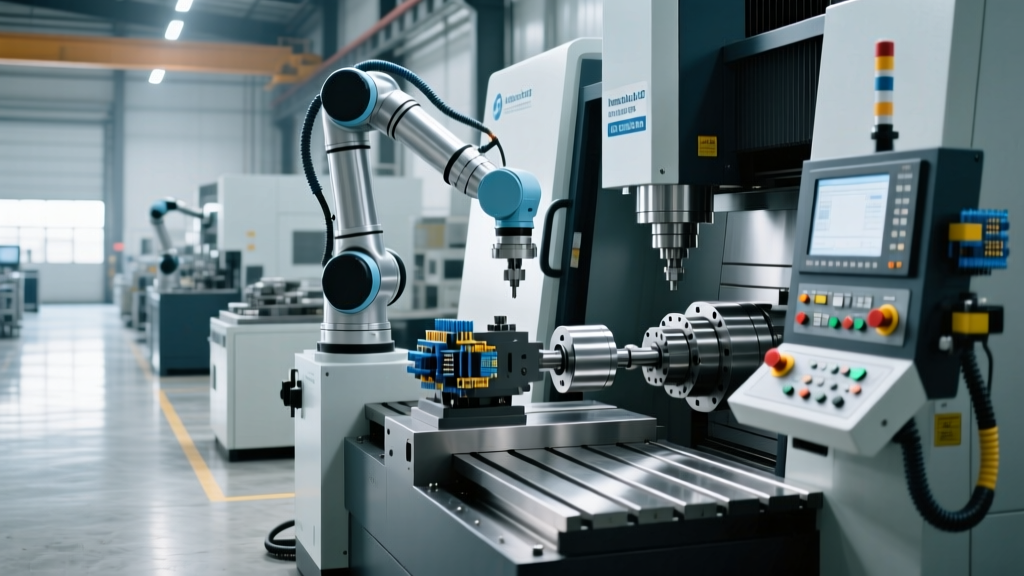
Many shops producing high-volume parts for types of agricultural machinery, such as planter seed-meter housings, run lights-out shifts using automated pallet pools (e.g., Makino MMC2). The safety compliance here shifts from operator protection to maintenance-technician protection.
In an Industry 4.0 cell, the automated guided vehicle (AGV) or rail-guided cart communicates with the CNC via 5G or Wi-Fi 6. If the network drops, the cart must default to a safe state, not continue moving blindly into the machining envelope. Compliance requires implementing Safe Torque Off (STO) on the cart's drive motors, triggered by a secondary, hardwired safety mat or laser perimeter that operates entirely independently of the wireless network. Relying solely on wireless signals for emergency stopping violates ISO 13849-1 requirements for Category 3 architectures, which demand redundancy and diagnostic coverage that standard Wi-Fi cannot guarantee in a metal-rich shop environment.
Pre-Deployment Audit Checklist for Connected Machine Shops
Before bringing a new smart machining cell online for agricultural component production, the safety and compliance team must verify the following parameters:
- PLC Firmware Verification: Confirm the safety PLC firmware matches the exact version certified by the machine builder. Uncertified firmware updates void the CE/UL safety listing.
- Network Latency Testing: Measure the round-trip latency of the PROFIsafe/CIP Safety signals. It must remain under 8ms under maximum network load conditions.
- Physical-Digital Interlock Test: Trigger a physical E-stop and verify via the SCADA dashboard that the digital twin reflects the safe state within 50 milliseconds.
- USB Port Physically Disabled: Ensure all unused USB and Ethernet ports on the CNC HMI are physically blocked with lockout devices or disabled at the BIOS level to prevent unauthorized local access.
- Guard Door Defeat Prevention: Verify that RFID safety switches (e.g., Schmersal AZM40) are coded and cannot be defeated by a simple magnet, a common violation in fast-paced job shops.
Integrating smart machine tools to manufacture complex types of agricultural machinery yields massive gains in OEE and spindle utilization. However, those gains are only sustainable when the cyber-physical safety architecture is designed with the same rigor as the mechanical cutting processes. By treating network security as a fundamental component of machine guarding, shops can achieve full compliance and protect both their workforce and their capital investments.