Linear vs Box Ways in Machine Tools and Equipment: Tech Specs
Explore the technical specifications of linear guide rails versus box ways in machine tools and equipment. Compare damping, load capacity, and speed limits.
The Core Kinematics: How Way Systems Dictate Machine Performance
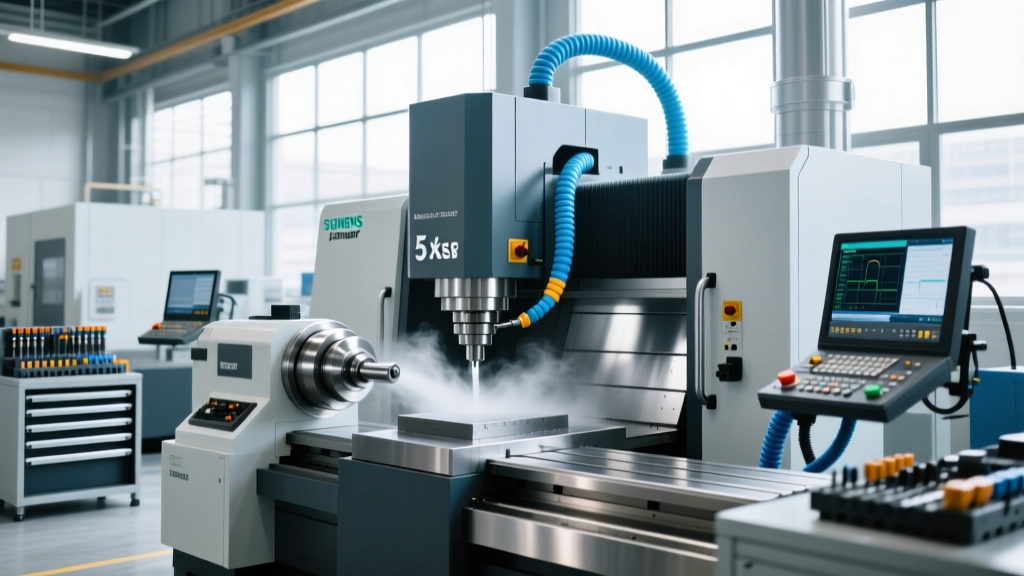
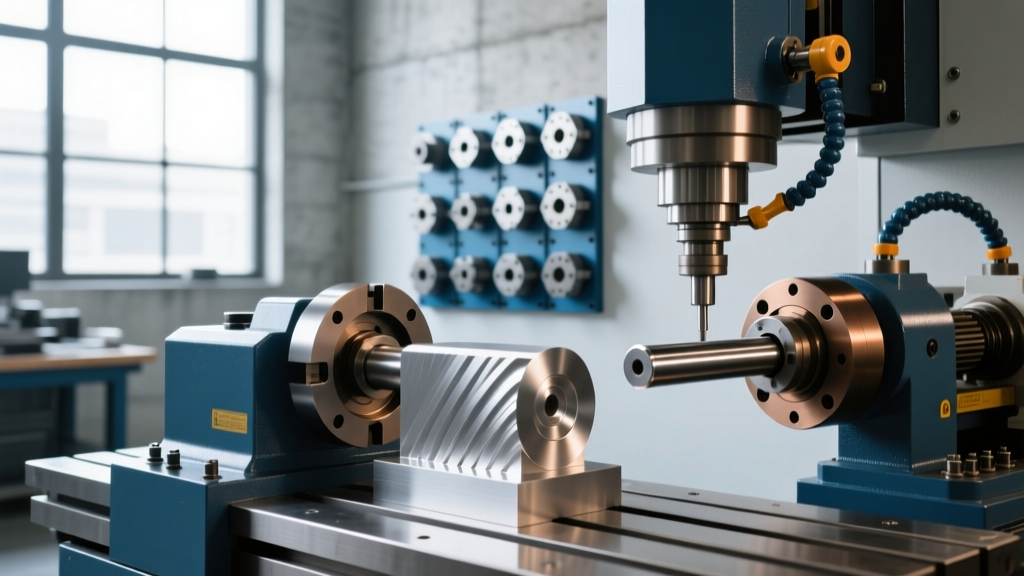
The structural foundation of any CNC machining center relies entirely on its way system—the mechanical interface that guides axis movement while resisting cutting forces. When evaluating machine tools and equipment for high-precision manufacturing, the choice between linear guide rails (rolling friction) and box ways (sliding friction) is the single most critical determinant of dynamic rigidity, damping capacity, and ultimate surface finish. In 2026, advancements in cylindrical roller profiles and synthetic PTFE composites have blurred the historical performance lines, yet the fundamental physics of rolling versus sliding contact remain distinct.
Understanding the exact technical specifications, load ratings, and friction coefficients of these systems is mandatory for process engineers tasked with matching machine architecture to specific material removal rates (MRR) and tolerance requirements.
The Physics of the Squeeze Film Effect
Box ways utilize a microscopic layer of pressurized lubricant between sliding surfaces. Under heavy cutting loads, this oil film acts as a hydraulic shock absorber—a phenomenon known as the squeeze film effect. This grants box ways a damping coefficient up to 10 times higher than recirculating ball linear guides, effectively neutralizing high-frequency chatter during heavy roughing operations.
Linear Guide Rails: Technical Specifications and Limits
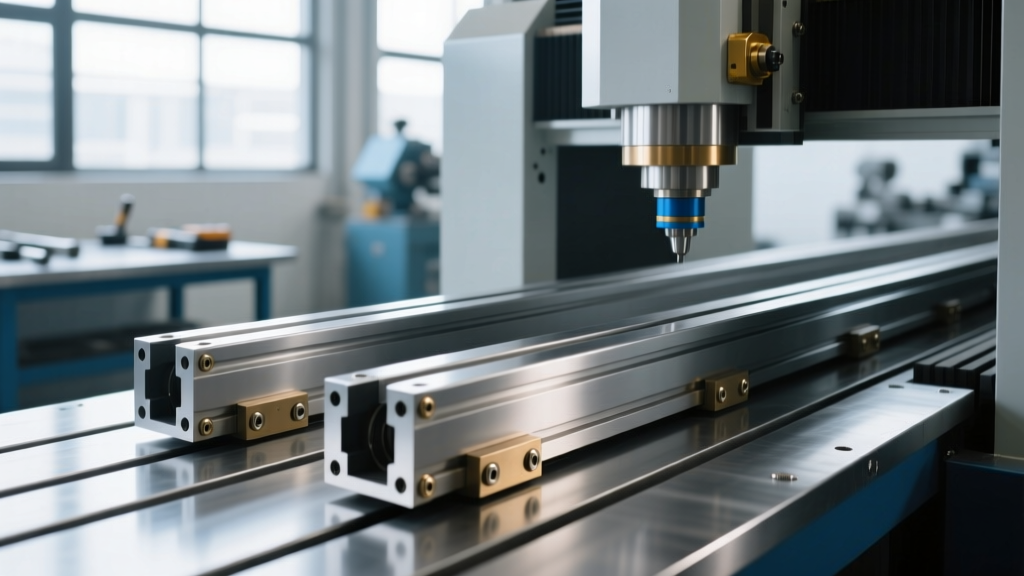
Linear motion guides dominate modern high-speed machine tools and equipment due to their low coefficient of friction (typically 0.002 to 0.005) and ability to sustain rapid traverse rates exceeding 60 meters per minute. Modern systems utilize either recirculating steel balls or cylindrical rollers.
Ball vs. Roller Linear Guides
Recirculating ball guides (such as the standard THK SHS series) offer point contact, resulting in lower rigidity but exceptional high-speed capabilities. Cylindrical roller guides (like the THK SRG or Bosch Rexroth BSCL series) utilize line contact, increasing static rigidity by 200% to 300% compared to ball guides of the same physical footprint. For aerospace aluminum milling where spindle speeds exceed 20,000 RPM and axis accelerations hit 1.5G to 2.0G, roller linear guides are the undisputed standard.
Preload Classes and Rigidity Metrics
Rigidity in linear guides is artificially induced via preload—the intentional oversizing of rolling elements to eliminate internal clearance. Selecting the correct preload class is vital; excessive preload causes thermal runaway and premature raceway fatigue, while insufficient preload allows axis deflection under cutting loads.
| Preload Class | Industry Designation | Preload Force (% of Dynamic Load C) | Primary Application |
|---|---|---|---|
| Light | C0 / P0 | ~2% to 4% | General packaging, low-load automation |
| Medium | C1 / P1 | ~6% to 8% | Standard CNC milling, moderate MRR |
| Heavy | C2 / P2 | ~10% to 13% | Heavy-duty die/mold machining, high rigidity |
For comprehensive technical data on load ratings and lifecycle calculations, engineers frequently reference the THK Linear Motion technical catalogs, which provide exact dynamic load ratings (C) and static load ratings (C0) for specific carriage dimensions.
Box Ways: The Engineering of Sliding Friction
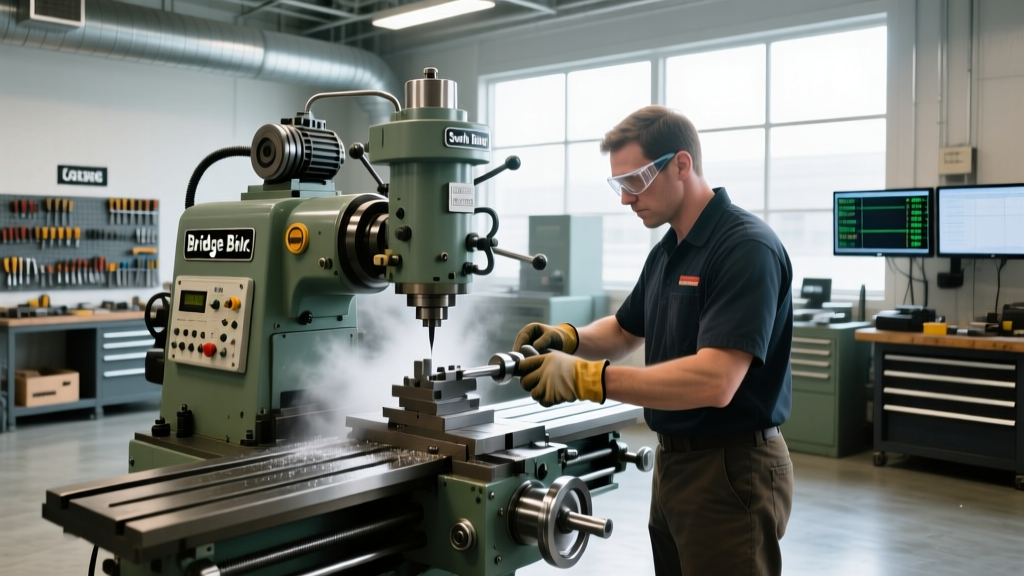
Box ways represent the traditional architecture of heavy-duty machine tools and equipment. They consist of a sliding member (the saddle or carriage) moving along a stationary base. The technical superiority of box ways lies in their massive surface area contact and bespoke geometric tuning.
Turcite-B and Rulon Coefficients
Historically, cast-iron-on-cast-iron sliding surfaces suffered from high static friction (stiction), leading to the 'stick-slip' phenomenon at low feed rates. Modern box ways eliminate this by bonding a PTFE-based composite material, such as Turcite-B or Rulon 142, to the sliding surface. This reduces the coefficient of friction to approximately 0.05 and ensures that the static friction coefficient is nearly identical to the dynamic friction coefficient, enabling ultra-smooth micro-interpolation for mirror-finish mold machining.
Hand Scraping and Oil Retention Specifications
The mating cast iron surface is not ground perfectly flat; it is hand-scraped to create a precise topography. Master scrapers target 12 to 16 Points Per Square Inch (PPI). These microscopic peaks and valleys serve a critical engineering function: they act as reservoirs for ISO VG 68 or VG 220 way oil, maintaining the hydrodynamic squeeze film even when the axis is stationary under heavy static loads.
Head-to-Head Decision Matrix
Selecting between linear and box ways requires mapping the machine's kinematic profile to the specific material and cutting mechanics. Use the following framework when specifying machine tools and equipment for your facility:
- Scenario A: High-Speed Aerospace Aluminum (7075-T6)
Requirement: 24,000 RPM spindle, 50 m/min feed rates, 1.5G acceleration.
Selection: Cylindrical Roller Linear Guides. Box ways cannot overcome their own mass and sliding friction at these acceleration rates without severe servo lag and following errors. - Scenario B: Heavy Roughing of Inconel 718 or Titanium Ti-6Al-4V
Requirement: High torque, low RPM, massive depth of cut, high harmonic vibration.
Selection: Box Ways. The superior damping capacity of the squeeze film will absorb the severe chatter generated by interrupted cuts in superalloys, protecting the spindle bearings and extending tool life by up to 40%. - Scenario C: Precision Boring and Jig Milling
Requirement: Sub-micron positioning accuracy, ultra-slow feed rates (10 mm/min) for fine finishing.
Selection: Hand-Scraped Box Ways with Turcite. Linear ball guides can suffer from micro-stiction at ultra-low speeds, causing 'flat spots' in circular interpolation. Box ways provide perfectly continuous motion at near-zero velocities.
Real-World Edge Cases and Failure Modes
Even with perfect specification, way systems fail if maintenance parameters are ignored. A common failure mode in linear guides is brinelling—permanent indentations in the raceway caused by static shock loads (e.g., a crane dropping a heavy vise onto the table while the machine is powered off). To mitigate this, heavy-duty linear guides utilize specialized retaining plates and high-carbon chrome steel (SUJ2) hardened to 58-64 HRC.
Conversely, box ways suffer from galling if the way lube system fails. Unlike linear guides which use grease or light oil, box ways require a continuous flood of dedicated way oil containing tackifiers (such as Mobil Vactra Oil No. 2). These tackifiers prevent the oil from being wiped away by the wiper seals at the ends of the saddle. If a facility mistakenly uses standard hydraulic oil (like AW 46) in a box way system, the lack of tackifiers will result in metal-to-metal contact and catastrophic axis seizure within 500 operating hours.
When evaluating machine tools and equipment, do not rely solely on the manufacturer's rapid traverse speed claims. A machine with box ways may list a lower max rapid rate, but its ability to maintain 100% of its rated cutting force at 90% of that rapid rate often vastly outperforms a linear-guided machine that must derate its feed force to prevent carriage lift-off. — Advanced Manufacturing Kinematics Report
For deeper insights into linear motion sizing and friction calculations, the Bosch Rexroth Linear Motion Technology portal provides extensive engineering calculators and whitepapers on thermal displacement and preload decay over time.
Frequently Asked Questions (FAQ)
Can linear guides be retrofitted onto older box way machines?
While technically possible, retrofitting linear guides onto a cast-iron box way base is rarely economical or structurally sound. The geometry of a box way saddle is designed for wide, flat sliding planes. Machining it down to accept narrow linear rails compromises the structural integrity of the casting and alters the machine's center of gravity, often leading to pitch and yaw errors that the original servo tuning cannot compensate for.
How does thermal expansion differ between the two systems?
Linear guides generate localized heat at the recirculation zones due to rolling friction and preload. If not properly cooled, this causes localized thermal growth. Box ways generate heat across the entire sliding surface via fluid shear in the oil film. However, because the mass of a box way machine is significantly larger, it exhibits higher thermal inertia, meaning it takes longer to reach thermal equilibrium but is ultimately more stable in environments with fluctuating ambient temperatures.
What is the expected maintenance lifecycle for hand-scraped box ways?
With proper way oil filtration (maintaining ISO 18/16/13 cleanliness codes) and annual geometric verification using laser interferometry, hand-scraped box ways with Turcite coatings can operate for 15 to 20 years before requiring a major teardown and re-scraping. Linear guides, being sealed rolling-element bearings, are generally considered 'replaceable' components and are swapped out every 5 to 8 years in high-duty-cycle production environments.