Linear vs Box Ways: Deepfake Machine Learning Tools Are Trained by Analyzing Pixels, CNC Needs Physics
Compare linear vs box ways for CNC machine tools. Explore damping, speed, Turcite coatings, and AI vision inspection for way wear in 2026.
The Physics of Precision: Linear vs. Box Ways in 2026
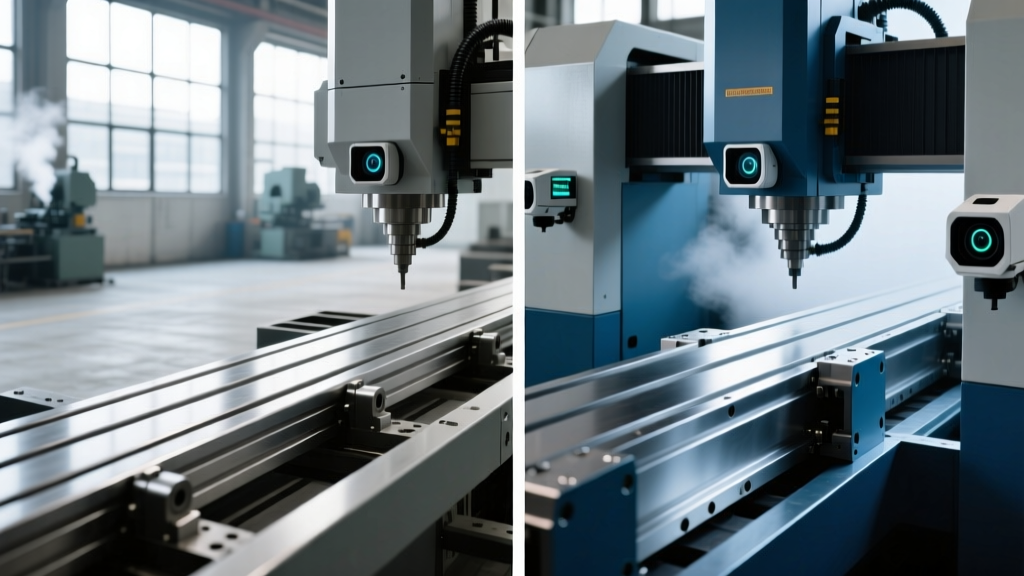
The intersection of artificial intelligence and machine tool metrology is rapidly evolving. When developing automated optical inspection (AOI) systems to detect way cover degradation or lubrication starvation, data scientists face a stark contrast in training data. While deepfake machine learning tools are trained by analyzing synthetic pixels and facial micro-expressions, CNC predictive maintenance vision models must be trained by analyzing physical tribology—real-world wear scars, Turcite B degradation, and micron-level deflection. But before a shop can implement AI-driven way inspection, they must first specify the correct physical way system. The choice between linear ways and box ways dictates the machine's fundamental DNA, separating high-speed production centers from heavy-duty aerospace profilers.
Insight: The Tribology Data GapWhile deepfake machine learning tools are trained by analyzing easily generated synthetic media, generating training data for CNC way wear requires physical accelerated life testing. Shops utilizing edge-computing AOI in 2026 rely on baseline datasets of sliding vs. rolling friction wear patterns, making the initial selection of your way system critical to your long-term predictive maintenance strategy.
Box Ways: Sliding Friction and Unmatched Damping
Box ways rely on sliding contact between two flat, precision-machined surfaces. Typically, a cast-iron saddle slides against a hardened steel or cast-iron base. To prevent galling and reduce the static friction coefficient (stiction), manufacturers apply specialized low-friction polymers like Turcite B (a PTFE-based composite) or injectable epoxy granites like Moglice.
The Art and Science of Hand Scraping
Unlike linear ways which are bolted onto milled surfaces, box ways require hand scraping. Master scrapers use precision straightedges and marking ink to identify high spots, scraping them away to create a surface with 20 to 30 points per square inch (PPI). These microscopic pockets retain way lubricant, preventing metal-on-metal contact and eliminating the stick-slip phenomenon that causes positioning errors at ultra-slow feed rates.
According to Sandvik Coromant's machining knowledge base, damping is the critical factor when performing heavy interrupted cuts in tough materials like Inconel 718 or Ti-6Al-4V. The sliding friction inherent in box ways acts as a massive vibration absorber. When a cutting tool encounters a hard spot or an interrupted cut, the kinetic energy is dissipated through the sliding interface, preventing the harmonic chatter that destroys surface finishes and shatters carbide inserts.
Failure Mode: Lubrication Starvation and Scoring
The primary vulnerability of box ways is the lubrication system. If the metering units fail or the way wipers degrade, the sliding surfaces will quickly score and gall. Once a cast-iron way is scored, the machine must be completely disassembled, the base re-machined, and the saddle re-scraped—a downtime event that can exceed $40,000 and take six weeks.
Linear Ways: Rolling Elements and High-Velocity Machining
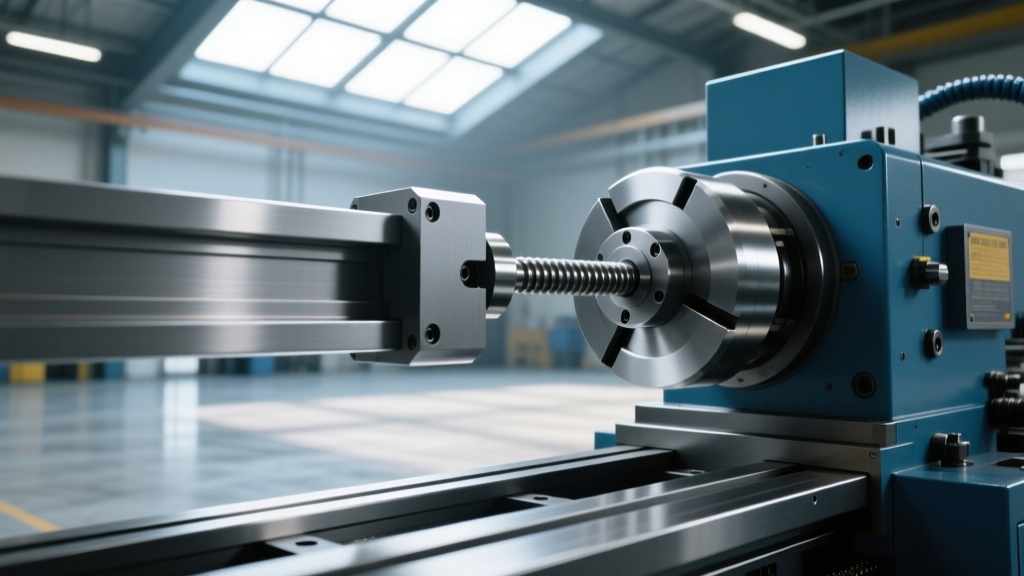
Linear motion guides (LM guides) utilize recirculating ball or roller bearings that ride along precision-ground profile rails. Pioneered by companies like THK, these systems have revolutionized machine tool design by drastically reducing assembly time and enabling rapid traverse rates.
Ball vs. Roller Cages: Preload Matters
Not all linear ways are created equal. Ball-type linear ways feature point contact between the ball and the raceway. This minimizes friction and allows for traverse speeds exceeding 100 m/min, making them ideal for high-speed aluminum machining. However, point contact yields lower static rigidity.
Roller-type linear ways use cylindrical rollers, creating line contact. This dramatically increases the load-bearing area and static rigidity, bridging the gap between linear speed and box-way stiffness. As detailed in THK's LM Guide technical documentation, applying preload (intentional oversizing of the rolling elements to eliminate internal clearance) is standard practice. A heavy preload (C1 or C2 class) maximizes rigidity but increases rolling resistance, heat generation, and accelerates fatigue life depletion if not perfectly aligned.
Thermal Growth and Metrology Challenges
One of the most critical, yet frequently overlooked, aspects of linear way selection is thermal management. Because rolling elements generate less friction than sliding surfaces, they produce less baseline heat. However, the localized heat generated at the ball or roller contact patches during high-speed, high-preload operations can cause the rail to bow. In 2026, advanced CNC builders mitigate this by routing chilled glycol directly through the linear way blocks or utilizing hollow ball screws to maintain volumetric accuracy within 5 microns over a 1-meter travel.
Data Matrix: Linear vs. Box Way Specifications
| Specification | Box Ways (Sliding / Turcite) | Linear Ways (Rolling - Ball) | Linear Ways (Rolling - Roller) |
|---|---|---|---|
| Damping Ratio | High (0.15 - 0.25) | Low (0.01 - 0.03) | Medium (0.04 - 0.08) |
| Static Rigidity | Very High | Medium | High |
| Friction Coefficient | 0.002 - 0.005 | 0.001 - 0.002 | 0.001 - 0.003 |
| Max Traverse Speed | 15 - 25 m/min | 60 - 120 m/min | 40 - 80 m/min |
| Assembly Cost / Time | High (Requires Scraping) | Low (Bolt-on Modular) | Medium (Precision Alignment) |
| Stick-Slip at Low Feed | Negligible (with Turcite) | None | None |
Application Decision Framework for 2026
Specifying the correct way system requires analyzing your shop's specific part mix, spindle utilization, and material hardness. Use the following framework to guide your capital equipment purchases:
- Choose Box Ways When: Your primary workload involves heavy roughing of titanium, stainless steel, or cast iron. If you are utilizing large-diameter face mills, heavy interrupted cuts, or deep-hole boring where chatter is the primary enemy of tool life, the superior damping of box ways is non-negotiable. Expect to pay a 15-20% premium on the base machine cost due to scraping labor.
- Choose Linear Roller Ways When: You require a hybrid approach. 5-axis universal machining centers often utilize heavy-duty roller linear ways to achieve the rigidity needed for steel milling while maintaining the rapid traverse speeds necessary for complex contouring and 3D surfacing.
- Choose Linear Ball Ways When: Your shop focuses on high-volume production of non-ferrous materials (6061-T6 aluminum, brass, plastics) or high-speed graphite electrode milling. The ultra-low friction allows for the aggressive acceleration and deceleration required to minimize cycle times in die-mold and aerospace structural component machining.
The 2026 Metrology Reality: As machine tool builders integrate more inline probing and laser calibration, the inherent repeatability of linear ways makes thermal compensation and volumetric error mapping significantly easier than on box-way machines, where sliding friction generates unpredictable, asymmetric heat growth.