Ingersoll Machine Tools Inc: CapEx & Budget Analysis
Analyze Ingersoll Machine Tools Inc CapEx, hidden installation costs, and TCO. Compare Mastermill pricing against Zimmermann and SNK for 2026 budgets.
The CapEx Reality of Heavy-Duty Machine Tool Procurement
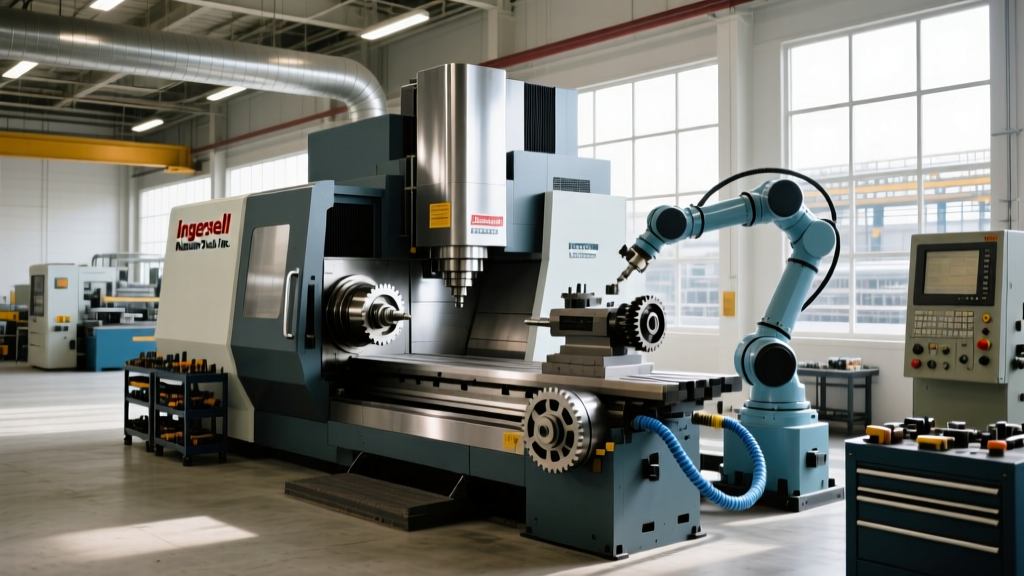
Procuring large-format CNC gantry mills and horizontal boring mills for aerospace, energy, and heavy equipment manufacturing requires navigating multi-million-dollar capital expenditure (CapEx) budgets. Unlike standard vertical machining centers, heavy-duty systems are highly engineered, custom-configured assets. Ingersoll Machine Tools Inc specializes in high-rigidity, large-envelope systems like the Mastermill gantry series and Masterhead horizontal boring mills. When evaluating these systems for 2026 facility expansions, procurement engineers must look far beyond the base machine quote. True budget planning requires a comprehensive analysis of hidden installation expenses, long-term total cost of ownership (TCO), and comparative value against European and Japanese alternatives.
Budget Warning: The CapEx IcebergIndustry data from the Association for Manufacturing Technology (AMT) indicates that for machines exceeding $2 million, the base purchase price typically represents only 70% to 75% of the total first-year capital outlay. Failing to budget for specialized rigging, foundation engineering, and utility upgrades is the primary cause of heavy-machine deployment delays.
Competitive Value Matrix: Ingersoll vs. Global Alternatives
Ingersoll Machine Tools Inc occupies a specific niche: high-torque, high-rigidity machining of hard metals (titanium, Inconel, hardened steels) in large formats. They compete directly with German and Japanese manufacturers, though their value propositions differ significantly. Below is a 2026 market comparison for large-format 5-axis and gantry systems.
| Manufacturer & Model | Primary Envelope (X-Y-Z) | Spindle Torque / Interface | Est. Base Price (2026) | Optimal Application |
|---|---|---|---|---|
| Ingersoll Mastermill | 30ft x 10ft x 5ft | 1,200 Nm / HSK100 | $3.8M - $5.2M | Titanium aero structures, heavy die/mold |
| Zimmermann FZ100 | 30ft x 10ft x 4ft | 350 Nm / HSK63 | $4.5M - $6.0M | High-speed aluminum aero skin profiling |
| SNK Neo-5M (HBM) | 16ft x 13ft x 6ft | 850 Nm / ISO50 | $2.9M - $4.1M | General heavy equipment, large gearboxes |
The Society of Manufacturing Engineers (SME) frequently notes that selecting a machine based solely on envelope size leads to catastrophic ROI miscalculations. If your primary workload involves removing massive volumes of aluminum at 24,000 RPM, the Zimmermann offers superior ROI through cycle time reduction. However, if your shop machines Ti-6Al-4V landing gear components or Inconel turbine casings requiring sustained high-torque cutting at low RPMs, the Ingersoll Mastermill's hydrostatic guideways and mass-dampened bridge structure provide the necessary rigidity to prevent tool deflection and chatter, ultimately yielding a lower cost-per-part.
The Hidden 25%: Foundation, Rigging, and Integration Costs
When budgeting for an Ingersoll system, the factory floor must be prepared to handle extreme static and dynamic loads. A fully assembled Mastermill can weigh between 80 and 150 tons. Standard industrial concrete slabs will deflect under this weight, destroying the machine's geometric accuracy.
1. Foundation Engineering and Epoxy Granite
Heavy gantry mills require isolated, deep-pour foundations. For a 30-foot X-axis travel, expect to excavate and pour a reinforced concrete pit ranging from 4 to 6 feet deep. Many precision shops opt for an epoxy granite overlay on the ways to absorb high-frequency vibrations. Budget $140,000 to $220,000 for civil engineering, excavation, specialized concrete curing (minimum 28 days), and vibration isolation trenching.
2. Specialized Rigging and Millwright Services
Standard forklifts and overhead cranes are insufficient. Delivering and setting an Ingersoll machine requires multi-point hydraulic gantry lifts, specialized air-ride trailers, and certified millwrights to align the bed segments to within 0.0005 inches over 30 feet. Rigging and setting costs routinely range from $75,000 to $120,000.
3. Utility and Control Integration
Modern Ingersoll systems are typically paired with the Siemens Sinumerik One control architecture. Upgrading your facility's power infrastructure to support a 480V, 3-phase, 400-amp dedicated drop, alongside chilled water lines for the spindle and hydraulic power units (HPUs), will add $45,000 to $85,000 to your facility prep budget.
Procurement Tip: The HPU Filtration FactorIngersoll machines utilizing hydrostatic guideways rely on high-pressure hydraulic oil to float the axes. If your facility's ambient temperature fluctuates wildly, the oil viscosity changes, altering the axis float height and ruining tolerances. Always budget an additional $25,000 for a dedicated, closed-loop chiller and a 3-micron offline filtration system to protect the hydrostatic bearings from particulate scoring.
Total Cost of Ownership (TCO) and Lifecycle Maintenance
Capital expenditure is only the entry fee. The TCO of a large-format machine tool over a 15-year lifecycle is dictated by component wear, control obsolescence, and preventative maintenance schedules.
- Spindle Rebuilds: High-torque HSK100 spindles designed for hard-metal milling endure immense radial loads. A complete spindle cartridge rebuild by an OEM-certified technician costs between $45,000 and $75,000. Budget for one rebuild every 8,000 to 12,000 cutting hours.
- Way Cover and Bellows Replacement: On a 30-foot travel machine, the telescoping steel way covers are subjected to heavy chip loads and coolant washdowns. Expect to replace the X-axis way covers every 7 to 10 years at a cost of $30,000 to $50,000.
- CNC Control Upgrades: While the mechanical iron of an Ingersoll machine will last 40 years, the electronic controls will not. Plan for a complete CNC and drive retrofit (e.g., upgrading from an older Sinumerik 840D to the Sinumerik One) around year 12, budgeting $250,000 to $350,000.
Decision Framework: When to Specify Ingersoll
To determine if Ingersoll Machine Tools Inc provides the right ROI for your specific operation, run your production requirements through this decision matrix:
- Evaluate Material Hardness and Torque Requirements: If more than 60% of your material removal involves titanium, stainless steel, or Inconel requiring sustained torque above 800 Nm, Ingersoll's high-rigidity bridge design is mandatory. If you primarily machine 6061 or 7075 aluminum, look to high-speed European alternatives.
- Assess Envelope vs. Accuracy Needs: If you require a massive envelope (e.g., machining 20-foot wind turbine hubs) but can tolerate standard heavy-equipment tolerances (±0.005 inches), a standard Japanese HBM may suffice. If you need aerospace-grade volumetric accuracy (±0.001 inches over 15 feet) in a large envelope, Ingersoll's laser-calibrated, thermally symmetric columns provide the necessary precision.
- Calculate the Automation Premium: Ingersoll offers integrated pallet pools and automated head-changing systems. If your shop runs untended weekend shifts on massive parts, the $400,000 premium for an automated tool and head-changing matrix will yield an ROI within 24 months through increased spindle utilization.
The true value of an Ingersoll system is not realized on the day it is installed, but five years later when the machine is still holding tight tolerances on hardened steel parts that would have induced chatter and destroyed the spindle bearings on a lighter, less rigid competitor's machine.
Ultimately, budgeting for an Ingersoll machine requires a shift in perspective from purchasing a 'tool' to investing in a permanent manufacturing infrastructure asset. By accurately forecasting the hidden civil, rigging, and long-term maintenance costs, shop owners can secure the necessary capital and achieve a predictable, highly profitable ROI in the heavy-duty machining sector.