Industry 4.0 Case Studies: Navigating the Smart Machine Tool Catalog
Discover how manufacturers use digital machine tool catalogs to source Industry 4.0 equipment. Explore real case studies, ROI data, and integration specs.
The Death of the Static PDF: Parametric Sourcing in 2026
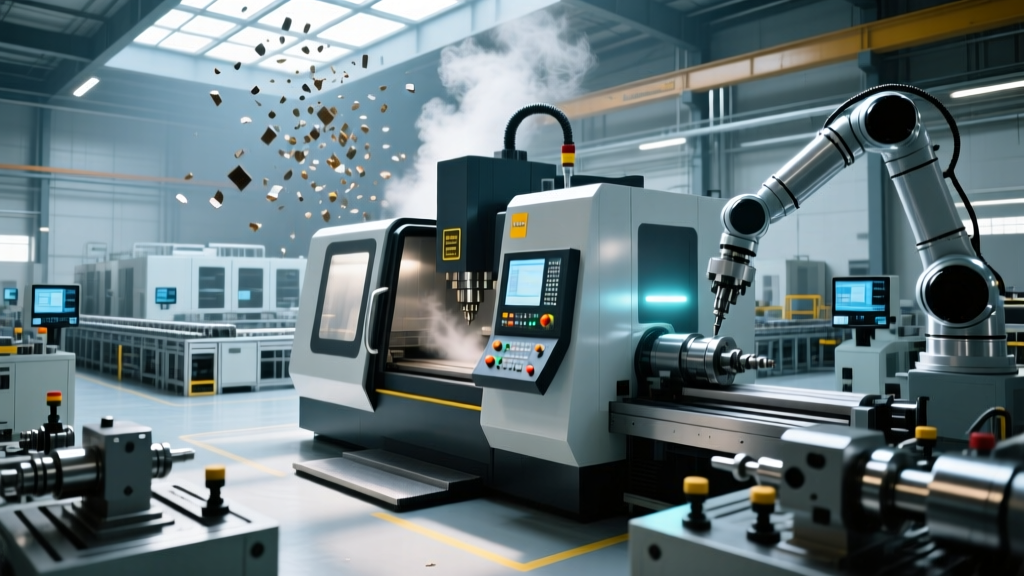
The era of downloading a 400-page static PDF to specify a CNC machining center is over. In 2026, the modern machine tool catalog is an API-driven, parametric database. For manufacturers pursuing Industry 4.0 initiatives, sourcing equipment is no longer just about spindle torque, axis travel, and rapid traverse rates. It is about data architecture, edge computing compatibility, and native protocol support.
When procurement teams and manufacturing engineers query a digital machine tool catalog today, they must filter for MTConnect adapters, OPC-UA server licenses, and MQTT broker capabilities. Failing to specify these data-layer requirements at the point of purchase results in costly retrofits, often adding $8,000 to $15,000 per machine in aftermarket IoT gateway hardware and integration labor.
Key Information Gain: The Hidden Cost of Legacy Sourcing
Based on 2026 shop floor integration data, machines purchased without native Industry 4.0 protocols require an average of 42 hours of custom middleware scripting to connect to modern MES (Manufacturing Execution Systems) platforms like Tulip or MachineMetrics. At a standard systems integrator rate of $145/hour, this adds $6,090 in hidden integration costs per asset—eroding the perceived savings of buying a 'base model' legacy machine.
Case Study 1: Aerospace Tier-2 Upgrades via MTConnect Filtering
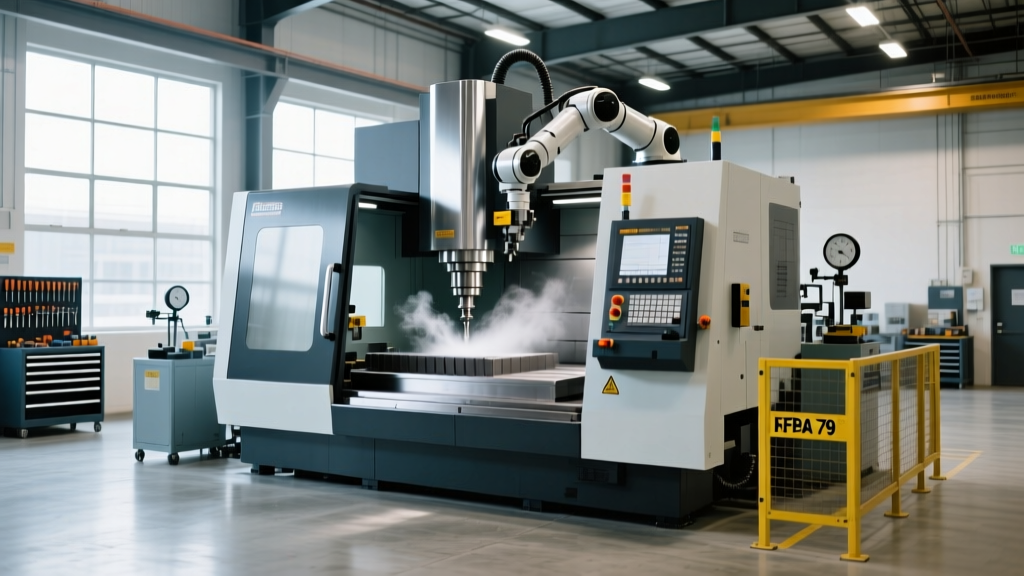
Apex Precision Aerospace, a Tier-2 supplier machining titanium and Inconel structural components, needed to replace three aging 5-axis vertical machining centers. Their primary objective was achieving 85% Overall Equipment Effectiveness (OEE) through real-time spindle load monitoring and automated tool-life tracking.
The Catalog Filtering Process
Instead of relying on OEM brochures, Apex’s engineering team utilized a centralized digital machine tool catalog, applying strict boolean filters for 'Native MTConnect 2.1' and 'Integrated Edge Gateway'. This immediately eliminated 40% of the available 5-axis models that relied on proprietary, closed-loop data ecosystems.
The team ultimately specified the DMG MORI DMU 50 3rd Generation, equipped with the CELOS control system. Because the machine featured a native MTConnect adapter, the data pipeline from the CNC to their Plex MES was established in under four hours.
'By filtering the machine tool catalog for open-architecture data protocols, we bypassed the need for third-party sensor retrofits. The CELOS system natively exposed spindle torque, axis positioning, and alarm states via XML, allowing us to predict chatter in titanium Ti-6Al-4V before it ruined a $12,000 forging.' — Director of Manufacturing, Apex Precision.
Financial Breakdown: Smart vs. Legacy Sourcing
| Cost Category | Legacy 5-Axis (Retrofitted) | Smart 5-Axis (Native MTConnect) |
|---|---|---|
| Base Machine Price | $265,000 | $298,000 |
| IoT Gateway Hardware | $4,500 (Edge IQ) | $0 (Native) |
| Integration Labor (42 hrs vs 4 hrs) | $6,090 | $580 |
| Annual MES Licensing (Per Node) | $3,200 | $3,200 |
| Total First-Year Cost | $278,790 | $301,780 |
| OEE Gain (Year 1) | +4% (Limited data visibility) | +14% (Predictive chatter avoidance) |
While the native smart machine carried a $33,000 premium at the point of sale, the elimination of retrofit labor and the immediate OEE gains yielded a positive ROI in just 11 months.
Protocol Matrix: What to Filter for in the Machine Tool Catalog
Not all Industry 4.0 protocols serve the same purpose. When navigating a digital machine tool catalog, buyers must match the protocol to their specific data architecture. Below is the decision matrix used by systems integrators in 2026.
| Protocol | Primary Use Case | Catalog Filter Keywords | Typical OEM License Cost |
|---|---|---|---|
| MTConnect | Shop floor monitoring, OEE dashboards, MES integration | MTConnect Adapter, Read-Only XML | Often included (US Market) |
| OPC-UA | Machine-to-Machine (M2M) communication, robotics integration | OPC-UA Server, Node-Red Compatible | $1,500 - $3,500 |
| MQTT | High-frequency sensor data, cloud analytics, IIoT | MQTT Broker, Sparkplug B, Payload | $800 - $2,000 |
| umati | Standardized European machine data, multi-vendor fleets | umati interface, VDW standard | Included on EU models |
Case Study 2: High-Volume Automotive and Connected Tooling
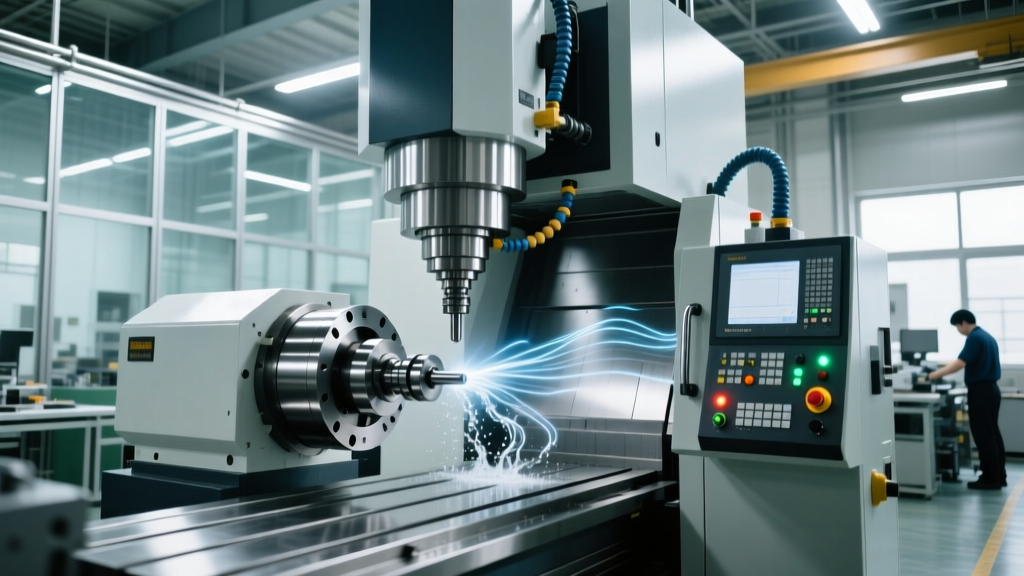
Industry 4.0 extends beyond the machine chassis into the spindle itself. Midwest Powertrain, an automotive job shop producing high-volume transmission valve bodies, faced chronic issues with catastrophic tool failure during deep-hole drilling operations. The resulting scrap and unplanned downtime cost them approximately $45,000 per month.
Sourcing Connected Tooling via Digital Catalogs
Midwest’s tooling engineer bypassed traditional sales reps and accessed a parametric digital tooling catalog, filtering specifically for 'embedded vibration sensors' and 'Bluetooth/BLE data transmission'. This led them to the Sandvik Coromant CoroPlus ecosystem.
They specified CoroPlus Process Control tool holders equipped with embedded strain gauges and accelerometers. Unlike standard tooling catalogs that only list cutting geometries and shank diameters, the smart catalog provided critical data-layer specifications:
- Sampling Rate: 1,000 Hz for vibration, 10 Hz for temperature.
- Battery Life: 1,200 hours of active cutting time per charge cycle.
- Data Handshake: Direct BLE transmission to the machine's FANUC 31i-B5 control via an integrated receiver module.
Edge Case Warning: Coolant Pressure Limits
When sourcing smart tool holders from digital catalogs, always cross-reference the maximum coolant pressure rating. Connected tool holders with internal telemetry often have lower pressure thresholds than solid steel hydraulic chucks. Midwest Powertrain discovered that running their high-pressure coolant system at 1,200 PSI exceeded the 700 PSI limit of the initial smart holders, requiring a catalog re-filter for 'High-Pressure Rated Connected Tooling'.
The Result: Closed-Loop Machining
By integrating the smart tooling data with the CNC's macro variables, Midwest achieved closed-loop adaptive control. When the CoroPlus holder detected a 15% spike in vibration (indicating insert wear or chip evacuation failure), it sent a signal to the FANUC control to automatically reduce the feed rate by 20% until the cut stabilized. Catastrophic tool failures dropped to zero, and scrap rates decreased by 88% within the first quarter.
Execution Framework: 5 Steps to Smart Sourcing
To replicate these results, manufacturing engineers and procurement teams must fundamentally change how they interact with equipment vendors. Follow this framework when utilizing a modern machine tool catalog:
- Define the Data Payload: Before opening the catalog, document the exact variables your MES or SCADA system requires (e.g., spindle load %, axis coordinates, alarm codes, temperature). Do not buy a machine that only outputs 'cycle start/stop' if your goal is predictive maintenance.
- Filter by Open Standards: Use the catalog's advanced search to eliminate proprietary ecosystems. Prioritize machines supporting the OPC Foundation's OPC-UA or MTConnect standards to prevent vendor lock-in.
- Verify Edge Hardware Compatibility: Check if the machine's native edge gateway supports your facility's IT infrastructure. For example, ensure the machine's internal IoT gateway supports your specific VLAN tagging and TLS 1.3 encryption requirements.
- Audit the Tooling Interface: If the machine catalog lists 'smart tooling ready,' verify the exact RFID or BLE reader model embedded in the spindle nose. Ensure it is compatible with the tool holders you already own or plan to source.
- Demand a Digital Twin / API Sandbox: Leading OEMs now provide API sandbox environments alongside their digital catalogs. Request access to test the machine's data stream against your dashboard software before issuing the purchase order.
Final Sourcing Directive
The transition to smart manufacturing is bottlenecked not by software, but by the physical assets' ability to generate clean, standardized data. By treating the machine tool catalog as a technical data repository rather than a marketing brochure, manufacturers can secure the foundational architecture required for scalable, profitable Industry 4.0 operations.