Machine Tool Vibration: Troubleshooting Types of Farm Machinery Parts
Diagnose and repair CNC machine tool rigidity and vibration issues when manufacturing heavy-duty parts for various types of farm machinery.
Manufacturing components for the diverse types of farm machinery currently in production—from combine harvester rotor shafts to heavy-duty tractor PTO housings—places extreme demands on CNC machine tool rigidity. Agricultural parts frequently feature interrupted cuts, asymmetric geometries, and tough materials like AR400 abrasion-resistant steel or Grade 80-55-06 ductile iron. When a CNC lathe or vertical machining center (VMC) loses structural rigidity, harmonic chatter degrades surface finishes, accelerates tool wear, and risks catastrophic spindle failure.
Troubleshooting vibration in this specific sector requires moving beyond generic toolpath adjustments. As of 2026, machine shops supplying Tier 1 agricultural OEMs must address root-cause mechanical degradation in the spindle, way systems, and workholding to maintain the tight tolerances required for modern precision farming equipment.
The Unique Rigidity Demands of Agricultural Manufacturing
Different types of farm machinery require distinct machining strategies, but they share a common trait: high mass and high cutting forces. Machining a 400-pound cast iron transmission housing for an articulated tractor generates radial cutting forces that can exceed 2,500 lbs during heavy roughing. If the machine tool's structural loop (spindle, column, saddle, and bed) lacks dynamic stiffness, these forces excite natural frequencies in the machine structure, resulting in regenerative chatter.
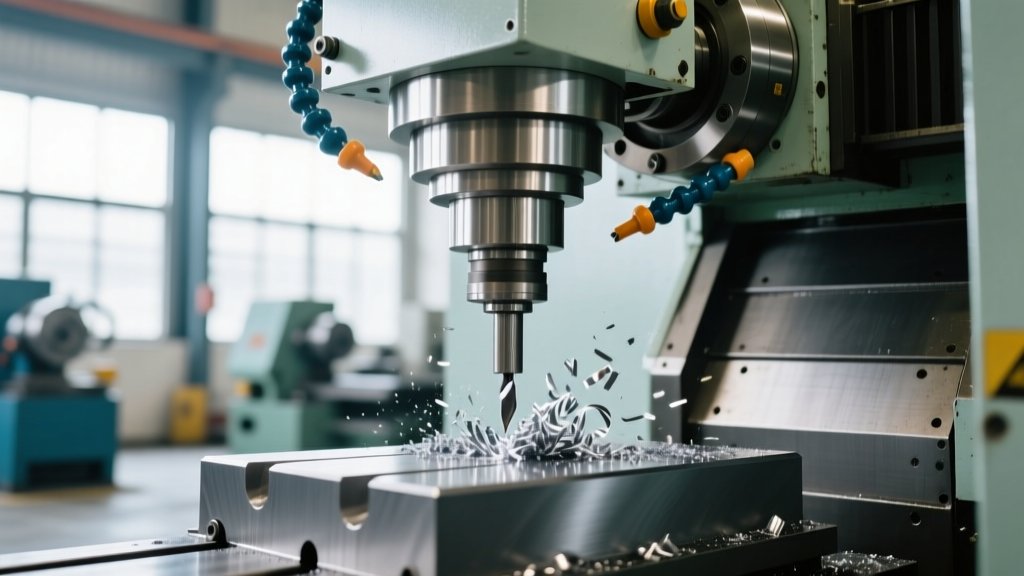
Unlike aerospace aluminum machining, where high spindle speeds (15,000+ RPM) are used to manage harmonics, agricultural steel and iron parts are typically machined at lower speeds (400 to 1,200 SFM) with high feed rates and deep depths of cut (DOC). This low-speed, high-torque environment heavily relies on the machine's static and dynamic rigidity rather than spindle speed to avoid chatter. According to the Sandvik Coromant Metal Cutting Knowledge base, low-frequency chatter (typically 50-300 Hz) is almost always a symptom of machine tool structural weakness or workholding deflection, rather than tooling geometry.
Diagnostic Decision Tree for Chatter and Vibration
Before tearing down a machine for mechanical repair, isolate the vibration source using this systematic diagnostic tree. Chatter marks on the workpiece or tool will reveal the origin.
Step 1: Analyze the Chatter Frequency
- High-Pitch Squeal (1,000+ Hz): Usually tool-side. Check tool overhang (L/D ratio). For boring bars in PTO shafts, ensure the L/D ratio is under 4:1 for steel bars, or upgrade to carbide/anti-vibration bars for ratios up to 10:1.
- Low-Frequency Thumping (50-300 Hz): Usually machine-side or workpiece-side. Proceed to Step 2.
Step 2: The Tap Test (Static Rigidity Check)
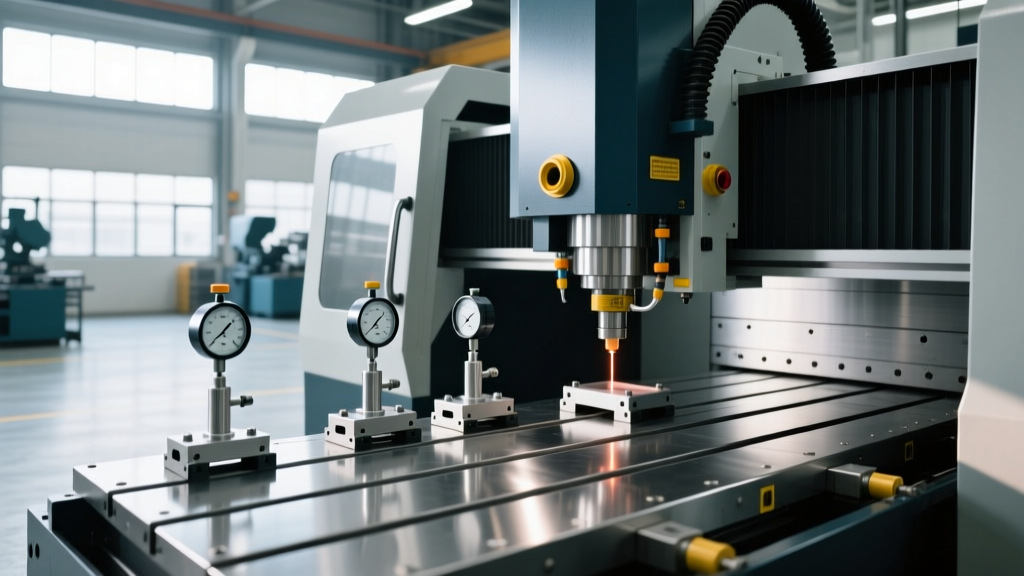
- Mount a dial indicator on the spindle nose and apply 50 lbs of manual leverage to the tool holder. If deflection exceeds 0.0005" on a 40-taper VMC, the spindle bearings or drawbar are compromised.
- Apply leverage to the workpiece. If the part shifts, the hydraulic fixture pressure is insufficient or the locating pins are worn.
Step 3: Evaluate the Cut Geometry
- If chatter only occurs during interrupted cuts (e.g., milling keyways on a splined tractor axle), the issue is likely spindle bearing preload loss, as the bearings cannot absorb the shock loads.
Spindle Bearing Preload Degradation and Repair
The most common cause of machine-side vibration when machining heavy farm machinery components is the loss of preload in the spindle's angular contact bearings. Heavy interrupted cuts common in agricultural manufacturing gradually cause the bearing preload spacer to wear or the bearing races to brinell.
Diagnostic Metric: Check the Total Indicator Runout (TIR) at the spindle nose. A healthy 40-taper or 50-taper spindle should exhibit less than 0.0002" TIR. If TIR reads between 0.0004" and 0.0008", and increases significantly when a 20 lb radial load is applied, the bearing preload has failed.
The Repair Process: Preload Adjustment vs. Complete Rebuild
If the bearings are merely loose but not pitted, a preload adjustment may suffice. This involves removing the spindle nose cap, measuring the spacer gap with a micrometer, and grinding the spacer to increase the clamping force. However, if the machine is used for heavy roughing of AR400 steel, a complete rebuild with heavy-preload (HB) precision bearing pairs (such as SKF or NSK) is mandatory.
2026 Cost Benchmark: A complete spindle rebuild for a standard 40-taper VMC (e.g., Haas VF-2 or Doosan DNM) currently ranges from $9,500 to $16,000, including new ABEC-7/ABEC-9 bearing sets, dynamic balancing, and a 24-hour burn-in test. Refer to the Haas Automation Troubleshooting Guide for specific spindle runout tolerances and alarm codes related to spindle load limits.Vibration Signatures by Farm Machinery Component Type
Understanding the specific vibration profiles associated with different types of farm machinery parts allows maintenance teams to predict which machine components will fail first.
| Component Type | Typical Material | Common Vibration Range | Primary Machine Failure Mode |
|---|---|---|---|
| Tractor PTO Shafts | 4140 Alloy Steel | 150 - 250 Hz (Torsional) | Spindle bearing brinelling from shock loads |
| Combine Harvester Rotors | Ductile Iron / Weldments | 80 - 150 Hz (Bending) | Way system gib wear due to high overhang mass |
| Tillage Plow Shares | AR400 / Boron Steel | 300 - 500 Hz (High-Freq) | Toolholder fretting and taper micro-welding |
| Hydraulic Valve Bodies | Class 40 Gray Iron | 50 - 100 Hz (Structural) | Column resonance and foundation bolt loosening |
Way System Wear and Gib Adjustment Protocols
When machining massive, asymmetric castings like combine harvester mainframes, the off-center center of gravity places uneven loading on the machine's X and Y axis way systems. Over time, this causes the Turcite or Rulon way liners to wear unevenly, introducing stick-slip friction and low-frequency vibration.
Scraping and Flaking Specifications
If the axis exhibits stick-slip during circular interpolation (visible as dwell marks on large bored holes), the way system must be re-scraped. For heavy-duty agricultural machining, the scraping pattern must prioritize oil retention over pure geometric flatness.
- Target Bearing Points: 12 to 16 points per square inch (PPI) for heavy roughing machines. Do not scrape to 24+ PPI, as the tighter surface contact reduces the hydrodynamic oil film thickness required to dampen heavy cutting vibrations.
- Gib Clearance: Adjust the jib to allow a maximum of 0.0005" of lift. Any looser, and the heavy mass of agricultural castings will cause the saddle to rock during Z-axis rapid traverses, misaligning the tool to the workpiece.
Workholding Solutions for Asymmetric Agricultural Castings
Machine tool rigidity is useless if the workholding system acts as a weak link. Many types of farm machinery rely on complex, asymmetrical castings that cannot be held securely with standard vise setups.
"In agricultural machining, 60% of what operators diagnose as 'machine chatter' is actually workpiece resonance caused by inadequate fixture damping. Injecting low-melting-point alloy or specialized polymer into the voids of a casting before machining can increase the part's dynamic stiffness by up to 300%."
For high-volume production of parts like tractor hitch points, transition from manual toggle clamps to hydraulically actuated, self-compensating fixture clamps. These clamps apply consistent, programmable tonnage (e.g., 4,500 lbs per clamp) that does not relax as the machine vibrates. Additionally, utilize Moglice (a specialized injection polymer) to fill the internal voids of the fixture base itself, turning a hollow steel weldment into a solid, vibration-damping mass.
Summary: Maintaining Rigidity for the Agricultural Sector
Troubleshooting vibration when manufacturing types of farm machinery requires a holistic approach. Operators must verify spindle TIR under load, maintain proper way system PPI through targeted scraping, and utilize high-tonnage hydraulic workholding to counteract the immense cutting forces generated by agricultural-grade alloys. By treating machine tool rigidity as a measurable, maintainable metric rather than a fixed property, shops can eliminate chatter, extend tool life, and meet the stringent quality demands of modern agricultural OEMs.