How Machine Tool Financing Impacts CNC Retrofit Safety Compliance
Discover how machine tool financing enables OSHA-compliant CNC retrofits for manual mills and lathes, covering ISO 13849-1 safety relays and NFPA 79.
The Hidden Compliance Trap in CNC Retrofits
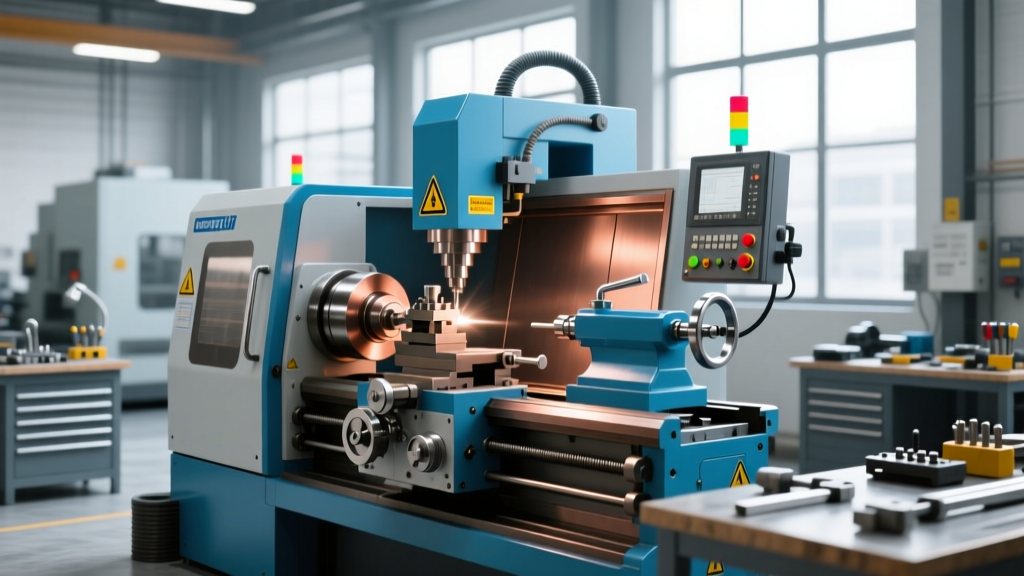
Converting a manual Bridgeport Series I mill or South Bend Heavy 10 lathe into a CNC machine is a proven strategy for job shops looking to increase throughput without the $150,000+ capital expenditure of a new vertical machining center. However, the transition from manual handwheels to automated, servo-driven axes introduces severe kinetic hazards. When a machine operates under programmatic control, the operator is no longer in direct physical contact with the feed handles, removing the innate tactile feedback that prevents manual crashes and entanglements.
When securing machine tool financing for these projects, shops frequently isolate the cost of the CNC controller, servo motors, and ball screws while treating safety compliance as an optional aftermarket addition. This is a critical financial and legal error. A retrofitted machine that lacks hardwired safety interlocks and compliant guarding is a liability that can result in immediate OSHA citations, invalidated equipment insurance, and catastrophic operator injury.
⚠️ WARNING: The 'Grandfather Clause' MythA pervasive misconception in machine shops is that older manual machines are 'grandfathered' under older safety codes. Under OSHA 29 CFR 1910.212, any fundamental alteration to a machine's operation—such as converting manual feed to automated CNC feed—voids grandfathered status. The retrofitted machine must comply with current consensus standards for automated machinery guarding and control reliability.
Decoding the Standards: ISO 13849-1 and NFPA 79
To build a legally defensible and physically safe CNC retrofit, the electrical and guarding upgrades must align with two primary frameworks. Budgeting for these requirements must be explicitly factored into your equipment loan or lease agreement.
Control System Reliability (ISO 13849-1)
The ISO 13849-1:2023 standard dictates the Performance Level (PL) of safety-related control systems. For CNC retrofits, the Emergency Stop (E-Stop) and axis-limit safety circuits must meet a minimum of Category 3 or Category 4.
- The Software Trap: Cheap, entry-level retrofits often route the E-Stop button through a standard USB breakout board into the PC software (e.g., Mach3 or LinuxCNC). If the PC freezes or the USB bus drops, the E-Stop becomes useless. This violates ISO 13849-1.
- The Compliant Solution: The E-Stop circuit must be hardwired through a dedicated safety relay (such as the Pilz PNOZ X3 or Allen-Bradley MSR127RP). This relay physically severs the 24VDC control power to the servo drives and spindle contactor, entirely independent of the CNC computer's operating state.
Electrical Enclosures and Wiring (NFPA 79)
NFPA 79 governs the electrical standard for industrial machinery. Retrofitting a manual machine requires building a new electrical enclosure. Compliance mandates specific wire color coding (e.g., red for control circuits, black for AC power, yellow for external connections), proper grounding of the machine casting, and the use of disconnect switches that can be locked out in the OFF position (LOTO). Financing packages that only cover the 'CNC kit' often leave the shop to jury-rig the electrical panel, resulting in NFPA 79 violations.
Structuring Machine Tool Financing for Safety
Modern equipment lenders and leasing companies recognize that safety upgrades extend the useful life and operational viability of legacy iron. When applying for machine tool financing, you must structure the capital request as a Comprehensive Modernization Package rather than a simple parts purchase.
"Lenders evaluating equipment financing agreements (EFAs) look favorably on capital expenditures that mitigate operational risk. By bundling NFPA-compliant electrical enclosures, polycarbonate guarding, and safety interlocks into the primary loan, shops can amortize the safety costs over the 60-to-84-month term of the loan, preserving immediate working capital while ensuring day-one compliance."
Furthermore, bundling these safety components into the primary equipment invoice ensures they qualify for Section 179 tax deductions in the year the machine is placed in service, provided the financing is structured as a capital lease or equipment loan rather than an operating lease.
Cost Matrix: Basic vs. Compliant Retrofit Packages
The following table illustrates the true cost of a compliant retrofit on a standard Bridgeport-style knee mill. Use this matrix to accurately request capital from your financing partner.
| Component Category | Non-Compliant 'Hobby' Kit | OSHA/ISO Compliant Industrial Package |
|---|---|---|
| Motion Control & Motors | $4,500 (Open-loop steppers) | $11,000 (Closed-loop AC servos) |
| E-Stop & Safety Relays | $45 (Software-routed switch) | $650 (Dual-channel Pilz safety relay) |
| Operator Guarding | $0 (None / Chip splash only) | $2,800 (1/2" Lexan with Bernstein interlocks) |
| Electrical Enclosure | $200 (Plastic project box) | $1,400 (NEMA 12 steel, LTO disconnect) |
| Total Capital Required | ~$4,745 | ~$15,850 |
Evaluating Retrofit Controllers for Safety I/O
Not all CNC controllers handle safety I/O equally. When selecting a system to justify your financing request, evaluate how the controller integrates with external safety hardware.
Centroid M400S
The Centroid M400S is an industrial-grade controller specifically engineered for retrofits. It features dedicated, optically isolated safety inputs and built-in relay outputs for spindle and coolant control. Its architecture natively supports hardwired E-Stop chains without requiring complex external PLC programming, making it a highly compliant choice right out of the box.
MachMotion with Ethernet SmoothStepper
MachMotion provides excellent servo tuning and user interfaces, but the underlying motion control relies on standard breakout boards. To achieve ISO 13849-1 compliance, the integrator must design an external safety relay circuit that interrupts the servo drive's 'Servo-ON' and 'Son' pins directly. This requires advanced electrical engineering but yields a highly robust, compliant system when executed correctly.
Step-by-Step Compliance Checklist for Retrofit Integration
Before finalizing your machine tool financing agreement, ensure the following actionable steps are mapped to your project timeline:
- Conduct a Baseline Risk Assessment: Identify all pinch points, shear points, and rotational hazards introduced by automated axis movement. Document these per ANSI B11.0 guidelines.
- Specify Polycarbonate Thickness: Do not use standard acrylic or thin PETG for CNC guarding. High-speed chip ejection and broken tooling require a minimum of 1/2-inch (12mm) Lexan Margard polycarbonate to prevent catastrophic shield penetration.
- Install Captive Interlocks: Use safety-rated limit switches (e.g., Bernstein ENM-U1Z) on all access doors. The switch must be wired in series with the safety relay. If the door opens during a cycle, the relay must trigger a Category 0 (immediate power removal) or Category 1 (controlled deceleration then power removal) stop.
- Verify Axis Limit Redundancy: Software limits are insufficient. Install physical, hardwired micro-switches at the extreme travel limits of the X, Y, and Z axes, wired directly into the E-Stop safety chain.
- Execute Third-Party Validation: Upon installation, hire a certified machine safety expert to perform a validation test, measuring the stopping time and calculating the exact safety distance required for the light curtains or physical guards.
Final Documentation and Handover
Compliance is not just physical; it is documentary. Your retrofit package must include an updated electrical schematic reflecting the NFPA 79 wiring, a risk assessment matrix, and a validation certificate. Retain these documents in the machine's physical operator manual. When OSHA inspectors or insurance auditors evaluate the shop floor, this documentation proves that the capital deployed via your machine tool financing was utilized to create a safe, modern, and legally compliant manufacturing asset.