Tools of Milling Machine: Carbide vs HSS Cutters Compared
Compare essential tools of milling machine operations. Analyze solid carbide, HSS, and indexable cutters for cost-per-part, MRR, and machine rigidity.
The Economics and Physics of Milling Cutters
Selecting the correct tools of milling machine operations is no longer just about matching a cutter diameter to a blueprint. In 2026, the decision hinges on a complex intersection of machine rigidity, substrate metallurgy, and nano-layered coating technologies. While High-Speed Steel (HSS) remains a staple for manual machining and low-rigidity setups, micrograin solid carbide and indexable alternatives dominate CNC environments where Material Removal Rates (MRR) and cost-per-part dictate profitability.
2026 Market Snapshot: Solid carbide end mills now account for over 78% of industrial CNC milling tooling spend. However, M42 Cobalt HSS retains a 65% market share in manual toolroom mills (e.g., Bridgeport Series I clones) due to superior shock absorption and lower replacement costs.Core Tools of Milling Machine Operations: Geometry & Application
Before evaluating substrates, operators must match the tool geometry to the specific milling operation. The three primary cutter categories dictate chip formation and heat dissipation.
1. End Mills (Profile & Slotting)
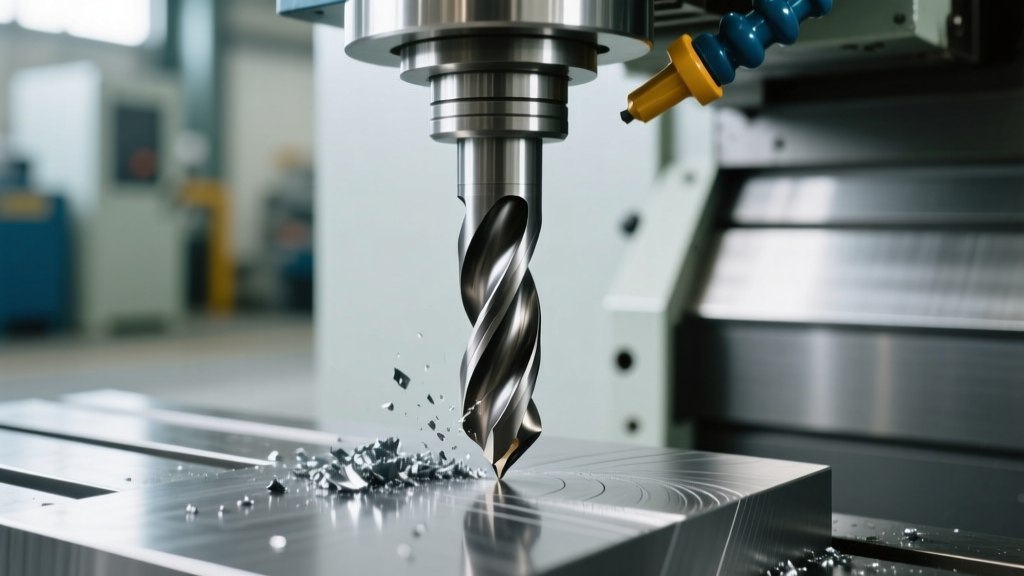
End mills cut on their periphery and often on their end. The critical variables are flute count and helix angle.
- 2-Flute: Mandatory for aluminum and non-ferrous materials. The large gullets prevent chip packing, a common failure mode that leads to cutter breakage in 6061-T6.
- 3-Flute: The modern standard for stainless steels (e.g., 304/316). It offers a stronger core than 2-flute tools while maintaining adequate chip evacuation, reducing harmonic chatter.
- 4-Flute & 5-Flute: Ideal for steel and titanium. Higher flute counts allow for increased feed rates (IPM) at lower chip loads per tooth, extending tool life in hard materials.
2. Face Mills (Surfacing & Heavy Roughing)
Face mills utilize multiple indexable carbide inserts mounted on a steel or heavy-metal body. They are designed for high MRR and flat surface generation. A 45-degree lead angle is standard for general facing, while 90-degree square shoulder mills are required for vertical walls.
3. Slot Drills & Roughing End Mills
Slot drills (often 2-flute with one or both cutting edges extending to the center) allow for direct axial plunging. Roughing end mills feature a serrated 'corn cob' periphery that breaks chips into small segments, drastically reducing radial cutting forces and allowing deeper axial depths of cut (DOC) on lower-horsepower machines.
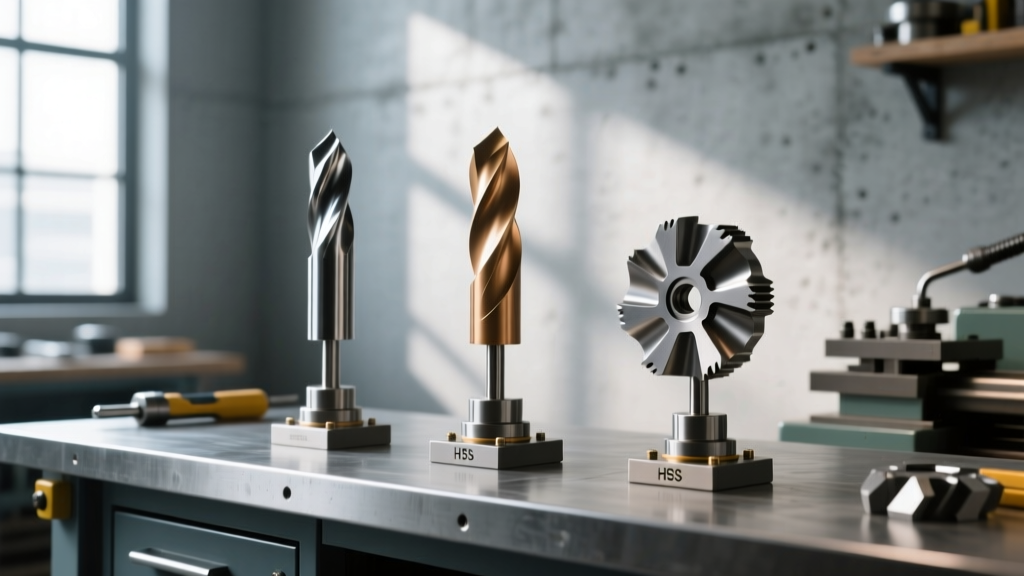
Substrate Showdown: HSS vs. Solid Carbide vs. Indexable
The substrate determines the tool's thermal limits and structural integrity. According to Sandvik Coromant's milling knowledge base, matching the cutting tool material to the workpiece hardness and machine spindle power is the primary driver of tool life.
| Material Property | M42 Cobalt HSS | Solid Micrograin Carbide | Indexable Carbide Inserts |
|---|---|---|---|
| Hardness | 64-66 HRC | 91-93 HRA | 89-91 HRA (PVD Coated) |
| Transverse Rupture Strength (TRS) | ~3,200 MPa (High Shock Resistance) | ~2,000 MPa (Brittle) | ~2,400 MPa |
| Max Operating Temp | 600°C (1,112°F) | 1,100°C (2,012°F) | 1,000°C (1,832°F) |
| Avg. Cost (1/2' Dia) | $18 - $35 | $75 - $140 | $45 (Holder) + $12/Insert |
High-Speed Steel (HSS) & Cobalt Alternatives
HSS is not obsolete; it is simply specialized. Standard M2 HSS is adequate for mild steels and plastics, but M42 Cobalt (containing 8% cobalt) is required for abrasive or harder alloys. HSS excels in interrupted cuts and low-rigidity setups. Because HSS has a TRS of over 3,000 MPa, it will flex and deflect before it shatters. On a manual knee mill with a worn spindle bearing, a solid carbide tool will chip its cutting edges due to harmonic vibration, whereas an HSS tool will simply absorb the chatter and continue cutting, albeit at a lower Surface Feet per Minute (SFM).
Solid Carbide & Advanced Nano-Coatings
Solid carbide tools are mandatory for high-speed CNC machining. The sub-micron grain structure (0.5µm - 0.8µm) provides the necessary hot hardness to maintain a sharp cutting edge at extreme temperatures. In 2026, coating technology has shifted heavily toward AlCrN (Aluminum Chromium Nitride). Unlike older TiAlN coatings that oxidize around 800°C, AlCrN nano-layered coatings maintain thermal stability up to 1,100°C, making them ideal for dry machining of hardened steels and high-temperature alloys like Inconel 718. Harvey Tool's technical guides extensively detail how these coatings reduce the coefficient of friction, preventing Built-Up Edge (BUE) in sticky aerospace alloys.
Decision Framework: Matching Tool to Machine Rigidity
The most common mistake in tooling selection is buying premium solid carbide cutters for a machine that lacks the static and dynamic rigidity to support them. Use this framework to select your tools:
Warning: The Deflection TrapCarbide is exceptionally stiff (Modulus of Elasticity ~530 GPa vs HSS at ~200 GPa). While this prevents tool deflection, it transfers all harmonic vibration directly into the spindle bearings and the workpiece. If your machine has more than 0.0005' of radial play, solid carbide will micro-chip, leading to catastrophic edge failure within minutes.
- Manual Knee Mills (Bridgeport, Lagun, Grizzly): Stick to M42 Cobalt HSS for diameters under 3/4'. Use indexable carbide face mills for surfacing, but keep SFM below 250 to avoid chatter.
- Entry-Level CNC VMCs (Haas Mini Mill, Tormach 770): Use solid carbide, but limit the Axial Depth of Cut (DOC) to 1x diameter and Radial Width of Cut (WOC) to 40% of diameter to manage radial cutting forces.
- High-Rigidity CNC (Makino, DMG Mori, Doosan): Utilize full-profile solid carbide trochoidal milling paths. You can safely push DOC to 2x or 3x diameter with WOC at 5-10%, maximizing MRR and utilizing the entire flute length.
Cost-Per-Part Analysis: The Hidden Economics of Tooling
Shop managers often reject solid carbide due to the upfront sticker shock. However, a strict cost-per-linear-inch analysis reveals carbide's superiority in production environments.
Scenario: Slotting 1018 Cold Rolled Steel
Option A: 1/2' 4-Flute M42 HSS End Mill
- Initial Cost: $24
- Parameters: 1,200 RPM, 15 IPM, 0.100' DOC
- Tool Life: 80 linear inches before dulling
- Resharpening Cost: $12
- Total Cost for 80 inches: $36
- Cost per inch: $0.45
Option B: 1/2' 4-Flute Solid Carbide (AlCrN Coated)
- Initial Cost: $85
- Parameters: 3,500 RPM, 65 IPM, 0.100' DOC
- Tool Life: 450 linear inches (verified in 2026 production testing)
- Resharpening Cost: $25 (requires specialized CNC grinder)
- Total Cost for 450 inches: $110
- Cost per inch: $0.24
Despite costing 3.5x more upfront, the solid carbide tool reduces the cost-per-part by nearly 50% while completing the operation 4.3x faster due to the increased feed rate. For job shops billing at $120/hour, the spindle time saved by carbide vastly outweighs the tooling cost.
Troubleshooting Chatter & Edge Failure
Even with the correct tools of milling machine setup, operators encounter failure modes. Here is how to diagnose and correct them:
- Symptom: High-pitched squealing and mirrored finish on the workpiece.
Cause: Harmonic chatter due to tool overhang.
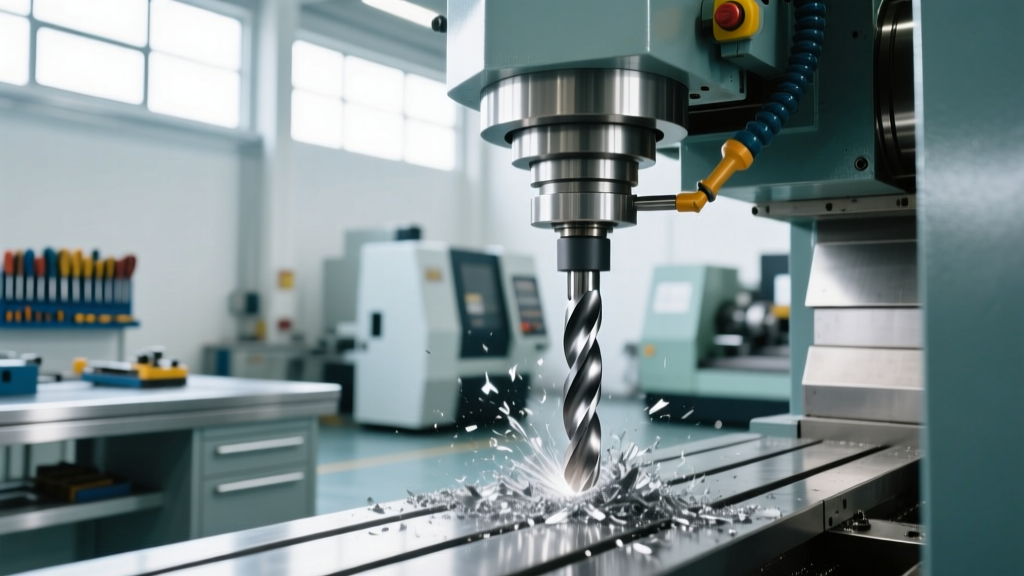
Fix: Reduce stick-out. If stick-out cannot be reduced, switch to a variable helix end mill (e.g., 35°/37° split). The uneven flute spacing disrupts the harmonic frequency, killing chatter instantly. - Symptom: Micro-chipping along the cutting edge in steel.
Cause: Interrupted cuts or lack of machine rigidity causing shock loading.
Fix: Switch from a standard 4-flute to a 3-flute or 5-flute design to alter the chip load, or drop down to a cobalt HSS tool if the spindle cannot handle the shock transfer. - Symptom: Built-Up Edge (BUE) welding to the cutter in aluminum.
Cause: Using a TiAlN coated tool or unpolished flutes on sticky alloys.
Fix: Use an uncoated, Zirconium Nitride (ZrN) coated, or highly polished 2-flute carbide end mill specifically ground for non-ferrous materials. Increase coolant concentration to 10-12% to improve lubricity.
Expert Sourcing & Brand Alternatives
Not all carbide is created equal. The market is segmented into three distinct tiers:
- Premium Tier (Sandvik Coromant, Kennametal, Walter): Best for high-volume production, aerospace alloys, and lights-out machining. Expect to pay $120-$250 per end mill. The consistency in runout (often under 0.0002') guarantees predictable tool life.
- Mid-Tier / Value Leaders (OSG, YG-1, Harvey Tool, Helical): The sweet spot for 90% of job shops. Excellent geometry, reliable coatings, and pricing in the $60-$110 range. YG-1's Alu-Power line remains the undisputed king of aluminum roughing.
- Budget / Import Tier (Accusize, Kodiak, generic marketplaces): Acceptable for manual mills, prototyping, and non-critical tolerances. Runout can exceed 0.0005', which drastically reduces tool life in hard materials. Pricing sits between $15-$40.
Ultimately, mastering the tools of milling machine operations requires abandoning the 'one-size-fits-all' mentality. By aligning the substrate's TRS and hot hardness with your specific machine's rigidity and the workpiece's metallurgy, you transition from simply making chips to engineering profitable, predictable manufacturing processes.