Evaluate the HVAC Equipment Manufacturing Company Trane on Furnaces
Learn how to evaluate the HVAC equipment manufacturing company Trane on furnaces using modular manufacturing equipment for flexible production lines.
When industrial engineers and plant managers evaluate the HVAC equipment manufacturing company Trane on furnaces, the analysis extends far beyond consumer-facing AFUE (Annual Fuel Utilization Efficiency) ratings or thermal output. From a manufacturing technology perspective, evaluating a tier-one OEM like Trane requires dissecting how their production facilities adapt to high-mix, variable-volume demand. In 2026, the cornerstone of this adaptability is modular manufacturing equipment. Fixed, hard-automated assembly lines are obsolete for modern HVAC production; they cannot accommodate the rapid changeovers required to switch between a 40,000 BTU residential single-stage furnace and a 120,000 BTU commercial modulating unit without incurring catastrophic downtime.
The Production Lens: Why Modular Flexibility Matters in HVAC
Trane Technologies has heavily invested in flexible manufacturing systems to support its sustainability and operational efficiency goals, such as its Gigaton Challenge initiatives, which demand leaner, less wasteful production processes. To evaluate the HVAC equipment manufacturing company Trane on furnaces effectively, one must look at the modularity of their assembly conveyors, robotic welding cells, and end-of-line testing rigs. Modular equipment allows manufacturers to reconfigure workstations in hours rather than weeks, utilizing standardized pallets, quick-change end-effectors, and plug-and-play sensor arrays.
2026 Flexible Production Metrics for HVAC Lines:- Average Changeover Time: Reduced from 4.5 hours (fixed line) to 18 minutes (modular cell).
- Capital Expenditure per Cell: $145,000 to $260,000 depending on cobot vs. industrial robot integration.
- Footprint Reduction: Modular U-shaped cells require 32% less floor space than linear conveyor setups.
Core Modular Equipment in Modern Furnace Assembly
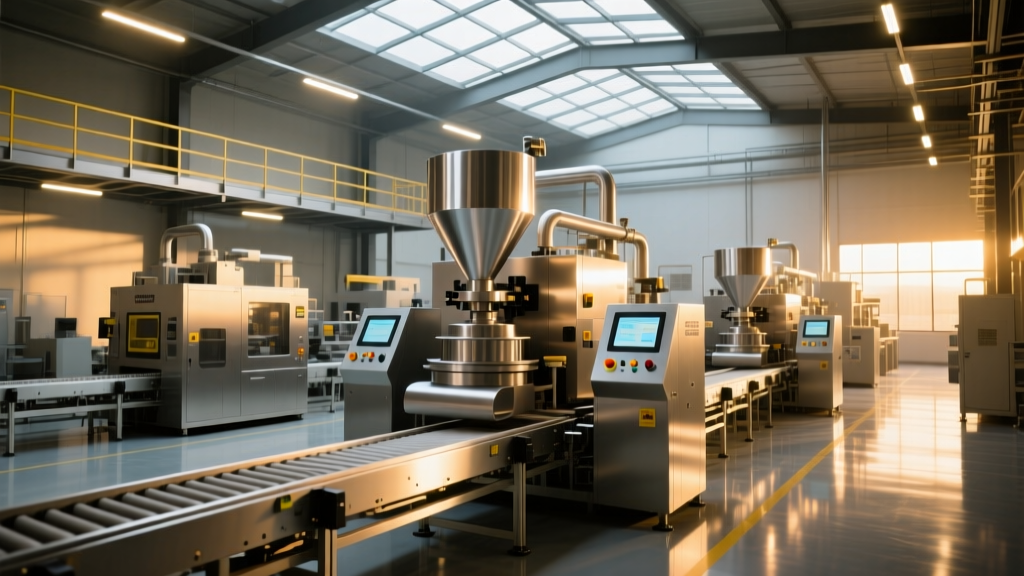
Evaluating the physical assembly of furnace cabinets and heat exchangers reveals a heavy reliance on heavy-duty modular roller conveyors and flexible pallet systems. Furnace heat exchangers constructed from aluminized steel or stainless steel can weigh between 85 and 160 lbs. Standard belt conveyors fail under this dynamic load.
Heavy-Duty Pallet and Conveyor Systems
Leading facilities utilize systems like the Bosch Rexroth TS5 roller conveyor, which supports loads up to 400 kg per pallet. The modularity of the TS5 allows plant engineers to insert or remove sections, integrate lift-and-transfer units, and reroute pallets to offline buffer zones without halting the main trunk line. According to guidelines from NIST's Advanced Manufacturing Office, integrating RFID-tagged pallets with modular conveyors enables real-time routing of custom furnace configurations directly to the appropriate brazing or wiring stations.
Flexible Robotic and Cobot Cells
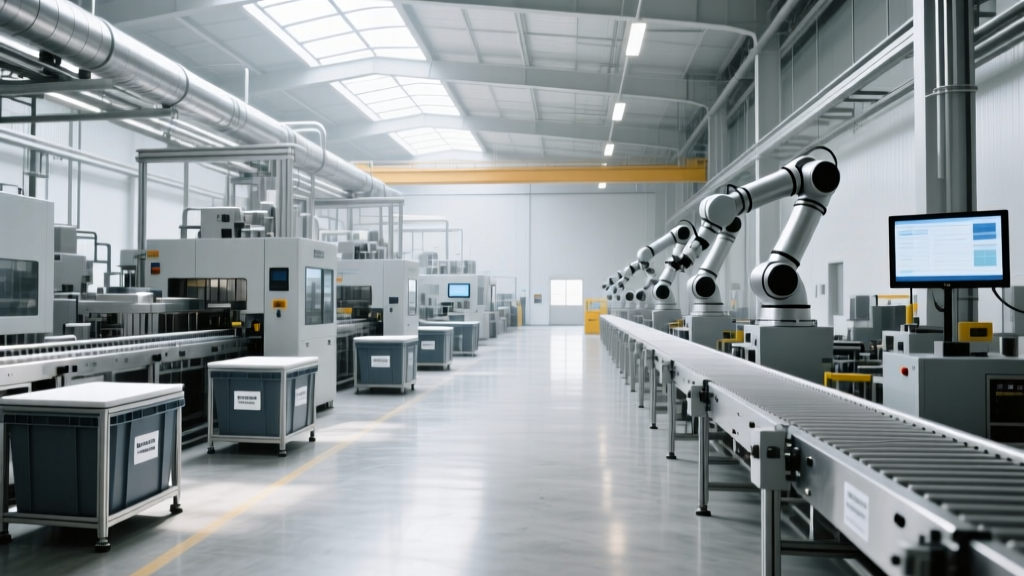
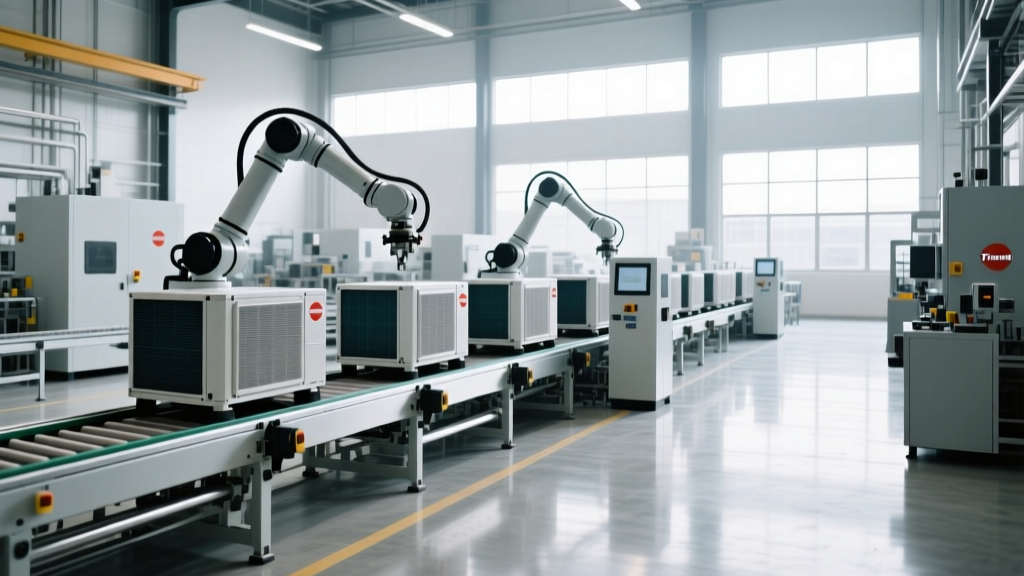
Welding and brazing are critical in furnace manufacturing. Traditional hard-automation welding fixtures are custom-machined for a single cabinet size. Modern flexible cells utilize collaborative robots (cobots) like the FANUC CRX-25iA or Universal Robots UR20, mounted on mobile modular bases. These cells use quick-change tool plates (such as the Schunk SWS series) to swap between MIG welding torches for cabinet seams and induction brazing heads for copper refrigerant lines in under 45 seconds.
| Feature | Traditional Fixed-Line Automation | Modular Flexible Production (2026 Standard) |
|---|---|---|
| Changeover Mechanism | Manual fixture teardown and recalibration | Automated quick-change end-effectors and recipe-driven PLCs |
| Product Mix Capability | Low mix, high volume (1-2 SKUs per line) | High mix, variable volume (15+ SKUs simultaneously) |
| Maintenance Downtime | Entire line stops for single station failure | Pallets reroute around offline modular cells |
| Capital Scalability | Requires massive upfront CapEx for full line | Incremental CapEx; add cells as demand grows |
End-of-Line Testing: Modular Leak and Combustion Analysis
A furnace is a pressurized gas vessel; therefore, end-of-line (EOL) testing is non-negotiable. Evaluating Trane's manufacturing rigor means examining their EOL modular testing rigs. Modern facilities use mass-flow leak testers rather than traditional pressure-decay systems. Mass-flow systems, such as those engineered by InterTech Development, measure the actual volume of air escaping the gas valve and manifold assembly, providing pass/fail results in under 3 seconds regardless of the internal volume of the specific furnace model being tested.
'Flexibility in HVAC manufacturing is no longer about how fast a human can retool a jig. It is about how seamlessly a modular test rig can auto-configure its pneumatic seals and sensor arrays based on the RFID tag of the furnace pallet arriving at the station.' — Manufacturing Systems Engineering Journal, 2025.
Troubleshooting Modular Line Bottlenecks in Furnace Production
Implementing modular equipment introduces unique failure modes. Plant managers evaluating or replicating tier-one HVAC production lines must anticipate the following edge cases:
- Pallet Tracking Desynchronization: In high-mix environments, a pallet carrying a 90,000 BTU cabinet might be routed to a station calibrated for a 60,000 BTU unit. Fix: Implement dual-redundant RFID read/write heads at every junction, paired with a localized edge-computing PLC that physically locks the lift-and-transfer gate until the pallet recipe matches the station tooling.
- Cobot Collision Faults in Tight Cabinets: Furnace interiors are dense with wiring harnesses and gas valves. Cobots operating inside the cabinet for internal wiring often trigger collision sensors due to harness spring-back. Fix: Utilize 3D vision systems (e.g., Cognex In-Sight 990) to map the exact harness position in real-time, dynamically adjusting the cobot's approach vector rather than relying on blind, pre-programmed coordinates.
- Mass-Flow Calibration Drift: Modular test rigs that seal against the furnace flue can experience gasket wear, leading to false leak failures. Fix: Schedule automated master-leak calibration cycles every 50 parts using an integrated reference standard built directly into the modular test bench.
Implementation Framework: Upgrading to Modular Furnace Assembly
For mid-sized HVAC manufacturers looking to emulate the flexible production strategies of industry leaders, a phased approach is required. The following framework aligns with ISO 23247 standards for digital twin integration in manufacturing:
- Phase 1: Decouple the Line (Months 1-3): Break the continuous conveyor into discrete, U-shaped modular cells. Introduce manual lift-and-transfer stations to buffer inventory between cells.
- Phase 2: Standardize the Pallet (Months 4-6): Design a universal base pallet with standardized locating pins that can accommodate the footprint of all furnace SKUs from 40k to 120k BTU.
- Phase 3: Automate the Changeover (Months 7-9): Integrate quick-change robotic end-effectors and recipe-driven HMI screens that automatically adjust torque limits, weld schedules, and test pressures based on the scanned pallet ID.
The Verdict on Flexible Manufacturing
To accurately evaluate the HVAC equipment manufacturing company Trane on furnaces from an industrial standpoint is to recognize their mastery of production flexibility. By leveraging modular conveyors, adaptive robotic cells, and intelligent EOL testing rigs, tier-one manufacturers insulate themselves against supply chain volatility and shifting market demands. For competing manufacturers, investing in modular equipment is no longer an experimental upgrade; it is the baseline requirement for surviving the high-mix, high-efficiency HVAC market of 2026 and beyond.