Gene Therapy Manufacturing Equipment: Startup Compliance Guide
Navigate FDA and EMA compliance for small-scale gene therapy manufacturing equipment. Learn GMP containment, biosafety standards, and startup costs.
The Regulatory Paradox for CGT Startups
Cell and gene therapy (CGT) startups face a unique operational paradox: they must operate with lean seed capital while adhering to the same stringent Current Good Manufacturing Practice (cGMP) standards as commercial pharmaceutical giants. When procuring small-scale gene therapy manufacturing equipment for pilot lines or Phase 1/2 clinical suites, founders cannot treat compliance as an afterthought. The equipment selected dictates the facility's biosafety containment, data integrity architecture, and ultimate regulatory approvability.
According to the FDA's Center for Biologics Evaluation and Research (CBER), the majority of clinical holds placed on early-stage CGT trials stem from cross-contamination risks and inadequate viral vector containment. For startups engineering viral vectors like Lentivirus, Adeno-Associated Virus (AAV), or engineering autologous CAR-T cells, the transition from R&D benches to GMP-compliant small-scale suites requires a meticulous approach to equipment qualification (IQ/OQ/PQ).
⚠️ Containment Warning: While AAV production can often be managed under standard BSL-1 or BSL-2 conditions, Lentivirus and retrovirus manufacturing strictly require BSL-2+ or BSL-3 containment. Selecting open-processing equipment for Lentiviral vectors will result in immediate facility rejection during FDA pre-approval inspections. Closed-system processing is non-negotiable.Core Containment & Biosafety Standards
The foundation of small-scale CGT equipment compliance rests on the guidelines established in the CDC's Biosafety in Microbiological and Biomedical Laboratories (BMBL). Startups must map their equipment footprint to the required Biosafety Level (BSL).
Transitioning to Closed-System Processing
Historically, biopharmaceutical manufacturing relied on stainless-steel skids requiring rigorous Clean-in-Place (CIP) and Steam-in-Place (SIP) validation. For small-scale startup suites, Single-Use Systems (SUS) have become the compliance standard. SUS eliminates cross-contamination risks and reduces the validation burden, but introduces a new regulatory hurdle: Extractables and Leachables (E&L) testing.
- Tubing & Connectors: Must be USP Class VI certified. Startups should procure gamma-irradiated, pre-sterilized single-use assemblies from vendors like Cytiva or Sartorius to avoid in-house sterilization validation.
- Welding & Sealing: Aseptic tube welders (e.g., Sartorius BioWelder) must generate particulate-free, hermetic seals that maintain ISO 5 conditions during connection.
- E&L Documentation: Equipment vendors must provide comprehensive E&L databases. If a startup sources cheap, non-certified polymer bags for small-scale bioreactors, the FDA will reject the batch due to potential toxic leachates.
Essential Compliant Equipment for Startup Pilot Lines
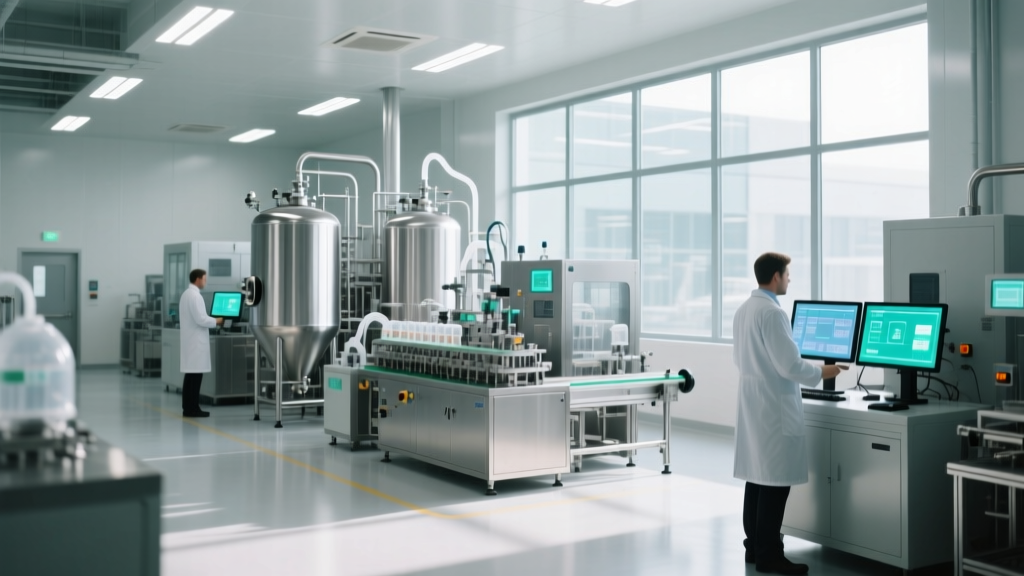
Procuring the right small-scale gene therapy manufacturing equipment requires balancing throughput, footprint, and software compliance. Below is a compliance matrix for essential pilot-scale equipment.
| Equipment Category | Industry Standard Model | Est. Startup Cost | Key Compliance Feature |
|---|---|---|---|
| Micro-Bioreactor System | Sartorius Ambr 250 | $180,000 - $250,000 | Integrated 21 CFR Part 11 software; automated DoE capabilities. |
| Single-Use Bioreactor | Cytiva Xcellerex X-platform (50L-200L) | $120,000 - $160,000 | Closed-system design; eliminates SIP/CIP validation requirements. |
| Automated Liquid Handler | Hamilton STAR V Series | $130,000 - $180,000 | Reduces human error; fully auditable electronic batch records. |
| Isolator / BSC | Getinge Fedegari BIOQ | $90,000 - $140,000 | VHP decontamination cycles; maintains ISO 5 during aseptic filling. |
Navigating 21 CFR Part 11 and Data Integrity
The most common point of failure for startups during regulatory audits is not mechanical equipment failure, but software non-compliance. Under FDA's CGMP for Phase 1 Investigational Drugs guidance, data integrity is scrutinized from day one. Any small-scale gene therapy manufacturing equipment with a digital interface must comply with 21 CFR Part 11.
Software Requirements for Equipment Procurement
When evaluating the Human-Machine Interface (HMI) or SCADA systems of small-scale bioreactors and centrifuges, startups must demand the following software architectures:
- Immutable Audit Trails: The system must automatically record the date, time, and user ID for any parameter change (e.g., altering agitation speed or pH setpoints). Audit trails cannot be paused or deleted by administrators.
- Role-Based Access Control (RBAC): Operators, supervisors, and quality assurance (QA) personnel must have distinct login credentials with restricted permissions. An operator cannot approve their own batch deviation.
- Electronic Signatures: The software must support secure, cryptographically linked e-signatures for batch record approvals, replacing error-prone paper-based sign-offs.
"Startups often buy refurbished or legacy R&D equipment to save capital, only to discover the legacy SCADA software lacks 21 CFR Part 11 audit trails. Retrofitting these systems costs more than buying new, compliant equipment upfront. Always mandate Part 11 validation packages from the vendor during the FAT (Factory Acceptance Test)." — Lead Process Engineer, CGT Contract Development and Manufacturing Organization (CDMO)
Facility Design & HVAC Compliance for Small Footprints
Small-scale equipment does not exist in a vacuum; it operates within a highly regulated HVAC environment. Startups leasing modular cleanroom suites must ensure their equipment placement aligns with ISO 14644-1 cleanroom standards and FDA airflow requirements.
Pressure Cascades and Air Changes
For viral vector manufacturing, the facility must maintain a strict pressure cascade to prevent vector escape or environmental contamination. Small-scale suites typically utilize a 'sink' or negative pressure design for BSL-2+ areas.
- Corridor to Anteroom: +10 Pa to +15 Pa (Positive)
- Anteroom to Processing Suite: -15 Pa to -30 Pa (Negative)
- Air Changes Per Hour (ACH): Small-scale GMP suites require a minimum of 15 to 20 ACH, with 100% exhaust (no return air) to prevent recirculation of airborne viral particles.
Equipment such as biosafety cabinets (BSCs) and isolators must be hard-ducted to the facility's exhaust system rather than relying on room-level HEPA recirculation, which is deemed insufficient for high-titer lentiviral processing.
Frequently Asked Questions (FAQ)
Do Phase 1 startups need full commercial-scale GMP validation?
No. The FDA applies a phased approach to cGMP. For Phase 1, the focus is heavily on patient safety, sterility, and preventing cross-contamination. Full commercial-scale process validation (PPQ) is not required until Phase 3. However, your small-scale equipment must still undergo rigorous IQ/OQ (Installation and Operational Qualification) to prove it operates within specified parameters.
Can we use the same small-scale suite for AAV and Lentivirus?
While technically possible if utilizing fully closed, single-use systems and executing validated VHP (Vaporized Hydrogen Peroxide) decontamination cycles between campaigns, regulatory agencies heavily discourage multi-product viral vector facilities for startups. The risk of cross-contamination and the burden of cleaning validation usually outweigh the real estate savings. Dedicated suites or isolated modular cleanrooms are the industry standard.
What is the ALCOA+ principle in equipment data logging?
ALCOA+ stands for Attributable, Legible, Contemporaneous, Original, and Accurate, plus Complete, Consistent, Enduring, and Available. When your small-scale bioreactor logs temperature and dissolved oxygen data, the system must ensure the data meets ALCOA+ criteria. If a sensor drops offline for 10 minutes, the system must flag a data gap alarm rather than interpolating the missing values, ensuring the batch record remains 'Complete' and 'Original'.