Startup Safety: Vetting Leading Burger Bun Manufacturing Equipment Suppliers Worldwide
Navigate safety standards and compliance when sourcing small-scale burger bun equipment. Learn ANSI, FDA, and IP69K requirements for startups.
The Compliance Minefield for Artisan Bun Startups
Scaling a burger bun recipe from a commercial kitchen mixer to a continuous small-batch production line introduces severe mechanical and regulatory hazards. High-absorption dough (60-65% hydration) requires heavy-duty spiral mixers and extrusion dividers that generate thousands of pounds of kinetic force. For food manufacturing startups, a single OSHA citation for missing machine guarding or an FDA warning letter for improper washdown electrical sealing can halt operations and drain limited capital.
Navigating the procurement process requires a strict adherence to food machinery safety standards. Founders must evaluate equipment not just on throughput (buns per minute), but on built-in compliance architecture, specifically targeting ANSI/ASME B151.0, ISO 14120, and FDA 21 CFR Part 117 requirements.
⚠️ Critical Regulatory Warning: Under the FDA's Food Safety Modernization Act (FSMA), equipment design must prevent harborage points for pathogens like Listeria monocytogenes. If a supplier provides a dough divider with hollow frame legs or unsealed bearing housings, the equipment is fundamentally non-compliant for commercial bun production, regardless of its throughput speed.Evaluating Leading Burger Bun Manufacturing Equipment Suppliers Worldwide
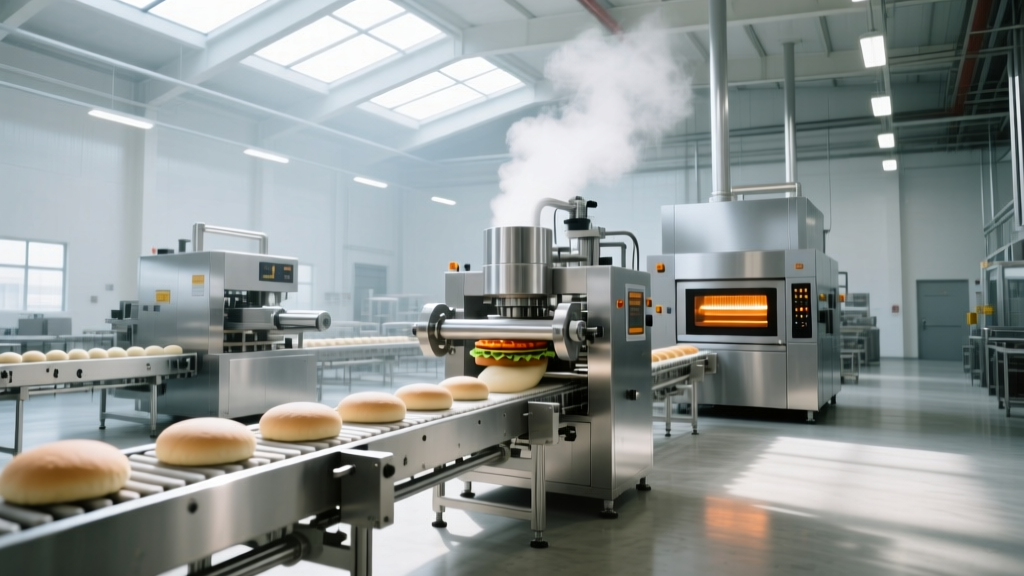
When identifying the leading burger bun manufacturing equipment suppliers worldwide, startups must look beyond marketing brochures and demand verifiable safety documentation. Top-tier European and North American manufacturers (such as WP Haton, Fortuna, and Diosna) engineer their small-scale lines with integrated safety logic, whereas budget-tier imports often require expensive third-party retrofitting to meet North American safety codes.
Mixer & Divider Guarding (ISO 14120 & ANSI/ASME B151.0)
Spiral mixers and volumetric dough dividers present severe nip-point and crush hazards. According to OSHA's general machine guarding requirements, any rotating part that exposes operators to injury must be guarded. However, food machinery requires specialized guarding that allows for rapid cleaning without compromising safety.
- Interlock Switches: Bowl guards on spiral mixers (e.g., Hobart HSL50 or Diosna SP100E) must feature dual-channel safety interlocks (such as Schmersal or Allen-Bradley RFID switches). If the polycarbonate guard is lifted, the system must trigger a Category 1 stop (controlled deceleration to zero speed, followed by power removal) within 1.5 seconds.
- Light Curtains on Dividers: Extrusion dividers like the Erika Record series require SICK or Keyence safety light curtains. The standoff distance must be calculated based on the machine's stopping time. For a divider with a 400ms stop time, the light curtain must be positioned at least 28 inches from the nip point to prevent hand intrusion before the extruder halts.
Small-Scale Equipment Safety Specs & 2026 Pricing Matrix
The following matrix outlines the baseline safety specifications and current capital expenditure requirements for a small-scale burger bun line (capable of 2,000 to 4,000 buns per hour) sourced from compliant manufacturers.
| Equipment Stage | Model Example (Small-Scale) | Mandatory Safety Feature | Est. 2026 Price Range |
|---|---|---|---|
| Spiral Mixer (50-80 lb) | Diosna SP100E / Hobart HSL50 | RFID bowl guard interlock, Category 1 brake | $38,000 - $52,000 |
| Dough Extruder/Divider | Fortuna Automat / Erika Record | Type 4 Safety Light Curtains, IP69K control panel | $65,000 - $88,000 |
| Intermediate Proofer | WP Haton Compact Proofer | Internal UV-C sanitation, thermal overload shutoff | $45,000 - $60,000 |
| Tunnel Oven (12-16 ft) | Reading Bakery Systems (Compact) | Surface temp < 140°F (UL 710B), NFPA 86 gas train | $110,000 - $145,000 |
Note: Prices reflect FOB factory for base models with standard North American safety packages. Custom UL/CSA field certification can add $8,000 - $15,000 per machine if not pre-certified.
Washdown Electrical Standards: The IP69K Mandate
Dough processing environments require aggressive daily washdowns using high-pressure, high-temperature water and caustic foaming agents. Standard NEMA 4X (IP66) enclosures are no longer sufficient for the food contact zones of modern bun lines. As of 2026, the industry standard enforced by health inspectors and FDA cGMP guidelines requires IP69K-rated components in all splash zones.
Decoding IP69K vs. NEMA 4X for Startup Founders
Many budget suppliers advertise 'washdown ready' equipment using NEMA 4X stainless steel enclosures. While NEMA 4X protects against hose-directed water and corrosion, it fails under high-pressure steam cleaning (up to 1450 PSI at 175°F). IP69K certification guarantees the electrical seals will not fail during aggressive sanitation cycles, preventing water ingress that leads to short circuits, arc flashes, and catastrophic control board failures.
💡 Procurement Tip: Demand the IP69K test certificates for the specific HMI (Human Machine Interface) screens and motor drives on the equipment. Suppliers often use IP69K motors but pair them with IP65 touchscreens, creating a critical failure point during sanitation.Electrical Panel Compliance: NFPA 79 & Arc Flash Mitigation
Small-scale manufacturing spaces often lack the dedicated electrical rooms found in large industrial bakeries. Control panels are frequently mounted directly on the production floor. Under NFPA 79 (Electrical Standard for Industrial Machinery), floor-mounted panels must feature specific arc flash mitigation and locking mechanisms.
- Disconnect Switches: The main disconnect must be a rotary, lockable type (capable of accepting up to three padlocks for LOTO procedures) with a minimum IP65 rating.
- Internal Segregation: High-voltage (480V) and low-voltage (24V DC) wiring must be physically separated by grounded metal barriers within the panel to prevent induced noise and cross-faulting.
- Thermal Management: Because bakery environments are hot, panels must include climate control. Filter fans are insufficient; closed-loop cooling units or vortex coolers are required to keep VFDs (Variable Frequency Drives) below their 104°F (40°C) maximum ambient rating.
Thermal Guarding in Compact Tunnel Ovens
Small-footprint tunnel ovens operate at internal baking temperatures between 400°F and 450°F. In a cramped startup facility, the exterior surface temperature of the oven poses a severe burn hazard. UL 710B and general industrial safety standards dictate that accessible exterior surfaces must not exceed 140°F (60°C).
To achieve this, premium suppliers utilize multi-layer mineral wool insulation encased in double-walled stainless steel cladding with an air-gap convection layer. When vetting suppliers, require a thermal imaging report of the oven's exterior skin operating at maximum bake temperature. Furthermore, gas-fired compact ovens must feature NFPA 86-compliant gas trains, including dual safety shutoff valves, a blocked vent switch, and a high-pressure gas switch to prevent explosive over-pressurization in the bake chamber.
Actionable Procurement Checklist for Founders
Before issuing a Purchase Order to any supplier, cross-reference their proposal against this compliance checklist:
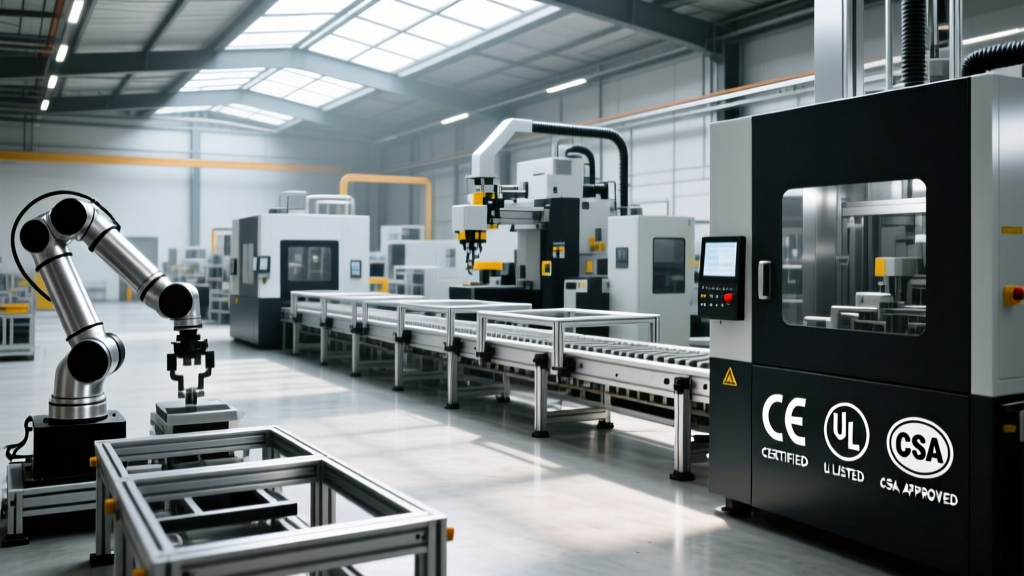
- CE/UL/CSA Markings: Verify the entire machine (not just individual components) carries a recognized Nationally Recognized Testing Laboratory (NRTL) mark. A CE mark alone is insufficient for North American electrical inspectors.
- LOTO (Lockout/Tagout) Documentation: The supplier must provide machine-specific LOTO procedures, detailing the exact location of all energy isolation points (pneumatic, electrical, thermal, and gravitational).
- Hygienic Design Audit: Inspect CAD drawings for hollow tubes, flat surfaces where flour can accumulate, and fasteners. All bolts in food zones must be captive or sealed; standard hex bolts are unacceptable.
- Safety Logic Diagram: Request the electrical schematic showing the safety relay circuit. Ensure emergency stops (E-stops) are hardwired directly to the safety relay, not routed through standard PLC logic, which can fail or be bypassed via software.
Securing capital for small-scale manufacturing equipment is difficult; losing it to regulatory fines or workplace injuries due to poorly vetted machinery is fatal. By strictly enforcing ANSI, FDA, and NFPA standards during the supplier selection phase, startups build a resilient, legally protected foundation for commercial scaling.