Equipment Selection & Maintenance: Manufacturer of Scuba Equipment
Explore contract manufacturing equipment selection criteria for a manufacturer of scuba equipment, focusing on MTBF, maintenance, and life-safety calibration.
Life-Support Tolerances and the Cost of Unplanned Downtime
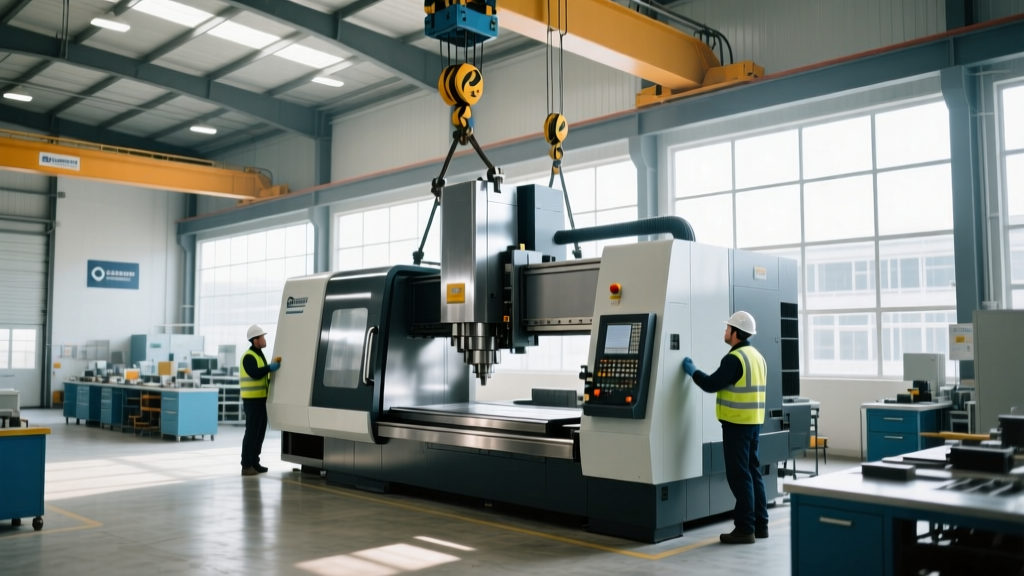
Manufacturing scuba regulators, buoyancy control devices (BCDs), and high-pressure cylinders is not standard consumer goods production; it is life-support engineering. When a manufacturer of scuba equipment partners with contract machinists or builds dedicated outsourced production lines, equipment selection criteria must extend far beyond initial spindle speed or injection tonnage. The defining metric for contract manufacturing machinery in this sector is Mean Time Between Failures (MTBF) and the rigidity of preventive maintenance (PM) schedules.
A single unplanned downtime event on a 5-axis CNC machining 316L stainless steel regulator bodies does not just delay shipments. It risks micro-fractures and work-hardening defects in life-critical components if a machine is restarted without full thermal stabilization and spindle runout verification. Therefore, evaluating contract manufacturing equipment requires a strict framework centered on maintenance predictability, service interval costs, and automated calibration capabilities.
Material-Driven Tooling Wear and Service Intervals
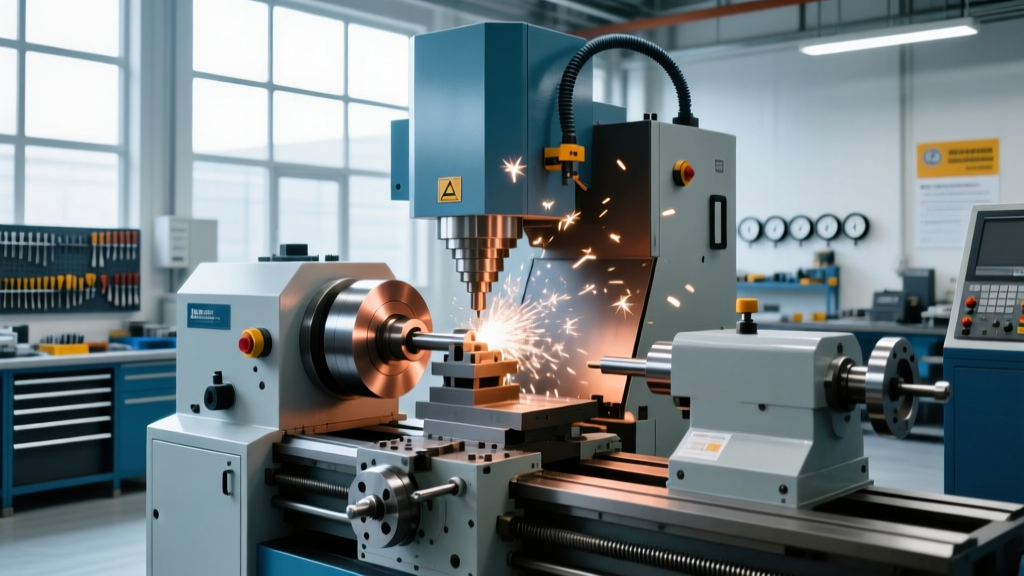
Scuba gear relies on highly corrosive-resistant and high-strength materials. Regulator first stages and high-pressure valves are typically forged from 316L stainless steel or marine-grade brass (CW617N), while O-ring seats and internal pistons utilize Delrin (POM) or aerospace-grade silicones. These materials impose severe wear patterns on contract manufacturing machinery, directly dictating the selection criteria for machine rigidity and service schedules.
According to guidelines published by the Society of Manufacturing Engineers (SME), machining austenitic stainless steels like 316L generates cutting forces up to 30% higher than standard carbon steels, alongside intense localized heat. This accelerates spindle bearing degradation and way-cover wear. Contract manufacturers must utilize machinery with oversized, pre-tensioned spindle bearings and automated way-lubrication systems that trigger alerts based on actual axis travel, not just elapsed time.
| Material (Scuba Application) | Machinery Stress Factor | Standard PM Interval | Scuba-Specific PM Interval | Critical Maintenance Action |
|---|---|---|---|---|
| 316L Stainless Steel (Regulator Bodies) | High (Work-hardening, heat) | 6 Months / 1,000 hrs | 3 Months / 500 hrs | Spindle runout check (< 3 microns), way-cover inspection |
| CW617N Marine Brass (Valves/Adapters) | Medium (Abrasive particulate) | 6 Months / 1,000 hrs | 4 Months / 750 hrs | Coolant filtration system flush, chip conveyor torque check |
| Delrin / POM (Poppets & Seats) | Low (High speed, low torque) | 12 Months / 2,000 hrs | 6 Months / 1,000 hrs | Spindle thermal growth calibration, tool setter lens cleaning |
| 304-Grade Silicone (Mouthpieces/BCD Bladders) | Medium (Mold residue buildup) | 12 Months / 2,000 hrs | Bi-Weekly (Mold specific) | Injection screw non-return valve inspection, mold vent clearing |
Calibration Schedules for Pneumatic and Hydrostatic Testing
For a manufacturer of scuba equipment, the assembly and testing phase is where life-safety liability is finalized. Contract manufacturers must deploy hydrostatic test rigs for cylinders and pneumatic leak testers for regulators. The equipment selection criteria here must prioritize machines with extended, certified calibration intervals and automated self-diagnostics.
Hydrostatic testing equipment must comply with rigorous standards outlined by the Compressed Gas Association (CGA). Older or lower-tier test rigs require manual transducer calibration every 30 days, introducing human error and halting production for half a day. Modern, top-tier contract testing rigs (such as those from AccuTech or Resato) feature digital, closed-loop pressure transducers with automated self-calibration routines that only require physical third-party certification every 12 to 24 months. When selecting a contract partner or buying testing machinery, demand equipment with ISO 17025-accredited digital calibration logs that integrate directly with the factory's ERP system.
Warning: The 'Orphaned Machine' Risk in Marine ManufacturingNever select contract manufacturing equipment from OEMs that lack a localized, factory-trained service network. If a specialized 5-axis CNC or high-pressure test rig suffers a control board failure, waiting 14 days for a replacement part from overseas while the machine sits idle will destroy your production margins. Always verify that the machinery OEM guarantees a 24-hour on-site service response or maintains a regional parts depot within 500 miles of the contract manufacturing facility.
Shifting to Predictive Maintenance: IoT Sensor Criteria
As of 2026, relying purely on calendar-based preventive maintenance is economically unviable for high-precision scuba manufacturing. The selection criteria for new contract manufacturing machinery must mandate native IoT (Internet of Things) integration for predictive maintenance. By monitoring the actual physical degradation of machine components, factories can schedule service exactly when needed, avoiding both premature part replacements and catastrophic mid-cycle failures.
According to research featured in Machinery Lubrication, integrating real-time oil particulate and vibration sensors can extend the life of critical spindle and hydraulic components by up to 40% while reducing unplanned downtime by 70%. When auditing contract manufacturing equipment, look for the following integrated sensor packages:
- Spindle Vibration Accelerometers: Mounted directly on the spindle housing to detect bearing wear at the sub-micron level. If vibration exceeds 0.05 in/sec RMS, the machine automatically flags a maintenance ticket before surface finish on 316L regulator bodies degrades.
- Coolant Concentration & pH Monitors: Inline sensors that track tramp oil and pH drops. Maintaining a strict pH of 8.8 to 9.2 is critical when machining marine brass to prevent dezincification and ensure the coolant does not induce micro-corrosion on finished scuba parts.
- Servo Motor Load Telemetry: Tracks the amperage draw on X, Y, and Z-axis ball screws. A gradual 5% increase in amperage draw over a 30-day period indicates way-cover friction or lubrication failure, allowing maintenance to be scheduled during the weekend shift.
TCO Analysis: Upfront Cost vs. Maintenance Downtime
The ultimate test of contract manufacturing equipment selection criteria is the Total Cost of Ownership (TCO). A machine with a lower upfront purchase price but a fragile maintenance schedule will rapidly outspend a premium, highly reliable machine. Let us examine a real-world financial scenario comparing two 5-axis CNC options for machining scuba regulator first stages.
Real-World Scenario: 5-Axis CNC Selection for Regulator First Stages
Option A: Budget 5-Axis CNC ($180,000 Initial Cost)
- MTBF: 1,200 hours
- PM Downtime: 16 hours per quarter (requires manual way-cover removal and spindle teardown for inspection).
- Unplanned Downtime Cost: Averages 2 major faults per year. At a scuba manufacturing blended burden rate of $220/hour, 24 hours of unplanned downtime costs $5,280 annually in lost capacity, plus $8,000 in expedited replacement parts and scrapped 316L forgings.
- 5-Year Maintenance TCO: ~$85,000
Option B: Premium 5-Axis CNC with Predictive IoT (e.g., Hermle C 250 or Haas UMC-500SS fully optioned, $340,000 Initial Cost)
- MTBF: 4,500+ hours
- PM Downtime: 4 hours per quarter (automated lubrication flushes, IoT-guided targeted inspections).
- Unplanned Downtime Cost: Near zero. Predictive sensors catch bearing degradation 3 weeks in advance, allowing parts to be staged and replaced during scheduled Saturday maintenance.
- 5-Year Maintenance TCO: ~$32,000
While Option B requires a 88% higher capital expenditure upfront, the 5-year maintenance TCO is less than half that of Option A. More importantly, Option B guarantees the uninterrupted production flow and metallurgical consistency required by a manufacturer of scuba equipment to maintain ISO 9001 and EN 250 life-safety certifications. When drafting contract manufacturing agreements or procuring new machinery, TCO models must explicitly penalize equipment that lacks automated diagnostics and extended MTBF guarantees.
Finalizing the Equipment Selection Matrix
Selecting contract manufacturing equipment for dive gear requires discarding generic machining metrics in favor of life-safety reliability metrics. Procurement teams and contract manufacturing auditors must mandate that all proposed machinery includes documented PM schedules tailored to marine-grade alloys, native IoT predictive maintenance sensors, and localized OEM service guarantees. By anchoring equipment selection criteria to maintenance predictability rather than just cycle times, manufacturers ensure that every regulator, valve, and cylinder that leaves the factory floor performs flawlessly at 130 feet underwater.