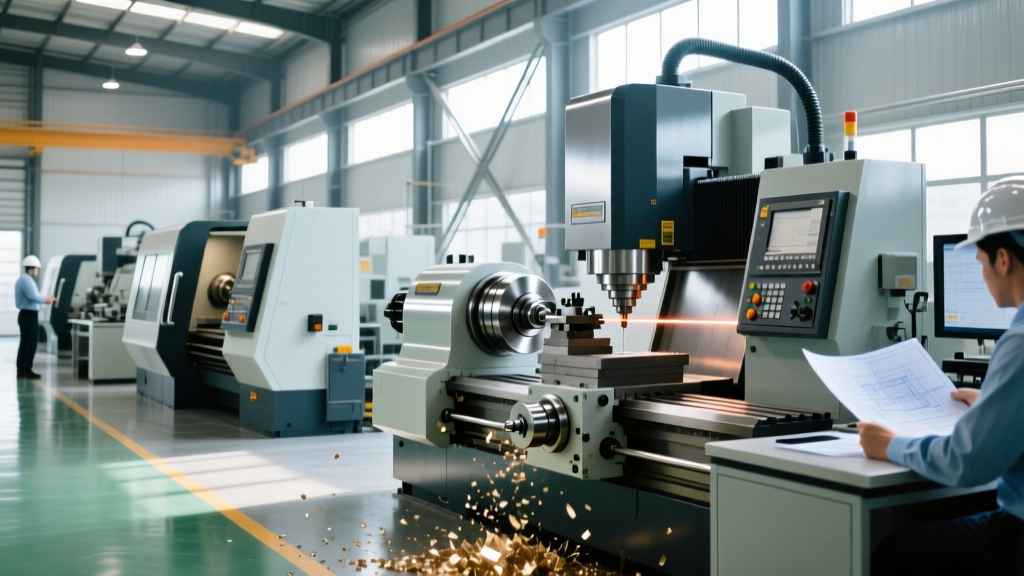
Pharmaceutical Manufacturing Equipment Suppliers: Lifecycle Analysis
Compare top pharmaceutical manufacturing equipment suppliers on lifecycle management, IoT maintenance, retrofitting alternatives, and total cost of ownership.
When evaluating pharmaceutical manufacturing equipment suppliers, plant managers and procurement teams frequently fixate on initial capital expenditure (CAPEX). However, the true financial burden of a liquid filling line, blister packer, or lyophilizer emerges long after the installation qualification (IQ) is signed. Manufacturing equipment lifecycle management encompasses everything from virtual factory acceptance testing (FAT) and predictive maintenance to end-of-life retrofitting and decommissioning.
Choosing the right supplier is no longer just about the machine's throughput; it is about the supplier's ecosystem for supporting that machine over a 15- to 20-year operational lifespan. This analysis compares the lifecycle management alternatives offered by top-tier suppliers, providing actionable frameworks to minimize total cost of ownership (TCO) and maximize overall equipment effectiveness (OEE).
The TCO Reality in Pharma Manufacturing
According to lifecycle cost models outlined by the International Society for Pharmaceutical Engineering (ISPE), initial CAPEX typically represents only 20% to 30% of a machine's TCO. The remaining 70% to 80% is consumed by energy, consumables, unplanned downtime, validation maintenance, and end-of-life disposal. Furthermore, the ICH Q10 Pharmaceutical Quality System mandates rigorous lifecycle oversight, meaning poor supplier support directly translates to regulatory compliance risks.
Supplier Lifecycle Framework Comparison Matrix
Not all suppliers approach lifecycle management equally. Some prioritize hardware durability, while others invest heavily in software-as-a-service (SaaS) ecosystems and circular economy retrofitting. Below is a comparison of the top four global players based on their 2026 lifecycle support capabilities.
| Supplier | IoT / Predictive Platform | Standard SLA Response | Retrofit / Upgrade Program | Equipment-as-a-Service (EaaS) |
|---|---|---|---|---|
| Syntegon | Synexio (Cloud & Edge) | 4-hour remote / 24hr onsite | Comprehensive (Control & Mech) | Available for select fillers |
| GEA Group | GEA Omni / Digital Twin | 2-hour remote / 48hr onsite | Strong on process equipment | Limited / Project-based |
| IMA | CORUS IoT Suite | 4-hour remote / 24hr onsite | Dedicated Retrofit Division | Available via IMA Financial |
| Romaco | NetTonic / IoT Gateway | 8-hour remote / 48hr onsite | Moderate (Focus on packaging) | Rare / Custom negotiation |
Phase 1 Alternatives: Procurement and Validation (FAT/SAT)
The lifecycle begins with validation. Traditionally, a Factory Acceptance Test (FAT) requires flying a team of 3 to 5 validation engineers to the supplier's facility in Europe or the US. At an average cost of $8,500 to $14,000 per trip (including flights, hotels, and lost production time at the home plant), physical FATs are a massive upfront OPEX drain.
Digital Twin FAT vs. Traditional On-Site FAT
Suppliers like GEA and Syntegon now offer virtual commissioning and Digital Twin FAT alternatives. By utilizing a digital twin of the machine's PLC logic and kinematic movements, engineers can execute 70% of the FAT protocol remotely via secure cloud environments.
- Traditional FAT: Costs $12,000+ in travel, requires 5-7 days on-site, and often results in rushed sign-offs due to travel fatigue.
- Digital Twin FAT: Costs $3,000-$5,000 in software access and engineering hours. Reduces on-site time to a 2-day Site Acceptance Test (SAT) focused purely on physical integration and utility hookups.
Decision Rule: If your line handles highly viscous biologics or requires complex CIP/SIP (Clean-in-Place/Sterilize-in-Place) validation, insist on physical wet-testing during FAT. For standard solid-dose blistering or dry-powder filling, mandate a Digital Twin FAT to preserve capital.
Phase 2 Alternatives: Predictive Maintenance vs. Traditional SLAs
Once operational, the machine enters the longest phase of its lifecycle. The alternative to a traditional break-fix Service Level Agreement (SLA) is Condition-Based Monitoring (CBM) via IoT platforms. According to Syntegon, integrating their Synexio platform can increase OEE by up to 12% by eliminating micro-stoppages.
Comparing IoT Ecosystems and Sensor Costs
Implementing predictive maintenance requires hardware and software investments. Here is how the alternatives break down for a standard high-speed packaging line:
IMA CORUS Approach
Focuses heavily on machine-level analytics. IMA installs proprietary piezoelectric vibration sensors ($1,800 per node) on main camshafts and servo motors. The CORUS dashboard alerts operators to bearing degradation 30 to 45 days before catastrophic failure. SaaS subscription: ~$2,500/month per line.
Third-Party Agnostic IoT
Alternatively, plants can bypass supplier IoT and use agnostic platforms (like Siemens MindSphere or PTC ThingWorx). This requires buying ultrasonic sensors ($3,200 per node) and hiring a systems integrator ($40,000-$60,000 one-time fee). Better for multi-vendor lines, but lacks the deep, proprietary PLC fault-code translation that OEM platforms provide.
The Verdict: For single-supplier lines (e.g., an all-Syntegon vial filling and capping line), the OEM's native IoT platform is vastly superior due to direct access to proprietary servo fault codes. For mixed-vendor packaging halls, an agnostic integrator alternative yields a better unified dashboard.
Phase 3 Alternatives: Retrofitting vs. Full Replacement
By year 10, mechanical components remain sound, but the PLC, HMI, and safety systems become obsolete, risking 21 CFR Part 11 compliance and cybersecurity vulnerabilities. Plant managers face a critical alternative: execute a lifecycle retrofit or purchase new equipment.
Financial Breakdown: IMA Adapta Blister Line Retrofit
Consider a 12-year-old IMA Adapta blister machine. The mechanical forming and sealing stations are built from heavy-grade steel and have decades of life left. The bottleneck is the outdated Bosch Rexroth control system.
| Lifecycle Alternative | Estimated Cost | Downtime Required | Validation Burden |
|---|---|---|---|
| OEM Control Retrofit | $95,000 - $125,000 | 3 - 4 Weeks | Medium (Delta Validation) |
| New Machine (Adapta 2.0) | $750,000 - $900,000 | 12 - 16 Weeks (Lead + Install) | High (Full IQ/OQ/PQ) |
| Third-Party Automation Upgrade | $60,000 - $80,000 | 4 - 6 Weeks | High (OEM support voided) |
Critical Warning: Never use a third-party automation integrator to retrofit a pharma machine's safety and control systems unless the original OEM has officially declared end-of-life (EOL) and refuses support. Voiding the OEM's lifecycle support contract will trigger massive red flags during FDA or EMA audits regarding change control and software validation.
Decision Framework: Selecting Your Lifecycle Strategy
Use this operational matrix to dictate how you engage with pharmaceutical manufacturing equipment suppliers based on your facility's specific constraints:
- If your primary constraint is CAPEX limitation: Negotiate an Equipment-as-a-Service (EaaS) contract during procurement. Suppliers like Syntegon and IMA offer models where you pay a base monthly fee plus a per-unit-produced metric. This shifts lifecycle maintenance entirely to the OEM and moves costs from CAPEX to OPEX.
- If your primary constraint is regulatory audit readiness: Prioritize suppliers with native, fully validated electronic batch record (EBR) integration and digital twin FATs. Ensure the SLA includes guaranteed 24-hour on-site deployment for critical control failures to prevent batch spoilage.
- If you are managing aging legacy lines (10+ years): Contact the OEM's dedicated retrofit division immediately. Request a 'Lifecycle Health Audit' (typically $5,000-$8,000). This audit will map out exact obsolescence dates for your PLCs and HMIs, allowing you to budget for an OEM retrofit 18 months in advance, avoiding emergency third-party integrations.
Ultimately, the most cost-effective pharmaceutical manufacturing equipment supplier is not the one with the lowest sticker price, but the one that provides a transparent, technologically supported pathway from installation through eventual decommissioning. By leveraging digital twins, OEM-specific IoT platforms, and structured retrofit programs, manufacturers can extend asset viability by up to 40% while maintaining strict compliance with global quality systems.