2026 Modular Injectable Parenteral Manufacturing Equipment Suppliers
Compare top injectable parenteral manufacturing equipment suppliers offering modular skids for flexible vial, syringe, and cartridge filling in 2026.
The Paradigm Shift to Modular Skids in Parenteral Filling
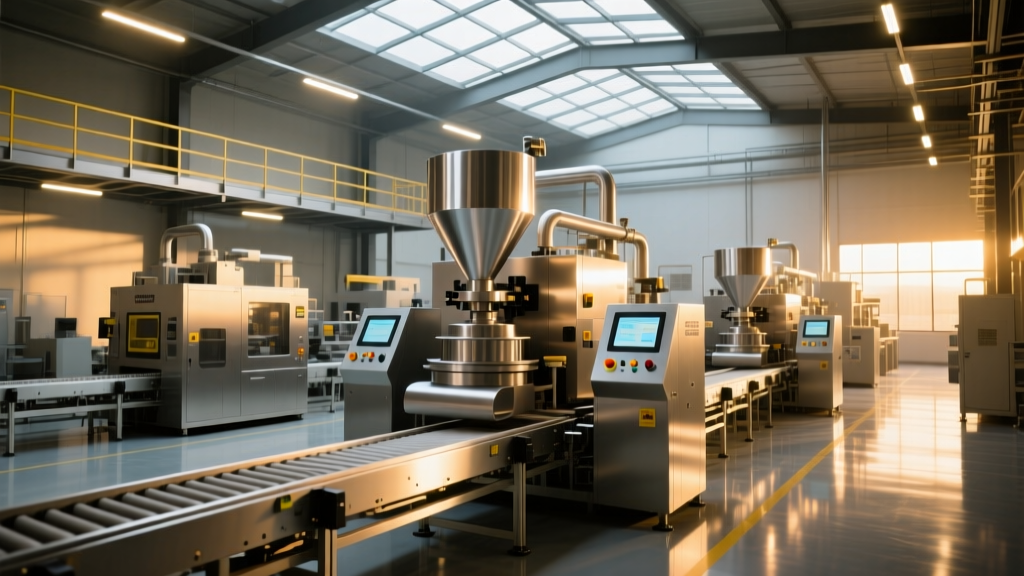
Contract Development and Manufacturing Organizations (CDMOs) and mid-tier pharmaceutical companies are rapidly abandoning monolithic, dedicated filling lines in favor of modular manufacturing equipment for flexible production. This shift is driven by the need to handle diverse biologic formats—from 2R glass vials to 10mL pre-filled syringes (PFS) and dual-chamber cartridges—within the same Grade A (ISO 5) cleanroom footprint. By decoupling the depyrogenation tunnel, filler, and lyophilizer loading into independent, standardized skids, facilities can reconfigure production suites in hours rather than weeks.
2026 Facility Metric: Modular skid deployments have reduced cleanroom validation timelines by an average of 14 weeks compared to traditional monolithic lines, while decreasing HVAC footprint requirements by 30-40% due to localized Restricted Access Barrier Systems (RABS) and isolators.Evaluating Injectable Parenteral Manufacturing Equipment Suppliers
When sourcing flexible production lines, procurement teams must look beyond base throughput speeds (vials per minute) and evaluate tool-less changeover capabilities, single-use fluid path compatibility, and robotic nest handling. The leading injectable parenteral manufacturing equipment suppliers have pivoted their engineering focus toward platforms that support rapid format switching without requiring specialized metrology tools.
| Supplier | Core Modular Platform | Primary Formats | Format Changeover Time | Est. Base Skid Price (USD) |
|---|---|---|---|---|
| Bausch+Ströbel | VarioSys Platform | Vials, Ampoules, PFS | < 45 minutes (tool-less) | $2.2M - $3.5M |
| Syntegon | FXS / ALF Series | Vials, Cartridges | 60 - 90 minutes | $1.8M - $2.9M |
| Groninger | pharmafiller Modules | PFS, Vials, Cartridges | < 30 minutes (cassette swap) | $2.5M - $4.1M |
| Optima | CBF / Modular Isolators | Vials, Blow-Fill-Seal | 90 - 120 minutes | $3.0M - $5.5M |
Critical Subsystems for Flexible Production
True flexibility in parenteral manufacturing relies on the integration of advanced subsystems that eliminate cross-contamination risks and minimize cleaning validation burdens.
Single-Use Fluid Paths and Aseptic Connectors
For biologic drugs prone to shear stress or high-value orphan drugs requiring small batch sizes (10L - 50L), stainless steel product contact parts are being replaced by Single-Use Assemblies (SUA). Modern modular fillers integrate seamlessly with 2D or 3D single-use bags via aseptic disconnects. Suppliers like Colder Products Company (CPC) and Saint-Gobain provide steam-through or pre-sterilized gamma-irradiated connectors that allow operators to mate the fluid path to the peristaltic pump manifold in under 3 minutes inside a Grade A isolator. Peristaltic pumping is now the standard for modular SUA lines, offering ±1% fill accuracy without the dead legs inherent in rotary piston pumps.
Robotic Nest and Tub Handling
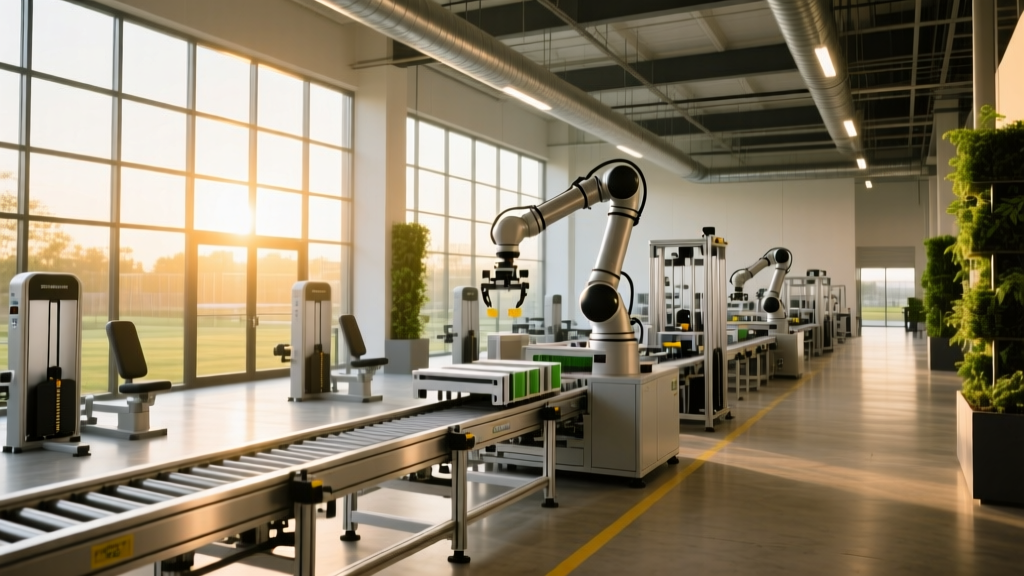
Pre-filled syringes and cartridges arrive nested in tubs. Traditional mechanical screw-and-starwheel systems require extensive physical changeover parts. Leading suppliers now deploy 4-axis Delta robots or 6-axis articulated arms equipped with vision systems (e.g., Cognex In-Sight) to pick nested formats. This software-driven changeover requires only a recipe selection on the HMI, reducing mechanical wear and eliminating the risk of misaligned format parts causing glass-to-glass contact and particulate generation.
Decision Framework: Modular vs. Monolithic Deployment
Use this operational framework to determine if a modular skid approach aligns with your facility's 2026 production roadmap:
- If your portfolio includes >5 distinct primary packaging formats (e.g., 2R vials, 6R vials, 1mL PFS, 2.25mL PFS): Deploy a modular platform with robotic tub handling and peristaltic single-use fluid paths. The CapEx premium of ~15% over a monolithic line is recovered within 18 months through eliminated cleaning validation and reduced downtime.
- If you are running high-speed, low-mix generic sterile injectables (>400 vials/min): Retain monolithic lines with rotary piston pumps and fixed tunnel depyrogenation. Modular skids currently face throughput bottlenecks above 300 units/min when utilizing robotic nest handling.
- If your facility requires multi-product campaigns in the same suite (Campaign-to-Campaign): Mandate fully integrated isolator modules with Vaporized Hydrogen Peroxide (VHP) generators. Modular isolators allow the filling skid to be decontaminated independently of the downstream capping or lyophilizer loading zones.
CapEx Breakdown for a Fully Integrated Modular Line
Procuring modular equipment involves distinct skid costs. Below is a realistic 2026 CapEx estimation for a mid-speed (150 vials/min) flexible vial and PFS line integrated within a closed isolator system.
| Equipment Module | Specification Details | Estimated Cost (USD) |
|---|---|---|
| Unidirectional Flow (UDF) Isolator | 4-meter length, integrated VHP, Grade A (ISO 5) | $1,400,000 - $1,800,000 |
| Modular Filler Skid | Peristaltic pump, robotic stoppering, 100% IPC (In-Process Control) | $1,200,000 - $1,600,000 |
| Depyrogenation Tunnel Module | Compact electrically heated tunnel, 350°C, 100 vials/min | $800,000 - $1,100,000 |
| Single-Use Fluid Path Skid | Load cells, SUA manifolds, aseptic welding station | $350,000 - $500,000 |
| Total Estimated CapEx | Excluding facility HVAC and lyophilizer integration | $3,750,000 - $5,000,000 |
Regulatory Alignment: WHO Annex 6 and Isolator Integrity
Modular equipment must strictly comply with evolving global sterility assurance standards. The transition to closed isolator technology on modular skids is heavily influenced by guidelines such as the WHO Good Manufacturing Practices for Sterile Pharmaceutical Products (Annex 6), which mandates stringent contamination control strategies (CCS) and the minimization of human intervention in Grade A zones.
"Facilities utilizing flexible manufacturing must ensure that rapid changeover procedures do not compromise the integrity of the barrier system. Glove leak testing and VHP cycle validation must be executed and documented for every distinct campaign setup, regardless of the speed of the mechanical changeover."
To meet these requirements, top-tier suppliers integrate automated ISO 10648-2 pressure decay glove leak testing directly into the isolator HMI. Acceptable leak rates are typically programmed to <0.5 Pa/min at a 500 Pa test pressure. Furthermore, VHP aeration cycles on modular isolators are engineered to reduce residual H2O2 to <1 ppm within 60 to 90 minutes, ensuring that sensitive biologic APIs are not exposed to oxidative degradation during the filling process.
For engineering teams designing next-generation suites, leveraging frameworks provided by the ISPE Good Practice Guides on Flexible Manufacturing is critical for aligning modular equipment specifications with facility lifecycle management. Additionally, continuous monitoring of particulate and viable contamination data via the PDA Journal of Pharmaceutical Science and Technology provides empirical baselines for validating the sterility assurance levels (SAL) of newly deployed modular skids.
Final Procurement Directive
When issuing an RFQ to injectable parenteral manufacturing equipment suppliers, mandate the inclusion of a Factory Acceptance Test (FAT) protocol that specifically measures tool-less changeover times and robotic vision system recalibration using your actual primary packaging components. Do not accept supplier-provided dummy formats for FAT validation; glass dimensional tolerances vary significantly between manufacturers and will expose hidden bottlenecks in modular nest-handling robotics before the equipment reaches your cleanroom.