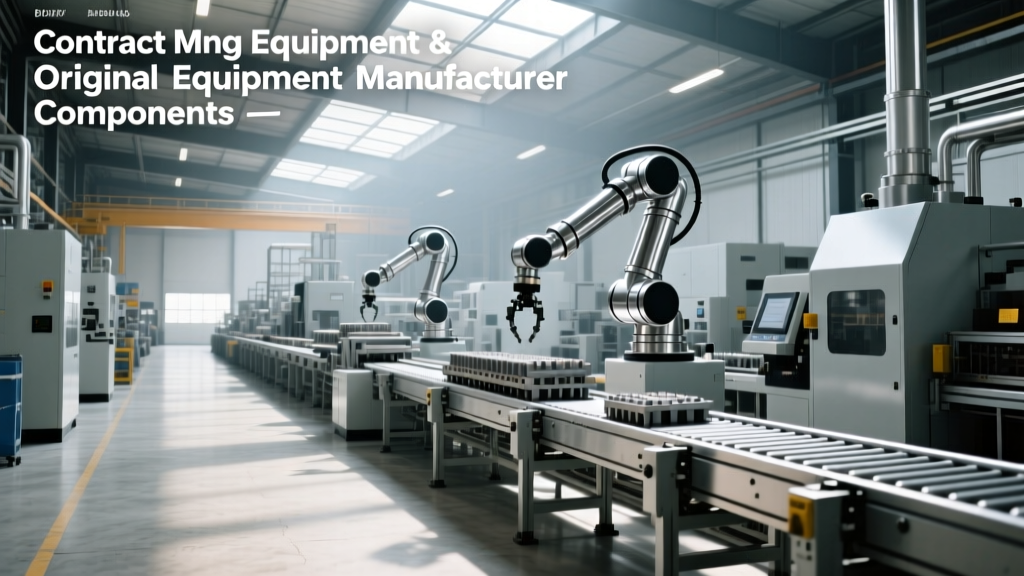
Contract Mfg Equipment & Original Equipment Manufacturer Components
Evaluate contract manufacturing equipment selection criteria by analyzing maintenance schedules and original equipment manufacturer components availability.
Contract manufacturing operates on net margins of 6% to 14%. When bidding on high-volume or tight-tolerance aerospace and medical contracts, equipment selection criteria traditionally prioritize cycle time, spindle torque, and axis travel. However, failing to integrate maintenance schedules and the supply chain for original equipment manufacturer components into the procurement matrix leads to catastrophic OPEX overruns. A machine that cuts 15% faster but requires triple the preventative maintenance (PM) downtime will destroy contract profitability.
Procurement Warning: Selecting a machine based solely on initial CAPEX without auditing the OEM parts supply chain and PM intervals can increase Year-1 maintenance OPEX by 22% to 35%, directly eroding the profit margin of the contracted work.The Preventative Maintenance (PM) Matrix in Machine Selection
Before signing a purchase order for a 5-axis CNC mill or a high-tonnage press brake, procurement and engineering teams must map the machine's PM schedule against the facility's available maintenance windows. Tier 1 equipment builders (e.g., Mazak, DMG Mori, Trumpf) engineer their machines with centralized auto-lubrication, sealed spindle cartridges, and predictive vibration sensors. This architecture pushes major service intervals to 4,000 or even 8,000 hours.
Conversely, Tier 2 or entry-level machines often rely on manual greasing of way covers, external belt tensioning, and basic time-based fluid changes every 500 to 1,000 hours. In a 24/7 contract manufacturing environment running three shifts, a 500-hour interval mandates stopping the machine every three weeks for 4 to 6 hours. Over a year, this equates to 104 to 156 hours of lost production per machine—time that must be absorbed into the contract's hourly machine rate.
Standard 2,000-Hour Service Checklist (5-Axis CNC Example)
- Replace hydraulic unit fluid (e.g., Mobil DTE 25) and clean suction strainers.
- Inspect and re-grease rotary table seals (critical for Heidenhain or Tsudakoma units).
- Check Yaskawa or Fanuc servo motor cooling fans and replace if bearing noise exceeds 45 dB.
- Flush spindle chiller unit and verify temperature delta remains within ±0.1°C.
- Perform ballbar testing (Renishaw QC20-W) to check for servo mismatch and backlash.
Sourcing Original Equipment Manufacturer Components: The Precision Imperative
When a critical component fails, the temptation to source cheaper aftermarket alternatives is high. However, in precision contract manufacturing, utilizing original equipment manufacturer components is non-negotiable for core kinematics and metrology systems.
Consider the linear guides and ball screws on a high-speed vertical machining center. An OEM-sourced THK SRG-series linear guide ensures exact preload matching and factory-grade geometric alignment. An aftermarket replacement might save 30% on the initial invoice, but it frequently introduces a 4-to-8 micron deviation in straightness. In aerospace machining (AS9100 compliance), this deviation causes scrap rates to spike, wiping out any parts savings and risking the entire contract.
Asset Management Rule: Never substitute original equipment manufacturer components for kinematic or metrology-critical parts (ball screws, spindle bearings, linear scales, servo drives). Restrict aftermarket sourcing strictly to non-critical consumables (coolant hoses, way covers, chip conveyor belts, and standard relays).2026 Lead Time Realities and Inventory Strategy
The global supply chain for specialized industrial automation parts remains volatile. According to industry data tracked by the Society of Manufacturing Engineers (SME), lead times for specialized PLCs and high-end servo drives can stretch significantly during peak demand cycles. If a contract manufacturer relies on a just-in-time parts strategy for critical OEM electronics, a single drive failure can halt a production line for 12 to 18 weeks.
To mitigate this, contract manufacturers must negotiate 'local caching' agreements with the equipment vendor. This ensures that high-failure-rate original equipment manufacturer components (like spindle contactors, cooling pump impellers, and specific I/O modules) are physically stocked at the vendor's regional service center, guaranteeing 24-hour delivery rather than 12-week factory-direct lead times.
Total Cost of Ownership (TCO): OEM vs. Aftermarket Spindle Replacement
| Factor | OEM Spindle Cartridge (e.g., Kitamura/Mazak) | Third-Party Aftermarket Rebuild |
|---|---|---|
| Upfront Cost | $18,500 - $26,000 | $7,500 - $11,000 |
| Warranty Coverage | 24 Months / Unlimited Hours | 6 to 12 Months (Prorated) |
| Mean Time Between Failures (MTBF) | 15,000+ Hours | 4,000 - 7,000 Hours |
| Runout Tolerance Guarantee | < 2 Microns at Nose | 5 - 10 Microns (Variable) |
| 5-Year Total Cost (incl. Downtime) | $26,000 | $38,500+ |
Contract Bidding: Factoring Maintenance into Hourly Machine Rates
When calculating the hourly machine rate for a new contract bid, maintenance costs are frequently underestimated. A robust selection criteria framework requires calculating the 'Fully Burdened Maintenance Rate' (FBMR).
To calculate FBMR, take the total estimated cost of original equipment manufacturer components required over a 5-year period (based on the OEM's published PM schedule), add the estimated labor hours for internal technicians, and divide by the machine's expected annual operating hours. For a high-end 5-axis mill running 5,000 hours annually, the OEM PM parts and fluid costs alone can exceed $14,000 per year. If this $2.80/hour burden is not explicitly baked into the contract bid, the shop is effectively subsidizing the machine's upkeep out of its net profit.
'The reliability of a manufacturing asset is determined long before it hits the production floor. It is engineered into the machine's architecture and sustained strictly through adherence to OEM-specified maintenance protocols.' — Best practices outlined by ReliabilityWeb and the Society for Maintenance & Reliability Professionals.
Step-by-Step Procurement Audit for Maintenance Viability
Before finalizing any capital equipment purchase, run the machine through this 5-point maintenance audit:
- Request the Full PM Schedule: Do not accept a summary brochure. Demand the complete service manual detailing every 500, 2000, and 4000-hour interval task, including specific fluid volumes and grease grades.
- Audit the OEM Parts Portal: Create a test account on the manufacturer's digital parts portal. Verify that schematics are clear, part numbers are cross-referenced, and pricing is transparent. Opaque parts pricing is a red flag for future OPEX spikes.
- Map Local Service Density: Identify the nearest factory-certified service engineers. If the closest OEM technician is more than 400 miles away, factor in the cost of extended travel time and emergency travel rates into your risk model.
- Evaluate Diagnostic Software Licensing: Modern machines require OEM software (e.g., Mazak's MAZATROL SmoothAi or Haas remote diagnostics) for deep troubleshooting. Verify if these software licenses require annual subscription fees and include those fees in the TCO.
- Negotiate the Initial Spare Parts Package (ISPP): Work with the OEM to build a custom ISPP tailored to your specific contract needs, focusing on high-wear items like tool changer cam followers, way wipers, and specific proximity switches.
Finalizing the Equipment Service Level Agreement (SLA)
The final step in equipment selection is negotiating the SLA. A standard warranty is insufficient for contract manufacturing. Procurement teams must negotiate guaranteed response times (e.g., remote diagnostic connection within 4 hours, on-site technician dispatch within 48 hours) and penalty clauses for extended downtime caused by the OEM's failure to supply critical original equipment manufacturer components. By embedding maintenance realities and parts availability into the core of the equipment selection criteria, contract manufacturers protect their margins, ensure on-time delivery, and maintain the strict quality tolerances their clients demand.
Related reading

IoT Sensor Maintenance: Poultry Equipment Manufacturers in China
Batch vs Continuous Equipment: Best Commercial Equipment Auction Platforms for Manufacturing Machinery