Startup Gear: Scaling a Manufacturer of Non-Industrial Hygiene Equipment
Explore how a manufacturer of non-industrial hygiene equipment scaled production using small-scale manufacturing equipment, including exact CapEx and failure modes.
When a manufacturer of non-industrial hygiene equipment—such as residential HEPA air scrubbers, consumer UV-C water purifiers, or home-grade sanitation gadgets—transitions from prototyping to commercial production, the standard industrial playbook fails. These products do not require the massive, high-throughput automated lines used for industrial OSHA-compliant ventilation systems or municipal water treatment valves. Instead, they demand high-aesthetic finishes, tight tolerances for consumer safety, and the flexibility to iterate designs based on early market feedback.
For startups in this niche, over-investing in 300-ton injection molding presses or fully automated 6-axis robotic assembly cells is a fast track to burning through seed capital. The objective is to build a sub-10,000 unit annual production line that maintains consumer-grade quality without the enterprise-grade footprint. This case study examines the exact equipment stack, capital expenditure (CapEx), and real-world failure modes encountered when scaling small-batch manufacturing for non-industrial consumer hygiene products in 2026.
Case Study Snapshot: AerisPure Consumer Air Scrubbers
- Company Profile: Seed-stage startup manufacturing residential UV-C and HEPA air purifiers.
- Target Volume: 8,000 units annually (approx. 35 units/day).
- Facility: 4,500 sq. ft. light-industrial lease (208V 3-phase power).
- CapEx Budget: $220,000 for core machining, molding, and QA.
The Core Small-Scale Equipment Stack
Building a small-scale line requires balancing precision with footprint. A manufacturer of non-industrial hygiene equipment must produce two primary component types: structural metal chassis (for heatsinks and UV-C lamp housing) and injection-molded polymer enclosures (for HEPA filter seals and fan shrouds).
Precision CNC Milling: Haas Mini Mill vs. Desktop Alternatives
Startups often attempt to mill aluminum 6061-T6 chassis using desktop CNC routers (like the Bantam Tools Desktop CNC). While adequate for prototyping, desktop machines lack the rigidity and spindle torque required for production tolerances. Under continuous 8-hour shifts, desktop spindles suffer from thermal growth, causing tool deflection that ruins the tight 0.002-inch tolerances needed for UV-C lamp seating.
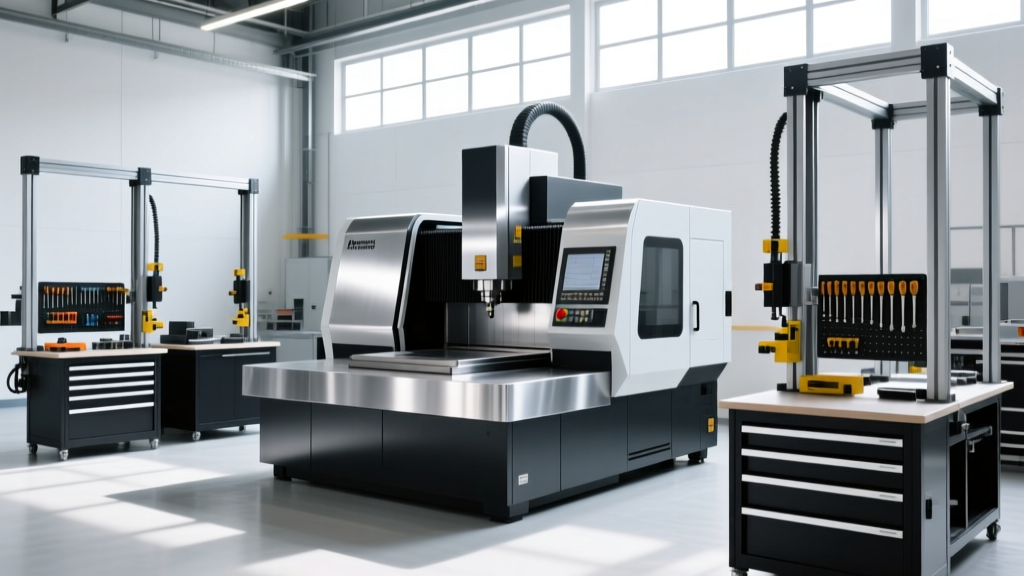
The Haas Mini Mill remains the gold standard for small-scale metal removal. As of 2026, a base model costs approximately $55,000, rising to $72,000 with the necessary 15,000 RPM spindle upgrade and probing package. Its 16 x 12 x 10 inch work envelope is perfectly sized for consumer appliance chassis, and its 7.5 HP vector drive handles aggressive facing operations on aluminum extrusions without stalling.
Small-Tonnage Injection Molding: The 50-Ton Sweet Spot
Consumer air purifier housings typically require shot sizes between 1.5 and 4.0 ounces. Utilizing a standard 150-ton press results in massive energy waste and excessive residence times in the barrel, which degrades the polymer. The Toshiba EC50SXII (a 50-ton all-electric press) is the optimal choice. Priced around $88,000 in 2026, its all-electric toggle mechanism eliminates the need for hydraulic oil maintenance—a critical factor for hygiene equipment manufacturers who want to keep their clean-assembly areas free of airborne oil mist.
| Equipment Category | Specific Model | Footprint | Est. 2026 Cost | Primary Application |
|---|---|---|---|---|
| CNC Milling | Haas Mini Mill (15k RPM) | 48 x 45 in. | $72,000 | UV-C heatsinks, aluminum chassis |
| Injection Molding | Toshiba EC50SXII (50-Ton) | 110 x 45 in. | $88,000 | ABS/PC HEPA filter housings |
| 3D Printing (Bridge) | Formlabs Fuse 1+ 30W (SLS) | 34 x 28 in. | $32,000 | Nylon 12 custom fan shrouds |
| Vision QA | Cognex In-Sight 2800 | Compact Inline | $6,500 | HEPA seal integrity verification |
Navigating Small-Batch Failure Modes
Operating small-scale manufacturing equipment introduces unique physics that do not exist on massive production lines. A manufacturer of non-industrial hygiene equipment must actively mitigate the following edge cases:
- Resin Residence Time Degradation: The Toshiba EC50SXII features a small 1.2 oz barrel. If the cycle time for a small HEPA housing drops below 15 seconds, the next shot might sit in the heated barrel for too long while the robot extracts the part. For hygroscopic resins like Polycarbonate (PC), this causes hydrolysis and yellowing. Solution: Implement a strict 2-hour drying protocol at 180°F using a desiccant dryer, and program the press to purge automatically if cycle delays exceed 45 seconds.
- Aluminum Mold Thermal Expansion: To save on tooling costs, startups often use 7075-T6 aluminum molds (sourced via platforms like Thomasnet) instead of P20 steel. Aluminum dissipates heat quickly but also expands faster. If the cooling lines are not balanced perfectly, the mold halves will warp microscopically at operating temperature (140°F), causing flash on the HEPA filter sealing lips. Solution: Use conformal cooling channels and monitor mold surface temperature with an IR pyrometer every 50 shots.
- Power Phase Derating: Many startup leases only offer single-phase 220V power. Running a 3-phase Haas Mini Mill on a static phase converter will derate the spindle motor by up to 30%, causing it to stall during heavy roughing passes. Solution: Invest $3,500 in a rotary phase converter (e.g., Phase-A-Perfect) to generate a true, balanced 3-phase output.
Bridge Tooling vs. Hard Tooling Strategy
For a manufacturer of non-industrial hygiene equipment, design iteration is constant. Consumer feedback might dictate that the air intake grill needs 15% more surface area to reduce decibel output. Committing to $40,000 hardened steel molds before product-market fit is established is a fatal error.
"The most successful consumer hardware startups use Selective Laser Sintering (SLS) for the first 1,000 units, transition to aluminum soft tooling for the next 5,000, and only cut hardened steel molds once the design is frozen and retail channel orders exceed 10,000 units." — Hardware Scaling Framework, NIST MEP
By utilizing the Formlabs Fuse 1+ 30W SLS printer, startups can produce end-use Nylon 12 fan shrouds that withstand the thermal load of the UV-C lamps (up to 160°F ambient) without the need for injection molding. This bridges the gap between prototyping and production, preserving capital.
Automating QA on a Startup Budget
Consumer hygiene equipment requires flawless sealing. If a HEPA filter housing has a 0.5mm gap due to molding flash, unfiltered air bypasses the media, rendering the device useless and inviting severe customer backlash. Manual visual inspection is insufficient and unscalable.
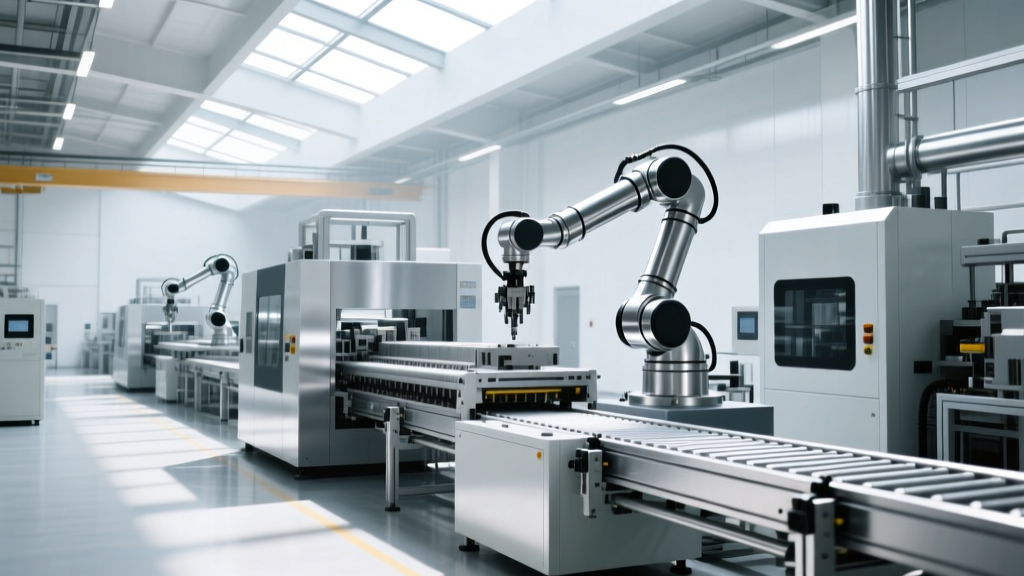
Integrating a Cognex In-Sight 2800 vision system at the end of the small-batch conveyor allows for 100% inline inspection. Priced around $6,500, this edge-learning vision system can be trained by the line operator in under 20 minutes to recognize flash, short shots, and sink marks on the white ABS housings. This ensures that every unit shipped meets the stringent airflow resistance specs required for consumer safety, without the $80,000 price tag of a fully automated robotic pick-and-place QA cell.
Leveraging Institutional Support
Startups should not fund this CapEx entirely out of pocket. The NIST Manufacturing Extension Partnership (MEP) offers state-level grants and cost-sharing programs specifically designed to help small manufacturers adopt advanced, energy-efficient technologies (like all-electric injection molding presses). Furthermore, local MEP centers can conduct a free facility layout optimization to ensure the 4,500 sq. ft. space flows logically from raw material staging to CNC milling, molding, and final QA, minimizing forklift traffic and work-in-progress (WIP) bottlenecks.
Scaling as a manufacturer of non-industrial hygiene equipment requires a disciplined approach to machinery selection. By right-sizing the equipment stack to the 50-ton and mini-mill tier, enforcing strict process controls on small-barrel thermodynamics, and utilizing vision systems for consumer-grade QA, startups can achieve enterprise-level quality on a seed-stage budget.