Park Workout Equipment Manufacturer: Batch vs Continuous Safety Guide
Compare batch vs continuous manufacturing equipment for a park workout equipment manufacturer, focusing on ASTM safety compliance, traceability, and ROI.
The Compliance Dilemma in Outdoor Fitness Production
For a park workout equipment manufacturer, the margin for error in structural fabrication is effectively zero. Outdoor fitness stations—ranging from multi-grip pull-up rigs to elliptical cross-trainers—must endure extreme thermal cycling, UV degradation, and dynamic human loads exceeding 2,500 lbs of instantaneous force. Compliance with rigorous standards like ASTM F3101 (Standard Specification for Outdoor Fitness Equipment) and EN 16630 (Permanently installed outdoor fitness equipment) dictates not only the material specifications but also the manufacturing processes used to shape and coat them.
When scaling production, facility engineers face a critical decision: deploy batch manufacturing equipment or invest in continuous manufacturing lines. This choice fundamentally alters the factory's safety compliance posture, defect traceability, and liability exposure. Below is a technical comparison of both approaches through the lens of industrial safety and quality assurance.
⚠️ Compliance Warning: Structural Load TestingUnder ASTM F3101, primary load-bearing uprights must withstand a static load test of at least 2.5 times the maximum intended user weight (typically calculated at 250 lbs) without permanent deformation. The manufacturing method directly influences the metallurgical consistency required to pass this test.
Batch Manufacturing Equipment: Lot Traceability and Audit Control
Batch processing remains the backbone of mid-volume park workout equipment manufacturing, particularly for powder coating and CNC tube bending. In a batch system, a discrete quantity of parts (e.g., 50 pull-up bar assemblies) moves through a process step together, allowing for complete isolation between production runs.
Equipment Profile: Batch Powder Coating & CNC Bending Cells
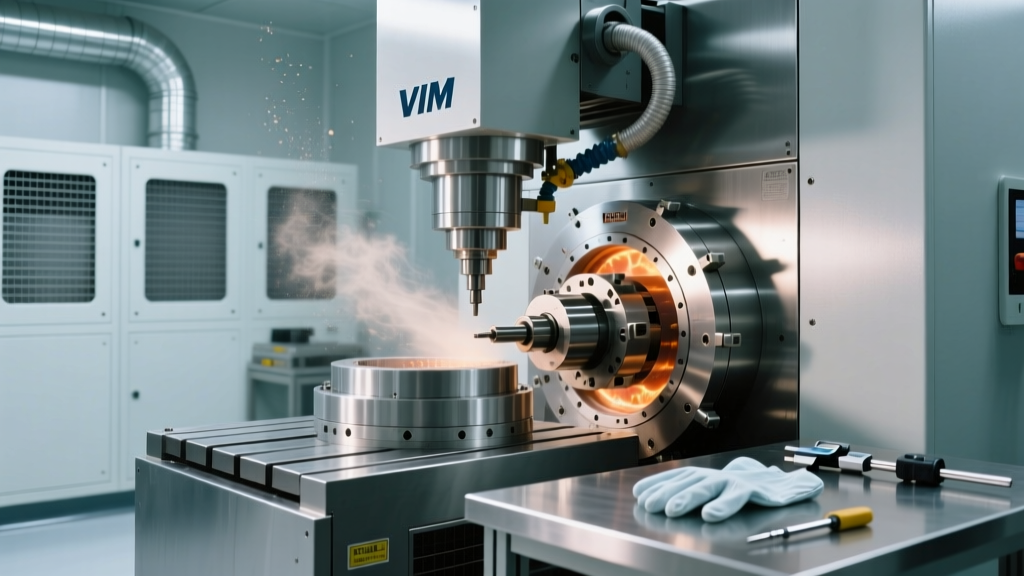
Outdoor fitness equipment requires a minimum powder coat thickness of 2.0 to 3.0 mils to prevent subsurface corrosion. A typical batch setup utilizes a manual or semi-automated spray booth (such as the Gema OptiFlex Pro series) paired with a walk-in convection curing oven.
- Safety Advantage (Traceability): If a batch of 11-gauge ASTM A500 Grade B steel uprights fails adhesion testing due to improper pre-treatment washing, the entire defect is contained within that specific lot. The manufacturer can quarantine the batch without halting the entire factory.
- Audit Readiness: Batch ovens allow quality engineers to place physical thermocouples directly on the parts to validate the curing curve (e.g., 400°F metal temperature for exactly 10 minutes). This generates a discrete, auditable data log for ISO 9001 compliance.
- Handling Risks: The primary safety drawback is manual material handling. Operators must physically load and unload heavy steel rigs onto rolling racks, increasing the risk of ergonomic injuries and crush hazards if racks are not properly chocked.
Continuous Manufacturing Equipment: Automated Consistency vs. Recall Risks
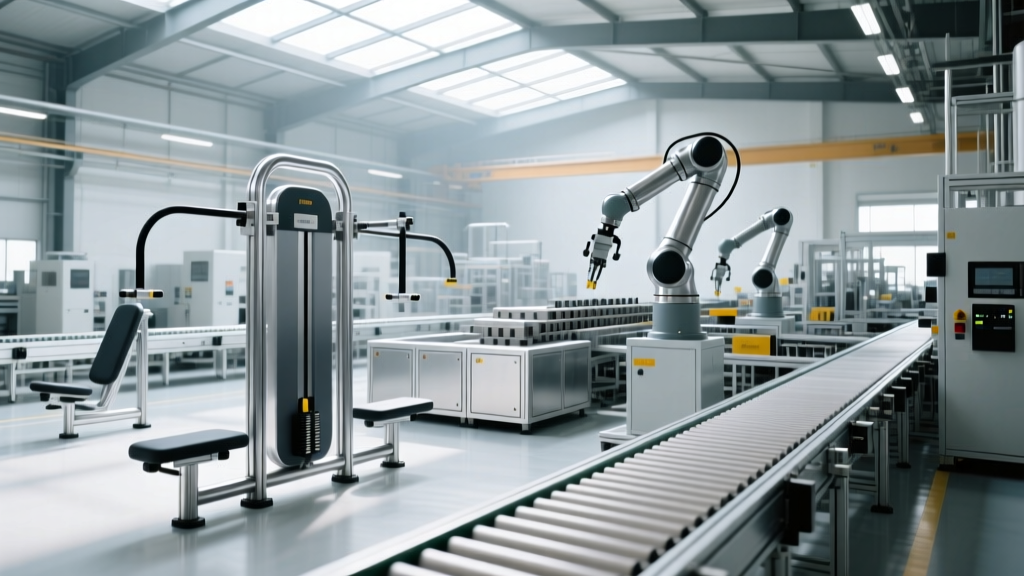
Continuous manufacturing is utilized by high-volume producers fabricating thousands of identical components, such as elliptical swing arms or continuous polymer grip extrusions. Material flows uninterrupted through forming, welding, and coating stages.
Equipment Profile: Continuous Tube Roll-Forming & Inline Extrusion
A continuous roll-forming line (such as those engineered by Tauringroup or BLM Group) takes raw steel coil and progressively forms it into structural tubing, cutting it to length via flying cutoff saws. Similarly, inline extrusion continuously produces HDPE or TPE grips for equipment handles.
- Safety Advantage (Ergonomics & Guarding): Continuous lines drastically reduce manual handling. Automated material handling and enclosed OSHA Machine Guarding guidelines compliant enclosures keep operators away from the point of operation, minimizing amputation and crush hazards.
- The Recall Risk (Defect Propagation): The critical vulnerability of continuous manufacturing is defect propagation. If a roll-forming die shifts by just 0.4mm, it can introduce a micro-fracture along the weld seam of the tubing. Without highly calibrated inline laser scanning, the line might produce 15,000 defective uprights before a human inspector notices the dimensional drift. Under CPSC Business Education portal guidelines, this could trigger a massive, multi-state park equipment recall.
- Thermal Inconsistencies: In continuous inline powder coating tunnels, parts are densely packed. If the conveyor speed fluctuates, parts may under-cure, leading to premature UV chalking and warranty claims.
Comparative Matrix: Safety, Compliance, and Financials
The following matrix breaks down the operational realities for a park workout equipment manufacturer evaluating capital expenditure in 2026.
| Compliance Vector | Batch Manufacturing Equipment | Continuous Manufacturing Equipment |
|---|---|---|
| Defect Isolation | High. Defects are confined to the specific lot or rack. | Low. Defects can propagate for hours before detection. |
| ASTM Traceability | Excellent. Lot numbers tied to specific oven cure cycles. | Moderate. Requires sophisticated inline timestamping software. |
| Operator Safety | Lower. High manual handling and ergonomic strain. | Higher. Automated feeds reduce human-machine interaction. |
| Maintenance LOTO | Simple. Individual machines locked out independently. | Complex. Massive stored energy requires strict OSHA Lockout/Tagout standards across the entire line. |
| 2026 CapEx Range | $85,000 - $250,000 (Coating & Bending Cells) | $1.2M - $3.8M (Automated Roll-Forming & Extrusion) |
Navigating Maintenance Safety and LOTO Protocols
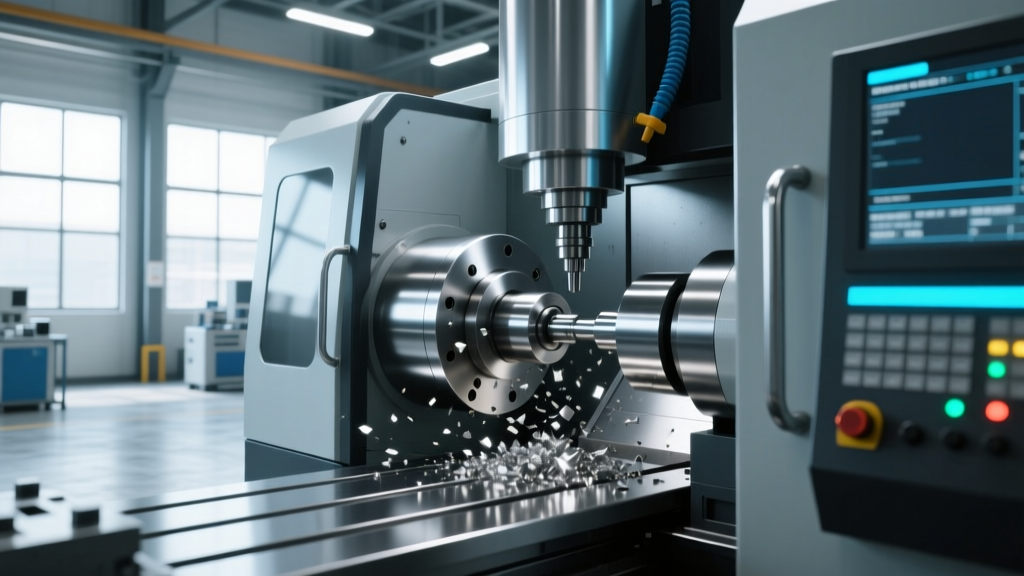
Manufacturing heavy-gauge steel for outdoor fitness equipment involves high-torque machinery. The safety compliance burden during maintenance differs vastly between the two setups.
💡 Engineering Insight: Stored Energy in Continuous LinesA continuous tube mill utilizes massive hydraulic accumulators and pneumatic tensioners. When performing die changes, simply cutting the power is insufficient. Engineers must bleed hydraulic pressure and mechanically block the uncoiler to prevent the release of stored kinetic energy, a frequent cause of fatal injuries in continuous metalforming.
In a batch environment, a CNC tube bender or a batch wash station operates as an independent island. Maintenance teams can apply standard lockout/tagout (LOTO) procedures to a single machine's disconnect switch. Conversely, a continuous line requires a complex, multi-point LOTO procedure. If a flying cutoff saw jams, the entire upstream uncoiler and roll-forming section must be safely brought to a zero-energy state, requiring specialized training and extended downtime.
Defect Isolation Protocol: Step-by-Step Response
When a field report indicates a cracked weld on a park elliptical machine, the manufacturer must trace the failure back to the production floor. Here is how the response differs:
- Batch System Response: The quality team pulls the lot number stamped on the fractured part. They access the batch oven's thermocouple logs and the CNC bender's tool-wear records for that specific 8-hour shift. If the pre-treatment wash pH was out of spec, they quarantine the remaining 40 units from that exact lot. Time to resolution: 2 hours.
- Continuous System Response: The team identifies the timestamp laser-etched on the part. They must then review hours of inline camera footage and laser-scanner data to find the exact moment the weld-seam tracking laser lost calibration. Because the line ran continuously for three days before the calibration error was caught, the manufacturer must issue a hold on 12,000 units already shipped to municipal distributors. Time to resolution: 14+ hours.
Frequently Asked Questions (FAQ)
Can a park workout equipment manufacturer use a hybrid approach?
Yes, and this is the industry best practice for 2026. Most manufacturers use continuous roll-forming to produce the raw, standardized structural tubing (uprights and bases) to capitalize on material yield and speed. They then route this tubing into batch CNC bending and batch powder coating cells. This hybrid model ensures high-volume material efficiency while maintaining strict lot-level traceability for the final safety-critical coating and assembly stages.
How does UV degradation testing impact the choice of coating equipment?
ASTM F3101 requires outdoor equipment coatings to withstand 2,000 hours of QUV accelerated weathering without chalking or loss of adhesion. Batch ovens are generally preferred for thick-film architectural powders (like TGIC polyesters) because operators can manually adjust rack spacing to ensure optimal Faraday cage penetration into complex, multi-angled pull-up rig joints, ensuring the 3.0-mil thickness required for UV resistance.
What is the biggest safety compliance trap when buying used continuous equipment?
The most common trap is purchasing legacy continuous extrusion or roll-forming lines that lack modern Category 3 or 4 safety-rated PLCs. Older machines often rely on simple mechanical limit switches rather than modern light curtains and safety-interlocked guarding. Upgrading a used continuous line to meet current OSHA and ANSI B11.19 safeguarding standards can easily add $150,000 to the acquisition cost, erasing the savings of buying used.