Modular Printed Circuit Board Manufacturing Equipment Trends 2026
Discover how modular printed circuit board manufacturing equipment enables flexible SMT production, reducing changeover times and optimizing high-mix ROI.
The Shift from Monolithic to Modular SMT Lines
The transition from high-volume, low-mix (HVLM) to high-mix, low-volume (HMLV) production has forced a fundamental redesign of the modern Surface Mount Technology (SMT) line. Legacy monolithic printed circuit board manufacturing equipment—characterized by fixed-footprint, single-purpose machines—is being rapidly replaced by modular, software-defined architectures. As of 2026, contract manufacturers (CMs) and OEMs require lines that can pivot from assembling 01005 micro-passives to large odd-form connectors without manual reconfiguration or hard tooling changes.
Modular equipment decouples the machine base from the functional process module. This allows factory managers to scale capacity by adding or swapping modules rather than purchasing entirely new capital assets. According to data published by Fuji SMT, modern modular pick-and-place platforms can reduce physical line changeover times by up to 85% compared to fixed-architecture predecessors, primarily through hot-swappable heads and intelligent feeder carts.
Key Metric Highlight: A fully optimized modular SMT line utilizing smart feeders and offline setup stations can achieve a complete product recipe changeover in under 12 minutes, compared to the 45–90 minutes required on legacy monolithic lines.Core Modular Systems and Equipment Specifications
High-Mix Pick-and-Place (PnP) Platforms
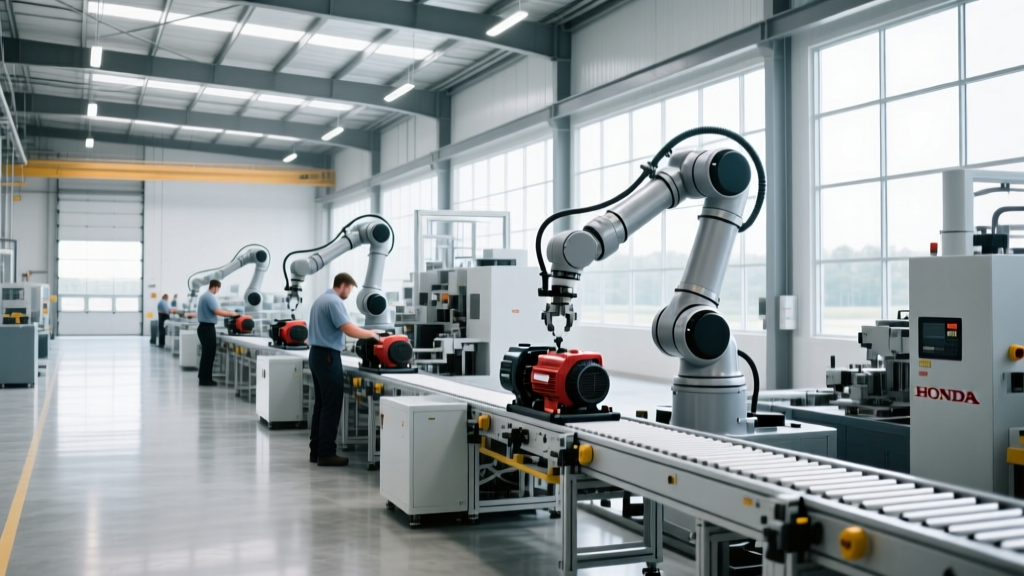
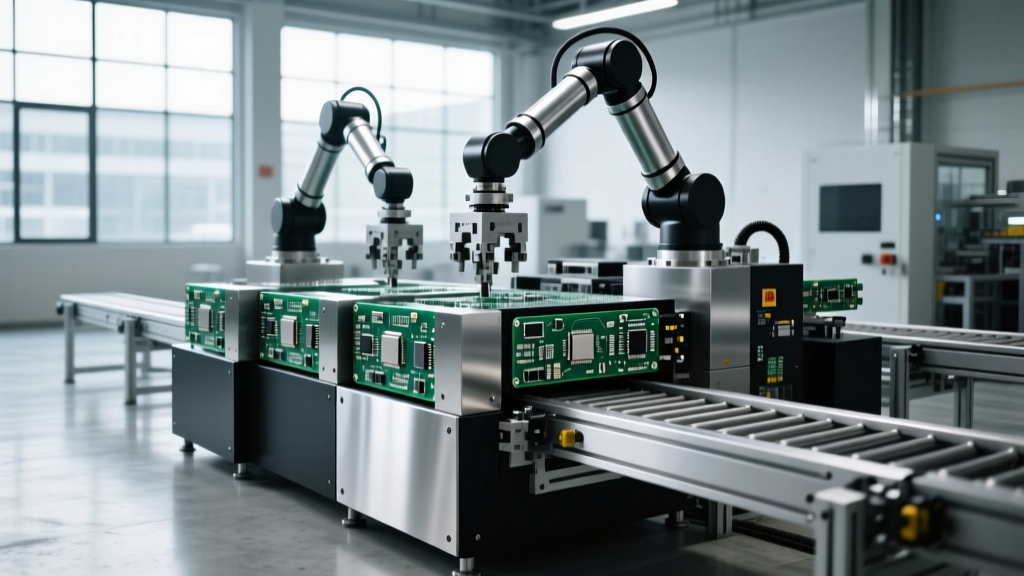
The pick-and-place machine represents the highest CapEx in any SMT line. Modern modular PnP systems utilize a standardized base frame that accepts interchangeable gantry and head modules.
- Fuji NXT IV: The current industry benchmark for modularity. The NXT IV base accepts various modules, including the H24G high-speed rotary head (capable of 105,000 CPH for passives) and the OF (Odd Form) head for heavy connectors. Modules can be physically unplugged and rolled to another base machine in minutes.
- Yamaha YRM20: Features a hybrid platform where rotary and inline multi-nozzle heads can be swapped on the same gantry, allowing a single machine to handle both high-speed micro-components and complex BGAs with 3D coplanarity checks.
Adaptive Screen Printing and 3D Inspection
Flexibility in the front-end of the line is equally critical. Modular screen printers like the ASM DEK NeoHorizon utilize tool-less changeover mechanisms for squeegees and stencil frames. Downstream, 3D Solder Paste Inspection (SPI) and Automated Optical Inspection (AOI) have shifted from fixed 2D cameras to modular 3D profilometry. Koh Young systems, for example, use 8-way moiré phase profilometry to measure actual solder paste volume and post-reflow joint coplanarity, with software modules that can be toggled to inspect different board topographies without hardware swaps.
Monolithic vs. Modular Equipment Matrix
Understanding the operational differences between legacy and modern architectures is critical for CapEx planning. The following matrix outlines the functional divergence:
| Feature | Monolithic (Legacy) | Modular (Current Gen) |
|---|---|---|
| Footprint Scaling | Fixed; requires new machine for capacity | Linear; add process modules to existing base |
| Changeover Time | 45 - 90 minutes (manual feeder threading) | < 15 minutes (smart cart swap, offline prep) |
| Head Flexibility | Dedicated turret or gantry per machine | Hot-swappable heads for varying component mixes |
| Maintenance Impact | Full line stop for head/gantry repair | Swap faulty module; repair offline (Zero downtime) |
| Dual-Lane Asymmetry | Limited to identical product on both lanes | Independent module control for Lane A / Lane B |
The Protocol Layer: IPC-2591 CFX vs. Legacy SMEMA
Hardware modularity is useless without a flexible communication protocol. For decades, the industry relied on the IPC-SMEMA-9851 standard—a basic hardware handshake utilizing boolean signals ("Board Available" and "Machine Ready"). SMEMA cannot transmit recipe data, component metadata, or real-time telemetry, creating massive bottlenecks in flexible, high-mix environments.
In 2026, true flexible production requires the IPC-2591 Connected Factory Exchange (CFX) standard. CFX is an open, IP-based protocol that allows modular equipment from different OEMs to share granular data. When a new PCB batch enters the line, the Manufacturing Execution System (MES) pushes the exact recipe, CAD coordinates, and tolerance thresholds via CFX to the printer, PnP, and AOI modules simultaneously. This eliminates manual recipe loading and ensures that modular hardware is perfectly synchronized with digital twin requirements.
Financial Framework: CapEx vs. OpEx in Modular Lines
While the initial unit cost of modular equipment can appear higher, the Total Cost of Ownership (TCO) heavily favors flexibility in HMLV environments.
2026 Pricing Benchmarks (USD):• Single High-Speed Modular PnP Base + Module: $180,000 – $240,000
• Modular 3D AOI System: $110,000 – $160,000
• Fully Kitted Dual-Lane Flexible Line (Printer, SPI, 3x PnP, Reflow, AOI): $1.4M – $2.2M
• Smart Feeder Fleet (100x 8mm RFID feeders): $45,000 – $60,000
The primary ROI driver is the reduction in unutilized machine time. On a monolithic line, a machine waiting for a manual changeover generates zero revenue. On a modular line, operators prepare the next batch's smart feeder carts offline. When the current batch finishes, the cart is rolled on, and the RFID-tagged feeders instantly map to the machine's CFX-driven recipe. This increases Overall Equipment Effectiveness (OEE) from an industry average of 65% to over 88%.
Edge Cases and Implementation Pitfalls
Conveyor Bottlenecks and Asymmetric Dual-Lane Routing
A common failure mode in modular line design is mismatched conveyor speeds. If a modular PnP machine is configured to run two different products simultaneously on Lane A and Lane B (asymmetric production), the downstream reflow oven must handle different thermal mass profiles concurrently. If the board on Lane A requires a longer soak time than Lane B, standard synchronous conveyor systems will bottleneck. Engineers must specify independent, dual-track conveyor modules with variable speed drives to prevent board starvation or oven congestion.
Thermal Profiling in High-Mix Reflow
Modular PnP machines can change recipes in seconds, but reflow ovens possess high thermal inertia. You cannot instantly change the oven's zone temperatures for the next product. The operational workaround is "Group Technology" processing—sequencing PCB assemblies that require similar thermal profiles back-to-back, minimizing the delta in oven temperature adjustments and preventing cold-solder or tombstoning defects.
"The true value of modular printed circuit board manufacturing equipment is not just in the hardware's ability to swap heads, but in the software's ability to manage the logistics of thousands of unique components across hundreds of daily changeovers without human intervention." — Advanced Manufacturing Engineering Review, 2025
Feeder Maintenance and Wear
Smart feeders are precision electromechanical devices. In a modular setup where feeders are constantly moved between offline staging racks and machine bases, the electrical contact pins and pneumatic seals experience high wear rates. Facilities must implement a strict preventive maintenance schedule, cleaning feeder drive gears and replacing pneumatic O-rings every 500,000 pick cycles to prevent mis-picks and vacuum loss, which remain the leading cause of micro-component (0201/01005) placement failures.