Industrial Equipment Manufacturing Software for CE & UL Compliance
Learn how industrial equipment manufacturing software automates CE, UL, and CSA compliance, reducing audit failures and accelerating global market entry.
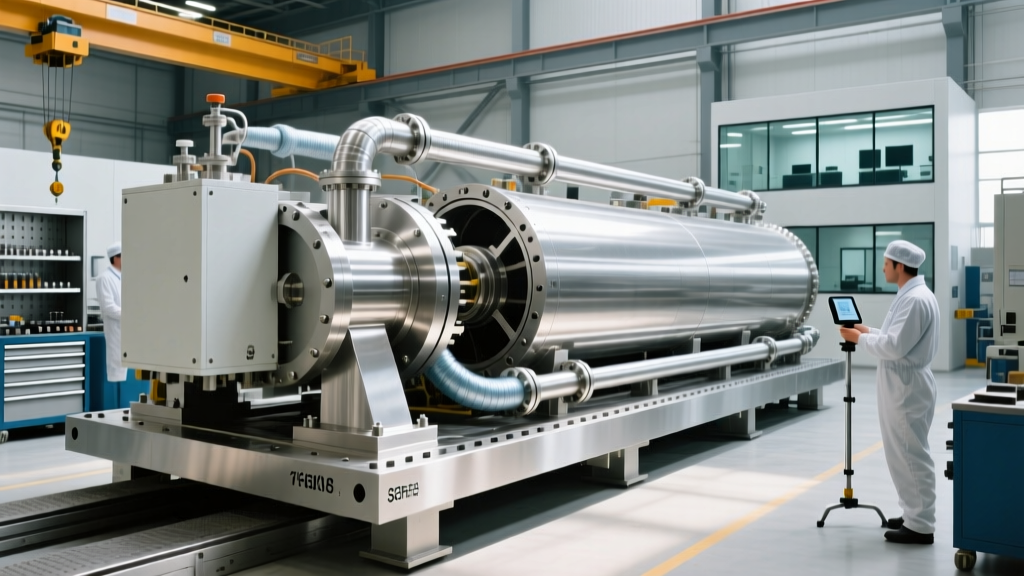
Exporting a custom CNC machining center or an automated packaging line across international borders requires far more than translating the HMI. It demands rigorous, documented adherence to regional safety directives. Historically, achieving CE, UL, and CSA marks relied on manual spreadsheets, disjointed CAD files, and costly third-party audit iterations. Today, modern industrial equipment manufacturing software shifts compliance left, embedding regulatory validation directly into the electrical and mechanical design phases.
For OEMs building heavy machinery, non-compliance is not merely a paperwork delay; it results in border rejections, impounded shipments, and field retrofits that can exceed $50,000 per machine. By leveraging specialized engineering and Product Lifecycle Management (PLM) platforms, manufacturers can automate Short Circuit Current Rating (SCCR) calculations, validate Performance Levels (PL), and generate audit-ready technical files dynamically.
Decoding the Big Three: CE, UL, and CSA Marks
Before configuring your software environment, it is critical to map the specific regulatory frameworks your target markets require. While there is overlap in foundational safety principles (such as risk assessment), the certification pathways differ drastically.
| Mark | Primary Region | Core Standards | Certification Pathway | Software Validation Focus |
|---|---|---|---|---|
| CE | European Union | EN ISO 12100, IEC 60204-1, EN ISO 13849-1 | Self-declaration (requires comprehensive Technical Construction File) | Risk assessment matrices, safety logic PL calculations |
| UL | United States | UL 508A (Control Panels), NFPA 79, UL 73 | Third-party testing via Nationally Recognized Testing Laboratory (NRTL) | SCCR calculations, wire sizing, component recognition databases |
| CSA | Canada | CSA C22.2 No. 14, CSA C22.2 No. 301 | Third-party testing via SCC-accredited body | Component cross-referencing, environmental rating validations |
According to the European Commission's guidelines on CE marking, the manufacturer bears sole responsibility for declaring conformity. This makes the digital traceability provided by engineering software legally indispensable.
Automating Electrical Compliance: SCCR and UL 508A
The most frequent point of failure in North American machinery exports is the industrial control panel. Under UL 508A standards for Industrial Control Panels, every panel must have a verified Short Circuit Current Rating (SCCR). If a machine is connected to a facility with 65 kA available fault current, but the panel is only rated for 10 kA, the installation is a severe fire and arc-flash hazard.
How Software Solves the 'Weakest Link' Problem
Calculating SCCR manually requires evaluating every component on the load side of the main disconnect. The panel's overall rating is limited by the weakest component unless specific feeder circuit exceptions apply. Modern electrical CAD platforms, such as EPLAN Electric P8 or Siemens Capital, integrate directly with component manufacturer databases (e.g., Rockwell Automation, Schneider Electric).
- Automated Database Matching: When an engineer drags a contactor into the schematic, the software pulls the exact UL-recognized file number and kA rating.
- Real-Time SCCR Calculation: The software applies the UL 508A Table SB4.1 methodology instantly. If an engineer substitutes a 10 kA rated motor protector with a 5 kA rated alternative, the software flags the panel SCCR drop immediately in the design interface.
- Wire Sizing and Derating: The software calculates ampacity based on IEC 60204-1 or NFPA 79, automatically adjusting for ambient temperature and bundling derating factors, eliminating manual lookup errors.
Safety Logic Validation: ISO 13849-1 and Performance Levels
For the CE mark, mechanical and electrical engineers must prove that the machine's safety control system meets the required Performance Level (PLr) defined during the ISO 12100 risk assessment. This involves calculating the Mean Time to Dangerous Failure (MTTFd), Diagnostic Coverage (DC), and Common Cause Failure (CCF).
Tools like Rockwell Automation's Safety Automation Builder (SAB) or the free Pilz PAScal software allow engineers to model the safety architecture (e.g., Category 3, dual-channel with cross-monitoring). The software ingests the specific B10d values from pneumatic valve and contactor datasheets to output the achieved PL.
Integration with PLM: Advanced OEMs link these safety calculation tools directly to PLM systems like PTC Windchill or Siemens Teamcenter. If a mechanical engineer changes a light curtain from a Type 4 (SIL 3 / PLe) to a Type 2 (SIL 1 / PLc) to save costs, the PLM workflow triggers an automatic compliance hold, forcing a safety engineer to re-run the ISO 13849-1 calculation before the BOM can be released to the shop floor.
The 2026 Transition: Preparing for the New EU Machinery Regulation
OEMs must use 2026 to overhaul their technical file generation processes. The new EU Machinery Regulation (Regulation (EU) 2023/1230) becomes fully applicable in January 2027, replacing the legacy 2006/42/EC Directive. This update introduces strict new requirements for software updates, cybersecurity (referencing IEC 62443), and AI-driven safety systems.
Under the new regulation, if an OEM pushes an over-the-air (OTA) firmware update that alters the machine's safety logic or operational envelope, it may invalidate the original CE mark, requiring a new conformity assessment. Industrial equipment manufacturing software must now track software versioning and digital twin configurations as rigorously as physical hardware BOMs to maintain continuous compliance.
Cost of Compliance: Software ROI vs. Manual Auditing
The financial argument for deploying compliance-integrated software is rooted in the cost of audit iterations and engineering hours.
| Compliance Task | Manual Process Cost / Time | Software-Automated Cost / Time | Annual Savings (per 50 machines) |
|---|---|---|---|
| UL 508A SCCR Calculation | 15 hours @ $120/hr ($1,800) | 15 minutes (Automated via CAD) | $85,000+ |
| Technical File Compilation | 40 hours per machine | 4 hours (Auto-generated from PLM) | $144,000 |
| NRTL Audit Re-testing | $4,500 per failed iteration | $0 (Pre-validated via digital twin) | $45,000 (assuming 10 failures avoided) |
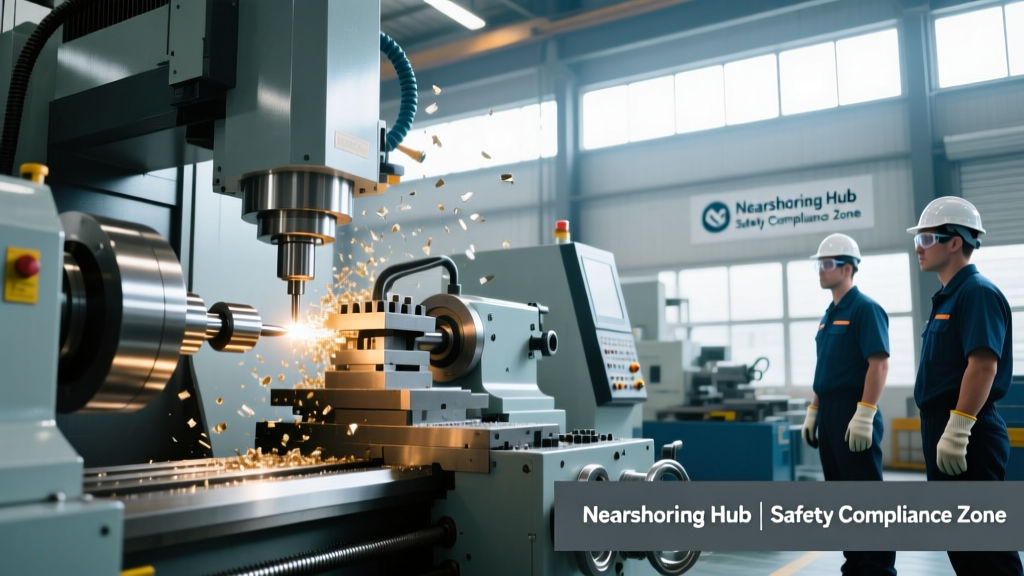
Based on OSHA machine guarding and safety guidelines, ensuring that physical barriers and interlock logic match the digital schematics is also streamlined. Software can generate 3D panel layouts and safety fence footprints that verify physical clearance distances against ISO 13855 (positioning of safeguards with respect to the approach speeds of parts of the human body).
Actionable Implementation Steps for OEMs
- Audit Current Component Libraries: Purge legacy CAD libraries of outdated parts. Map every electrical symbol to a verified manufacturer part number with active UL/CSA file numbers and ISO 13849 B10d data.
- Implement Rule-Based Design Checks: Configure your electrical CAD to run automated ERC (Electrical Rule Checks) that specifically flag missing grounding symbols, undersized e-stop wiring, and absent SCCR documentation blocks.
- Link Risk Assessment to BOM: Use a tool like DocuMatrix or PLM-native risk modules to tie specific ISO 12100 hazard mitigations directly to the hardware components that execute them.
Frequently Asked Questions
Can I use the same electrical schematic for both CE and UL markets?
Not without software-driven adaptations. While IEC 60204-1 (CE) and NFPA 79 / UL 508A (North America) share similarities, they differ in wire color codes (e.g., black vs. red for AC power), grounding requirements, and component listing statuses. Advanced manufacturing software allows engineers to maintain a single logical schematic while outputting region-specific manufacturing BOMs and wire routing tables.
Does using UL-recognized software guarantee my machine will pass a field inspection?
No. Software validates the design against the standard. The physical build must match the software output exactly. If a panel builder substitutes a fuse brand or alters wire routing in a way that affects thermal dissipation, the UL mark is voided regardless of the software's accuracy.
How do we handle custom AI vision systems in our CE technical file?
Because harmonized standards for AI in machinery are still evolving under the new EU Machinery Regulation, OEMs must use their industrial equipment manufacturing software to document the AI's decision-making boundaries, fail-safe states, and cybersecurity protocols, applying ISO 12100 risk assessments to the software's logic just as they would a mechanical crushing hazard.