Lean Workstation Design for a Calf Nursery Equipment Manufacturer USA
Explore how a calf nursery equipment manufacturer USA optimizes production with lean workstation design, T-slot framing, and ergonomic lift specs.
Engineering the Assembly Cell for Agricultural Plastics
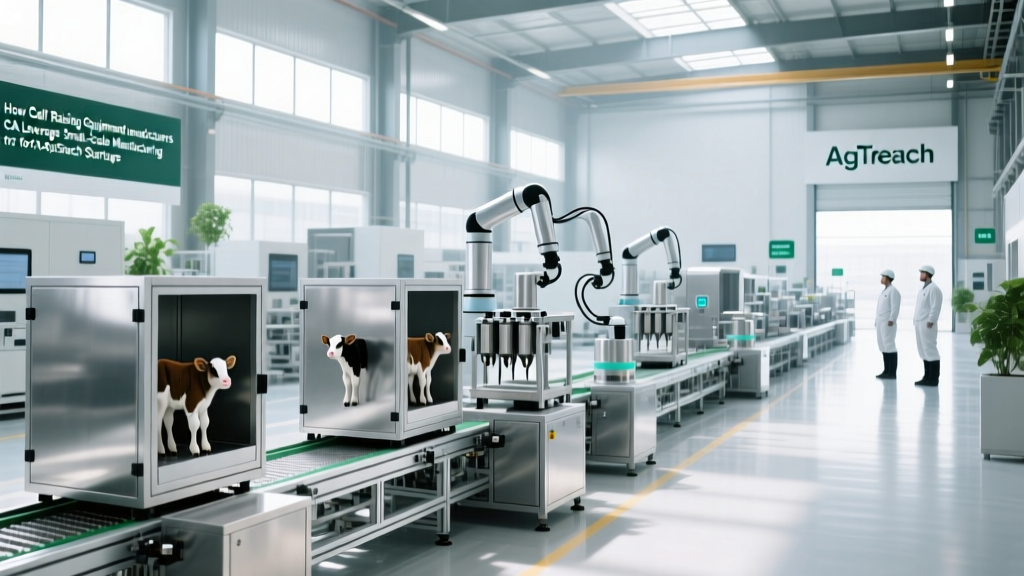
Manufacturing polyethylene calf hutches, UV-stabilized feeding troughs, and insulated warming boxes requires handling bulky, awkward materials with high secondary-operation tolerances. For a modern calf nursery equipment manufacturer USA, applying lean manufacturing equipment and cellular workstation design is not merely an efficiency exercise—it is a critical intervention to mitigate ergonomic strain while maintaining strict dimensional tolerances on rotational molding and thermoforming secondary operations. Unlike standard metal fabrication, processing large-format agricultural plastics generates unique challenges, including static buildup, variable material thickness, and high-volume hardware kitting. This technical guide dissects the exact specifications, equipment selections, and spatial configurations used to engineer a high-mix, low-volume lean assembly cell for livestock nursery equipment.
Cellular Assembly Jigs Using Modular T-Slot Extrusions
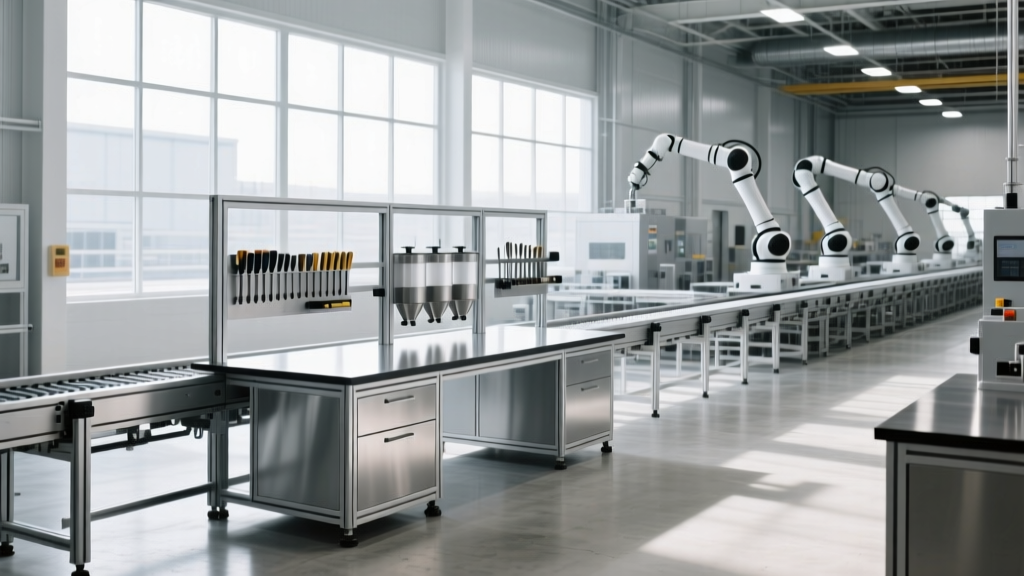
Traditional welded steel jigs lack the flexibility required for agricultural equipment lines that frequently shift between 4x8-foot standard hutches and 5x10-foot premium models. Lean workstation design in this sector relies heavily on modular aluminum extrusion systems, specifically the 40-series (40mm x 40mm) and 40x80mm T-slot profiles constructed from 6105-T5 alloy.
When designing the primary assembly fixture for a 120-pound polyethylene hutch roof, engineers must account for dynamic loading during the hardware insertion phase. A standard 40x40mm profile spanning 48 inches will deflect approximately 0.15 inches under a centered 150-pound load. To maintain the strict +/- 0.05-inch drilling tolerance required for 316 stainless steel hinge alignment, the horizontal load-bearing beams of the jig must utilize 40x80mm profiles oriented with the 80mm axis vertical. This reduces deflection to less than 0.02 inches under the same load, ensuring that pneumatic drill presses mounted to the jig do not wander off-axis during the penetration of high-density polyethylene (HDPE).
Engineering Callout: The 'Golden Zone' MandateAccording to NIOSH Ergonomics Guidelines, repetitive assembly tasks must occur within the 'golden zone'—between 28 and 42 inches from the floor, and within 15 inches of the operator's torso. Modular workstations allow engineers to adjust the hutch fixture height dynamically using adjustable leveling feet and sliding T-nut mounts, accommodating operators of varying statures without requiring custom-fabricated steel platforms.
Gravity Flow Racks for Polymer Hardware Kanban
A critical component of lean manufacturing equipment is the point-of-use material delivery system. Calf nursery equipment requires diverse hardware kits: 3/8-inch stainless steel carriage bolts, UV-resistant nylon locknuts, and heavy-duty polypropylene latches. Storing these in bulk bins causes motion waste and overprocessing.
Instead, lean cells utilize gravity flow racks pitched at a precise 2.5% grade (approximately 3/8-inch drop per linear foot). For heavy hardware bins weighing up to 45 pounds, 1.9-inch galvanized steel rollers are specified over skatewheel conveyors to prevent bin jamming and track deformation. The rack depth is calculated based on the Heijunka (production leveling) box requirements, typically holding exactly two hours of Kanban inventory to prevent floor-space congestion while ensuring uninterrupted Chaku-chaku (load-load) operation.
Lean Equipment Specifications Matrix
| Equipment Type | Technical Specification | Application in Calf Hutch Assembly |
|---|---|---|
| Modular Framing | 40x80mm 6105-T5 T-Slot Aluminum | Main load-bearing jig beams for roof drilling |
| Gravity Flow Rack | 1.9" Galvanized Rollers, 2.5% Pitch | Hardware bin delivery (bolts, hinges, latches) |
| Scissor Lift Table | 2,000 lb Capacity, 36" Stroke, 2HP | Positioning 150 lb hutch shells for trimming |
| Poka-Yoke Sensor | Keyence PZ2 Photoelectric, 10ms | Verifying latch presence before final pack |
| Andon Stack Light | Patlite LR6, 24V DC, IP65 Rated | Visual management in washdown testing zones |
Electro-Hydraulic Scissor Lifts and Ergonomic Positioning
Rotational molded calf hutch shells are exceptionally bulky and cumbersome, often weighing between 110 and 160 pounds. Manual lifting to place these shells onto assembly jigs violates OSHA Ergonomics Guidelines for safe material handling and rapidly leads to lower-back fatigue and musculoskeletal disorders (MSDs).
The lean solution is the integration of electro-hydraulic scissor lift tables directly into the workstation flow. The specified equipment features a 36-inch by 48-inch platform with a 2,000-pound load capacity, driven by a 2HP hydraulic power unit. The critical metric here is the cycle time: a 15-second raise time across a 36-inch stroke allows the operator to elevate the hutch shell to the exact 34-inch working height without waiting, preserving the cellular takt time (typically 4.5 minutes per hutch). Furthermore, the lift tables are equipped with 2-inch diameter polyurethane casters and a floor-lock mechanism, allowing the entire workstation to be reconfigured during weekend Kaizen events without requiring forklifts or rigging equipment.
Poka-Yoke Integration in Trough Drilling Stations
Mistake-proofing (Poka-Yoke) is a foundational pillar of the Lean Enterprise Institute methodology. In the assembly of calf feeding troughs, a common and costly failure mode is drilling the drainage holes in the incorrect quadrant, which renders the UV-stabilized polymer trough unusable and forces a scrap event.
To eliminate this, lean workstation designers integrate custom 3D-printed fixture blocks coupled with photoelectric sensors. The technical implementation follows a strict sequence:
- Fixture Nesting: The trough is placed into a high-durometer urethane nest that conforms to the outer radius of the part. The nest is asymmetrical, physically preventing the trough from being loaded upside down.
- Sensor Verification: A Keyence PZ2-series photoelectric sensor with a 10-millisecond response time is mounted flush within the jig. It detects the presence of the molded-in manufacturer logo, which only exists on the correct exterior face.
- Interlock Circuit: If the sensor does not register the logo within 50 milliseconds of the operator clamping the part, a 24V DC relay cuts power to the pneumatic solenoid controlling the drill press. The spindle cannot engage until the part is correctly oriented.
When designing Poka-Yoke sensors for HDPE and XLPE calf nursery equipment, engineers must account for high static electricity generation during dry machining and trimming. Standard optical sensors can trigger false positives due to static dust attraction on the sensor lens. Workstations must incorporate ionizing air blowers (emitting < 50V residual voltage) directed at the sensor arrays, and all aluminum jig components must be bonded to a dedicated earth ground to dissipate triboelectric charges.
Visual Management and Washdown-Rated Andon Systems
Agricultural equipment manufacturing facilities often include wet-testing zones where completed calf hutches and warming boxes are subjected to high-pressure water sprays to verify leak-proof seams and drainage functionality. Standard industrial electronics fail rapidly in these environments.
Lean visual management in these cells requires IP65-rated or higher Andon systems. The Patlite LR6 series stack lights are specified for these stations, operating on 24V DC to eliminate high-voltage shock hazards in wet conditions. The wiring is routed through sealed, liquid-tight flexible metal conduits (LFMC) and terminated with M12 circular connectors. When an operator identifies a seam leak during the 60-second water test, a single press of a waterproof piezoelectric switch illuminates the red Andon tier and triggers a localized 85-decibel auditory alarm, instantly signaling the cell leader to initiate root-cause problem-solving without leaving the testing footprint.
'Cellular manufacturing is not just about moving machines closer together; it is about designing the physical environment so that the safest, most ergonomic method is also the fastest and most error-proof method.' — Principles of Lean Production Systems.
Final Technical Considerations for Factory Layout
Implementing these lean workstation designs requires precise floor planning. A standard U-shaped assembly cell for calf nursery equipment requires a minimum footprint of 16 feet by 12 feet to accommodate the gravity flow racks on the exterior and the scissor lifts in the interior. Aisles between cells must be maintained at a minimum of 60 inches to allow safe passage of manual tugger carts delivering Kanban hardware bins. By prioritizing modular T-slot framing, ergonomic lift specifications, and rigorous Poka-Yoke sensor integration, manufacturers can drastically reduce scrap rates, eliminate ergonomic injuries, and achieve a highly responsive production flow tailored to the unique demands of the agricultural livestock sector.
Related reading

Production Tracking Solutions for Industrial Equipment Manufacturing
Safety Standards for Startup Manufacturers of Agricultural Equipment