Hospital Equipment Manufacturing Energy Efficiency Cost Guide
Analyze capital and operational costs of energy efficiency ratings in hospital equipment manufacturing. Compare ROI on all-electric vs hydraulic machinery.
Utility overhead in medical device and hospital equipment manufacturing typically accounts for 8% to 14% of total conversion costs. When producing high-tolerance components—ranging from MRI chassis and surgical robotic arms to polycarbonate IV pump housings—the energy footprint of the production line directly dictates per-unit margins. As industrial electricity rates in primary manufacturing hubs average $0.09 to $0.14 per kWh in 2026, relying on baseline-efficiency machinery is a compounding financial liability.
Procurement teams and plant managers must look beyond the initial capital expenditure (CAPEX) sticker price. Evaluating manufacturing equipment energy efficiency ratings through a rigorous Total Cost of Ownership (TCO) lens reveals that premium-rated machinery often achieves payback in under 36 months, fundamentally altering the budget planning lifecycle for medical OEMs.
Decoding Motor and Drive Efficiency Ratings in CNC Machining
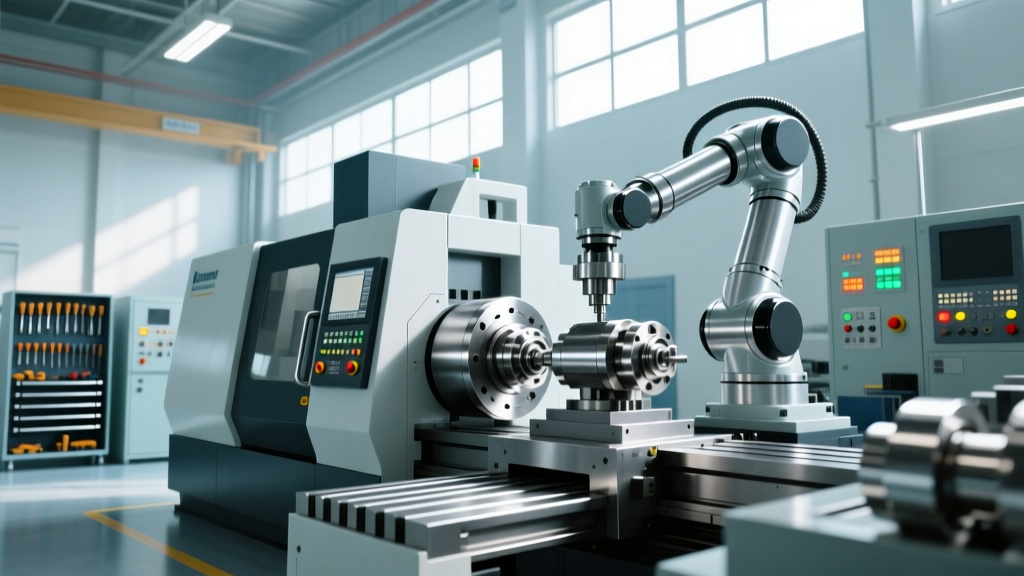
Hospital equipment manufacturing relies heavily on multi-axis CNC machining for orthopedic implants and surgical instruments. The primary energy sinks in these machines are not the spindle cutting operations, but the auxiliary systems: coolant pumps, hydraulic power units, and chip conveyors, which run continuously regardless of cutting load.
The International Electrotechnical Commission (IEC) standard 60034-30-1 classifies motor efficiency from IE1 (Standard) to IE5 (Ultra Premium). While many legacy medical manufacturing facilities still operate IE2 or IE3 rated auxiliary motors, upgrading to IE4 or IE5 yields disproportionate savings due to the 24/7 nature of medical device production.
The Auxiliary Power Drain
A standard 5-axis CNC mill (e.g., DMG MORI CMX 600 V) equipped with an IE2 coolant pump motor draws approximately 4.5 kW continuously. Replacing this with an IE5 synchronous reluctance motor drops the draw to 2.8 kW. Over an 8,000-hour annual operating schedule at $0.11/kWh, this single component swap saves $1,496 annually. When scaled across a 20-machine surgical tool production cell, the annual OPEX reduction exceeds $29,900.
For comprehensive guidance on industrial motor upgrades and utility incentive mapping, the U.S. Department of Energy Better Plants program provides foundational frameworks for calculating baseline energy consumption and identifying localized rebate structures for premium efficiency upgrades.
Injection Molding: Hydraulic vs. All-Electric TCO Analysis
Manufacturing sterile, single-use hospital consumables and durable equipment casings requires high-precision injection molding. The transition from hydraulic to all-electric injection molding machines represents the most significant energy efficiency leap in plastics processing for the medical sector.
Hydraulic machines require continuous pump operation to maintain system pressure, even during cooling phases. All-electric machines utilize servo motors that only draw power during active movement, eliminating hydraulic fluid heating and cooling requirements entirely.
| Cost Metric (5-Year Horizon) | Hydraulic (e.g., Arburg Allrounder 520 C) | All-Electric (e.g., Arburg Allrounder 520 A) |
|---|---|---|
| Initial CAPEX | $145,000 | $215,000 |
| Annual Energy Consumption | 310,000 kWh | 135,000 kWh |
| Annual Energy Cost (@ $0.12/kWh) | $37,200 | $16,200 |
| Annual Maintenance (Fluids/Filters) | $8,500 | $2,100 |
| 5-Year Total Cost of Ownership | $373,500 | $310,500 |
Despite a $70,000 premium in initial capital expenditure, the all-electric platform achieves absolute parity in year three. Furthermore, all-electric machines eliminate the risk of hydraulic fluid contamination—a critical compliance factor when manufacturing components for ISO Class 7 and 8 cleanrooms.
Cleanroom HVAC: The Unseen Energy Sink in Medical Production
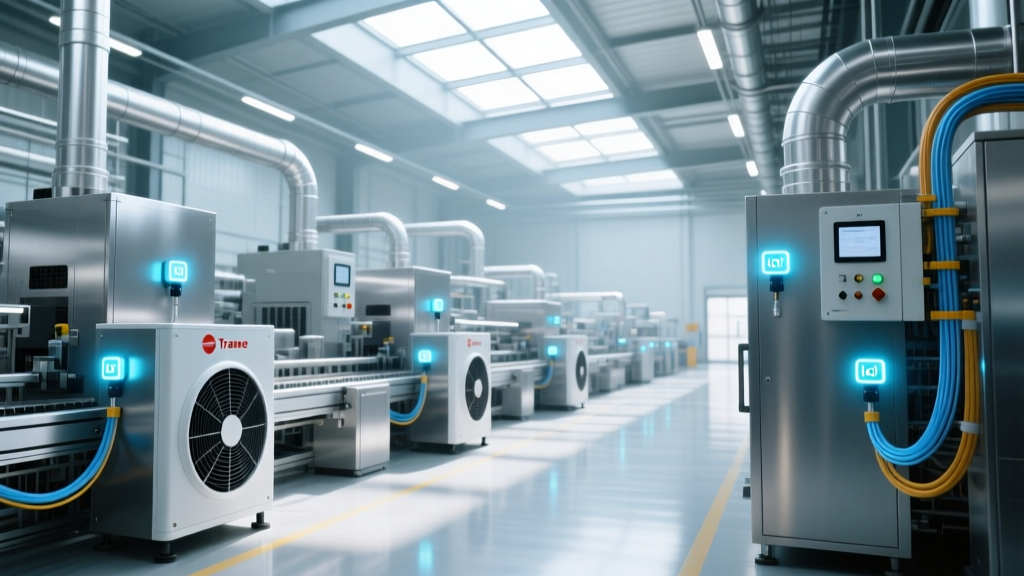
Hospital equipment manufacturing mandates strict environmental controls. Producing implantable devices or sterile diagnostic equipment requires ISO 14644-1 Class 7 or Class 8 cleanrooms. The HVAC systems powering these spaces consume up to 60% of a medical manufacturing facility's total energy budget.
'An ISO Class 7 cleanroom requires 30 to 60 Air Changes per Hour (ACH). Traditional AC belt-driven fan filter units (FFUs) operate at fixed speeds, wasting massive amounts of energy during non-production shifts. Upgrading to Electronically Commutated (EC) plug fans with integrated Variable Frequency Drives (VFDs) allows the system to drop to 10 ACH during off-hours, cutting cleanroom HVAC energy costs by 35% to 45%.'
When budgeting for a new medical device production line, facility engineers must specify EC motors for all FFUs. The premium for EC-based FFUs is approximately $120 to $180 per unit over standard AC models. In a 5,000-square-foot cleanroom requiring 400 FFUs, the $60,000 CAPEX increase is typically recovered via utility savings in under 22 months.
The 2026 CAPEX Budgeting Framework for Medical OEMs
To systematically integrate energy efficiency ratings into hospital equipment manufacturing budgets, procurement and engineering teams should adopt the following Specific Energy Consumption (SEC) framework. Do not accept generic OEM claims of 'energy saving modes'; demand empirical data.
Step 1: Demand SEC Data in kWh/kg or kWh/part
Require OEMs to provide the Specific Energy Consumption for their machinery processing the exact medical-grade polymers (e.g., PEEK, PPSU) or alloys (e.g., Ti-6Al-4V) you utilize. The NEMA Premium Efficiency Program outlines rigorous testing protocols for motor efficiency; demand that machine builders certify their auxiliary systems meet NEMA Premium or IEC IE4 standards as a baseline for bidding.
Step 2: Calculate the Internal Carbon and Energy Price
Forward-looking medical manufacturers are integrating an internal shadow price on energy to future-proof against grid volatility. Apply a 15% buffer to current local industrial kWh rates when modeling 5-year OPEX. This prevents budget shortfalls when utility rate hikes inevitably compress margins on low-volume, high-mix medical device contracts.
Step 3: Map Utility Rebates Prior to PO Issuance
Many regional utilities offer aggressive rebates for installing VFDs on cleanroom HVAC systems and IE4/IE5 motors on CNC coolant pumps. These rebates can offset 20% to 40% of the CAPEX premium for high-efficiency equipment. Secure pre-approval letters from your utility provider before finalizing the capital budget to ensure the rebates are factored into the initial ROI presentation to the board.
Auditing OEM Efficiency Claims: A Procurement Checklist
Greenwashing in industrial machinery marketing is prevalent. To protect your capital budget, mandate that equipment vendors answer the following technical queries before advancing to the final vendor selection phase:
- Standby Power Draw: What is the exact kW draw of the machine in 'idle' or 'standby' mode? (Medical CNCs often sit idle for 30% of the shift during CMM inspection; high standby draws destroy efficiency ratings).
- Regenerative Braking: Do the servo drives on the injection molding clamping unit feature regenerative braking that feeds power back to the local grid or machine bus?
- Smart Sleep Functions: Does the machine's PLC automatically shut down hydraulic pumps and chip conveyors after 5 minutes of zero spindle load, or does it require manual operator intervention?
- Thermal Management: Are electrical cabinets cooled via passive heat exchangers or active compressor-based AC units? (Active AC units on CNC cabinets can add 1.5 kW of continuous hidden load).
By shifting the procurement focus from initial purchase price to verified, data-backed energy efficiency ratings, hospital equipment manufacturers can permanently lower their cost-per-part. In an industry where regulatory compliance and material costs are largely fixed, optimizing the energy footprint of the manufacturing equipment remains one of the most controllable and profitable levers available to operations leaders.