A Gym Equipment Manufacturer Encourages Customers to Use AR Tech
Discover how AR and IoT tech are transforming heavy manufacturing equipment relocation and commercial gym rig installation protocols in 2026.
The Convergence of Industrial Rigging and Commercial Fitness
Historically, the relocation and installation of heavy manufacturing equipment—such as 15,000-pound Mazak INTEGREX CNC mills or Amada laser cutters—required specialized riggers, laser alignment tools, and extensive facility prep. Today, high-end commercial fitness equipment has crossed into this industrial weight class. Modern multi-station cable crossovers, plate-loaded lever machines, and integrated pneumatic resistance rigs routinely weigh between 800 and 2,500 pounds, requiring 480V power drops, compressed air lines, and precision floor anchoring.
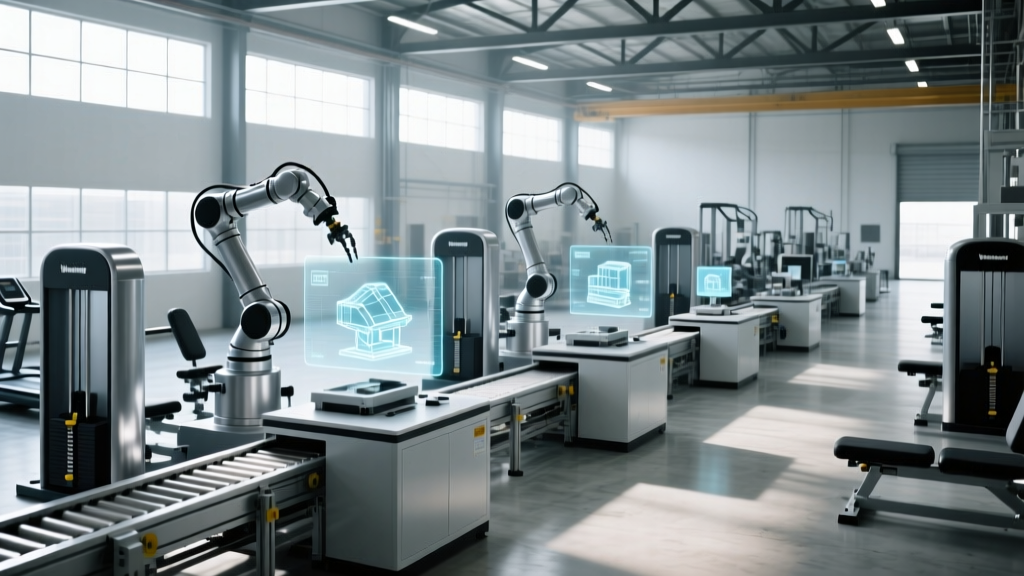
In a fascinating crossover of industrial strategies, a gym equipment manufacturer encourages customers to apply heavy manufacturing relocation protocols to commercial fitness installations. By leveraging Augmented Reality (AR), Digital Twins, and Internet of Things (IoT) shock monitoring, facility managers are eliminating the guesswork from heavy machinery placement. This approach reduces installation time by up to 34% and prevents catastrophic misalignment that can void equipment warranties.
Traditional vs. Tech-Enabled Equipment Relocation
The shift from analog rigging to digital-first installation fundamentally changes how heavy assets are moved, sited, and anchored. Below is a comparison of legacy methods versus modern AR/IoT-assisted protocols.
| Installation Phase | Traditional Protocol | AR & IoT-Enabled Protocol (2026 Standard) |
|---|---|---|
| Site Verification | Manual tape measurements; chalk lines | HoloLens 2 BIM overlay; LiDAR slab scanning |
| Transit Monitoring | Visual inspection upon delivery | ShockWatch IoT sensors (25G threshold) logging |
| Anchoring | Hammer drills; generic wedge anchors | AR-guided epoxy embeds; digital torque verification |
| Leveling & Calibration | Machinist levels; manual shimming | Bluetooth digital inclinometers; auto-shim calculation |
Step-by-Step: AR and IoT Implementation for Heavy Moves
Whether you are relocating a 12,000-pound stamping press or installing a 1,500-pound commercial gym rig, the physics of load distribution and anchoring remain identical. Here is the modern workflow for precision installation.
Phase 1: Digital Twin Mapping and Slab Verification
Before any equipment arrives, the facility's concrete slab must be verified. Heavy manufacturing equipment and commercial gym rigs require a minimum concrete compressive strength of 3,000 PSI to prevent anchor pull-out under dynamic loads. Using AR headsets integrated with PTC Vuforia, installers project the equipment's 3D Digital Twin directly onto the factory or gym floor. This allows teams to identify clashes with overhead HVAC ducts, verify 480V conduit routing, and mark exact anchor points with millimeter accuracy, avoiding embedded post-tension cables.
Phase 2: IoT Shock Monitoring During Transit
Relocating precision machinery introduces severe vibration risks. A misaligned spindle on a CNC machine or a warped cam profile on a plate-loaded gym machine will render the asset useless. Installers now place tri-axial IoT accelerometers on critical structural nodes. If the equipment experiences a shock exceeding 25Gs during forklift transport or rigging, the sensor flags the event on a cloud dashboard. This mandates a mandatory laser-alignment check before the equipment is bolted down, adhering to strict OSHA material handling guidelines for heavy load stability.
Phase 3: AR-Guided Anchoring and Calibration
Once positioned, the equipment must be anchored. For dynamic loads, standard mechanical wedge anchors are insufficient due to vibration loosening over time. The current industry standard is chemical anchoring using Hilti HIT-HY 200-A epoxy. The AR headset guides the technician through the exact drilling sequence:
- Drill Depth: 8 inches for 5/8-inch threaded rods.
- Cleaning: Four cycles of compressed air and wire brushing to remove concrete dust (critical for epoxy adhesion).
- Curing: 45 minutes at 70°F before applying torque.
- Torque Spec: 65 ft-lbs, verified via Bluetooth-enabled digital torque wrenches that log the exact tension to the equipment's digital maintenance file.
Cost and ROI Analysis of Smart Relocation
While the initial capital expenditure for AR hardware and IoT sensors is higher, the reduction in downtime and rework yields a rapid return on investment. The following table breaks down the average costs associated with relocating a standard 10,000-pound manufacturing asset or heavy commercial rig in 2026.
| Cost Category | Legacy Installation | Smart AR/IoT Installation | Variance |
|---|---|---|---|
| Site Prep & Surveying | $2,400 | $850 (LiDAR/AR scan) | -$1,550 |
| Rigging & Placement | $4,500 | $4,500 | $0 |
| Anchoring & Leveling | $1,800 | $1,200 (Digital torque tools) | -$600 |
| Downtime / Rework Risk | $6,000 (avg. 15% rework rate) | $400 (1% rework rate) | -$5,600 |
| Total Estimated Cost | $14,700 | $6,950 | -$7,750 |
Edge Cases and Failure Modes in AR-Assisted Moves
Despite the advantages of smart manufacturing and installation protocols, technology introduces specific failure modes that facility managers must anticipate. Understanding these edge cases is critical for maintaining operational continuity.
Warning: Sensor Drift in High-EMI EnvironmentsWhen installing equipment near high-frequency induction heaters or large variable frequency drives (VFDs), electromagnetic interference (EMI) can cause AR headset spatial mapping to drift by up to 3 inches. Always perform a secondary physical measurement verification using a laser distance meter when anchoring within 15 feet of high-voltage switchgear.
Another common failure mode involves concrete moisture content. Epoxy anchors like the Hilti HY 200 require specific moisture tolerances. If a facility's slab has a high moisture vapor emission rate (MVER > 5 lbs/1000 sq ft/24 hrs), the epoxy bond can degrade, leading to anchor pull-out under the dynamic lateral forces generated by heavy machinery or commercial fitness rigs. Installers must perform a calcium chloride test or use in-situ relative humidity probes before committing to chemical anchors.
Furthermore, the integration of digital twins requires rigorous data hygiene. According to research on smart manufacturing systems by NIST, discrepancies between the as-built BIM model and the actual factory floor can lead to severe placement errors. If a concrete pour deviated by 2 inches from the original architectural drawings, the AR overlay will guide the installer to drill into the wrong location. Regular LiDAR scanning of the facility to update the digital twin is mandatory to ensure spatial accuracy.
By treating commercial and industrial installations with the same rigorous, data-driven methodology used in aerospace and automotive manufacturing, facility managers can drastically reduce installation friction. The convergence of AR, IoT, and advanced chemical anchoring ensures that heavy equipment remains perfectly calibrated, securely anchored, and ready for immediate production.