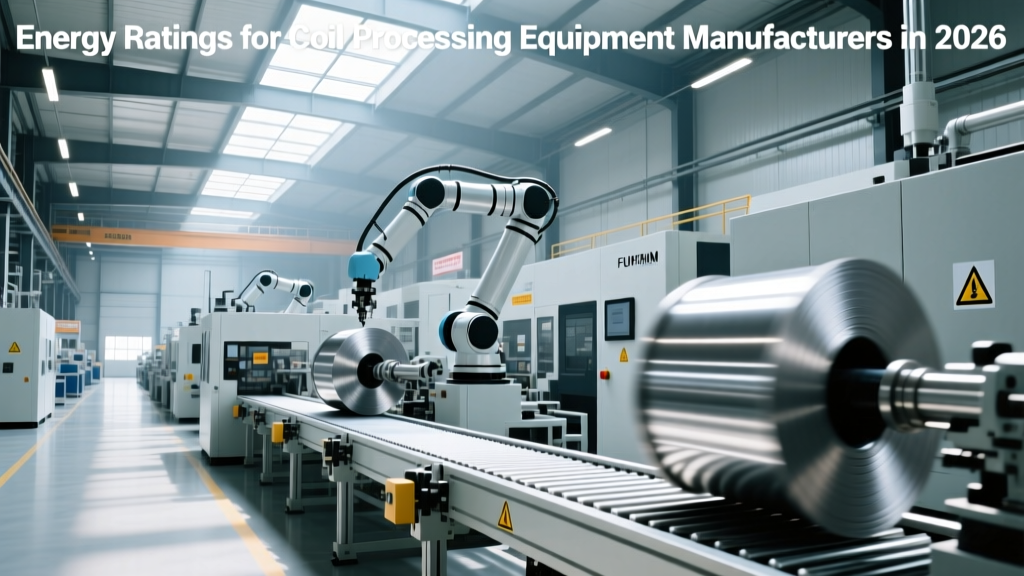
Energy Ratings for Coil Processing Equipment Manufacturers in 2026
Compare 2026 energy efficiency ratings from top coil processing equipment manufacturers. Discover servo vs. hydraulic kWh metrics and ROI frameworks.
The True Cost of Power in Modern Coil Processing
With industrial electricity rates averaging $0.09 to $0.15 per kWh across North American and European grids in 2026, energy consumption has moved from a secondary overhead metric to a primary driver of profitability in metal service centers. For high-volume operations processing 20,000 to 50,000 tons of steel, aluminum, or copper annually, the difference between an outdated hydraulic cut-to-length (CTL) line and a modern all-servo system can exceed $150,000 in annual energy savings. When sourcing new machinery, evaluating coil processing equipment manufacturers requires looking past raw throughput speeds and scrutinizing Specific Energy Consumption (SEC) ratings, drive topologies, and regenerative capabilities.
2026 Industry Benchmark: Specific Energy Consumption (SEC)
The standard metric for evaluating coil line efficiency is kWh per ton of processed material. In 2026, top-tier manufacturers are achieving the following SEC benchmarks for standard 0.020' to 0.250' thick, 60-inch wide steel lines:
- Legacy Hydraulic CTL Lines: 45 – 65 kWh/ton
- Hybrid (Servo Feed / Hydraulic Shear): 22 – 30 kWh/ton
- Modern All-Servo CTL Lines: 11 – 16 kWh/ton
- High-Speed Slitting Lines (with regen drives): 18 – 24 kWh/ton
Decoding Drive Topologies: Hydraulic vs. All-Servo Systems
The most significant divergence in energy efficiency ratings among coil processing equipment manufacturers lies in the actuation of the leveler, roll feed, and shear. Historically, hydraulic power units (HPUs) dominated due to their high force density. However, a standard 100-horsepower HPU running continuously to maintain system pressure—even during idle or feed cycles—draws roughly 75 kW per hour. Over a 24/7 operation, this single component can consume over $65,000 in electricity annually.
Leading manufacturers have transitioned to all-servo electric architectures. By utilizing high-torque, direct-drive servo motors for the leveler and roll feed, energy is only drawn during active material movement. Furthermore, modern servo shears utilize kinetic energy storage or direct-drive servos that eliminate the need for continuous hydraulic pump operation.
| System Architecture | Idle Power Draw | Peak Processing Draw | Estimated Annual OpEx (3-shift) |
|---|---|---|---|
| Constant-Pressure Hydraulic | 65 - 80 kW | 110 kW | $380,000 - $420,000 |
| Variable Frequency Drive (VFD) HPU | 15 - 25 kW | 95 kW | $210,000 - $240,000 |
| All-Servo Electric (IE4/IE5 Motors) | < 5 kW | 130 kW (Short burst) | $110,000 - $135,000 |
Regenerative Braking: The Hidden Efficiency Multiplier
When evaluating coil processing equipment manufacturers, buyers must specifically inquire about regenerative drive modules on the decoiler (uncoiler) and recoiler mandrels. Decelerating a 40,000-pound coil from 200 feet per minute to a dead stop generates massive kinetic energy. In older systems, this energy is wasted as heat through dynamic braking resistors, which also increases the ambient temperature of the factory floor, driving up HVAC costs.
In 2026, premium manufacturers integrate Active Line Modules (ALMs)—such as the Siemens SINAMICS S120 or equivalent ABB drives—that feed this braking energy back into the plant's local microgrid or directly to the utility. Service centers utilizing regenerative decoilers report a 12% to 18% reduction in total line power consumption, effectively using the decoiler as a power generator during the deceleration phase of the cycle.
"Transitioning to IE4 (Super Premium) and IE5 (Ultra Premium) motor classes is no longer optional for heavy machinery. According to the U.S. Department of Energy's Advanced Manufacturing Office, motor systems account for nearly 70% of all electricity used in industrial manufacturing. Specifying IE5 synchronous reluctance or permanent magnet motors for leveler drives can yield an additional 4-8% efficiency gain over standard IE3 induction motors, particularly at partial loads."
The 4-Step Evaluation Framework for Buyers
To separate genuine engineering advancements from greenwashing, procurement teams should apply this framework when reviewing proposals from coil processing equipment manufacturers:
1. Demand the SEC Data Sheet
Do not accept generic 'energy-saving' claims. Require the manufacturer to provide a simulated Specific Energy Consumption (kWh/ton) report based on your exact material matrix (yield strength, thickness, width) and cycle time. If they cannot model this in software like Siemens PLM or similar digital twin environments, their efficiency claims are unverified.
2. Audit the HPU Configuration
If the line requires hydraulics for the shear or clamping, ensure the HPU is equipped with a Variable Frequency Drive (VFD) and an accumulator bank. The VFD allows the pump motor to drop to 15Hz during idle, while the accumulator stores pressure for the instantaneous high-flow demand of the shear stroke.
3. Verify Motor Efficiency Standards
Cross-reference the motor nameplates on the Bill of Materials against the National Electrical Manufacturers Association (NEMA) Premium Efficiency standards or the IEC 60034-30-1 IE4/IE5 classifications. Many OEMs still default to IE2 motors on auxiliary systems like scrap choppers, coolant pumps, and mist collectors to keep initial capital costs low.
4. Check for ISO 50001 Integration
Top-tier manufacturers design their PLCs (typically Allen-Bradley ControlLogix or Siemens S7-1500) to output real-time energy telemetry via MQTT or OPC-UA. This allows the line to integrate directly into a plant's ISO 50001 Energy Management System, providing operators with dashboards that track kWh per coil, per shift, and per operator.
Hidden Energy Drains in Auxiliary Equipment
The main leveler and shear often receive the most engineering attention, but auxiliary components can silently destroy a line's overall energy rating. When auditing a manufacturer's proposal, scrutinize these specific areas:
- Scrap Choppers: Continuous-duty rotary scrap choppers running at constant speed waste immense power. Specify servo-driven or VFD-controlled choppers that only ramp up to cutting speed when edge trim is actively detected by photoelectric sensors.
- Magnetic Stackers: Electromagnetic stackers generate significant heat and require continuous DC current to hold sheets. Modern vacuum-handling or permanent-magnet-assisted stackers reduce holding energy by up to 90%.
- Thread-Assist Rolls: Pneumatic thread-assist systems require massive air compressors. Transitioning to electric linear actuators for threading arms eliminates the need for plant air, which is notoriously inefficient (typically costing $0.25+ per 100 CFM to generate).
Making the Final Capital Decision
Selecting between coil processing equipment manufacturers in 2026 requires a shift from evaluating initial Capital Expenditure (CapEx) to calculating 10-year Total Cost of Ownership (TCO). An all-servo CTL line may carry a 15% to 22% higher upfront purchase price compared to a hybrid hydraulic alternative. However, when factoring in a $0.12/kWh electricity rate, a 3-shift operation, and the elimination of hydraulic fluid maintenance, cooling, and disposal costs, the payback period for the premium energy-efficient architecture typically falls between 28 and 36 months. By mandating strict SEC metrics, regenerative drive integration, and IE5 motor standards in your RFQ, you secure a production asset that actively defends your margins against volatile energy markets.