Medical Equipment Manufacturing Industry Trends 2026: CMO Selection & Maintenance
Explore medical equipment manufacturing industry trends 2026 focusing on CMO equipment selection criteria, maintenance schedules, and OEM SLAs.
The 2026 CMO Equipment Paradigm: Beyond Initial CapEx
When analyzing the medical equipment manufacturing industry trends 2026, the primary differentiator for Contract Manufacturing Organizations (CMOs) has shifted from sheer production capacity to equipment maintainability and predictive service integration. Medical device OEMs outsourcing production no longer evaluate CMOs solely on per-unit cost; they scrutinize the Mean Time Between Failures (MTBF), Mean Time To Repair (MTTR), and the rigor of the facility's preventative maintenance (PM) protocols.
Selecting contract manufacturing equipment for medical devices requires a lifecycle approach governed by FDA Quality System Regulations (21 CFR Part 820) and ISO 13485:2016 standards. A $350,000 medical-grade 5-axis CNC mill is a severe liability if its spindle fails and the OEM service level agreement (SLA) dictates a 72-hour response time, halting a validated cleanroom production line and risking batch contamination.
💡 Expert Insight: The Maintainability QuotientIn 2026, top-tier medtech CMOs assign a "Maintainability Quotient" (MQ) to prospective equipment. MQ scores are calculated using historical spare parts lead times, local technician availability for specific PLCs (e.g., Siemens Sinumerik vs. Fanuc), and the machine's native IIoT telemetry capabilities. Equipment with an MQ score below 75/100 is automatically disqualified from cleanroom integration.
Core Selection Criteria for Contract Manufacturing Equipment
Equipment selection for medical contract manufacturing must prioritize contamination control, validation stability, and service accessibility. Below are the non-negotiable technical criteria for primary manufacturing assets.
1. Cleanroom Compatibility and Automated CIP/SIP
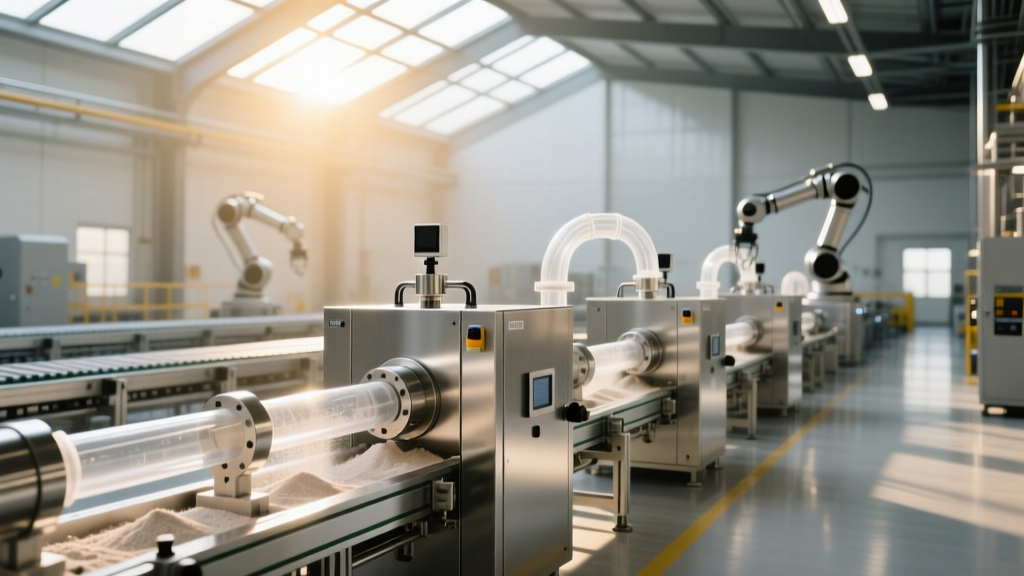
For implantable devices and diagnostic equipment, machinery must operate within ISO Class 7 or Class 8 cleanrooms. Equipment selection must favor designs with minimal particulate shedding. For instance, when selecting injection molding presses for medical plastics (like PEEK or polycarbonate), CMOs prioritize all-electric models like the Arburg Allrounder 370 A over hydraulic alternatives. All-electric drives eliminate the risk of hydraulic fluid atomization and require 40% less routine maintenance, bypassing the need for quarterly ISO 4406 fluid cleanliness testing.
2. Native IIoT and Edge Computing for Predictive Maintenance
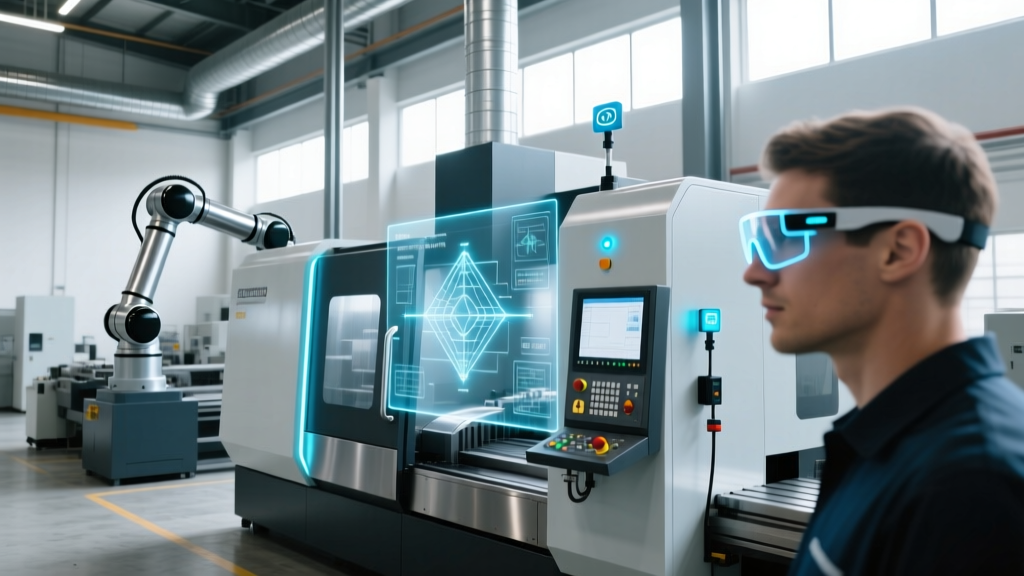
Legacy equipment relying on reactive maintenance is incompatible with modern medtech SLAs. Selected machinery must feature native edge-computing sensors capable of monitoring spindle vibration (measured in mm/s RMS), motor current signature analysis (MCSA), and thermal drift. The Haas UMC-750 with the integrated wireless intuitive probing system allows CMOs to automate daily tool-length and spindle-runout verifications without manual intervention, ensuring continuous compliance with statistical process control (SPC) mandates.
Mandatory Maintenance & Service Schedules for MedTech CMOs
Adherence to strict PM schedules is a primary audit focus during FDA and Notified Body inspections. Below is a baseline maintenance matrix for standard medtech CMO equipment. These schedules must be integrated into a validated Computerized Maintenance Management System (CMMS) with 21 CFR Part 11 compliant electronic signatures.
| Equipment Type | Interval | Specific Maintenance Task | Estimated Downtime | Avg. Cost (Parts/Labor) |
|---|---|---|---|---|
| Medical Injection Molder (Arburg 370 A) |
Weekly | Toggle pin lubrication (Kluber Isoflex NBU 15); nozzle heater band resistance check. | 1.5 Hours | $120 |
| Medical Injection Molder (Arburg 370 A) |
4,000 Hrs | Barrel screw pull, flight wear measurement, and non-return ring inspection (critical for PEEK processing). | 14 Hours | $4,500 |
| 5-Axis CNC Mill (Haas UMC-750) |
Monthly | Way lube ISO 4406 cleanliness sampling; coolant concentration and pH balancing (maintain 8.5-9.2 pH). | 2 Hours | $250 |
| 5-Axis CNC Mill (Haas UMC-750) |
Bi-Annual | Spindle vibration analysis (baseline < 1.5 mm/s RMS); axis laser interferometer calibration. | 18 Hours | $8,200 |
| Fiber Laser Stent Cutter (Trumpf TruLaser Tube) |
Daily | Cutting head protective window inspection; assist gas (Argon/Nitrogen) dew point verification. | 0.5 Hours | $45 |
| Fiber Laser Stent Cutter (Trumpf TruLaser Tube) |
Annual | Chiller glycol flush (maintain 35-40% concentration); resonator optics alignment and beam profiler check. | 24 Hours | $12,500 |
Under ISO 13485 Clause 7.6, CMOs must distinctly separate maintenance (restoring equipment to functional state) from calibration (verifying measurement accuracy against NIST-traceable standards). A CMMS must trigger automatic production holds if a machine's calibration certificate expires, even if the machine is mechanically sound and fully maintained.
Cleanroom Infrastructure: The Hidden Maintenance Sink
Equipment selection does not occur in a vacuum; it directly impacts facility infrastructure. The ISO 14644-1 standard dictates strict particulate limits for cleanrooms, and the machinery installed must not overwhelm the HVAC and filtration systems.
HEPA/ULPA Filtration and Airflow Balancing
Medical manufacturing equipment that generates heat or particulates requires localized exhaust ventilation (LEV). When selecting CNC machines for machining titanium orthopedic implants, CMOs must specify machines with integrated, sealed enclosure mist collectors (e.g., Losma or Filtra-System) rated to 99.97% efficiency at 0.3 microns.
The facility's terminal HEPA filters must be scanned and certified semi-annually. Replacing a bank of 24x24x12 HEPA filters in an ISO Class 7 molding suite costs between $14,000 and $18,000, factoring in the required re-certification and airborne particle counting. Equipment that minimizes thermal load reduces the HVAC air-exchange rate required, directly extending HEPA filter lifespans by up to 18%.
Evaluating OEM Service Level Agreements (SLAs)
In the medical sector, machine downtime equates to delayed patient therapies and breached supply contracts. CMOs must negotiate SLAs that guarantee specific response metrics. Standard "next business day" warranties are insufficient for critical path medical manufacturing.
| SLA Tier | Response Time | Spare Parts Inclusion | Annual Cost (Per Asset) | Best Application |
|---|---|---|---|---|
| Standard | 48-72 Hours (Remote/Onsite) | Parts billed separately; 5-10 day lead time. | $3,500 - $5,000 | Non-critical packaging or secondary assembly equipment. |
| Premium | 24 Hours Remote; 48 Hours Onsite | Consumables included; critical spares stocked regionally. | $12,000 - $18,000 | Standard CNC machining and cleanroom injection molding. |
| Comprehensive (MedTech) | 4 Hours Remote; 12 Hours Onsite | All parts included; dedicated field service engineer assigned. | $28,000 - $45,000 | Laser stent cutting, clean-in-place (CIP) bioreactors, automated optical inspection (AOI). |
The Cost of Downtime vs. SLA Investment
Consider a CMO manufacturing Nitinol guidewires. If the laser micro-welding station fails, the cost of scrapped WIP (Work in Progress) and delayed batch releases can exceed $40,000 per day. Paying a $35,000 annual Comprehensive SLA ensures a 12-hour onsite response, effectively paying for itself with a single prevented downtime event. Furthermore, comprehensive SLAs often include annual IQ/OQ/PQ (Installation, Operational, Performance Qualification) revalidation support, a critical requirement when OEMs perform major firmware or hardware updates on the machinery.
Sourcing Authentic Spare Parts in a Constrained Supply Chain
A major focal point in current manufacturing trends is the mitigation of counterfeit or out-of-spec spare parts, which can compromise device biocompatibility or structural integrity. When selecting equipment, CMOs must evaluate the OEM's proprietary parts-locking mechanisms and authorized distributor networks.
- Proprietary Consumables: Some medical-grade 3D printers (e.g., Stratasys Origin) utilize RFID-chipped resin cartridges. While this guarantees material traceability for FDA Device History Records (DHR), it locks the CMO into OEM pricing, increasing consumable maintenance costs by 22-30% compared to open-source platforms.
- Critical Spares Inventory: CMOs must maintain an on-site "critical spares" cage. For a medical CNC mill, this includes a replacement spindle chiller pump, way lube pump, and main drive belts. Holding $25,000 in localized inventory reduces MTTR from days to hours.
Auditing the CMO's Maintenance Culture
Medical device OEMs conducting supplier audits must look beyond the CMMS software. Request the "wrench time" reports and review the deferred maintenance backlog. A CMO with a 98% PM completion rate but a growing backlog of deferred corrective work orders is masking systemic equipment degradation. True equipment selection criteria must encompass the vendor's ability to support the CMO's maintenance culture with rapid technical escalation, localized training, and transparent telemetry data sharing.