Sustainable Factory Specs for a School Fitness Equipment Manufacturer
Explore the technical specs of sustainable manufacturing equipment used by a modern school fitness equipment manufacturer to achieve zero-emission goals.
The 2026 Baseline: Heavy-Duty Specs Meet Zero-Emission Goals
Manufacturing vandalism-resistant school fitness equipment—such as 11-gauge steel weight racks, heavy-duty stationary bikes, and commercial treadmills—traditionally requires massive energy inputs and generates significant volatile organic compound (VOC) emissions. However, a modern school fitness equipment manufacturer operating in 2026 leverages sustainable manufacturing equipment to decouple production volume from carbon output. This requires a fundamental shift in the technical specifications of the factory floor, moving from open-loop consumption to closed-loop regeneration.
According to the U.S. Department of Energy's industrial decarbonization initiatives, heavy fabrication facilities that integrate regenerative drives and closed-loop material handling can reduce scope 1 and 2 emissions by up to 65% while maintaining the rigorous structural tolerances required for institutional gym equipment. Below is a technical breakdown of the green technology and manufacturing equipment specifications driving this transition.
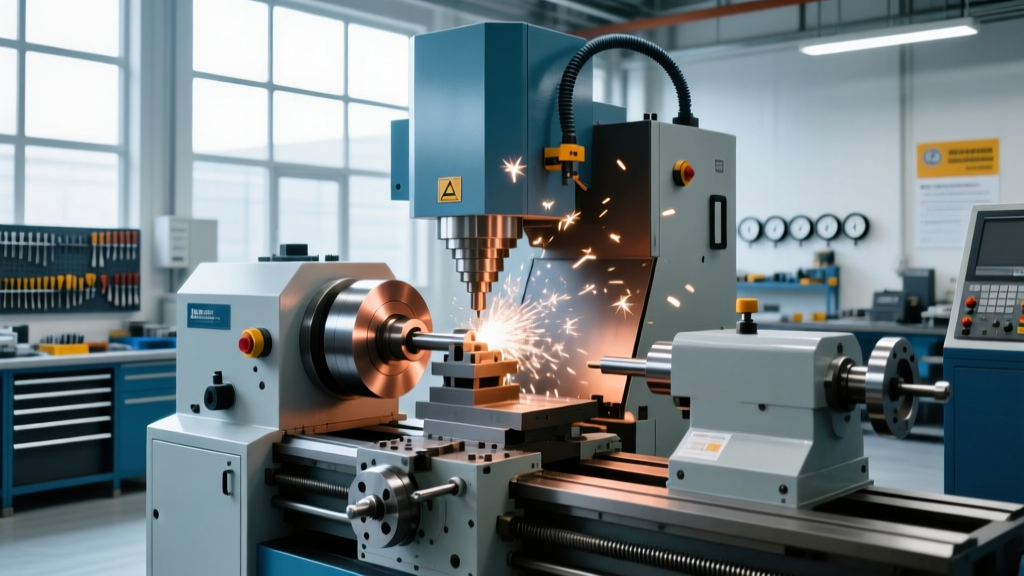
12kW Fiber Laser Cutting with Regenerative Gantry Drives
School fitness equipment demands extreme durability. Weight racks and squat stands are typically cut from 11-gauge (0.1196-inch) mild steel tubing and 3/16-inch gusset plates. Historically, CO2 lasers or plasma cutters handled this, consuming vast amounts of electricity and assist gases. Modern sustainable facilities utilize 12kW fiber laser cutting systems equipped with regenerative braking on the gantry axes.
Technical Specifications & Operational Mechanics
- Laser Source: 12,000W solid-state fiber laser with a 30% wall-plug efficiency (up from 18% in older 6kW models).
- Cutting Speed: Achieves 450 inches per minute (IPM) on 11-gauge mild steel using high-pressure nitrogen assist.
- Regenerative Drives: The X and Y-axis linear motors utilize regenerative braking. During rapid deceleration at the end of a cut path, the kinetic energy is converted back into electrical energy and fed into the machine’s internal DC bus, reducing peak grid draw by 14%.
- Nitrogen Generation: On-site pressure swing adsorption (PSA) nitrogen generators eliminate the carbon footprint associated with liquid nitrogen delivery trucks, producing 99.99% pure N2 at 350 PSI directly at the cutting head.
By using nitrogen instead of oxygen, the cut edges remain completely oxide-free. This eliminates the secondary grinding or sandblasting step typically required before powder coating, saving an average of 4.2 kWh of energy per 100 pounds of processed steel.
Closed-Loop Electrostatic Powder Coating Cells
Liquid paint application is the largest source of VOC emissions and hazardous waste in fitness equipment manufacturing. To meet EPA pollution prevention standards, leading manufacturers have transitioned to closed-loop electrostatic powder coating systems with cyclone reclaim technology.
How Cyclone Reclaim Works:Overspray powder that misses the grounded steel tubing is pulled into a high-velocity cyclone separator. Centrifugal force pushes the heavier, reusable powder particles to the outer wall and down into a fluidized bed hopper, while the lighter, unusable fine dust (under 10 microns) is exhausted to a secondary HEPA filter. The reclaimed powder is automatically sieved and mixed with virgin powder at a precise 70/30 ratio.
Decision Matrix: Liquid Paint vs. Closed-Loop Powder
| Specification | Traditional Liquid Paint Line | 2026 Closed-Loop Powder Cell |
|---|---|---|
| Transfer Efficiency | 40% - 55% | 95% - 98% (with reclaim) |
| VOC Emissions | 2.5 - 4.0 lbs per gallon | 0.0 lbs (Zero VOC) |
| Curing Energy (Oven) | 350°F for 30 mins (Gas-fired) | 400°F for 12 mins (IR + Convection) |
| Material Waste Disposal | $450 per 55-gal drum (Hazmat) | $0 (Reclaimed or inert filler) |
A critical failure mode in closed-loop powder systems is moisture ingress. If the factory ambient relative humidity exceeds 65%, the reclaimed powder absorbs moisture, causing micro-blistering during the 400°F curing phase. Sustainable facilities must integrate desiccant dehumidifiers specifically zoned to the powder feed hoppers, maintaining a strict 45% RH ± 3% to ensure the structural integrity of the fitness equipment's finish.
Regenerative Dynamometer Testing Rigs
Quality control for school treadmills, ellipticals, and stationary bikes requires continuous load testing to simulate years of student use. Traditional testing rigs use eddy-current or friction brakes that dissipate the mechanical energy generated by the equipment's motors as waste heat, requiring massive HVAC loads to cool the testing floor.
Modern green factories utilize regenerative AC dynamometers (such as those based on Magtrol or similar 480V 3-phase technology). When a treadmill motor is tested under a 300-pound simulated load, the dynamometer acts as a generator. The mechanical resistance is converted into 480V alternating current, which is passed through an active front-end (AFE) drive and fed directly back into the facility’s microgrid.
Power Feedback Specifications
- Grid Feedback Efficiency: 92% of the mechanical braking energy is returned to the plant's electrical bus.
- Harmonic Distortion: AFE drives maintain Total Harmonic Distortion (THDi) below 5%, preventing dirty power from disrupting sensitive CNC machinery on the same grid.
- Thermal Load Reduction: By eliminating friction-brake heat generation, the localized HVAC cooling requirement for the QA testing zone drops by 40%, compounding the energy savings.
Smart Fume Extraction and Micro-Climate Control
Welding the heavy-duty joints on school weight machines generates manganese and hexavalent chromium fumes. Traditional exhaust systems run at 100% capacity continuously, wasting electricity and exhausting conditioned air outside. Sustainable manufacturers now deploy smart, demand-controlled fume extraction arms integrated with IoT particulate sensors.
These systems utilize variable frequency drives (VFDs) on the central blower motors. When an optical particulate sensor detects that a welder has struck an arc, it signals the VFD to ramp up the extraction velocity to 100 feet per minute (FPM) at the hood within 0.5 seconds. When welding stops, the system drops to a 15% idle state. Furthermore, the extracted air is passed through multi-stage HEPA and activated carbon filters, allowing 100% of the conditioned air to be recirculated back into the factory during winter months, drastically reducing natural gas heating costs.
ROI and Payback Periods for Green Factory Upgrades
Transitioning to sustainable manufacturing equipment requires significant capital expenditure, but the operational savings and compliance with ISO 50001 energy management standards provide a clear financial trajectory. Below is the projected 2026 ROI data for a mid-sized school fitness equipment manufacturer upgrading a 50,000-square-foot fabrication cell.
| Equipment Upgrade | Capital Cost (2026) | Annual Energy/Material Savings | Simple Payback Period |
|---|---|---|---|
| 12kW Fiber Laser w/ Regenerative Drives | $680,000 | $92,000 | 7.3 Years |
| Closed-Loop Powder Coating Cell | $415,000 | $115,000 | 3.6 Years |
| Regenerative QA Dynamometers (x4) | $185,000 | $34,000 | 5.4 Years |
| Smart VFD Fume Extraction System | $120,000 | $28,000 | 4.2 Years |
Strategic Sourcing for Institutional Bids
For procurement officers and facility managers sourcing fitness equipment for school districts, verifying a manufacturer's use of this sustainable technology is no longer just an environmental preference—it is a proxy for build quality. Factories that invest in 12kW nitrogen-assisted lasers and closed-loop powder cells inherently produce equipment with superior edge tolerances and corrosion-resistant finishes. When evaluating bids, request the manufacturer's ISO 14001 and ISO 50001 certifications, and specifically ask for their powder coating transfer efficiency data and laser assist-gas protocols to ensure the equipment will survive decades of rigorous institutional use.