Relocation Tech: The Modern Industrial Process Equipment Manufacturer
Discover how a modern industrial process equipment manufacturer uses digital twins, IoT telemetry, and AR to execute zero-defect facility relocations.
Executive Summary
Relocating heavy manufacturing assets—such as 60-ton continuous chemical reactors, multi-axis CNC cells, or sterile pharmaceutical filling lines—is no longer a brute-force rigging exercise. In 2026, leading facilities demand sub-millimeter precision and zero unplanned downtime during re-commissioning. To meet these demands, the modern industrial process equipment manufacturer has transformed its relocation and installation divisions into high-tech integration hubs. By leveraging point-cloud spatial mapping, IoT transit telemetry, and augmented reality (AR) alignment, original equipment manufacturers (OEMs) are eliminating the traditional 15-20% cost overruns associated with heavy machinery moves.
The Hidden Costs of Legacy Relocation Methods
Historically, moving a production line relied on 2D CAD floor plans, manual theodolite surveys, and reactive troubleshooting upon arrival at the new facility. This analog approach routinely resulted in foundation clashes, misaligned utility drop points, and compromised machine geometries. In high-margin sectors like semiconductor fabrication or biopharmaceuticals, downtime during equipment reinstallation can cost between $25,000 and $100,000 per hour. Furthermore, undetected transit shock can fracture glass-lined reactor vessels or misalign precision spindle bearings, leading to catastrophic failures weeks after the move. According to OSHA material handling guidelines, improper rigging and unmonitored transit also account for a significant percentage of heavy-industry workplace incidents, making data-driven relocation a critical safety and financial imperative.
Digital Twins and Point-Cloud Spatial Mapping
Before a single anchor bolt is cut, advanced manufacturers deploy 3D laser scanners, such as the Leica RTC360, to capture the new facility environment. These scanners generate high-density point clouds with 1.9mm accuracy at 10 meters, capturing exact overhead clearances, structural column placements, and existing utility conduits.
This point-cloud data is imported into digital twin software environments like Siemens Tecnomatix or Dassault Systèmes DELMIA. The engineering team then simulates the exact kinematic footprint of the equipment. This allows them to identify spatial conflicts—such as a robotic arm's sweep radius intersecting with a newly installed HVAC duct—weeks before the physical teardown begins. The NIST Smart Manufacturing Program highlights that implementing digital twin simulations in facility planning reduces physical rework by up to 40%, a metric that directly translates to compressed installation timelines.
Simulation Tool Capabilities Matrix
| Technology | Primary Application in Relocation | Accuracy / Tolerance | Cost Estimate (2026) |
|---|---|---|---|
| 3D Laser Scanning (Point Cloud) | Facility environment capture & clash detection | ±1.9mm at 10m | $12,000 - $18,000 per 50k sq ft |
| Kinematic Digital Twin Simulation | Equipment footprint, utility routing, and sweep analysis | Sub-millimeter virtual clearance | $8,000 - $25,000 (Software/Eng. time) |
| Automated Rigging Pathing | Simulating crane loads and forklift turning radii | Centimeter-level path validation | Included in OEM relocation package |
IoT Transit Telemetry: Protecting Micron-Level Tolerances
Once the equipment is on the flatbed, the risk profile shifts from spatial to kinetic. Precision manufacturing equipment is highly sensitive to vibration and shock. A 5-axis CNC mill with hydrostatic guideways or a continuous bioreactor with glass-lined internal baffles can suffer irreversible micro-fractures if subjected to unmonitored transit vibrations.
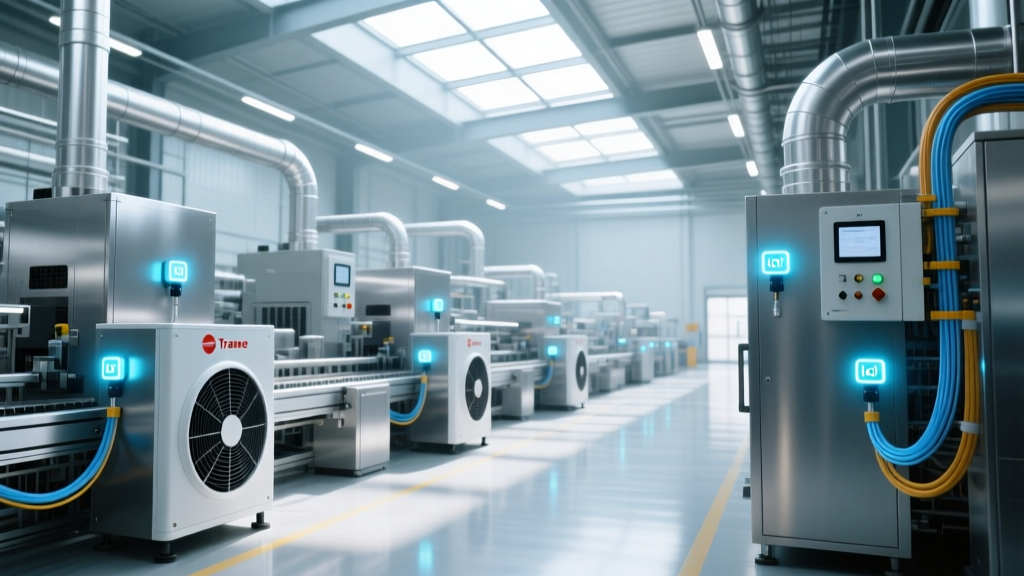
To mitigate this, OEMs now affix tri-axial IoT accelerometers and gyroscopes—such as Monnit ALTA or Bosch XDK sensor nodes—directly to the machine's primary castings and spindle housings. These sensors transmit real-time telemetry via cellular or satellite networks to a centralized dashboard.
Critical Shock Thresholds for Transit
- Glass-Lined Chemical Reactors: Maximum 1.5G shock limit. Exceeding this risks micro-fissures in the tantalum/glass coating, leading to rapid corrosion upon chemical exposure.
- Precision CNC Spindles: Continuous vibration must remain below 0.2G (RMS) to prevent brinelling of the ceramic hybrid bearings.
- Sterile Fill-Finish Isolators: Tilt sensors must not register more than a 3-degree deviation from level to prevent HEPA filter media displacement and seal degradation.
If a truck hits a severe pothole and the sensor registers a 2.5G spike, the system instantly flags the event with GPS coordinates and timestamps. The receiving installation team knows exactly which axis absorbed the impact and can perform targeted laser interferometry or dye penetrant inspections before powering up the machine, preventing secondary damage during commissioning.
Augmented Reality and Laser Trackers During Reinstallation
The physical reinstallation phase has been revolutionized by the convergence of laser tracking and spatial computing. Legacy methods of dropping plumb bobs or using optical transits to align a 40-meter-long extrusion line or a multi-stage turbine assembly are being replaced by API Radian or Faro Vantage laser trackers. These devices provide real-time, 6-degree-of-freedom (6DoF) coordinate measurements with an accuracy of 15 micrometers per meter.
Step-by-Step AR-Assisted Alignment Workflow
- Network Establishment: The laser tracker is positioned in the facility, establishing a unified 3D coordinate system tied to the facility's primary datum points.
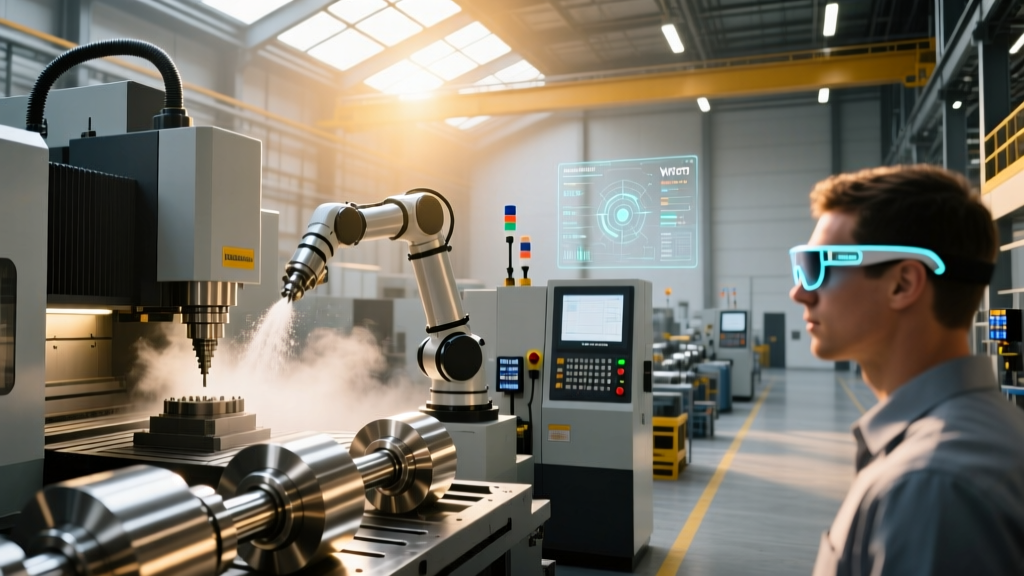
- AR Overlay Deployment: Installation technicians wear spatial computing headsets (e.g., Microsoft HoloLens 2 or Apple Vision Pro) loaded with the equipment's 3D CAD model and Piping & Instrumentation Diagrams (P&IDs).
- Guided Shimming: As the technician adjusts the leveling jacks and epoxy shims under the machine base, the AR headset displays a live, color-coded deviation map. Green indicates the base is within the 0.02 mm/m flatness tolerance; red indicates areas requiring adjustment.
- Utility Connection Validation: Technicians use the AR overlay to 'see through' concrete floors, locating embedded conduit and chilled water lines before core-drilling for anchor bolts, eliminating the risk of severing critical facility infrastructure.
'The integration of spatial computing into heavy equipment installation has reduced our piping tie-in errors by 85%. Technicians are no longer interpreting complex 2D isometric drawings while hanging off a mezzanine; the exact weld joint and valve orientation is projected directly onto their field of view.' — Director of Field Engineering, Tier-1 Pharma OEM
Industry analyses from Deloitte's Industry 4.0 insights confirm that augmented reality in field service and installation reduces task completion time by up to 30% while drastically lowering the cognitive load on specialized riggers and millwrights.
Vetting an Industrial Process Equipment Manufacturer for Tech-Enabled Moves
Not every machinery builder possesses the internal capabilities to execute a data-driven relocation. When contracting an industrial process equipment manufacturer to oversee the teardown, transit, and re-commissioning of your production line, it is critical to audit their technological maturity. Require the following deliverables in your RFP (Request for Proposal):
- Mandatory Point-Cloud Integration: Ensure the OEM requires a 3D scan of the destination facility as a prerequisite for generating the rigging plan. Refuse vendors who rely solely on client-provided 2D PDF floor plans.
- IoT Telemetry SLAs: The contract must include a Service Level Agreement (SLA) guaranteeing continuous transit monitoring, with predefined protocols for route deviation or shock-threshold breaches.
- Laser Tracker Certification: Verify that the OEM's installation crew utilizes calibrated, certified laser trackers for geometric alignment, rather than relying on precision machinist levels alone.
- Digital Twin Handover: Post-installation, the OEM should provide an updated digital twin reflecting the 'as-installed' state of the equipment, including new utility drop coordinates and final shim configurations, for integration into your facility's digital maintenance system.
By demanding these advanced methodologies, plant managers ensure that capital-intensive equipment is relocated with surgical precision, safeguarding both the physical asset and the production schedules that depend on it.